Description
Coating adhesion control — Nearly 30 years of coated fabric process experience applied to multi-layer aviation duct construction, ensuring consistent bonding between PVC fabric reinforcement and aluminum foil insulation.
Technical Specifications
| Parameter | Value |
|---|---|
| Product Type | PCA Air Duct Hose |
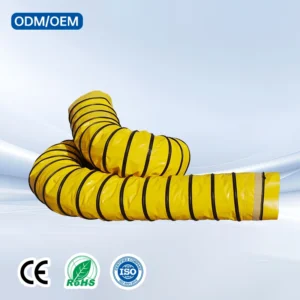
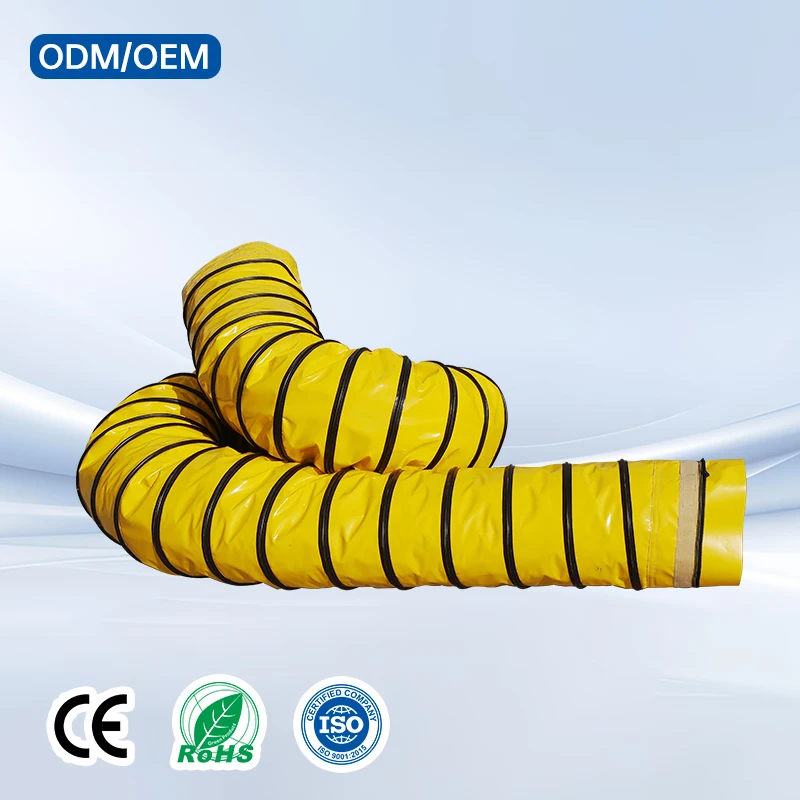
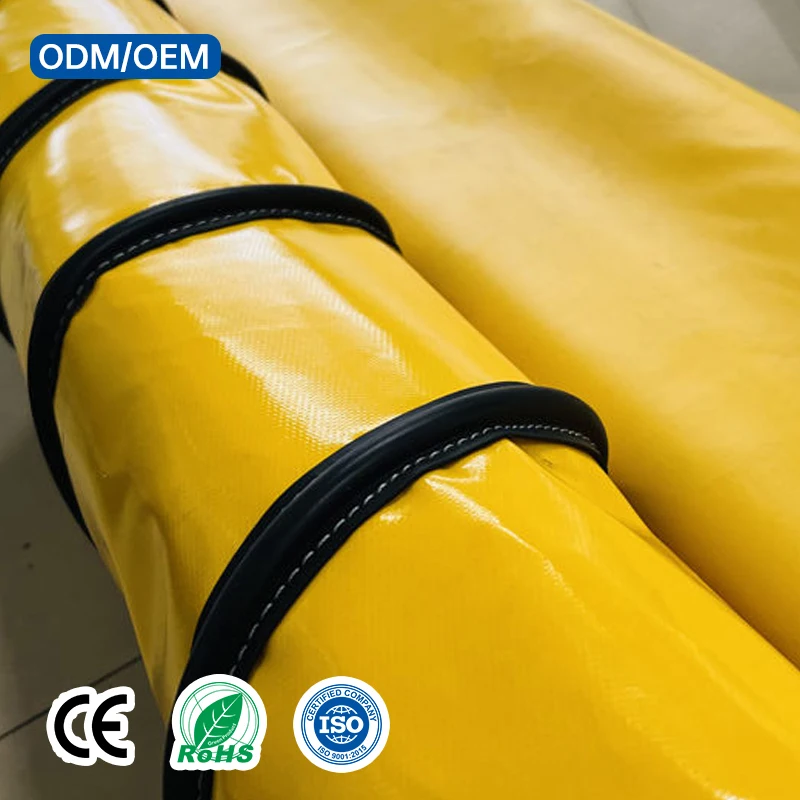
| Material | PVC coated fabric-reinforced layer with aluminum foil insulation |
| Construction | Multi-layer with built-in aluminum foil bubble film |
| Temperature Range | -30°C to 150°C |
| Connection Type | Zipper and Velcro link |
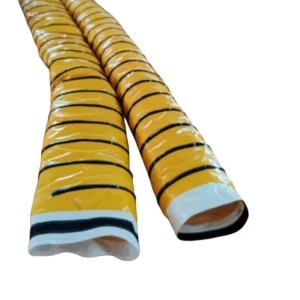
| Outer Layer Coloring | Yellow-black alternating (high visibility) |
| Mildew Resistance | Yes (grade not stated) |
| Flame Retardant Grade | (grade not stated) |
| Anti-Static | (not confirmed) |
| Logo Customization MOQ | 100 units |
| Pattern Customization MOQ | 100 units |
| Standards | ISO, CE |
Application Suitability
| Application | Exposure & Requirement |
|---|---|
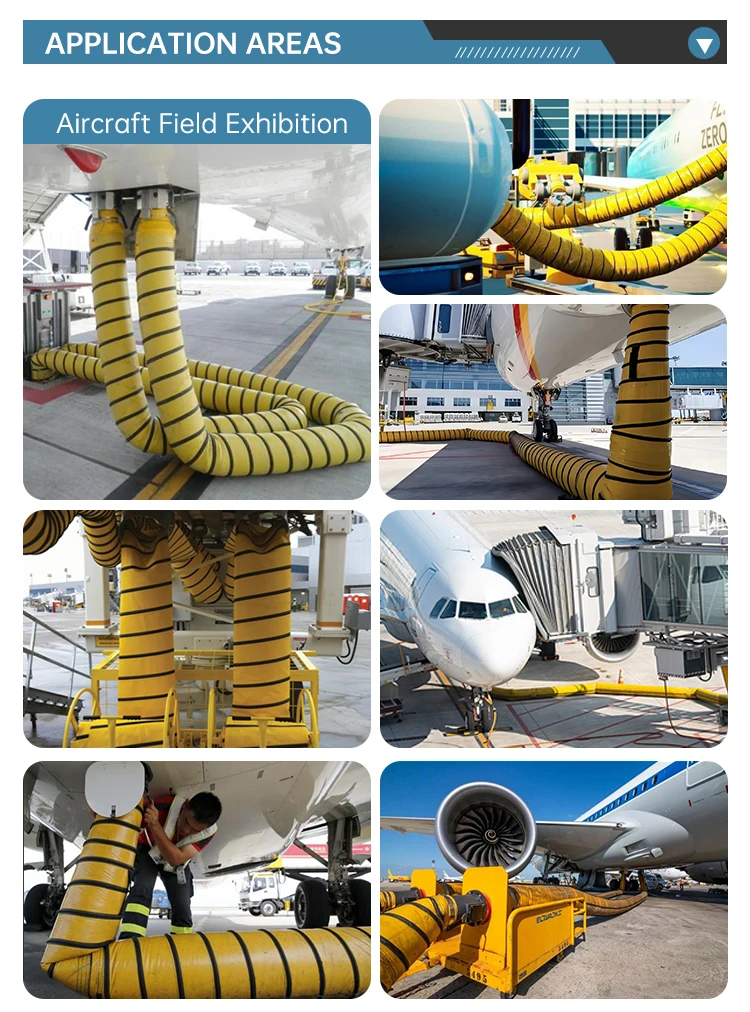
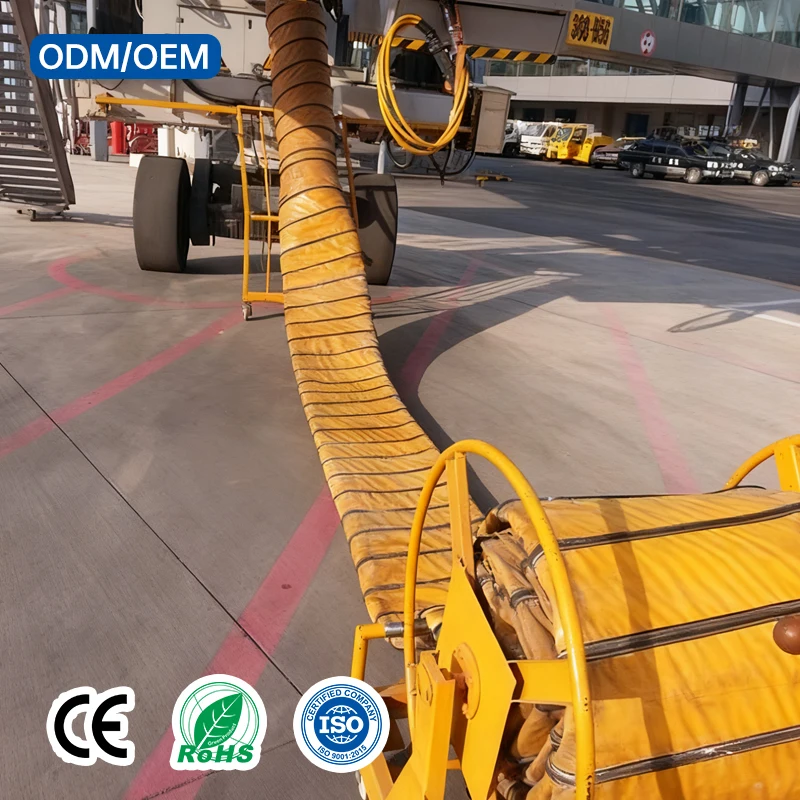
| Airport apron PCA unit to aircraft cabin connection | Constant deployment and retraction cycles, tarmac abrasion, fuel and hydraulic fluid splash, extreme ambient temperature swings |
| Mobile ground air supply carts at regional airports | Rough handling during transport, repeated folding and storage, UV exposure during outdoor staging between aircraft turns |
| Military and regional airfield air conditioning interface | Rapid turnaround demands, dust and sand ingestion risk, operation across sub-zero and high-heat seasonal conditions |
What "Fire-Retardant Certified" Means When the Grade Is Missing from the Datasheet
A duct hose without a stated fire-retardant grade leaves the buyer carrying the compliance risk, not the manufacturer.
Many aviation ground support equipment specifications reference fire-retardant requirements, yet the duct hose supplied often arrives with only a generic claim on the invoice. Airport operating authorities and GSE procurement teams need a documented grade tied to a recognized test method before the duct enters service on a commercial apron. When the Aviation Air Duct manufacturer does not provide this at the quotation stage, the buyer faces delayed commissioning or failed site audits. [NEED_CITE: fire classification standards for aviation ground support ventilation equipment]
Thermal Insulation Layer Integrity Across the Operating Envelope
The multi-layer construction combines a PVC coated fabric-reinforced outer shell with an internal aluminum foil bubble film insulation core. This arrangement maintains thermal retention whether the PCA unit is delivering pre-cooled air at near-ambient sub-zero temperatures or heated air approaching the upper 150°C boundary. The aluminum foil layer reflects radiant heat back into the airstream while the bubble film traps convective losses, reducing the energy demand on the ground cart’s compressor or heater bank. A PCA Air Duct Hose operating within this envelope must sustain repeated thermal cycling without delamination between the insulation film and the fabric substrate.
Apron Visibility and Rapid Deployment Mechanics
The yellow-black alternating outer coloring serves a functional role beyond aesthetics on busy airport aprons where ground crew, tugs, and fuel trucks share limited maneuvering space. High-visibility duct routing reduces trip and snag hazards during aircraft turnaround windows that often run under 45 minutes. The zipper and Velcro connection system allows ground handlers to extend, link, or disconnect duct sections without tools, matching the pace of sequential aircraft servicing. [NEED_CITE: ground support equipment visibility and safety standards on airport aprons]
Reading the Specification Sheet Beyond Temperature Range
The stated -30°C to 150°C range defines the thermal boundaries, but the practical performance of this Aviation Air Duct manufacturer product depends equally on how the PVC coating behaves at those extremes. At the lower boundary, PVC becomes progressively stiffer and more susceptible to cracking if the duct is folded or dragged across cold tarmac. At the upper boundary, the coating softens and its bond to the base fabric weakens under sustained load. The aluminum foil insulation layer must remain adhered through these transitions; any separation creates a thermal bridge where condensation forms on the outer surface during cooling operations. The base fabric denier and weave density determine how much mechanical abuse the duct survives between the PCA cart and the aircraft interface before the outer shell shows puncture or tear damage.
The Hidden Cost of Deploying Duct Without Confirmed Certification
Supplying a PCA Air Duct Hose to a regulated airport environment without confirming the fire-retardant grade and anti-static properties required by local aviation authorities can halt ground operations. A failed inspection does not just reject the duct — it grounds the entire PCA cart until compliant replacement arrives, disrupting aircraft turnaround schedules across multiple gates. Similarly, if the insulation layer delaminates prematurely because the adhesive specification was not matched to the operating temperature cycle, the duct loses thermal efficiency and the ground unit works harder, increasing fuel burn or electrical draw. [NEED_CITE: aviation ground equipment compliance documentation requirements]
Why Procurement Teams Source This Duct Here
The three full production lines and 36 sets of professional equipment support volume orders of PCA Air Duct Hose with consistent lead times, critical when airport fleets schedule seasonal replacement programs. The 10-person R&D team handles custom diameter, length, and connection configuration development, producing samples within days rather than weeks for GSE manufacturers integrating ducts into new cart designs. Dedicated QA/QC inspection at every production stage catches insulation layer alignment issues and zipper function defects before the duct leaves the factory. Deep process control over PVC coating weight and adhesion ensures the outer shell and insulation core perform as a unified assembly through thermal cycling. ISO and CE documentation is prepared per shipment, not retrofitted after the buyer requests it.
Documentation & Verification
- Material specification sheet stating base fabric type, coating weight, and aluminum foil insulation layer composition
- Temperature test basis documentation confirming performance across the -30°C to 150°C operating range
- Fire-retardant grade report aligned to aviation ground equipment standards where applicable
- Pre-shipment inspection record covering dimensional accuracy, seam integrity, and zipper/Velcro function test
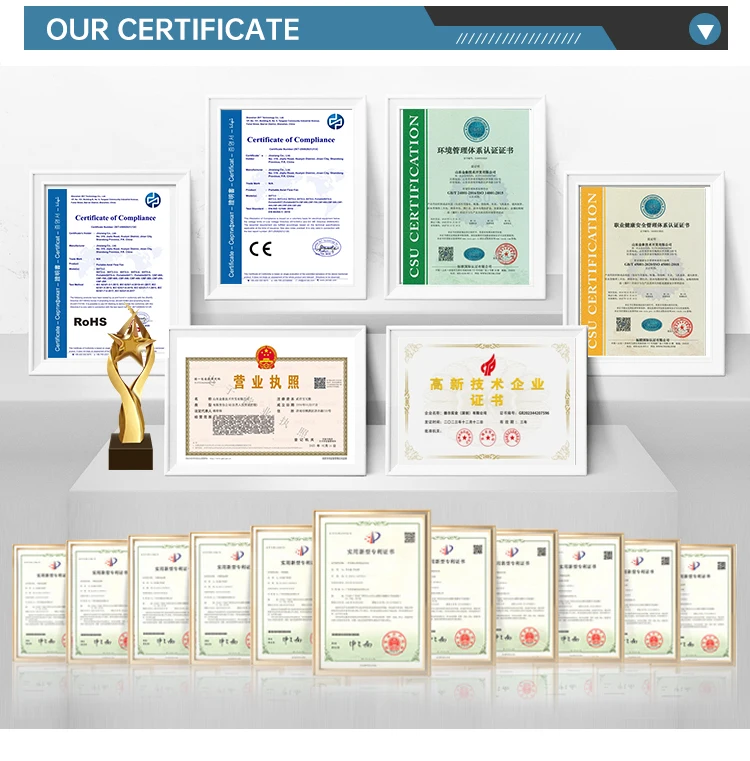
- ISO and CE certificates referencing the aviation duct product line
Fabrication, Handling & Storage
- Zipper and Velcro connections should be aligned without twisting the multi-layer duct body to prevent insulation layer creasing
- Store PCA Air Duct Hose sections flat or on wide-diameter cores to avoid permanent compression marks on the aluminum foil bubble film
- Clean the PVC coated outer shell with mild detergent only; solvents degrade the coating and reduce mildew resistance
- Inspect zipper teeth and Velcro hook surfaces for tarmac debris buildup after each aircraft turnaround cycle
- When linking multiple sections, ensure the yellow-black alternating pattern is continuous for apron visibility compliance
Preparing Your Inquiry
Specify the aircraft types your ground fleet services, the PCA unit output diameter, and whether your airport authority mandates a particular fire-retardant or anti-static certification. Confirm the duct length per section, total sections required per cart, and whether custom branding or color coding is needed for fleet identification. Indicate your annual replacement volume so the Aviation Air Duct manufacturer can align production scheduling and MOQ planning to your maintenance cycle.
Frequently Asked Questions
Q: What fire-retardant grade and anti-static certification does this PCA hose carry?
A: The standard product is supplied with ISO and CE documentation. Specific fire-retardant grades and anti-static test reports are available depending on the aviation authority requirements at your airport. Confirm your local compliance standard at inquiry stage so the correct grade is built into the production specification and documented before shipment.
Q: How is the temperature range from -30°C to 150°C verified?
A: The PVC coated fabric and aluminum foil insulation layers are tested across the stated thermal envelope to confirm coating adhesion, insulation integrity, and material flexibility. Request the test method documentation with your sample approval package to verify the basis matches your operational heating and cooling requirements.
Q: Can the hose diameter, length, and end fittings be customized?
A: Yes. The R&D team develops custom PCA Air Duct Hose dimensions and connection configurations to match specific PCA unit models and aircraft interface requirements. Samples are produced within days for fitment verification before bulk production begins. Logo and pattern customization are supported at 100-unit minimums.
Q: What is the expected service life under daily airport apron use?
A: Service life depends on deployment frequency, handling practices, tarmac conditions, and exposure to chemicals and UV. The multi-layer PVC reinforced construction with aluminum foil insulation is engineered for repeated daily turnaround cycles. Request a maintenance and inspection schedule recommendation based on your specific operational intensity at the inquiry stage.
Q: How is batch-to-batch consistency maintained across repeat orders?
A: Every production run passes through in-process QA checks covering PVC coating weight, insulation layer alignment, and zipper/Velcro function. A 100% pre-shipment inspection is performed with documented results included in the dispatch package, ensuring repeat orders match the approved sample specification.