
Description
Bulk Roll Consistency — every roll of aviation air duct fabric verified for uniform GSM and coating adhesion across the full production run before dispatch.
Technical Specifications
| Parameter | Value |
|---|---|
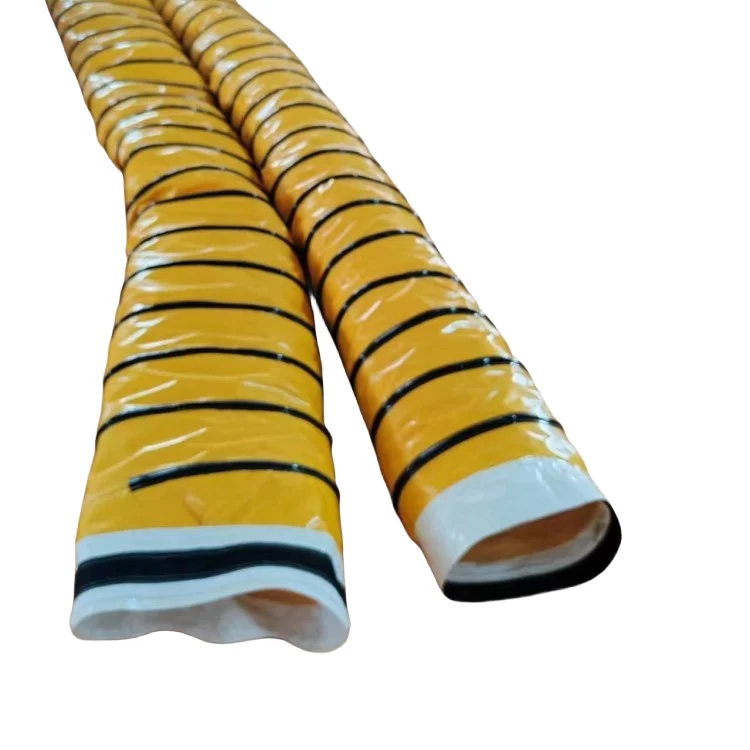
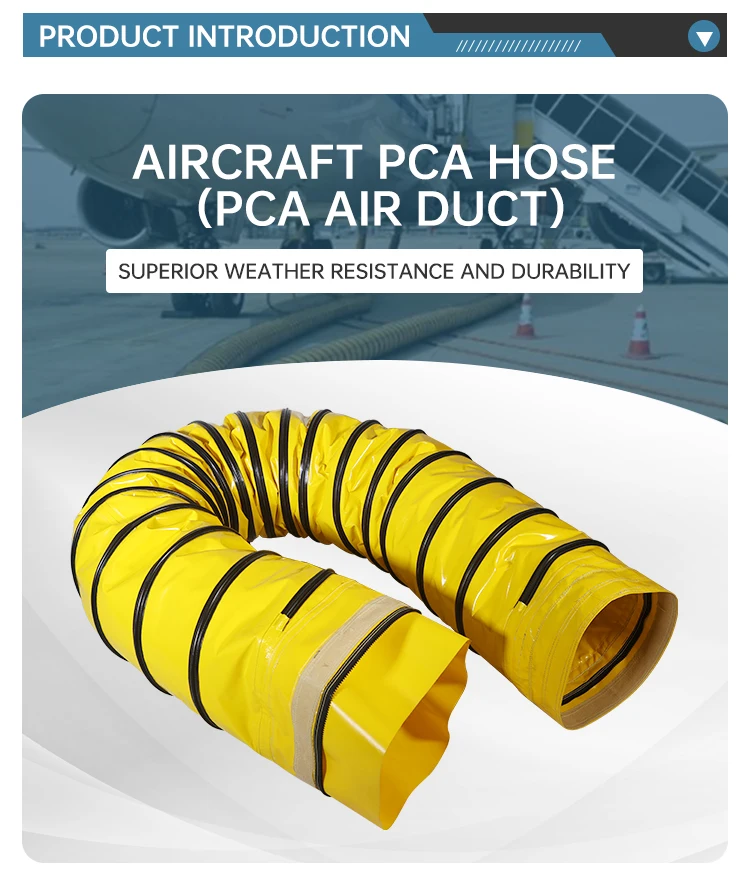
| Product Type | Aircraft PCA Hose (Pre-Conditioned Air Duct) |
| Diameter | 12 Inch |
| Material | PVC coated cloth with fabric-reinforced layer and aluminum foil insulation |
| Insulation Layer | Built-in aluminum foil bubble film |
| Temperature Range | -30°C to 150°C |
| Connection Method | Zipper and Velcro |
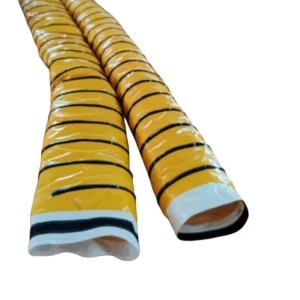
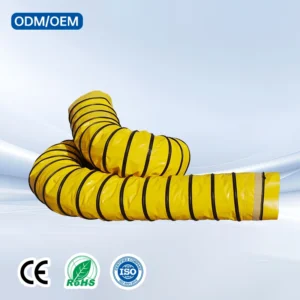
| Outer Layer Color | Yellow-black alternating (high visibility) |
| Net Weight | 21 kilogram |
| Customization MOQ | 100 units (Logo / Packaging / Pattern) |
| Flame Retardant | Available in flame retardant grades — confirm the grade required for your market |
| Anti-Static | Availability subject to confirmation — request test report for your compliance standard |
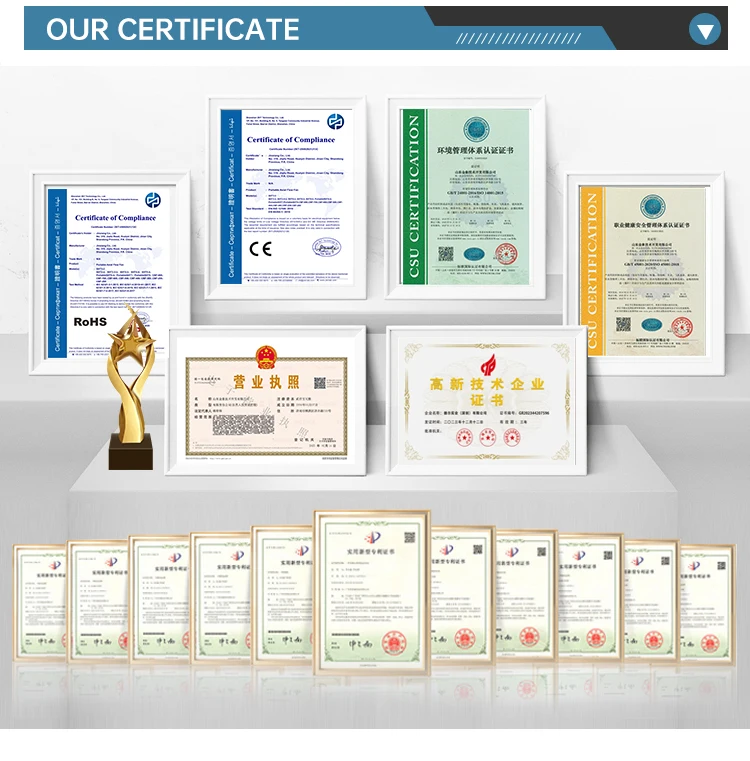
| Certifications | ISO, CE |
Application Suitability
| Application | Exposure & Requirement |
|---|---|
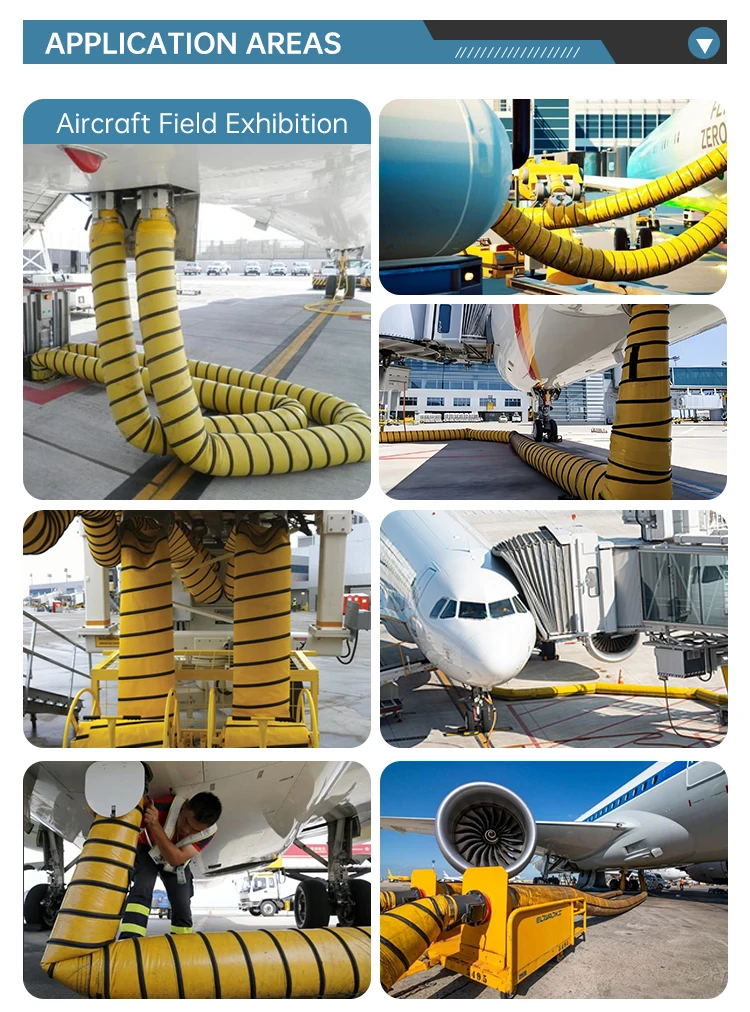
| Airport apron PCA ground cooling | Constant outdoor weather exposure, jet blast proximity, rapid temperature cycling between PCA unit output and ambient air |
| Aircraft cabin pre-conditioned air supply | Thermal retention across flexible duct length, repeated connection and disconnection cycles, high-visibility safety marking on active aprons |
| Aviation maintenance hangar temporary ventilation | Extended deployment in enclosed spaces, compliance with hangar fire safety requirements, resistance to hydraulic fluid and solvent splash |
| Fixed-base operator ground air systems | Frequent handling and storage between aircraft turnarounds, abrasion from concrete apron contact, UV exposure during summer operations |
What Happens When Aviation Duct Lacks Verified Fire Certification
An aviation air duct without documented flame retardant and anti-static test results cannot clear apron safety audits — regardless of the supplier’s verbal claims.
Ground support equipment procurement teams regularly encounter flexible ducting that arrives on site without the fire-retardant or anti-static certification the airport authority requires. The duct may perform adequately in thermal insulation, but without paperwork matching the specific aviation ground support standard enforced at your airport, the entire PCA system fails compliance inspection. Delays cascade: aircraft wait on the apron without cabin conditioning, ground crews scramble for replacement ducting, and the purchasing department faces an urgent reorder under compressed timelines. [NEED_CITE: airport ground support equipment fire safety compliance standards for flexible ventilation ducting]
Thermal Insulation Performance Across Extreme Apron Conditions
The aluminum foil bubble film insulation layer built into this Aircraft PCA Hose (Pre-Conditioned Air Duct) maintains thermal separation between the conditioned air stream and ambient apron temperatures. Pre-conditioned air exits the PCA unit at controlled temperatures, but without adequate insulation along the duct run, significant thermal loss occurs before the air reaches the aircraft cabin interface. The PVC coated cloth outer construction resists moisture ingress from rain and de-icing fluid splash, protecting the insulation layer from degradation during repeated outdoor deployments. This construction approach keeps the duct flexible enough for ground crews to maneuver around ground power units and baggage carts on congested aprons.
Rapid Deployment and Connection Integrity on Active Aprons
The zipper and Velcro connection system allows ground handling crews to attach and detach the Aircraft PCA Hose (Pre-Conditioned Air Duct) from PCA unit outlets and aircraft cabin interfaces without specialized tools. On busy aprons where turnaround time directly affects airline scheduling, connection speed matters. [NEED_CITE: aircraft turnaround time impact on ground support equipment design requirements] The yellow-black alternating outer coloring provides high visibility against concrete aprons and painted ground markings, reducing the risk of vehicle contact during taxi operations. Between deployments, the duct folds down for compact storage in ground support equipment bays or mobile storage containers.
Reading the Specifications for Procurement Decisions
The 12-inch diameter matches standard PCA unit outlet configurations used across many narrow-body and wide-body aircraft ground air supply interfaces, but confirming your specific aircraft type and PCA unit model before ordering prevents interface mismatch. The -30°C to 150°C temperature range covers conditioned air delivery in both extreme winter and summer apron environments, though the actual performance envelope depends on air flow velocity and duct run length. PVC coated cloth with fabric reinforcement provides the structural backbone — the coating weight and base fabric denier together determine how well the duct resists collapse under negative pressure and abrasion from apron contact. The aluminum foil bubble film insulation layer handles thermal retention independently of the outer structural layer, meaning insulation performance does not degrade if the outer PVC surface sustains minor scuffs during handling.
The Hidden Cost of Underspecified Aviation Ducting
Procurement decisions based solely on diameter and length, without verifying insulation integrity and fire compliance documentation, lead to costly operational failures on the apron. Ducts that lack verified flame retardant certification get rejected during airport authority safety audits, forcing emergency replacement orders that disrupt ground support schedules. Insulation layers compressed during shipping or storage lose thermal efficiency, causing cabin conditioning complaints from flight crews and passengers. [NEED_CITE: flexible duct insulation compression damage during transport and storage] Connection systems that do not match existing PCA unit flanges require improvised adapters that create air leakage points, reducing the volume of conditioned air reaching the aircraft cabin.
Why Volume Buyers Source Aviation Duct Through This Channel
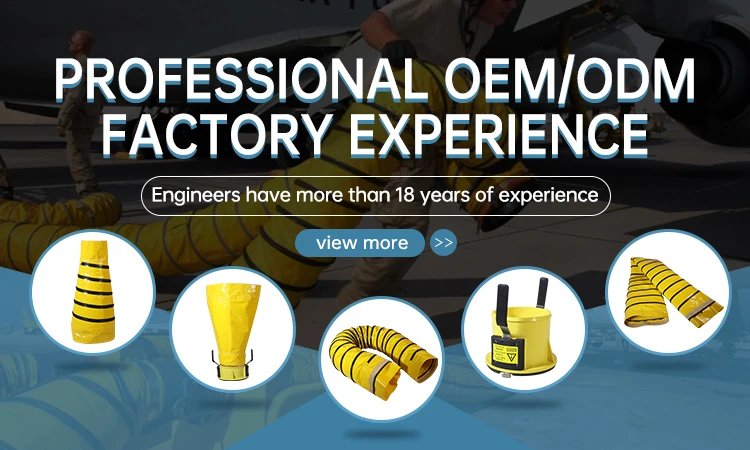
Three full production lines with 36 sets of professional equipment support container-volume orders of aviation air duct with consistent on-time delivery across production runs. A 10-person R&D team handles diameter adjustments, connection system modifications, and custom branding layouts for airline or ground handler logo requirements. Dedicated QA/QC inspection at every production stage catches coating adhesion failures, insulation layer compression defects, and zipper mechanism malfunctions before the duct leaves the factory. Samples for custom diameter or length configurations are developed within days, allowing procurement teams to validate fitment before committing to full production quantities. Each roll of PVC coated fabric entering production is verified for GSM consistency, ensuring that duct wall thickness and structural performance remain uniform across the order. [NEED_CITE: coated fabric GSM verification methods during production quality control]
Documentation & Verification
- Material specification sheet confirming PVC coating weight, base fabric construction, and aluminum foil insulation layer details for each batch
- Flame retardant test report matched to the aviation ground support standard specified in your purchase order
- Anti-static test results provided where airport authority compliance requires documented electrostatic discharge performance
- ISO and CE certificates included in shipment documentation for customs and receiving inspection
- Pre-shipment inspection record covering diameter tolerance, zipper function, Velcro adhesion, and insulation integrity
- Certificate of origin and customs support documentation prepared for cross-border ground support equipment procurement
Fabrication, Handling & Storage
- Zipper connection zones require reinforced backing fabric — confirm stitching pattern with production team before bulk order
- Velcro attachment strips should align with PCA unit flange geometry to prevent air leakage at connection points
- Store folded ducts in dry conditions to prevent moisture accumulation between PVC coated cloth layers
- Avoid stacking heavy equipment on stored ducts to prevent permanent compression of the aluminum foil bubble insulation
- Clean outer PVC surface with mild detergent — solvent-based cleaners may degrade the yellow-black coloring over repeated use
- Inspect zipper teeth and Velcro hooks after each deployment cycle for debris accumulation from apron grit
Requesting a Quotation for Your Ground Support Fleet
Provide your PCA unit model, aircraft types serviced, and typical duct run lengths so we can confirm diameter compatibility and recommend connection system configurations. Specify the fire safety and anti-static compliance standards enforced at your operating airports, as documentation requirements vary by aviation authority. Indicate whether you need standard yellow-black high-visibility coloring or custom color and logo printing for fleet identification — both options are available at MOQ 100 units.
Frequently Asked Questions
Q: What fire-retardant and anti-static certifications does this aviation duct carry for airport compliance?
A: The duct is available in flame retardant and anti-static grades, but the specific certification required depends on your airport authority’s ground support equipment standards. Provide your compliance requirement during inquiry, and we supply the matching test report and documentation with your shipment. Grades and test basis are confirmed before production begins.
Q: How do I confirm the correct duct diameter for my PCA unit and aircraft interface?
A: Measure the PCA unit outlet flange inner diameter and the aircraft cabin air connection interface. The standard 12-inch diameter fits many common ground air supply configurations, but we recommend sharing your PCA unit model and aircraft type so our R&D team verifies compatibility and adjusts the connection system if needed.
Q: How is temperature insulation performance verified across the operating range?
A: The aluminum foil bubble film insulation layer is tested for thermal retention within the -30°C to 150°C range. Request the insulation test report during the inquiry stage if your procurement process requires documented thermal performance data for ground support equipment acceptance.
Q: What is the MOQ for custom branding and pattern printing on aviation ducts?
A: Logo customization and pattern printing are both supported with a minimum order of 100 units. Provide your artwork files and color references during the sample development phase so the R&D team can confirm print placement and color accuracy on the PVC coated outer surface.
Q: How should the duct be stored to maximize service life between deployments?
A: Fold the duct loosely and store in a dry, shaded location away from direct UV exposure and chemical contact. Avoid placing heavy items on top of stored ducts, as sustained compression damages the aluminum foil bubble insulation layer and reduces thermal efficiency during subsequent use.