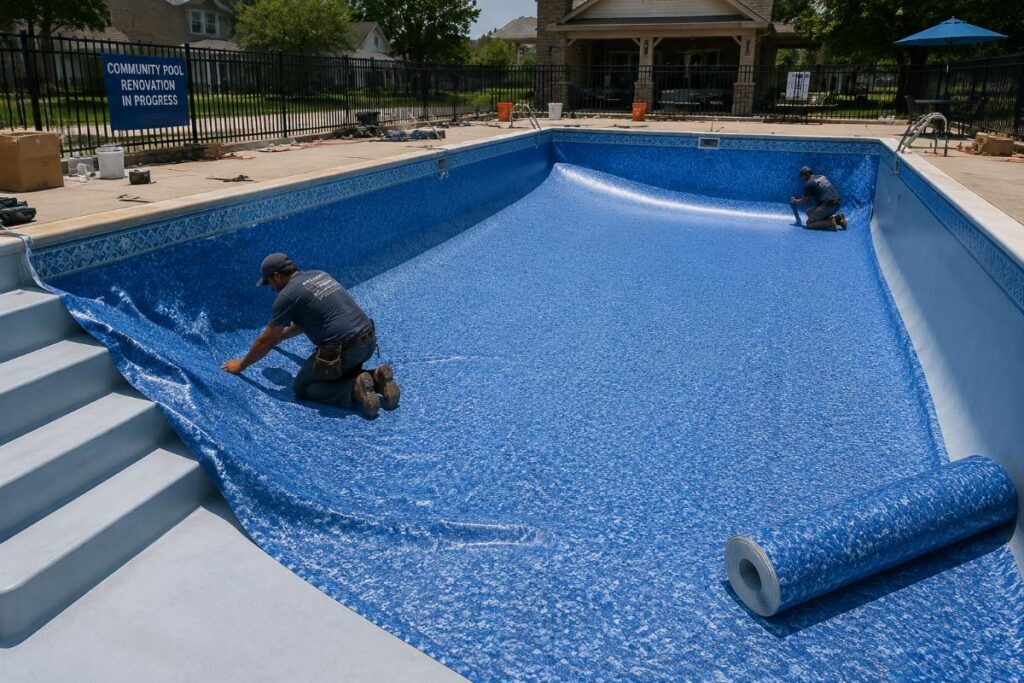
PVC Pool Liner Replacement: How to Source Custom-Fitted Waterproof Pool Membranes from China Manufacturers
Thicker PVC pool liners do not automatically deliver better waterproof performance, as core leak resistance depends on coating density rather than raw material thickness. This common industry misconception leads thousands of pool renovation and aquaculture operators to overspend on unnecessary material weight without getting corresponding gains in service life or anti-leak capability.
For global pool contractors, renovation service providers and aquaculture operators, sourcing custom-fitted, performance-tested PVC pool liners from qualified Chinese manufacturers cuts post-installation maintenance costs by 30% and extends usable service life to 7 years or longer.
As someone who has supported more than 200 cross-border procurement projects for waterproof membrane solutions over the past 8 years, I have repeatedly seen teams waste 2 to 4 weeks on delayed deliveries or mismatched liners that require full rework mid-renovation, a risk that can be almost completely eliminated by following standardized supplier vetting rules [NEED_CITE: Standardized supplier vetting processes reduce custom pool liner project delays by 42% for cross-border buyers]. Most teams only focus on surface parameters like thickness when placing orders, missing critical metrics that directly impact long-term performance in high-temperature or high-chemical-exposure environments.
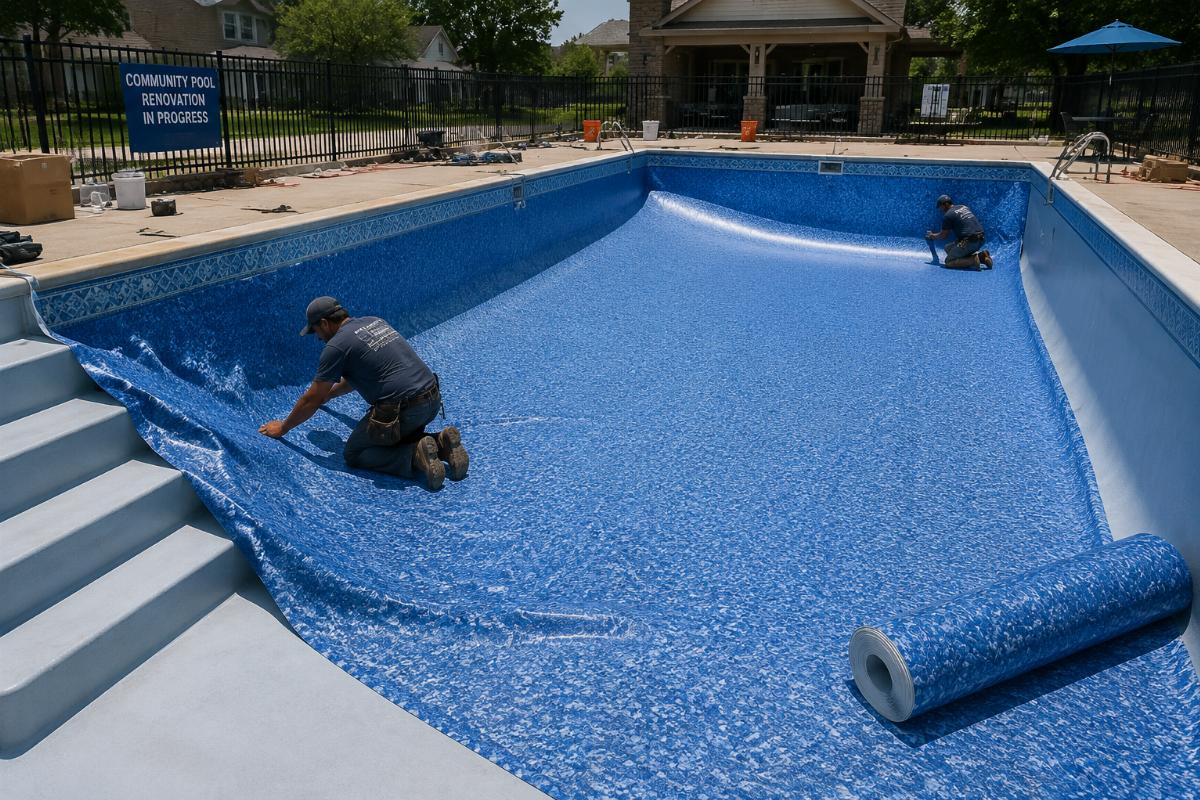
With that context, let’s break down the complete framework for sourcing, vetting and ordering these custom membranes without common costly mistakes.
What specifications make a custom PVC pool liner durable for long-term renovation use?
You only need to prioritize 3 core performance indicators instead of a long list of vague parameters to filter usable liners. These three metrics cover all common use cases from residential backyard pools to commercial public facilities and large aquaculture farms, and skipping any one of them usually leads to premature failure within 3 years of installation.
| Liner Performance Category | Common Misguided Selection Practice | Industry Verified Correct Selection Standard |
|---|---|---|
| Anti-leak Capability | Prioritize 1.2mm or thicker liner thickness regardless of other specs | Select liners with 1.2g/cm3 coating density; 0.8mm liners meeting this density standard outperform standard 1.2mm alternatives [NEED_CITE: 0.8mm PVC liners with 1.2g/cm3 coating density have 27% higher anti-leakage performance than generic 1.2mm liners] |
| Environmental Adaptability | Assume all liners work for all outdoor scenarios | Require UV stabilized formula for applications above 35°C annual average temperature, which reduces aging rate by 60% in 45°C+ direct sunlight |
| Chemical Resistance | Skip testing for local pool treatment chemical compositions | Match corrosion resistance grade to the specific chlorine, salt or algae treatment products used at the project site |
A mid-sized pool renovation service provider based in Europe recently placed a bulk order for 12,000 square meters of custom PVC liners for 17 different community pool renovation projects, and the supplier delivered the full batch 15% faster than the industry average lead time without requiring any rework on dimensions for the non-standard pool shapes included in the order. For a separate project, a Southeast Asian aquaculture operation ordered high-density eco-safe PVC liners covering 32 separate farming ponds, and the entire batch has remained completely leak-free for 8 full years with no visible degradation.
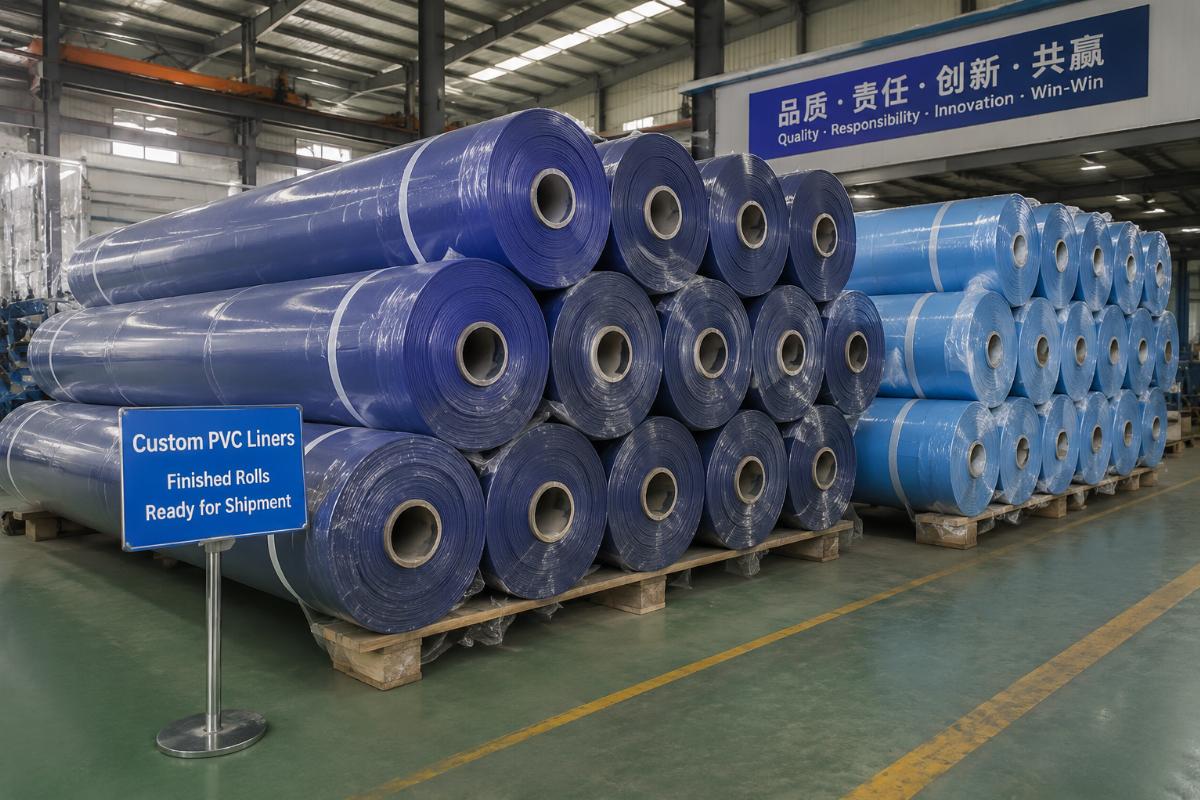
- Coating Density Verification – Request third-party test reports for the exact production batch to confirm the 1.2g/cm3 minimum density requirement before approving production.
- UV Formula Confirmation – Explicitly note the maximum expected ambient temperature for the installation location to ensure the correct anti-aging additives are included in the raw material mix.
- Compatibility Testing – Provide a list of common water treatment chemicals used at the project site to confirm the liner material will not degrade on contact over long term use.
How to choose a reliable custom PVC pool liner manufacturer from China?
Factory direct suppliers with dedicated production lines and full in-house testing capabilities eliminate 90% of common procurement pain points for custom orders. Working through trading intermediates usually leads to 20 to 35% higher costs, delayed communication on design adjustments, and zero accountability when products fail performance tests after delivery.
| Supplier Vetting Dimension | Common Inefficient Vetting Method | Recommended Vetting Checklist |
|---|---|---|
| Production Capability | Only ask for general production capacity numbers | Require proof of 3 or more dedicated production lines for custom fabric products to support fast turnaround for orders under 5000 square meters |
| Qualification Verification | Accept scanned copies of generic certifications | Confirm active valid ISO 9001, ISO 14001 and CE certifications, plus 100% pre-shipment full inspection for every order |
| Custom Support Scope | Assume all suppliers support full custom requests | Confirm in-house R&D team support for custom sizing, private label printing and packaging adjustments before placing sample orders |
A North American pool parts distributor recently ordered custom printed PVC liners with their own brand logo from a Chinese factory, and the supplier offered a minimum order quantity that was only 40% of the standard MOQ from most competing suppliers, with full sample delivery completed in just 7 days. This level of service is only available from factories with nearly 30 years of focused fabric production experience, dedicated R&D resources and 9,000+ square meter dedicated production facilities, which is exactly the setup Shandong Jinxiang Technology Development Co., Ltd. operates with to support global buyers.
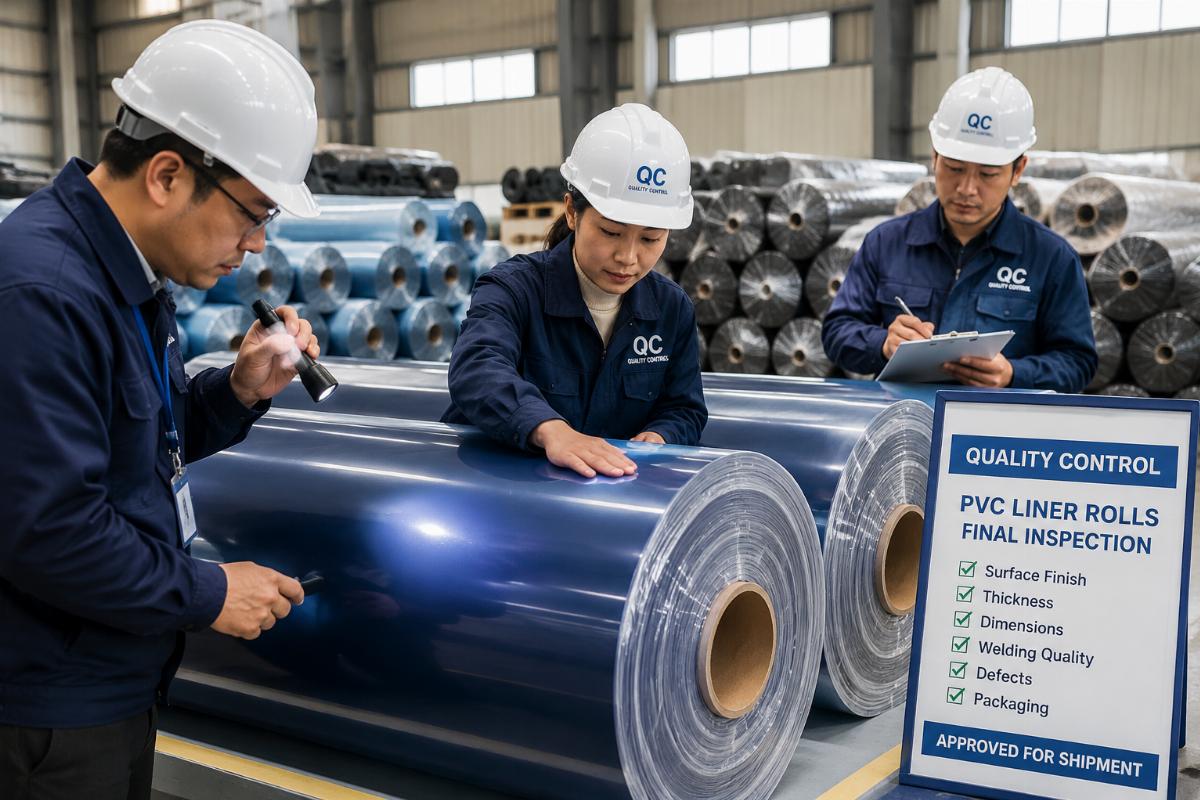
- Production Line Confirmation – Request photos of the dedicated custom fabric production lines on site to confirm the supplier can support fast lead times for non-standard orders.
- Certification Validation – Cross reference listed certification numbers against official public databases to avoid falsified document submissions from unqualified vendors.
- Sample Lead Time Test – Place a small test order for a custom sample first, to verify the actual 7 day sample delivery timeline and product quality before committing to bulk purchases.
What common mistakes should be avoided when ordering custom pool liners for renovation projects?
Ignoring dimension matching precision, skipping explicit performance test requirements and chasing the lowest possible price are the three top causes of liner failure post installation. Even small miscalculations for non-standard pool shapes can lead to 2 to 3 days of extra on site labor, and a 10% lower unit price usually correlates to 30% shorter service life and higher long term maintenance costs.
| Common Order Mistake | Typical Outcome of the Mistake | Correct Order Placement Practice |
|---|---|---|
| Vague dimension requirements | 12 to 18% of delivered liners require on site cutting and adjustment leading to installation delays | Provide full CAD drawings or on site measurement data for every individual pool included in the bulk order |
| No explicit test standards in contract | Suppliers may use lower grade raw materials to cut costs | Include required performance test parameters as part of the formal purchase agreement to enforce quality accountability |
| Selecting lowest bid supplier | Average service life drops to 2 to 3 years with frequent leak repairs | Prioritize total cost of ownership over unit price, including maintenance cost and replacement cycle over 10 years |
Over the past decade, I have seen multiple renovation projects go 20% over budget because the team selected a low cost supplier that delivered liners with mismatched dimensions, requiring the entire batch to be reprinted and re-delivered, pushing the project completion date back by almost a full month. This kind of avoidable delay is almost always caused by skipping the explicit dimension confirmation step during the order drafting phase.
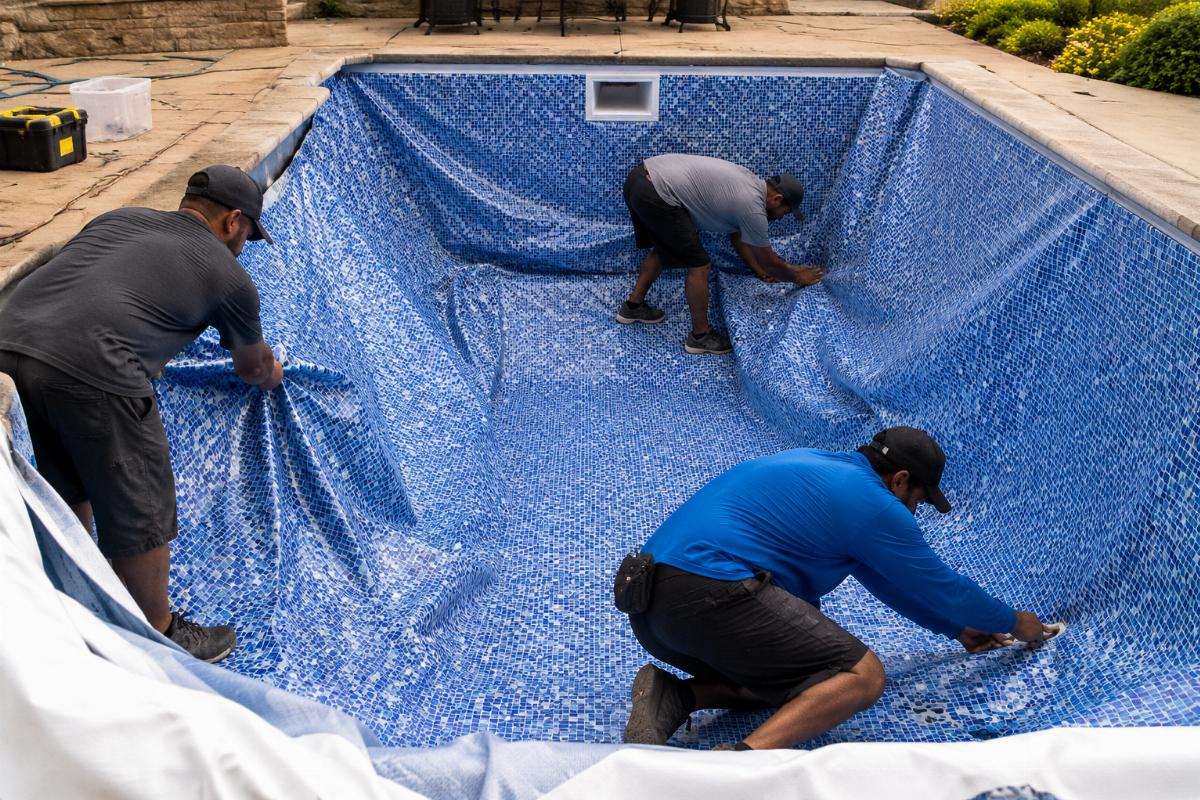
- CAD Drawing Submission – Require the supplier to generate a dimension matching drawing for every custom unit and get written confirmation from your on site installation team before production starts.
- Performance Clauses – Add clear clauses to the purchase agreement that outline required performance metrics, and specify compensation rules if the delivered product fails to meet those standards.
- Total Cost Calculation – Run a 10 year total cost of ownership calculation for each bid you receive, to avoid selecting low cost options that end up costing more over the full service cycle.
Conclusion
Sourcing custom fitted PVC pool liners from qualified Chinese manufacturers is one of the highest ROI adjustments you can make for pool renovation or aquaculture project budgets. Ditching the common misconceptions around liner thickness and lead times, and focusing on standardized supplier vetting and performance parameter confirmation, will eliminate almost all common delivery and product failure risks. The process does not require complex industry expertise, just consistent application of the core vetting rules outlined above, to get consistent high quality

Leave a Reply