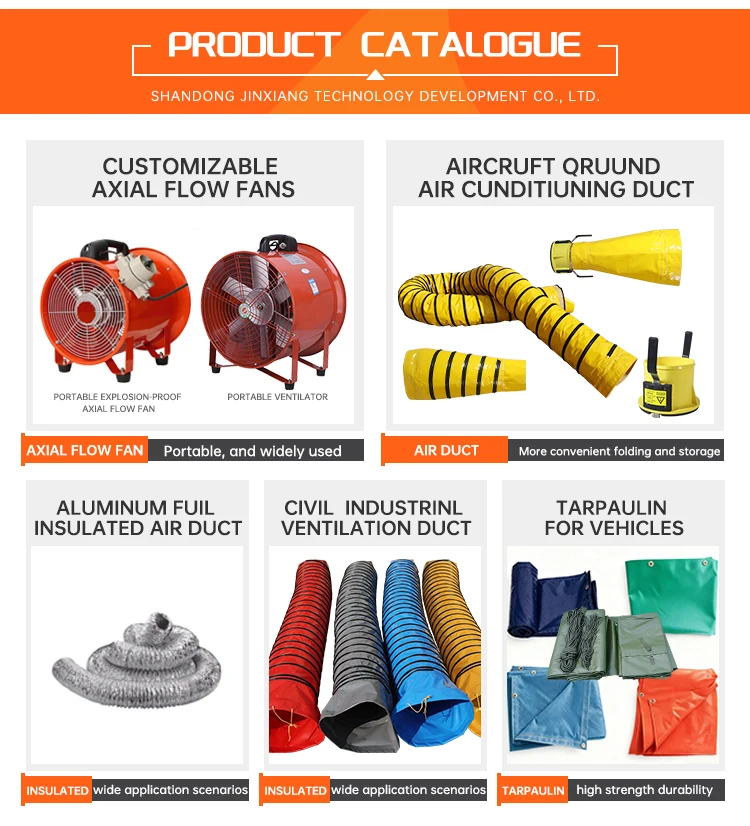

Description
Stock Grade Reliability — every axial flow fan and flexible duct hose in a bulk order undergoes 100% pre-shipment testing to confirm air volume and pressure match the quoted specification before container loading.
Technical Specifications
| Parameter | Value |
|---|---|
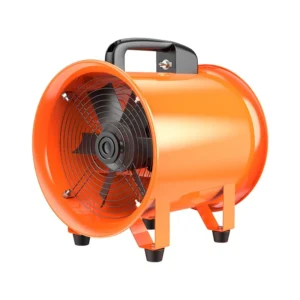
| Product Type | Axial Flow Fan |
| Size Options | 200mm / 250mm / 300mm / 350mm / 400mm / 450mm / 550mm / 650mm / 750mm / 850mm / 900mm |
| Power Range | 250W / 370W / 550W / 750W / 1100W / 2200W / 3000W / 4000W / 5500W |
| Air Volume | 1300 m³/h to 28000 m³/h (model dependent) |
| Total Pressure | 140 Pa to 320 Pa (model dependent) |
| Voltage | 220V / 380V |
| Noise Level | 57 dB(A) to 88 dB(A) (model dependent) |
| Speed | 3000 RPM |
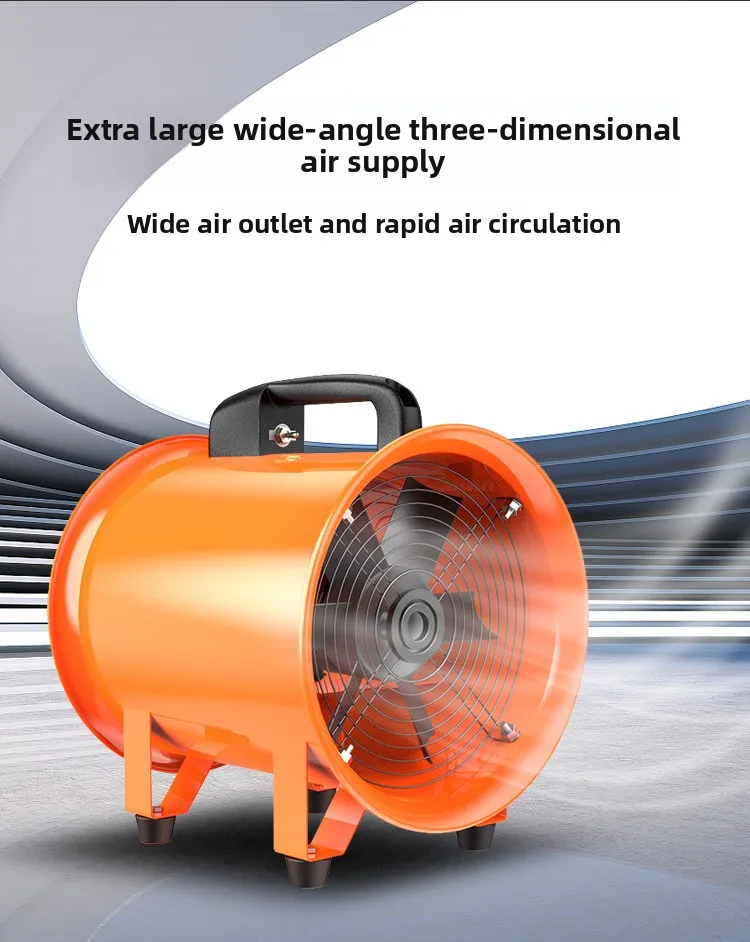
| Configuration | Portable / Handheld with Flexible Duct Hose accessory |
| Customisation | Brand printing and colour customisation available |
| Standards | ISO, CE |
Application Suitability
| Application | Exposure & Requirement |
|---|---|
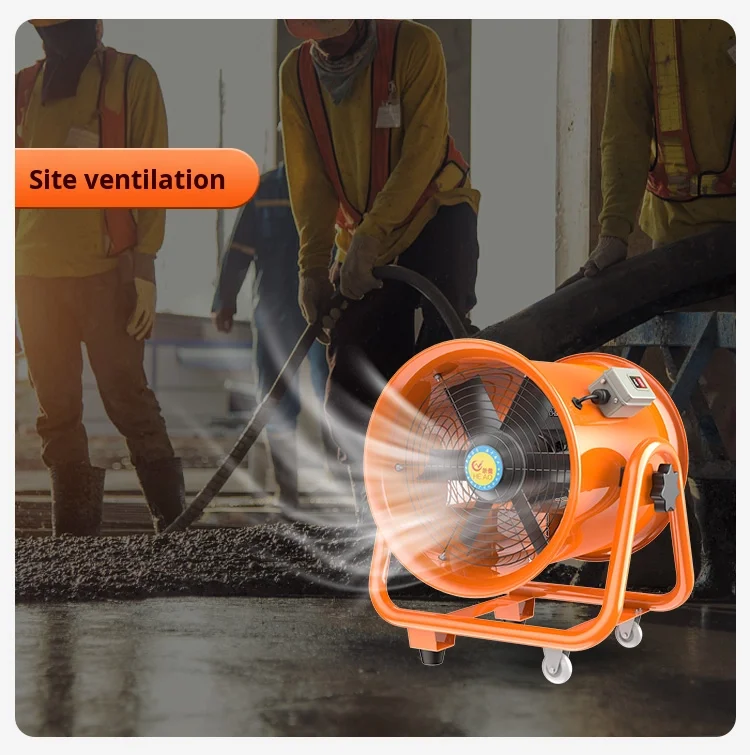
| Construction site confined spaces | Dust and fume extraction in trenches and enclosed formwork; portable fan must move quickly between work faces |
| Mining and tunnelling operations | Continuous exhaust of blasting fumes and particulate; duct routing around irregular tunnel profiles, fire-retardant and anti-static compliance required on site |
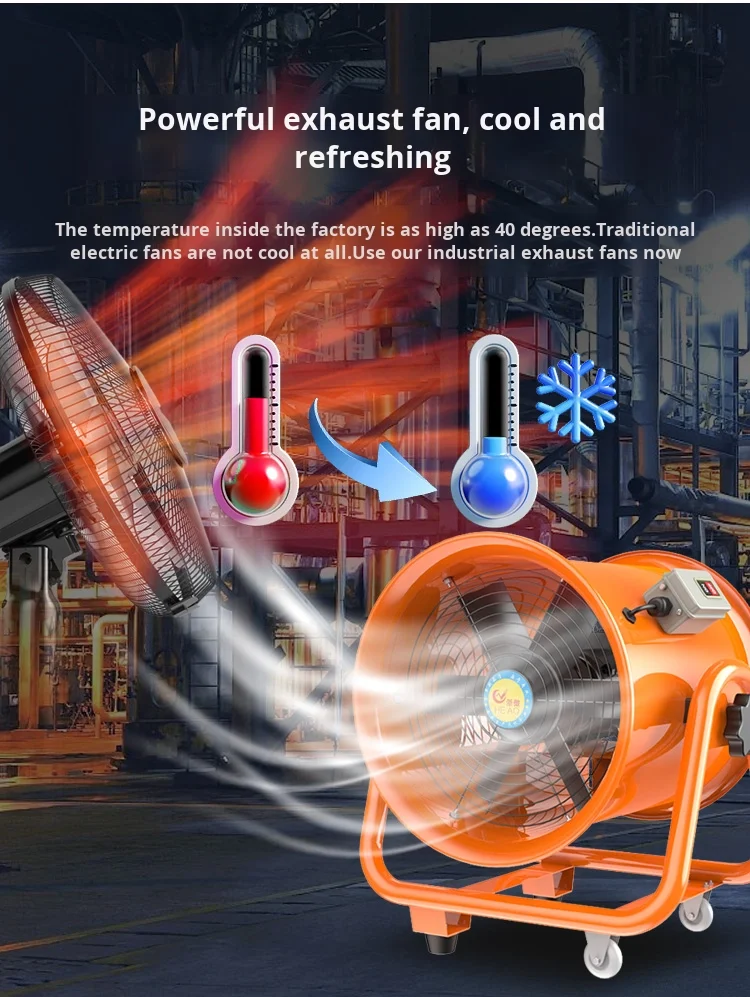
| Factory floor ventilation | Welding smoke and process dust capture; fan positioned near emission source with flexible duct routing to external exhaust |
| Warehouse and logistics loading bays | Diesel exhaust displacement during vehicle idling; intermittent deployment requiring quick setup and takedown |
Why Bulk-Ordered Ventilation Equipment Fails Site Safety Audits
An Industrial Axial Flow Fan wholesale order that arrives without consistent motor performance across units or missing compliance documentation creates an immediate problem for site safety managers preparing for regulatory inspection.
Documented air volume, pressure ratings, and valid CE certificates per unit are what pass audits — not the product listing on a quotation.
When procurement teams source ventilation equipment for multiple active sites, the common failure pattern is receiving a batch where motor output varies between units, or where the fire-retardant and anti-static certifications that were confirmed verbally never appear in the shipping documents. Site managers then face work stoppages while replacement documentation is chased, or worse, equipment is deployed in confined spaces without verified safety compliance [NEED_CITE: confined space ventilation requirements under occupational safety regulations]. The cost of a failed inspection extends beyond the equipment itself — it halts the entire work face until compliant ventilation is confirmed.
Matching Fan Diameter to Duct Infrastructure
Selecting the correct fan diameter from the available range of 200mm to 900mm depends on the existing duct hose diameter and the volume of the space being ventilated. A mismatch between fan outlet and duct inlet creates turbulence at the connection point, reducing effective airflow and accelerating wear on the duct collar. The Industrial Axial Flow Fan wholesale range covers incremental diameter steps so that buyers can match site-specific duct configurations rather than adapting with reducers that compromise static pressure.
Dual Voltage Deployment Across Site Power Configurations
Construction sites and mining operations frequently have mixed power infrastructure, with 220V single-phase available at surface facilities and 380V three-phase at heavy equipment distribution boards. Fans in this range support both voltage configurations, allowing procurement teams to standardise on a single equipment specification across different zones of a project. This reduces the risk of motors being connected to incorrect supply voltages, which is a recurring cause of premature winding failure in site ventilation fleets [NEED_CITE: motor failure causes in industrial ventilation equipment].
Understanding Air Volume and Pressure Ratings in Context
The stated air volume range of 1300 m³/h to 28000 m³/h and total pressure of 140 Pa to 320 Pa represent different models within the size range, not adjustable settings on a single unit. Higher air volume suits large open spaces where fume dilution is the goal, while higher static pressure is necessary when duct runs are long or include multiple bends that increase system resistance. Specifying a fan based on air volume alone without accounting for duct friction losses leads to underperformance once the system is installed and operating against real-world resistance. Noise levels between 57 dB(A) and 88 dB(A) correlate with motor power and impeller speed — units at the higher end of the range require hearing protection zones to be established around the fan installation point.
The Hidden Cost of Inconsistent Performance Across a Bulk Shipment
When a container-load order of portable ventilation fans arrives and individual units deliver varying airflow output, the problem typically surfaces only after deployment across multiple work faces. Site supervisors notice that some areas clear fumes within acceptable timeframes while others do not, leading to ad-hoc equipment swaps and duplicated ventilation setups. The root cause is often insufficient pre-shipment testing where units are sampled rather than individually verified. In mining and tunnelling applications, this inconsistency can trigger regulatory non-conformity findings during planned inspections, forcing entire ventilation sections offline until each unit is independently tested and documented [NEED_CITE: batch testing requirements for mine ventilation equipment].
Procurement Verification That Protects Project Timelines
The capability to produce three full production lines with 36 sets of professional equipment supports bulk volume output with maintained lead time reliability. Each fan in a wholesale order receives individual pre-shipment inspection against the quoted air volume and pressure specification, not batch sampling. A 10-person R&D team handles custom brand printing and colour requirements, developing samples within days so that buyers can confirm visual and physical attributes before committing the full production run. The same quality process that governs coated fabric production — dedicated QA/QC at every production stage — extends to ventilation equipment assembly, ensuring motor winding consistency and impeller balance across the order.
Documentation & Verification
- Material specification sheet stating model size, motor power, voltage configuration, and rated air volume
- CE certificate documentation supporting site safety compliance and regulatory audit submissions
- Pre-shipment inspection record confirming individual unit testing for air volume and total pressure
- Packing list detailing unit count, model breakdown, and container loading configuration per shipment
- Test report for fire-retardant and anti-static duct hose where applicable to site requirements
- Certificate of origin for customs clearance in destination market
Fabrication, Handling & Storage
- Connect flexible duct hose to fan outlet using manufacturer-specified clamps to prevent disconnection under full static pressure
- Store portable fans upright on pallets to prevent impeller shaft loading during extended warehouse holding
- Route flexible duct hose with bend radii exceeding the minimum specified to maintain rated air volume delivery
- Verify voltage selector setting matches site supply before energising any 220V/380V dual-configured unit
- Inspect flexible duct hose for punctures and seam separation before each deployment in confined space applications
- Clean fan impeller and housing with non-corrosive agents compatible with the motor enclosure rating
What to Include in Your Ventilation Equipment Enquiry
Provide the workspace dimensions, duct run length, and number of bends in your planned configuration so that the correct model size and air volume rating can be confirmed against your system resistance. Specify whether fire-retardant or anti-static certification is required for your site, and indicate the voltage available at the intended installation points. If brand printing or colour customisation is needed across the order, supply artwork files and Pantone references with your initial enquiry to enable sample development before production commitment.
Frequently Asked Questions
Q: How is air volume and pressure verified before shipment for bulk orders?
A: Every individual unit undergoes testing against the specified air volume and total pressure rating before packing. This is a 100% inspection process, not batch sampling, so each fan in your wholesale order has a documented performance record included in the pre-shipment inspection file.
Q: What certifications are provided to meet mining and construction safety regulations?
A: CE certificates are supplied with each shipment. Where fire-retardant or anti-static flexible duct hose is specified, the relevant test reports confirming compliance are included in the documentation package for your site safety officer’s review.
Q: What are the container loading options for flexible duct hoses and fans?
A: Container loading is calculated based on the specific model sizes and quantities in your order. A detailed packing list with unit count, model breakdown, and total weight is provided before dispatch so that you can plan receiving and warehouse allocation.
Q: How do you ensure consistency in motor performance across multiple units?
A: Motor winding and impeller assembly follow controlled production processes with in-process quality checks. Combined with individual pre-shipment performance testing, this ensures that every unit in your order delivers consistent air volume and pressure output.
Q: Can I order fans separately from the flexible duct hose?
A: Fans and flexible duct hose can be ordered as individual items or as complete ventilation sets. Specify your requirement at enquiry stage so that the quotation reflects your preferred configuration and container loading is optimised accordingly.