Description
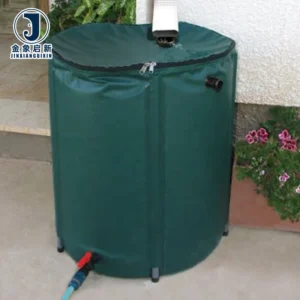
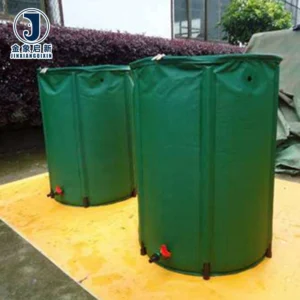
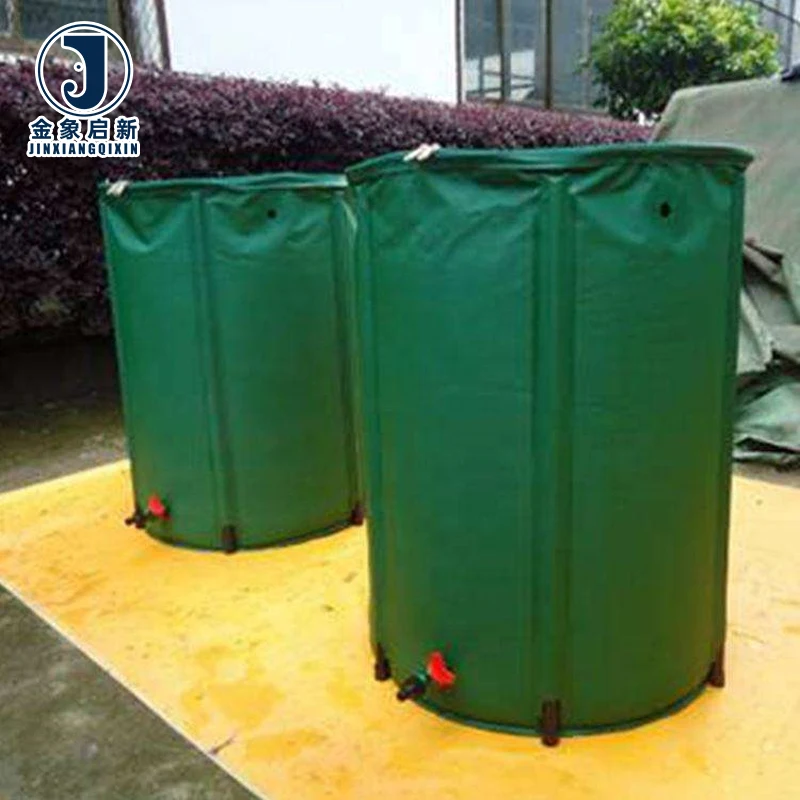
Capacity-Verified Water Storage — every collapsible barrel is measured for volume, seam integrity and fabric weight before packing, matching the bulk order spec from the first unit to the last.
Technical Specifications
| Parameter | Value |
|---|---|
| Product Type | Rain Water Tank |
| Capacity Options | 200L / 380L / 500L / 750L |
| Base Fabric | PVC mesh cloth, 500D or 1000D denier |
| Coating | PVC |
| Support Structure | PVC support rod frame |
| Waterproof | Yes |
| UV Treatment | Anti-UV (confirm test basis for your market) |
| Flame Retardant | Available in flame retardant grades — confirm the grade required for your market |
| Anti-Static | Available — confirm standard required for your market |
| Anti-Mildew | Yes |
| Abrasion-Resistant | Yes |
| Tear-Resistant | Yes |
| Anti-Bacteria | Yes |
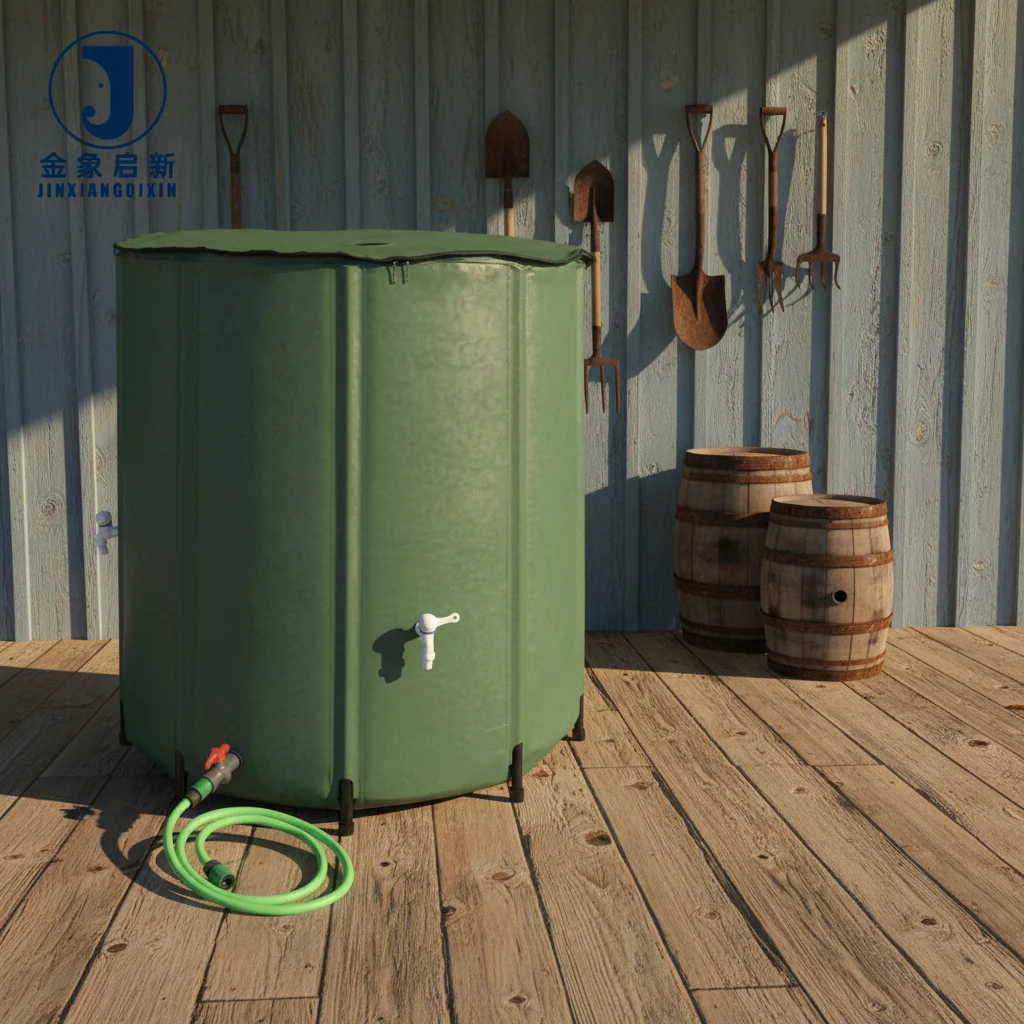
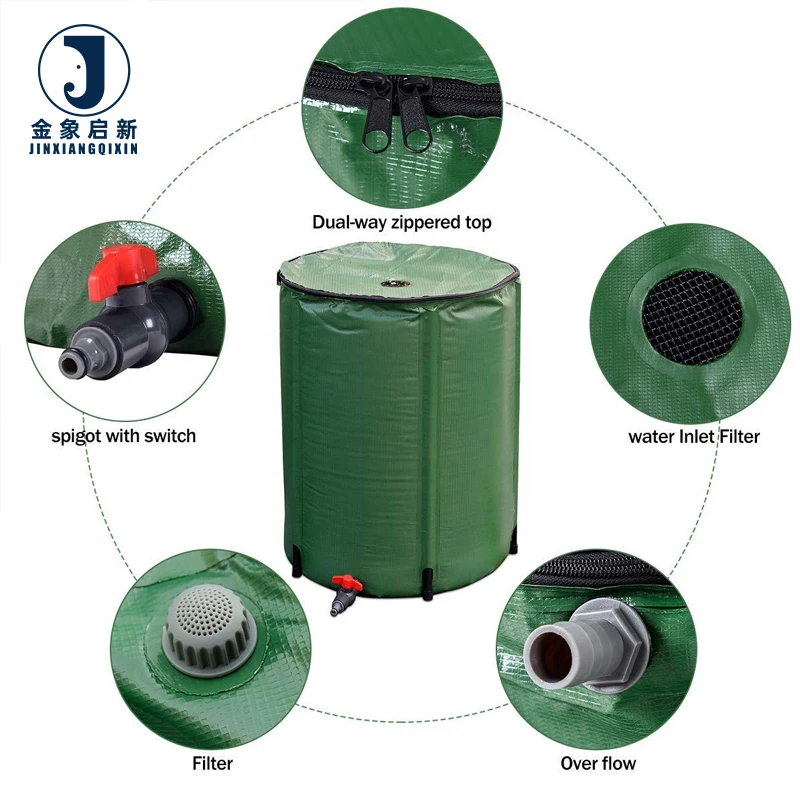
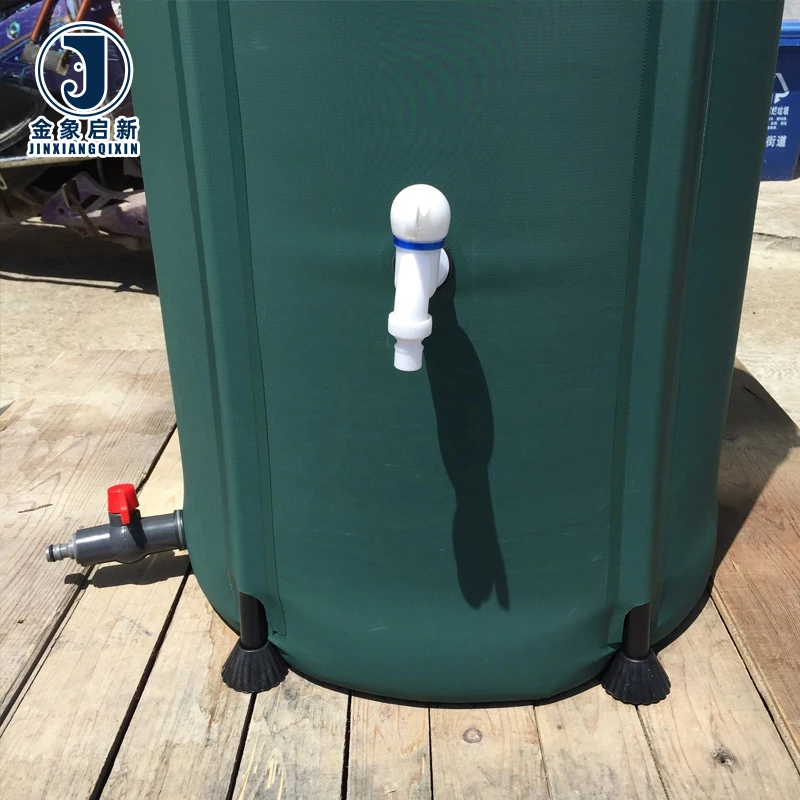
| Assembly | Freestanding with support rods, collapsible for storage |
Application Suitability
| Application | Exposure & Requirement |
|---|---|
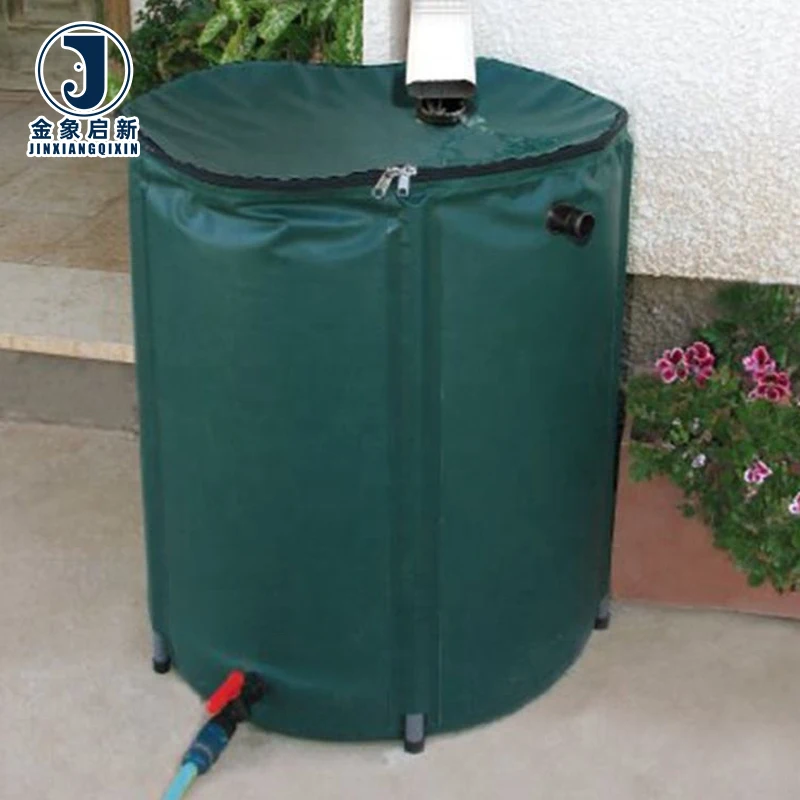
| Garden rainwater harvesting | Seasonal UV exposure, repeated fill-and-drain cycles, algae and mildew risk |
| Agricultural irrigation buffer | Continuous outdoor placement, dust and soil contact, high-capacity demand |
| Industrial non-potable water storage | Chemical splash risk, forklift and foot traffic nearby, flat-fold off-season storage |
| Residential sustainable water management | Visible placement near buildings, colour consistency across multiple units, easy collapse for winter |
Why Material Consistency Across a Bulk Order of Collapsible Rain Water Barrels Matters More Than You Think
Colour or fabric weight drifting between units in the same shipment is a distributor’s nightmare once barrels sit side by side on a retail shelf.
Buyers who source collapsible PVC rain barrels in volume often discover after unpacking that some units feel noticeably lighter or show a shade difference against others. This is not a cosmetic complaint — it signals inconsistent coating weight or base fabric tension across the production run. When a garden centre or agricultural supplier receives a container of barrels that do not match, the entire batch faces return risk. [NEED_CITE: coating weight variation and its effect on tensile performance in PVC tarpaulin products]
Roll-to-Roll Fabric Quality and What It Means for Barrel Production
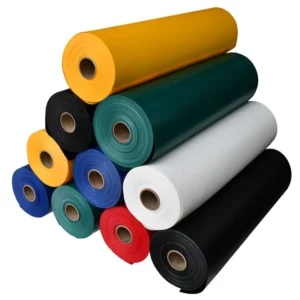
Each collapsible rain water barrel starts as a section cut from a coated fabric roll. If the PVC coating weight or mesh denier varies between rolls, the finished barrels will differ in stiffness, weld strength and long-term water retention. Our production process ties every barrel order to a defined fabric batch, so the 500D or 1000D base cloth specified on the quotation is the same cloth that arrives at your warehouse.
Heat-Welded Seams Built for Repeated Water Load Cycles
The seams on a collapsible water storage barrel flex every time the unit fills and empties. Heat-welded joints, consistent with our coated-fabric welding process, fuse the PVC coating layers rather than relying on thread alone. This approach reduces the risk of seam failure at the base and sidewall junction where hydrostatic pressure concentrates. [NEED_CITE: heat welding versus stitched seams in flexible liquid containment]
Denier Selection and Its Real-World Impact on Barrel Durability
The 500D option suits lighter-duty garden and residential use where barrels are moved or collapsed seasonally. The 1000D variant provides a heavier base fabric for agricultural or industrial sites where the barrel stays in place under full load for extended periods and may encounter ground abrasion or accidental impact. Choosing the right denier directly affects tear resistance and the barrel’s ability to hold shape when filled to capacity. Neither grade should be judged on denier alone — the PVC coating weight applied over the mesh determines how well the fabric resists puncture and water penetration together.
Specification Mismatch and the Hidden Cost of Wrong Fabric Choices
Ordering barrels in a denier too light for the intended environment leads to early sidewall sagging, especially in larger capacities like the 500L and 750L units where lateral pressure on the lower seams is greatest. Equally, specifying anti-UV treatment without confirming the test basis can result in surface chalking and stiffness loss after one season of direct sunlight. When flame retardant or anti-static properties are required by site regulations but not backed by documentation, barrels may fail inspection and require full replacement. These are not theoretical risks — they are the most common reasons bulk orders underperform within the first year. [NEED_CITE: field failure modes in flexible PVC water storage vessels]
Why Sourcing Collapsible PVC Rain Water Barrel Wholesale from a Coated-Fabric Manufacturer Changes the Conversation
Nearly three decades of PVC coating experience means the fabric used for these barrels is produced on the same lines as our industrial tarpaulins — not outsourced from a generic roll trader. Three full production lines and 36 sets of professional equipment support bulk barrel orders without compressing lead times for other product commitments. The 10-person R&D team handles capacity-specific pattern cutting, support rod configuration and custom sizing when standard dimensions do not fit your distribution model. Dedicated QA at every stage ensures the denier, coating weight and weld integrity of each barrel match the batch specification. Pre-shipment inspection covers every unit — not a sampling — before any container leaves the facility.
Documentation & Verification
- Material specification sheet listing base fabric denier, PVC coating type and treatment options per barrel order
- Pre-shipment inspection record covering unit count, seam check and capacity verification before dispatch
- Roll packing list detailing barrel capacity breakdown and unit count per container
- UV and flame retardant test reports where applicable to the specified grade
- Certificate of origin and export documentation for international shipments
Fabrication, Handling & Storage
- Heat-weld seams at manufacturer-recommended temperature to match the PVC coating thickness on each denier grade
- Insert PVC support rods fully before first fill to prevent sidewall creasing under water load
- Collapse barrels only when dry to avoid trapping moisture and mildew between PVC layers
- Store folded units flat and avoid stacking heavy items on top to prevent permanent crease marks
- Clean with mild detergent only — solvent-based cleaners can soften the PVC coating and reduce waterproof integrity
- Patch small punctures with compatible PVC repair adhesive applied to the coated surface, not the bare mesh side
Requesting a Quote — What We Need from You
Provide the intended capacity range, whether 500D or 1000D fabric suits your end-use environment, and any specific treatment requirements such as flame retardant or anti-static grades needed for your market. If you are a distributor, share your container volume target so we can calculate mixed-capacity loading. Sample development is available for approval before production begins.
Frequently Asked Questions
Q: What is the difference between 500D and 1000D base fabric for a rain barrel?
A: The 500D mesh cloth provides a lighter, more flexible barrel suited to garden and seasonal use where collapse and portability matter. The 1000D variant offers a heavier weave for agricultural or industrial placement where the barrel remains filled for longer periods and may face ground abrasion. Both are PVC-coated for waterproof performance.
Q: How is the PVC fabric weight verified on each batch of barrels before shipment?
A: Our QA process includes fabric weight checks at the coating stage and again during pre-shipment inspection. Every barrel in the order is inspected — not a random sample — ensuring the denier and coating applied match the material specification sheet accompanying your shipment.
Q: What capacity options are available and how does container loading scale by size?
A: Standard capacities are 200L, 380L, 500L and 750L. Smaller units like the 200L barrel allow higher unit counts per container, while 750L units occupy more volume. Mixed-capacity orders can share a single container, and we provide a packing list with unit breakdown before dispatch.
Q: How do you ensure colour and material consistency across a bulk order?
A: All barrels in a single order are cut from fabric produced in the same batch, avoiding roll-to-roll shade variation. In-process QA monitors coating colour and weight throughout production, and pre-shipment inspection confirms visual and physical consistency across the full order quantity.
Q: Are UV and flame-retardant test reports available for the fabric used in the barrels?
A: Test reports are provided where the specified grade has an established test basis. We recommend confirming the UV or flame-retardant standard required in your destination market at the inquiry stage so the correct treatment and documentation can be matched to your order.