Description
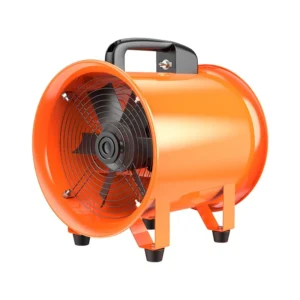
Bulk-Ready Axial Fans — Consistent specifications verified across every production batch before dispatch, supporting mixed-size container loads for large ventilation projects.
Technical Specifications
| Parameter | Value |
|---|---|
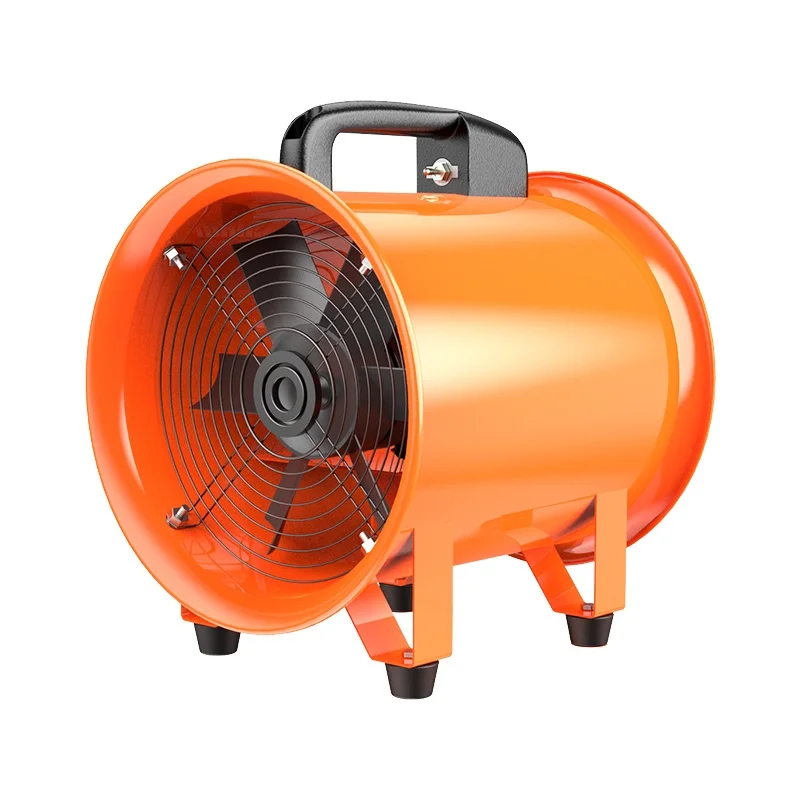
| Product Type | Axial Flow Exhaust Fan |
| Size Options | 200mm / 250mm / 300mm / 350mm / 400mm / 450mm / 550mm / 650mm / 750mm / 850mm / 900mm |
| Power Range | 250W to 5500W |
| Air Volume Range | 1300 to 28000 m³/h |
| Total Pressure Range | 140 to 320 Pa |
| Voltage | 220V / 380V |
| Noise Level Range | 57 to 88 dB(A) |
| Bearing Type | Ball Bearing |
| Housing Material | Cast Iron |
| Customization | ODM Available |
Application Suitability
| Application | Exposure & Requirement |
|---|---|
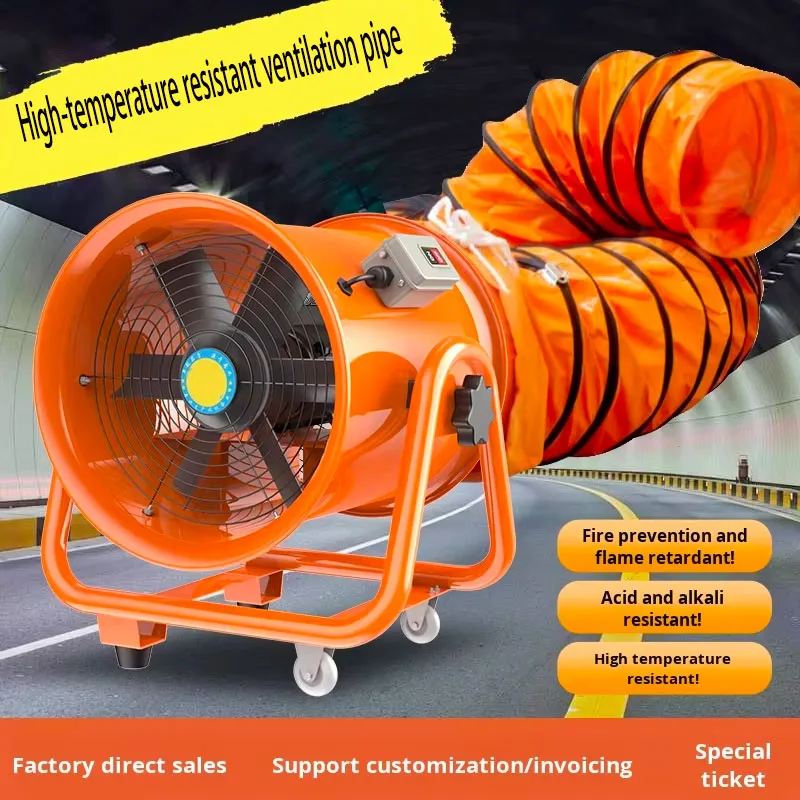
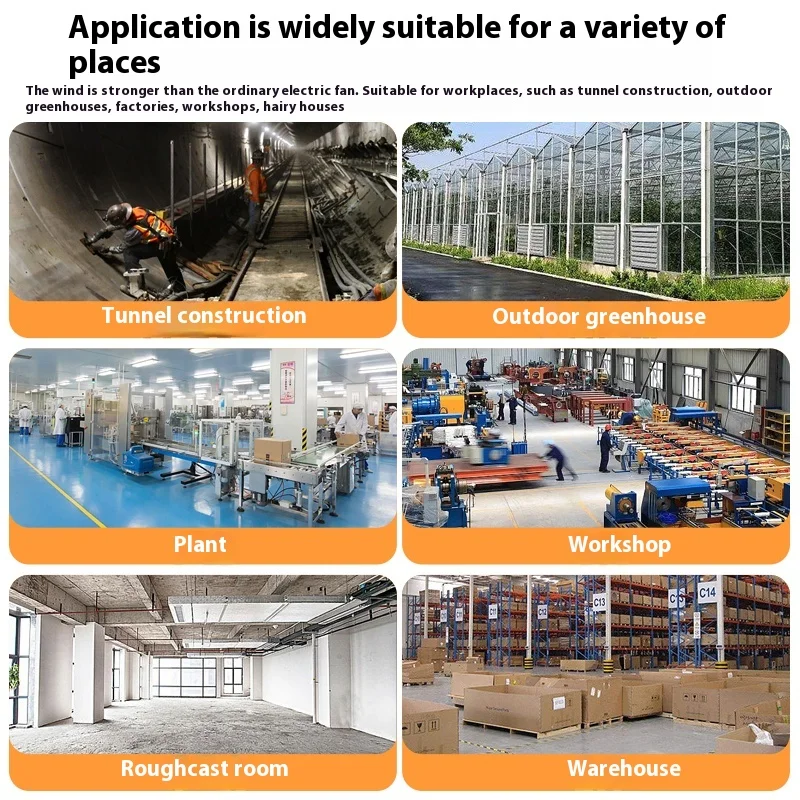
| Mining and tunnelling ventilation | Continuous operation in confined underground shafts, high dust load, sustained airflow demand through long duct runs |
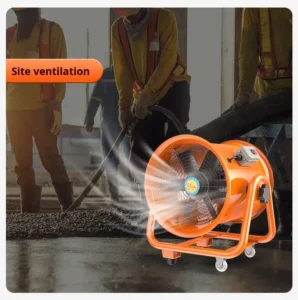
| Construction site confined space exhaust | Intermittent heavy use, exposure to particulate and moisture, portability between work zones |
| Workshop and warehouse air circulation | Extended duty cycles, ambient temperature variation, worker noise comfort thresholds |
| Manufacturing facility exhaust | Fume and particulate extraction, integration with existing ductwork, voltage compatibility with plant supply |
Why Air Volume Alone Does Not Guarantee Effective Ventilation
Matching fan output to duct diameter, length, and resistance determines whether airflow actually reaches the work face.
Procurement teams often select an Axial Flow Exhaust Fan wholesale based solely on the stated m³/h figure, only to find that pressure drops across long duct runs leave the far end under-ventilated. Total pressure and air volume must be evaluated together against the specific duct configuration on site. A fan producing high volume at low pressure will struggle to push air through a 50-metre duct with multiple bends, while a higher-pressure unit of similar size maintains adequate flow at the delivery point. [NEED_CITE: relationship between total pressure, duct resistance, and effective airflow delivery in portable ventilation systems]
Sizing Across the Full Range for Project Coverage
Eleven size options from 200mm to 900mm allow buyers to source a Portable Ventilation Blower bulk order covering every ventilation point on a project from a single supplier. Smaller units at 200mm and 250mm serve localised exhaust duties in tight enclosures, while the 750mm to 900mm range delivers the volume needed for main-line ventilation in tunnelling or large-scale mining operations. This spread eliminates the need to coordinate multiple equipment suppliers for a single site.
Dual Voltage Compatibility for Site Flexibility
The 220V and 380V options address the reality that construction and mining sites frequently have mixed electrical infrastructure. Smaller models running on 220V single-phase connect to standard site power without requiring dedicated three-phase supply, while larger units above 550mm typically draw on 380V three-phase for sustained heavy-duty operation. Confirming voltage availability at each installation point before ordering prevents commissioning delays once the Portable Ventilation Blower bulk shipment arrives. [NEED_CITE: three-phase versus single-phase supply availability on temporary construction and mining sites]
Interpreting the Specification Table for Procurement Decisions
Air volume and total pressure form the critical pairing: the 1300 to 28000 m³/h range covers applications from small workshop exhaust to main-line tunnel ventilation, but each size delivers its rated volume only against its corresponding total pressure of 140 to 320 Pa. Power consumption scales with size, from 250W at the smallest unit to 5500W at the largest, which directly affects generator sizing for off-grid sites. The cast iron housing provides mass for vibration dampening, reducing transmitted noise and structural fatigue at mounting points. Ball bearing construction supports continuous duty operation, whereas sleeve bearings would require more frequent replacement under sustained industrial use. Noise levels spanning 57 to 88 dB(A) mean the smaller units can operate near occupied work areas while larger models require positioning away from personnel or installation of acoustic attenuation.
The Cost of Underspecifying Pressure Requirements
Selecting a fan based on air volume while ignoring total pressure leads to inadequate airflow at the duct outlet, forcing contractors to add supplementary units mid-project at urgent-notice pricing. Noise levels underestimated at the ordering stage trigger worker complaints and may breach site occupational health limits, requiring retrofitted silencers or repositioning. [NEED_CITE: occupational noise exposure limits and ventilation equipment positioning requirements on industrial sites] Voltage mismatches discovered during commissioning cause project standstills while replacement units are sourced, particularly on remote mining operations where the nearest three-phase supply may be kilometres away.
Volume Procurement with Verified Consistency
Three full production lines and 36 sets of professional equipment provide the capacity to fulfil large Axial Flow Exhaust Fan wholesale orders without splitting across production batches. A 10-person R&D team handles ODM requests for custom mounting configurations or project-specific adaptations, developing samples within days rather than weeks. Dedicated quality control at every production stage ensures that a 900mm unit in a 50-unit order performs identically to the first unit tested. Pre-shipment inspection covers performance verification on every fan before container loading, so buyers receive documented test results rather than relying on random sampling.
Documentation & Verification
- Specification sheet stating size, power, air volume, total pressure, voltage, and noise rating for each model ordered
- Pre-shipment inspection record with individual unit performance verification before dispatch
- ISO and CE certificates confirming manufacturing system compliance
- Roll packing list detailing quantities and model breakdown per container
- Certificate of origin for customs clearance in destination markets
- ODM documentation covering custom configurations where applicable
Fabrication, Handling & Storage
- Verify cast iron housing integrity on arrival before removing protective crating to prevent handling damage
- Confirm 220V or 380V wiring matches site supply before first energisation to avoid motor burnout
- Store ball bearing units upright in dry conditions to prevent bearing grease migration during extended site storage
- Allow adequate clearance around intake and discharge openings per the size-specific installation guide
- Inspect duct-to-fan adapter connections for airtight sealing to maintain rated total pressure performance
Request a Quotation with Project Details
Provide the duct diameter, total duct run length, and number of bends so we can confirm which size delivers the required airflow at your work face. Specify the voltage available at each installation point and whether units will operate on generator or mains supply. Indicate total quantity and whether multiple sizes are needed in one shipment, and note any ODM requirements for custom mounting or branding.
Frequently Asked Questions
Q: How do I match fan capacity to duct diameter and length?
A: Start with the required air change rate for your space volume, then calculate total duct resistance including bends and transitions. Compare this resistance against the total pressure rating of each fan size. The selected unit must deliver the target air volume at the calculated system pressure, not just its free-air rating. We can assist with this matching when you provide duct layout details.
Q: What documentation ships with bulk fan orders?
A: Each order ships with a specification sheet for every model included, a pre-shipment inspection record verifying performance of individual units, packing lists detailing the container load breakdown, and ISO and CE certificates. ODM orders include additional documentation covering custom configuration specifications and any modified performance parameters.
Q: Can multiple sizes be mixed in one container shipment?
A: Yes. The eleven available sizes from 200mm to 900mm can be combined in a single container to cover different ventilation points across your project. Provide the quantity breakdown for each size, and we will calculate the loading plan and confirm container utilisation before production begins.
Q: What ODM customization options are available for project-specific requirements?
A: ODM capability covers custom mounting brackets, duct adapter configurations, voltage adaptations, and branding requirements. The R&D team develops samples within days for approval before bulk production proceeds. Provide your specific requirements including drawings or reference specifications, and we will confirm feasibility and lead time for the customised units.
Q: What is the lead time and stock availability for volume orders?
A: Standard sizes are produced on three full lines with capacity supporting large-volume orders. Lead time depends on order quantity, size mix, and whether ODM customisation is involved. Provide your required delivery date and quantity breakdown, and we will confirm the production schedule and dispatch date during the quotation stage.