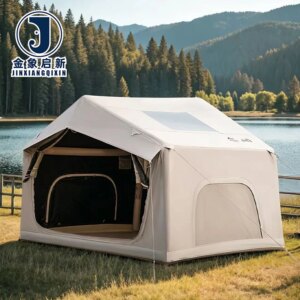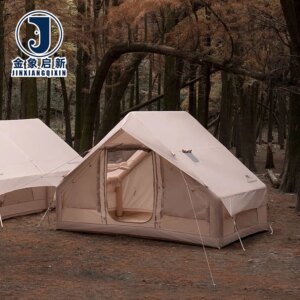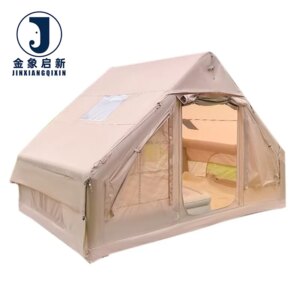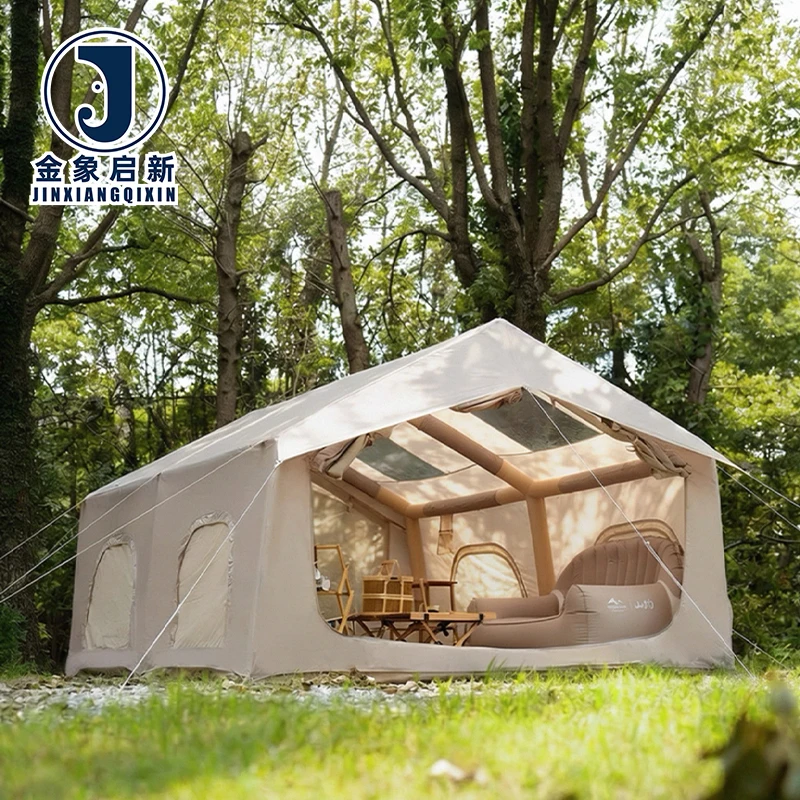
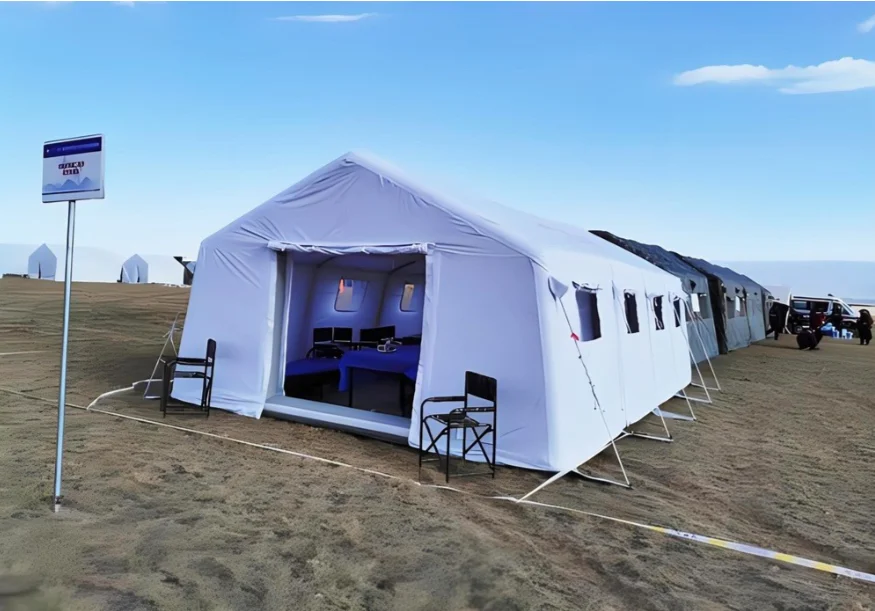
Description
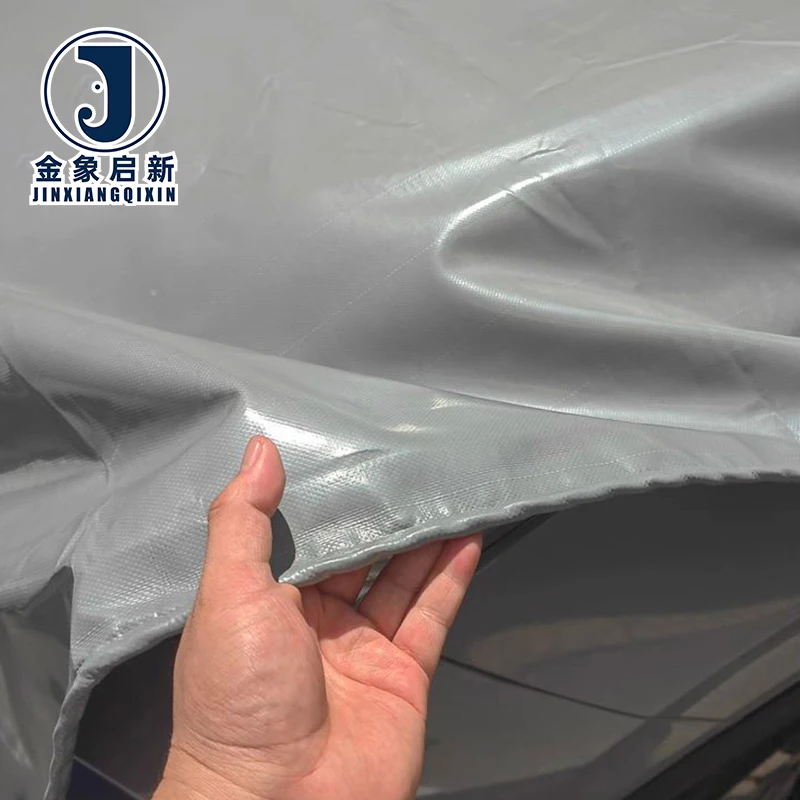
Full Process Coating Control — Every batch of PVC inflatable tent fabric undergoes strict QA/QC verification at each coating stage, ensuring consistent adhesion and waterproof coverage across the entire roll.
Technical Specifications
| Parameter | Value |
|---|---|
| Product Type | Inflatable Tent |
| Core Material | PVC waterproof fabric |
| Waterproof | Yes (grade not stated in source) |
| UV Treatment | UV-resistant (test basis not stated in source) |
| Tear Resistance | Tear-resistant (test basis not stated in source) |
| Design Feature | Quick automatic opening |
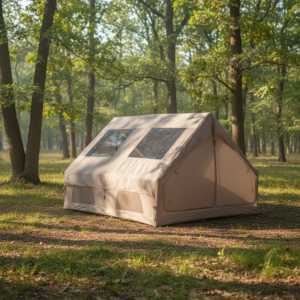
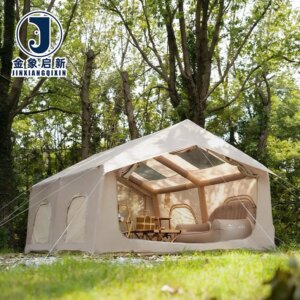
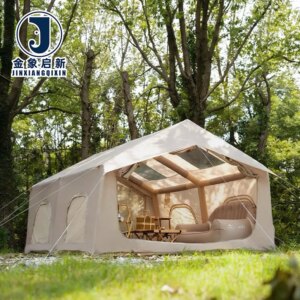
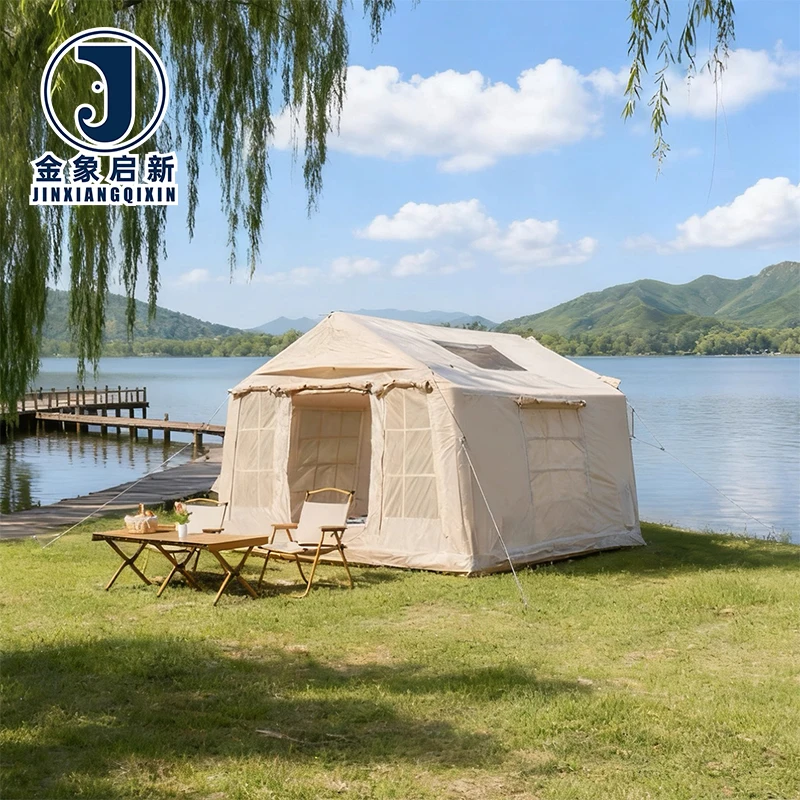
| Product Form | Inflatable four-season camping tent, extended type |
| Flame Retardant Grade | Not stated |
| Anti-Static | Not stated |
| GSM | Not stated |
| Customization Service | OEM & ODM, sample customization, pattern printing |
| Certifications | CE, ISO 9001, ISO 14001, ISO 45001 |
Application Suitability
| Application | Exposure & Requirement |
|---|---|
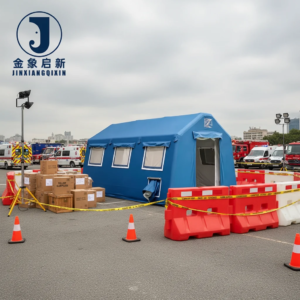
| Disaster relief temporary shelter | Rapid deployment, unpredictable weather, repeated inflation cycles |
| Engineering site worker accommodation | Constant outdoor exposure, dust, mechanical abrasion from site activity |
| Mobile storage for outdoor industrial events | UV exposure, wind load on inflated structure, frequent assembly and teardown |
| Four-season camping operations | Temperature fluctuation, rain and snow load, long-term UV exposure |
Why Stated Waterproofing Fails in the Field Without Batch Verification
Inflatable tent fabric must be verified against the production run it came from, not just the quotation sheet.
When an inflatable tent manufacturer receives rolls with inconsistent coating thickness, the seams become the first point of failure under inflation pressure. I have seen shelter deployments delayed because the PVC coated fabric arrived with visible variation in surface weight, making heat welding parameters impossible to standardize across the batch. Without a batch-specific inspection record, the waterproof claim on the spec sheet cannot be traced to the actual rolls on the factory floor [NEED_CITE: coating weight verification methods for PVC tarpaulin per ISO 3801].
Coating Adhesion and What It Means for Inflatable Structures
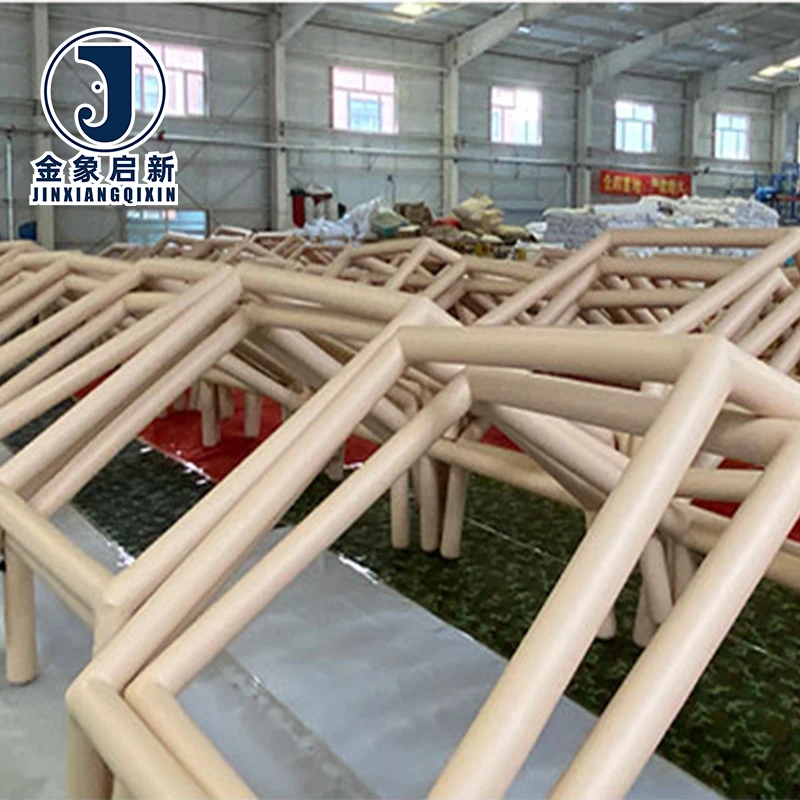
The performance of an inflatable tent depends entirely on how well the PVC coating bonds to the base fabric. When adhesion is weak, the coating separates from the yarn under the constant internal pressure of the inflated beams, creating delamination that spreads rapidly along stress points. This is why our full coating process control matters — consistent adhesion across the roll ensures that every welded seam and every inflated tube performs uniformly.
Quick Automatic Opening and the Demands on the Fabric
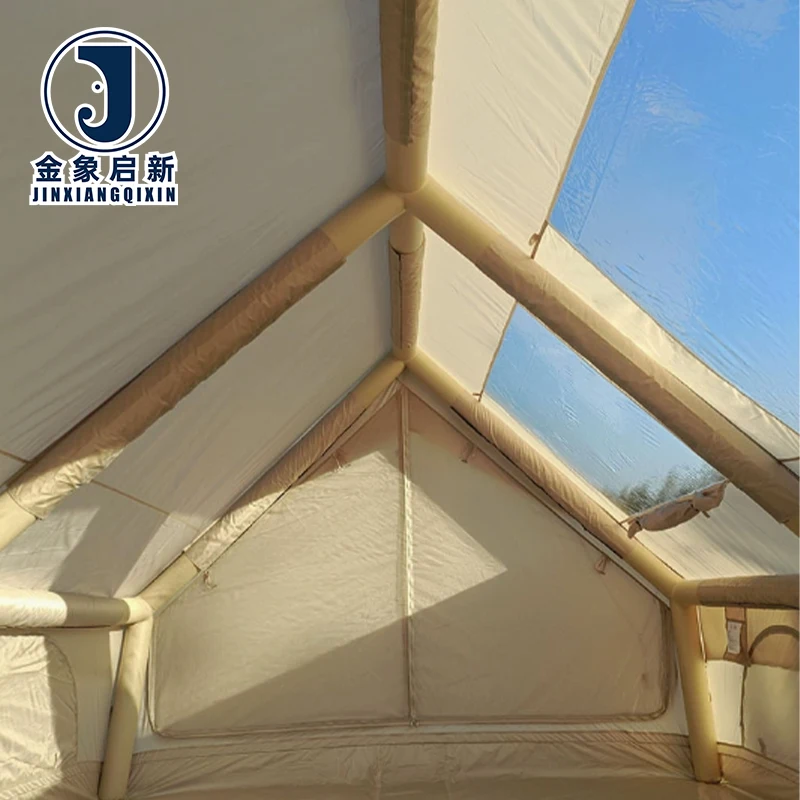
Rapid-deploy inflatable tents place unique demands on the PVC waterproof fabric. The material must flex quickly during inflation without developing micro-cracks, and it must return to its stored state repeatedly without losing structural integrity. The quick automatic opening design requires a fabric that balances stiffness for beam rigidity with enough pliability for compact packing — a balance achieved through controlled coating weight and base fabric selection.
Understanding GSM, Base Fabric, and Coating Weight Together
Specifying inflatable tent fabric by GSM alone is incomplete. The total weight combines the base fabric denier and weave density with the PVC coating mass, and each component contributes differently to performance. A high GSM driven mostly by heavy coating may resist abrasion but crack under repeated folding, while a high-denier base fabric with lighter coating provides tear strength but may not seal fully at welded seams. Request the material specification sheet that breaks down base fabric weight and coating weight separately to evaluate suitability for your specific inflatable structure design [NEED_CITE: relationship between base fabric denier and tear strength in coated fabrics per ISO 1421].
The Hidden Cost of Inconsistent Rolls in Inflatable Tent Production
When colour or coating weight varies between rolls in the same order, the consequences multiply. A tent fabricated from mixed rolls will show visible colour differences across panels once inflated and installed side by side, triggering rejection at the project site. Worse, inconsistent coating thickness means welding parameters set for one roll will produce weak seams on the next, leading to air leakage in the field and warranty claims that trace back to material supply, not fabrication error [NEED_CITE: batch-to-batch colour consistency standards in PVC coated fabric manufacturing].
Why Source Inflatable Tent Fabric and Finished Units Here
Nearly 30 years focused on coated fabric production means deep process control over PVC coating weight and adhesion — verified at every stage, not just at final inspection. Three full production lines and 36 sets of professional equipment support bulk roll supply alongside finished inflatable tent units without sacrificing consistency. A 10-person R&D team handles material selection, pattern printing, and sample development, returning samples within days so you can confirm performance before committing to volume. Dedicated QA/QC staff conduct 100% pre-shipment inspection, generating a batch quality report cross-referenced to your order number.
Documentation & Verification
- Material specification sheet stating base fabric denier, coating type, and GSM breakdown per roll
- UV-resistant treatment test report applicable to the specific batch supplied
- CE certificate and ISO 9001, ISO 14001, ISO 45001 certificates verifiable against issuing body
- Pre-shipment inspection record confirming 100% inspection with batch reference to order number
- Roll packing list with individual roll weight and dimensions for container loading planning
Fabrication, Handling & Storage
- Heat weld parameters must be adjusted to the specific PVC coating weight of this inflatable tent fabric batch
- Store rolls vertically on pallets to prevent flat-spot deformation of the PVC coated surface
- Use compatible PVC adhesive for field repair of inflatable tent seams to maintain coating bond integrity
- Avoid dragging rolls on unprotected ground to prevent abrasion damage to the waterproof PVC surface
- Allow cold-stored rolls to reach ambient temperature before unrolling to prevent coating micro-cracking
What We Need to Quote Your Inflatable Tent Fabric Order
Provide the target application and deployment conditions so we can recommend the appropriate base fabric and coating weight for your inflatable tent project. Specify your required roll width, annual volume, and whether you need finished units or raw roll stock. If your market requires flame retardant grades or specific UV treatment levels, state the certification standard so we can confirm availability and supply supporting test documentation.
Frequently Asked Questions
Q: What GSM and base fabric denier options are available for inflatable tent fabric?
A: We supply PVC waterproof fabric in a range of GSM grades suited to inflatable tent applications. The material specification sheet provided with your quotation breaks down the base fabric denier and coating weight separately, allowing you to evaluate the balance between tear strength, weldability, and flexibility for your specific inflatable structure design.
Q: How is batch-to-batch colour consistency controlled across rolls for inflatable tent production?
A: Every production run undergoes colour verification against the approved reference before dispatch. The pre-shipment inspection record documents colour consistency across all rolls in your order, preventing visible panel variation once the inflatable tent is fabricated and deployed on site.
Q: What UV test standards and treatment grades are applied, and how can buyers verify them?
A: UV-resistant treatment is available for inflatable tent fabric — confirm the specific test standard required for your market so we can supply the applicable batch test report. We do not claim UV performance without supporting documentation traceable to the production run.
Q: What custom sizing, pattern printing, and branding options are available?
A: Our R&D team supports OEM and ODM requirements including custom dimensions, pattern printing, and branding on inflatable tent fabric. Samples are developed within days for your approval before mass production proceeds, ensuring the final product matches your specifications for both material performance and visual identity.
Q: How are welded seams inspected to ensure they perform under inflation pressure?
A: Welded seams on inflatable tent structures are inspected during the 100% pre-shipment check to verify bond strength and air retention. Inspection results are recorded in the batch quality report cross-referenced to your order number, providing full traceability from fabrication to delivery.