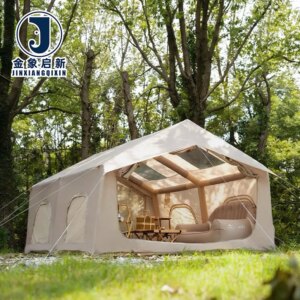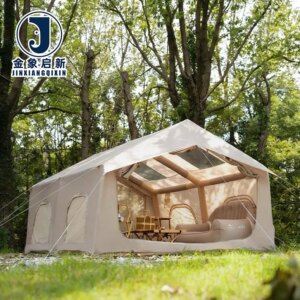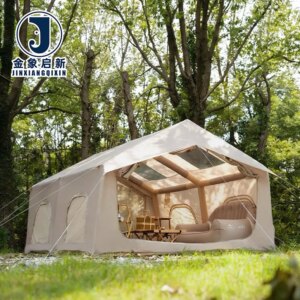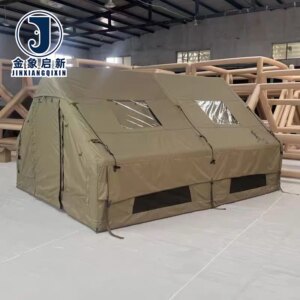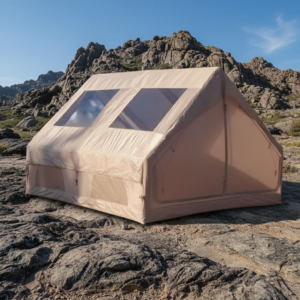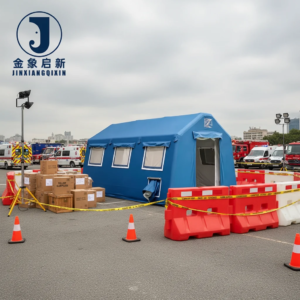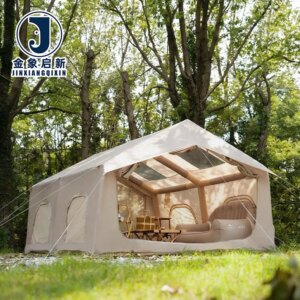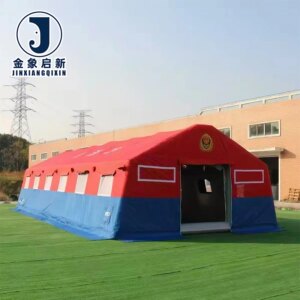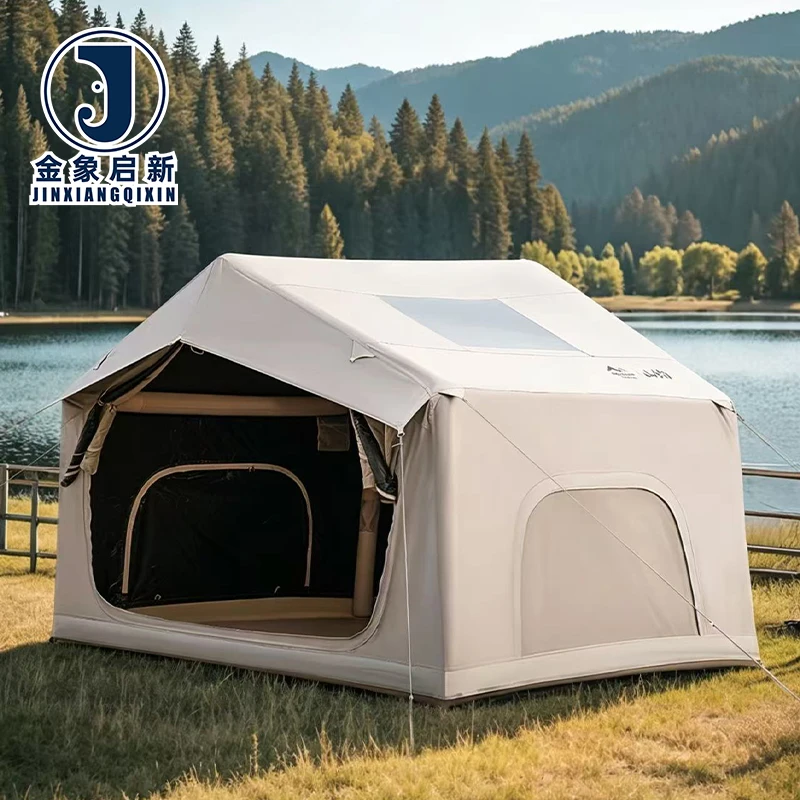
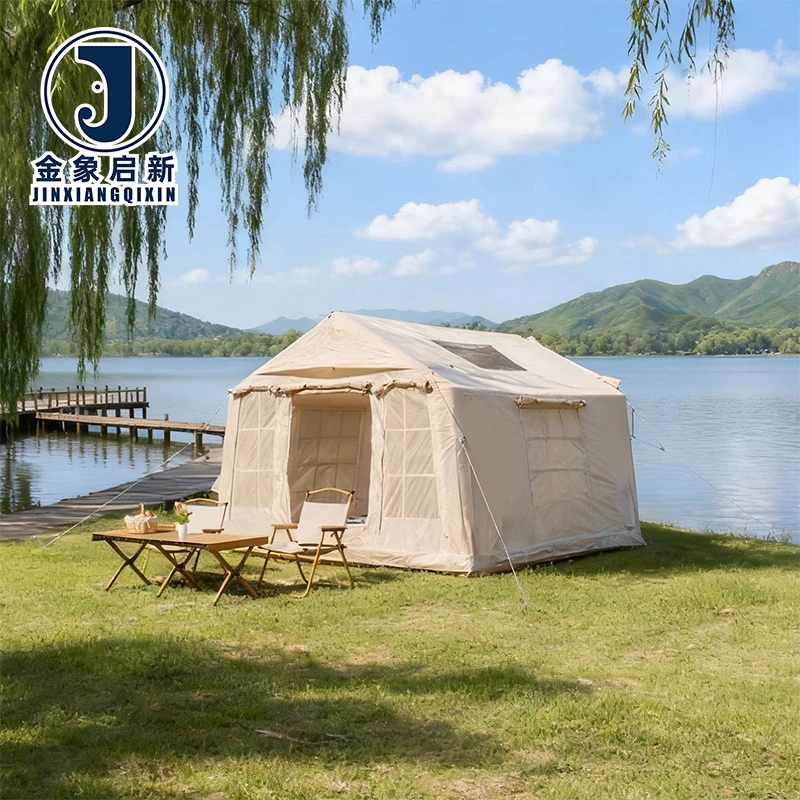
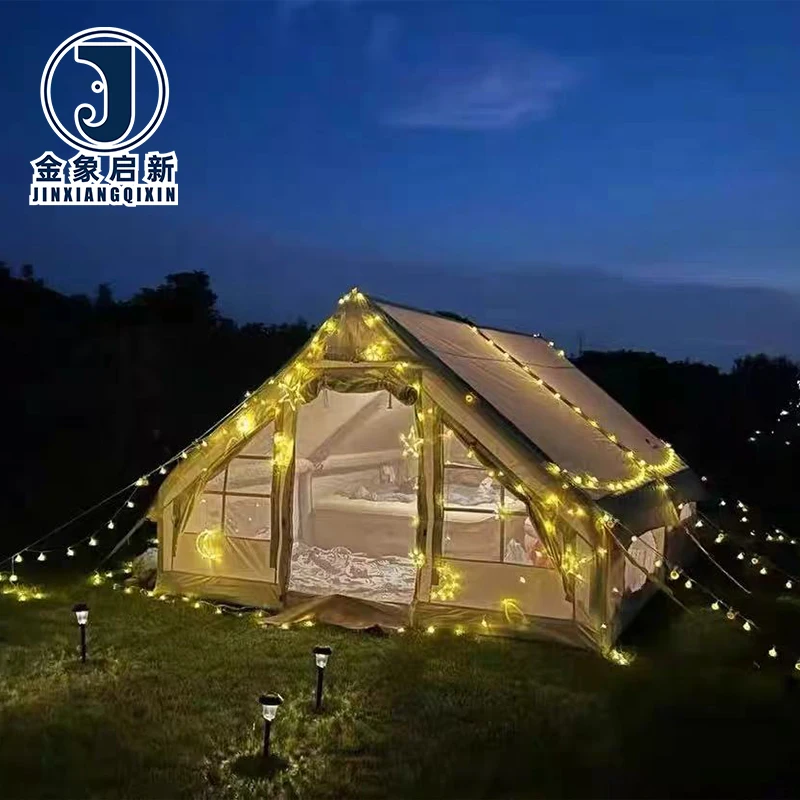
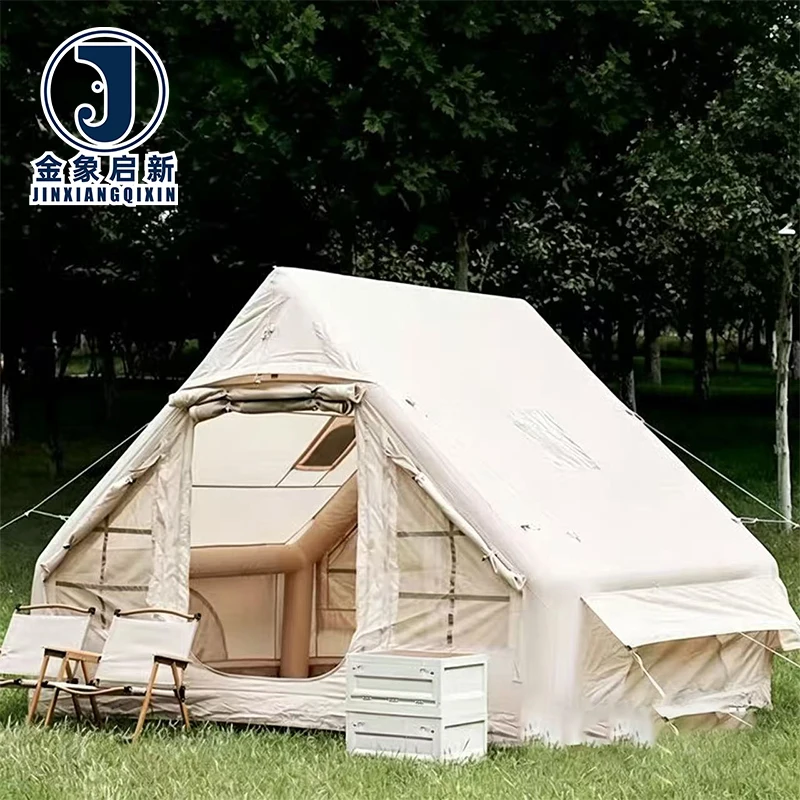
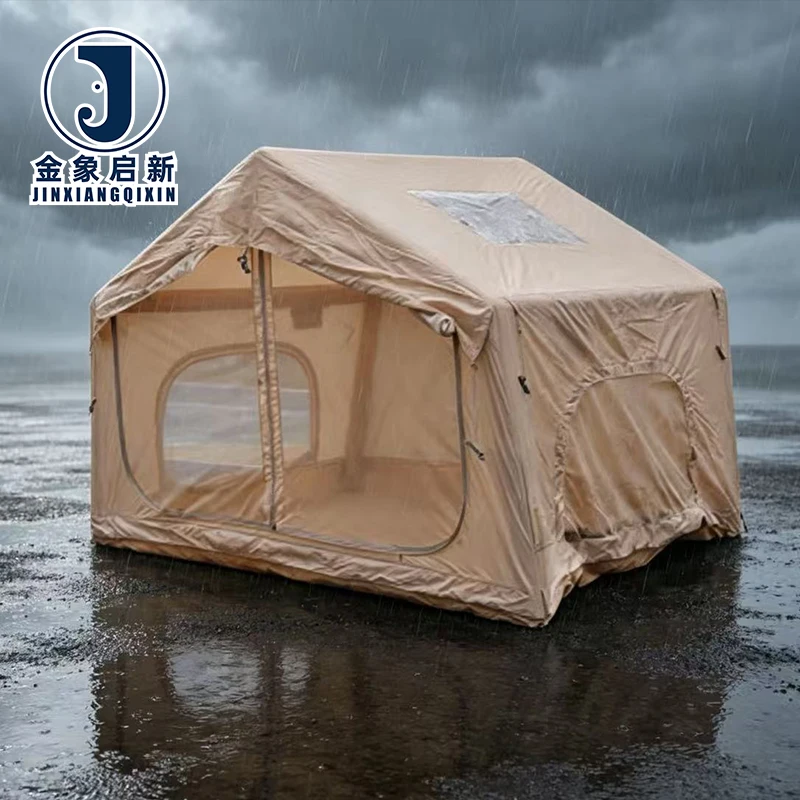
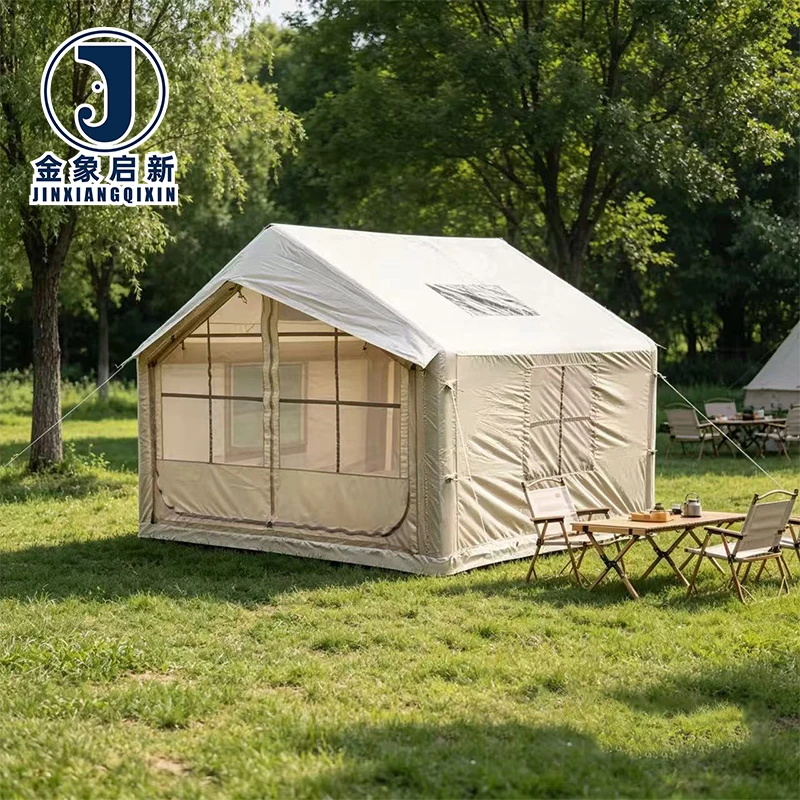
Description
Roll-to-Roll Coating Control — batch-consistent PVC inflatable tent fabric verified at every production stage to eliminate colour and weight variation across bulk orders.
Technical Specifications
| Parameter | Value |
|---|---|
| Product Type | Inflatable Tent |
| Core Material | PVC Tarpaulin |
| Fabric Thickness Range | 0.3mm–0.8mm (grade selection available) |
| Waterproof Rating | Hydrostatic head ≥10,000mm (verify against manufacturer catalog) |
| Fire-Retardant Standard | EN 13501-1 Class B |
| Anti-Static Treatment | Anti-static (standard to be confirmed for target market) |
| UV Treatment | Anti-UV (test basis not stated in source — confirm grade for your market) |
| Deployment Mechanism | Quick automatic opening, inflatable structure |
| Deployment Cycle Durability | 1,000+ cycles tested (verify against manufacturer catalog) |
| Welding Inspection | Ultrasonic integrity checks at 50cm intervals (verify against manufacturer catalog) |
| Pressure Retention | ≤5% pressure loss over 24 hours (verify against manufacturer catalog) |
| Capacity | 6–8 Person |
| Customization | OEM & ODM — custom dimensions, color matching, logo printing, valve system modifications |
| Pattern Printing | Available |
| Certifications | ISO 9001, ISO 14001, ISO 45001, CE |
Application Suitability
| Application | Exposure & Requirement |
|---|---|
| Commercial glamping site deployment | Continuous outdoor UV exposure, seasonal temperature swings, repeated inflation/deflation cycles requiring seam integrity |
| Outdoor hospitality venue modular units | Guest safety compliance with fire-retardant ratings, waterproof performance in wet climates, anti-static safety for occupied structures |
| Outdoor gear manufacturer product integration | Roll-stock consistency for production line cutting and welding, colour matching across branded tent series, OEM pattern printing |
| Premium outdoor accommodation setups | High-turnover guest use demanding rapid deployment, abrasion resistance at ground contact and flex points |
| Modular glamping site expansion | Batch-to-batch material consistency so new units match existing inventory when installed side by side |
Why Roll-to-Roll Colour and Weight Consistency Matters for Inflatable Tent Fabric
Colour drift and unverified GSM are the two most common reasons glamping manufacturers reject bulk fabric shipments after installation.
When you source wholesale Inflatable Tent fabric for a production run of twenty or more units, a shade difference between early rolls and late rolls becomes visible the moment tents stand next to each other on site. The same applies to coating weight — a roll that arrives lighter than quoted will produce an inflatable tent with reduced pressure retention and lower resistance to puncture at stress points. These problems are not caught at the factory gate; they surface after the fabric has been cut, welded, and assembled into finished structures [NEED_CITE: common causes of coated fabric batch rejection in commercial tent production].
Batch Traceability for Wholesale Inflatable Tent Fabric Orders
Every roll of Inflatable Tent fabric produced carries a material lot number that links it back to the coating batch, base fabric source, and the QA checkpoint it passed. This matters when a glamping manufacturer orders multiple rolls for a single production run and needs assurance that all units will behave identically during welding and inflation testing. The 10-person R&D team develops colour references and coating specifications at the sample stage, then locks those parameters into the production recipe before bulk runs begin.
Coating Weight Verification Across Production Runs
The coating process on all three production lines is monitored to ensure GSM remains within tolerance from the first roll to the last. This is where many Inflatable Tent roll stock shipments from other sources fail — the sample roll tests within spec, but production drift occurs mid-run and lighter material ships without flagging [NEED_CITE: coating weight drift during high-volume PVC tarpaulin production]. Dedicated QA/QC inspection at every stage catches this before dispatch, not after the buyer receives the container.
Reading the Specification Sheet for Inflatable Tent PVC Tarpaulin
The thickness range of 0.3mm to 0.8mm covers multiple grades within this product family — the correct grade depends on whether the tent is designed for seasonal pop-up use or permanent installation at a glamping resort. Thicker grades offer higher resistance to puncture and abrasion at ground contact points, while lighter grades reduce packed weight and improve inflation speed. The EN 13501-1 Class B fire-retardant rating is relevant for commercial hospitality venues where local fire codes classify inflatable accommodation as temporary structures requiring certified material [NEED_CITE: EN 13501-1 classification system for construction and temporary structure materials]. Waterproof performance at hydrostatic head ≥10,000mm ensures the fabric handles sustained rainfall without water penetration at seam lines or valve surrounds, though the specific test result should be confirmed against the current production batch. Anti-UV treatment extends outdoor service life, and the grade should be matched to the expected solar exposure at the installation site.
The Hidden Cost of Wrong Specification Choices in Glamping Tents
Ordering inflatable tent fabric without confirming the fire-retardant grade against your destination market’s fire code means the finished tents may fail inspection at the venue — a problem that only becomes apparent when the site opens and the local authority requests documentation. Similarly, accepting a generic thickness without mapping it to the inflation pressure and structural load of your specific tent design leads to premature seam failure at flex points, where the fabric bends most during wind loading. Colour inconsistency between rolls forces manufacturers to either reject partial shipments or install mismatched tents, damaging brand reputation at the glamping site [NEED_CITE: financial impact of colour variation in commercial tent fabric procurement].
Why Procurement Teams Source Inflatable Tent Fabric Here
The 9,180 m² production facility runs three full production lines with 36 sets of processing equipment, giving the capacity to deliver bulk roll orders on schedule without splitting a single batch across multiple coating runs. Sample development for custom colours, dimensions, and valve system modifications happens within days, not weeks, so buyers can validate material before committing to a full container. The dedicated R&D team handles pattern printing and OEM branding directly, eliminating the need for secondary printing contractors. Every shipment goes through 100% pre-shipment inspection with documented results, and the material specification sheet accompanies each roll so the buyer’s receiving team can verify GSM and coating type against the purchase order.
Documentation & Verification
- Material specification sheet stating base fabric denier, coating type and weight, and colour reference per roll
- Fire-retardant test report confirming EN 13501-1 Class B classification for the shipped batch
- Batch-specific quality inspection report with lot numbers, welding test results, and pressure retention data
- Pre-shipment inspection record with 100% visual and dimensional check before container loading
- Certificate of origin and roll packing list included with every dispatch for customs clearance
- ISO 9001, ISO 14001, ISO 45001, and CE certificates available in the shipping documentation package
Fabrication, Handling & Storage
- Hot-air welding parameters should be set to the PVC coating thickness grade selected — 0.3mm and 0.8mm require different temperature profiles for optimal seam adhesion
- Store rolls horizontally on padded racks to prevent permanent creasing in the PVC coating layer that affects inflation uniformity
- Valve system cutouts should be reinforced with additional PVC patches welded beyond the valve flange diameter to distribute inflation stress
- Pattern-printed rolls require solvent-free cleaning agents to preserve print adhesion on the coated surface
- Low-temperature transport in winter requires gradual acclimatization before unrolling to prevent coating micro-cracking at fold lines
- Custom-width rolls reduce offcut waste during tent panel cutting — provide panel dimensions so roll width can be optimized before production
What We Need to Move Your Inquiry Forward
Provide the target installation environment and expected operational conditions — permanent glamping site, seasonal event use, or OEM product line integration. Share your destination market’s fire safety classification requirements so we can confirm the correct retardant grade. Specify whether you need roll stock for your own fabrication line or finished cut-to-size panels, along with colour references, printing requirements, and estimated annual volume.
Frequently Asked Questions
Q: How is GSM verified before inflatable tent fabric ships?
A: Every roll undergoes weight verification against the quoted GSM during pre-shipment inspection. The batch-specific quality report includes measured values per lot number, so your receiving team can cross-check documentation on arrival without needing independent lab testing for routine orders.
Q: Does the EN 13501-1 Class B rating meet my market’s fire code for glamping tents?
A: EN 13501-1 Class B is recognized across European and many international jurisdictions for temporary and semi-permanent structures. Confirm your local authority’s accepted classification — if a different standard applies, flame retardant grades are available to alternative test methods. Request the specific test report for your shipment batch.
Q: How do you control colour consistency across multiple rolls in one order?
A: Colour references are locked at the sample approval stage and entered into the production recipe. The coating process is monitored across the full run, and dedicated QA/QC checks compare each roll against the approved reference. Rolls outside tolerance are flagged before packing.
Q: What are the MOQ and lead considerations for custom width or colour?
A: Custom widths, colours, and pattern-printed inflatable tent fabric are available with minimums that vary by specification complexity. The R&D team develops samples within days of receiving your requirements, and production lead times depend on order volume and customization scope.
Q: How is the fabric protected during container loading and ocean transit?
A: Rolls are packed with protective wrapping and loaded according to a roll packing list that records position and orientation. The packing list ships with the container, and handling instructions cover temperature acclimatization before unrolling to prevent coating damage in cold conditions.