Description
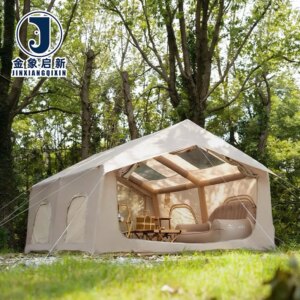
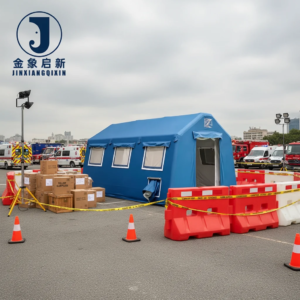
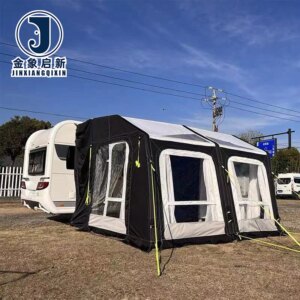
Batch-Matched Colour Consistency — verified roll-to-roll against the stated colour reference before dispatch, eliminating visible shifts across installed inflatable shelters.
Technical Specifications
| Parameter | Value |
|---|---|
| Product Type | Inflatable Tent |
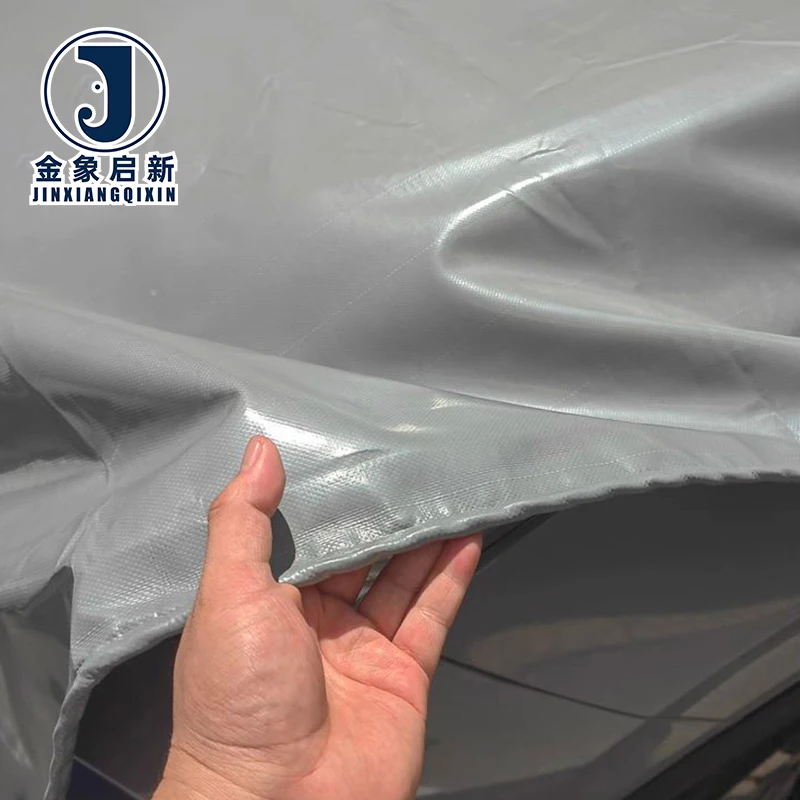
| Core Material | PVC waterproof fabric |
| Key Performance | Waterproof, UV-resistant (test basis not stated), tear-resistant, quick automatic opening |
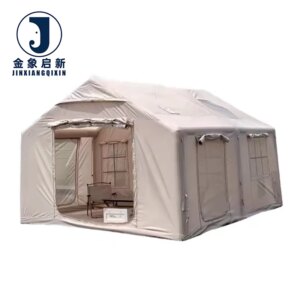
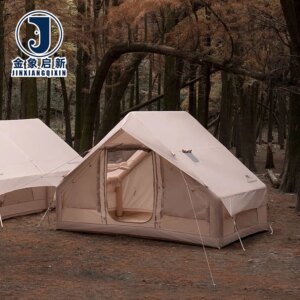
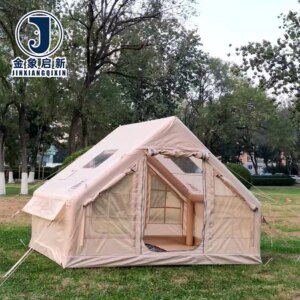
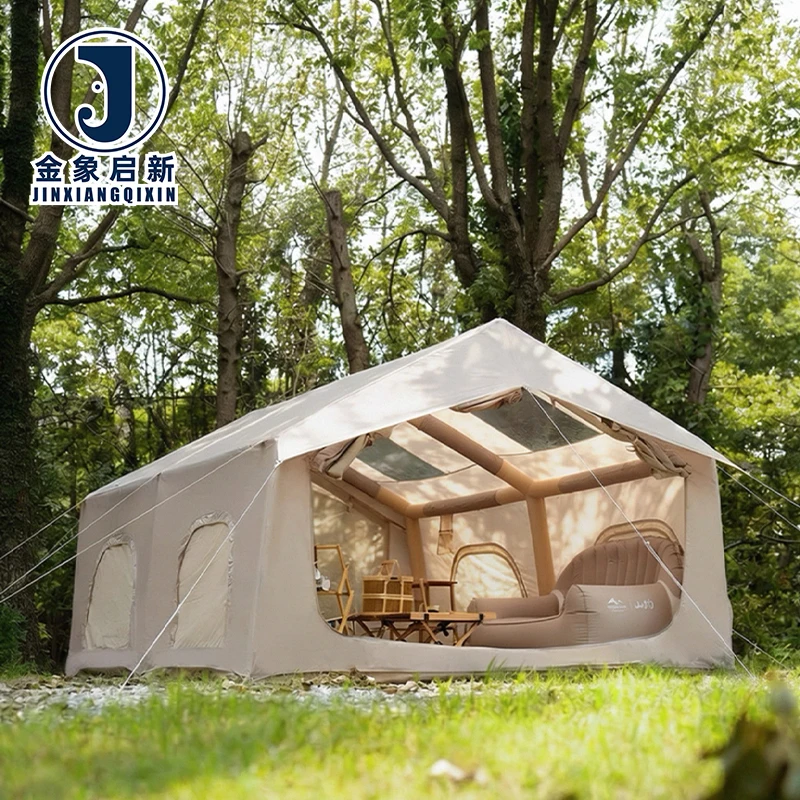
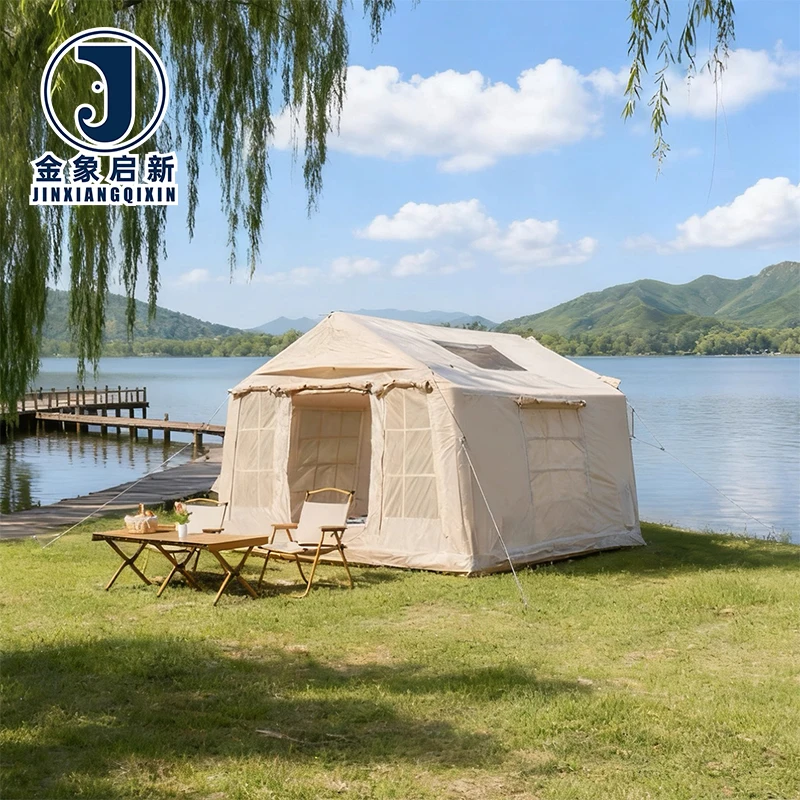
| Product Forms | Inflatable four-season camping tent, quick automatic opening design |
| Certifications | CE, ISO 9001, ISO 14001, ISO 45001 |
| Customization | OEM & ODM, sample customization, pattern printing |
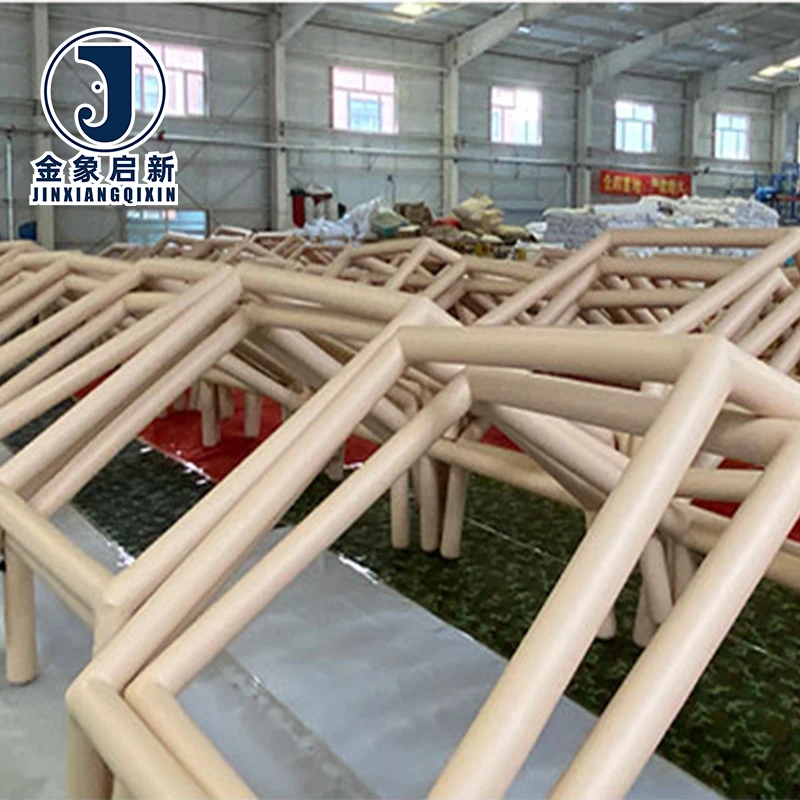
| Production Facility | 9,180 m² with 3 full production lines |
| Processing Equipment | 36 sets of professional processing equipment |
| R&D Team | 10 technicians |
Application Suitability
| Application | Exposure & Requirement |
|---|---|
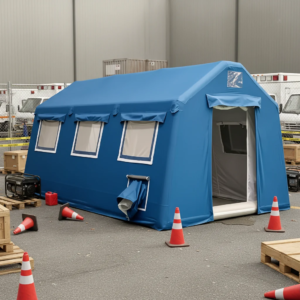
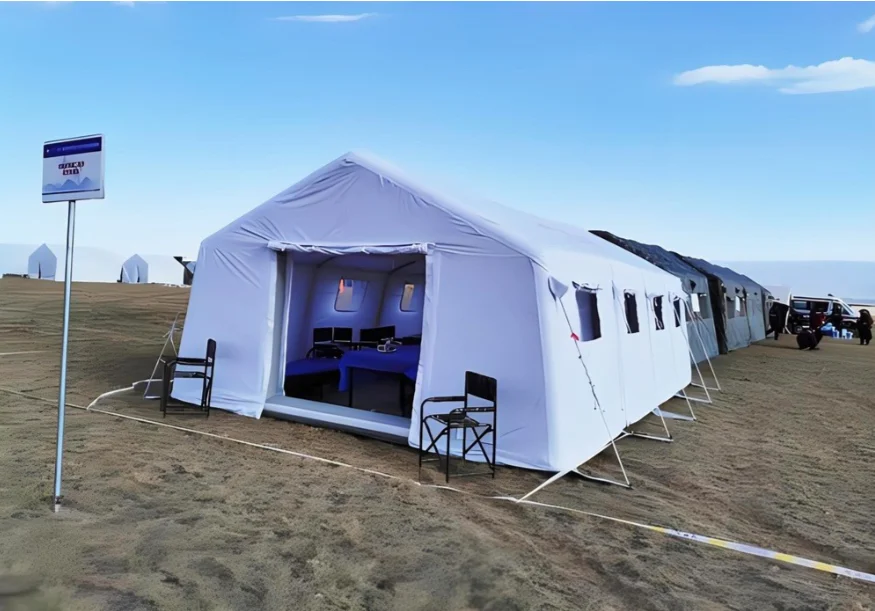
| Disaster relief shelter depots | Rapid deployment, repeated inflation cycles, weather exposure during storage and field use |
| Multi-site engineering compounds | Bulk procurement consistency, UV exposure across open terrain, wind loading on inflated structure |
| Outdoor industrial event storage | Waterproof integrity under sustained rainfall, frequent assembly and teardown, surface abrasion from ground contact |
| Emergency preparedness inventories | Long-term warehouse storage without coating degradation, quick automatic opening under time-critical conditions |
Why Roll-to-Roll Colour Drift Wrecks a Wholesale Tent Order
Batch consistency is not optional when dozens of inflatable shelters stand side by side on a relief site.
When a distributor unloads a container of bulk inflatable camping tents and the colour shifts from one roll to the next, the problem is not cosmetic — it signals inconsistent coating formulation across the batch. Procurement teams that specify a Pantone reference expect every unit to match. Coating weight variation that causes colour drift also affects seam weld strength and fabric hand, meaning the tents that look different may also perform differently [NEED_CITE: coating weight variation and its effect on welded seam integrity in PVC fabrics]. A wholesale inflatable tent order with unmatched batches forces costly sorting, partial rejection, and delayed deployment.
Volume Supply Built on Coating Process Control
Consistent inflatable tent wholesale supply depends on what happens inside the coating line, not just at final inspection. Three full production lines equipped with 36 sets of processing equipment allow this facility to hold coating weight within a narrow band across an entire container load. When the PVC waterproof fabric is applied to the base weave, even minor fluctuations in knife gap or oven temperature change the surface appearance and the tear resistance. Buyers ordering bulk inflatable camping tents for disaster relief programs need every roll to behave identically during heat welding and inflation, and that starts with stable coating parameters from the first metre to the last.
Matching Specification to Procurement Scale
A single sample roll that passes inspection tells you almost nothing about how the next two hundred rolls will perform. The 10-technician R&D team develops samples within days so that buyers can lock colour, weight, and treatment claims before mass production begins. Once approved, the same formulation and machine settings carry through to full production. Pre-shipment inspection covers every roll, confirming that the GSM, colour reference, and PVC coating integrity match the approved sample. This process matters most when the inflatable tent wholesale order ships directly to a regional distribution hub with no opportunity for rework before the next emergency deployment [NEED_CITE: pre-shipment inspection protocols for coated fabric roll stock].
Reading the Material Data Beyond the Headline Numbers
PVC waterproof fabric performance depends on how the base fabric denier, weave density, and coating weight interact — not on any single figure. A heavier coating does not automatically mean higher tear resistance if the base cloth uses low-denier yarns with open spacing; the coating fills the gaps but adds little structural strength. The coating method itself influences peel strength and heat weldability: knife-over-roll coating typically produces a thicker, more uniform layer suited to welded seams on inflatable structures, while lamination can offer cost savings but may delaminate under repeated inflation stress. UV-resistant treatment, where applicable, must be verified against a stated test standard — confirm the grade required for your target market. Surface finish, whether glossy or matte, affects both dirt shedding in field conditions and the adhesion of printed branding during customization.
The Cost of Specifying on Price per Kilogram Alone
When a buyer selects inflatable tent fabric based on the lowest cost per kilogram, the coating supplier compensates by reducing PVC layer thickness or switching to a lighter base cloth. The finished tent may pass initial inflation tests but fail at the heat-welded seams after repeated setup cycles, because the reduced coating weight provides insufficient material for a strong weld bond. Batch inconsistency compounds the problem: some rolls weld cleanly while others peel apart at the seam line under moderate air pressure [NEED_CITE: heat-welded seam failure modes in PVC coated fabrics under cyclic inflation]. For disaster relief stockpiles, a seam failure during deployment is not a warranty claim — it is an unusable shelter when one is needed most.
What the Production Floor Actually Delivers
Roll-to-roll consistency across a full container is achieved through in-process QA at every coating stage, not just a final visual check. The 36 sets of professional processing equipment handle everything from base fabric preparation through coating, curing, and winding, keeping each variable under control. A dedicated QA and QC team inspects every roll before dispatch, recording GSM, colour match, and coating integrity against the order specification. Custom widths and lengths are produced on the same lines as standard stock, so there is no separate short-run process that might compromise quality. Sample development within days lets buyers confirm material behaviour before committing to volume.
Documentation & Verification
- Material specification sheet stating PVC fabric composition, coating weight, and colour reference for each batch
- Pre-shipment inspection record confirming GSM and visual consistency across all rolls in the order
- UV-resistant and treatment test reports matched to the specific batch number when applicable
- CE and ISO certificates included with every shipment for cross-border customs compliance
- Roll packing list with individual batch and colour codes for warehouse traceability
Fabrication, Handling & Storage
- Heat weld temperature and dwell time must be calibrated to the PVC coating thickness of this specific fabric before production runs
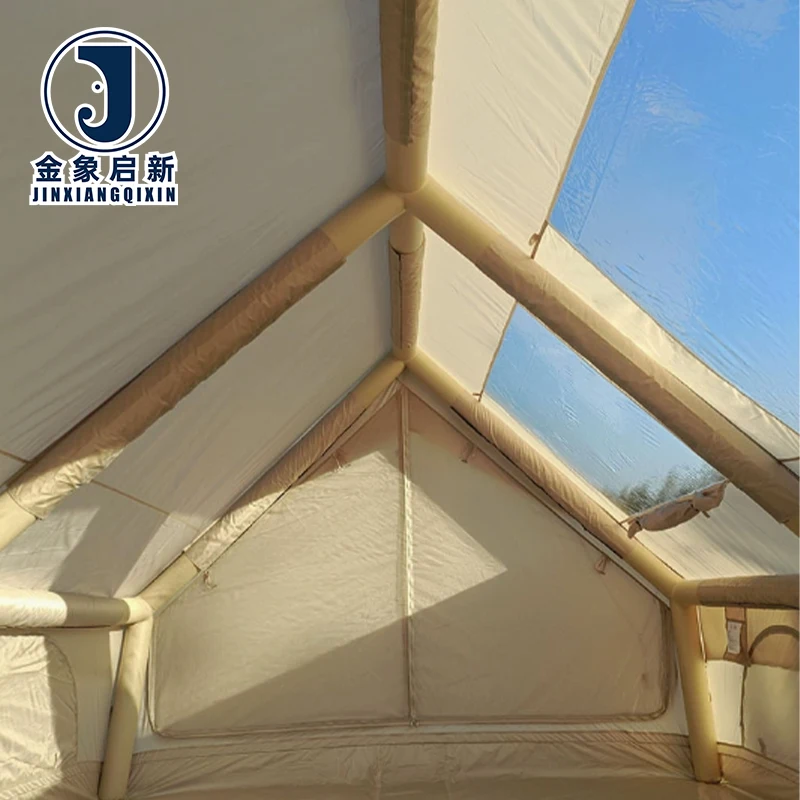
- Inflatable tent seams at air beam junctions require reinforced weld overlap to withstand repeated inflation pressure cycles
- Rolls should be stored upright on pallets in a shaded warehouse to prevent compression marks on the PVC coating surface
- Cold-weather transport requires gradual acclimatisation before unrolling to avoid cracking the PVC layer at low temperatures
- Surface cleaning should use mild detergent only; solvent-based cleaners may degrade the waterproof PVC coating finish
Before You Request a Quote
Provide the intended deployment environment — open-field disaster relief, construction compound, or covered storage — along with the expected wind load and climate exposure. Specify the target market so that any required fire classification or UV treatment grade can be matched to local regulations. Confirm whether you need finished inflatable tent units or roll-stock fabric for your own fabrication line, and indicate your annual volume and preferred roll width to receive accurate lead times.
Frequently Asked Questions
Q: How do you maintain colour consistency across a large inflatable tent wholesale order?
A: Every roll is produced using the same coating formulation and machine settings locked during sample approval. Our QA team inspects each roll before dispatch, comparing colour against the approved reference under controlled lighting. The pre-shipment inspection record documents the result for every roll in your order, so batch traceability is maintained from production to delivery.
Q: What documentation ships with a bulk inflatable camping tent order?
A: Each shipment includes a material specification sheet, pre-shipment inspection record, roll packing list with batch references, and CE and ISO certificates for customs clearance. UV-resistant or other treatment test reports are provided where applicable and matched to your specific batch number for full traceability.
Q: What is the lead time for custom printing on inflatable tent fabric?
A: Lead times depend on order volume and print complexity. Sample rolls with custom pattern printing are developed within days for buyer approval before mass production proceeds. Once the sample is signed off, full production runs on the same equipment, ensuring the printed branding matches across all rolls in the order.
Q: Can I order a sample roll before committing to a full container?
A: Yes. Sample rolls are produced to your specified colour, width, and treatment requirements so you can verify material performance in your own fabrication or inflation testing. Approval of the sample locks the production parameters for the subsequent bulk order, ensuring consistency between sample and shipment.
Q: Do your inflatable tents carry CE certification for international procurement?
A: The production facility holds CE certification along with ISO 9001, ISO 14001, and ISO 45001. Certificates are included with each shipment to support customs clearance and procurement compliance in international markets. Additional market-specific test reports can be arranged based on your destination country requirements.