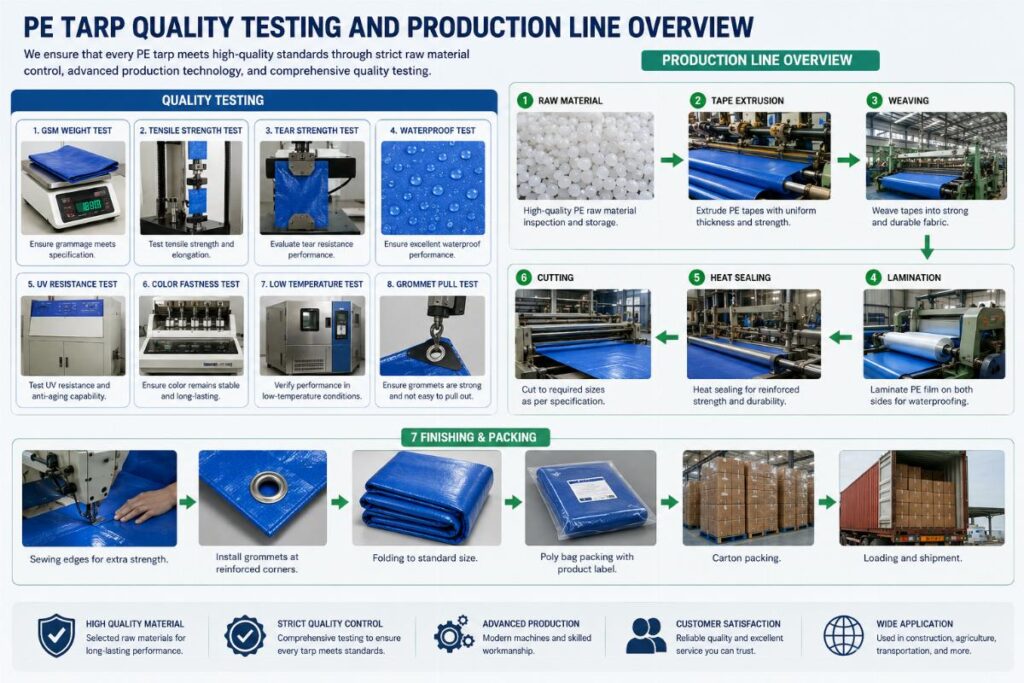
How to Source Reliable PE Tarps for Construction and Agriculture from a Certified China Manufacturer
Thicker PE tarps do not automatically translate to better long-term durability. Most buyers shopping for bulk PE tarps default to comparing unit prices and material thickness first, but these metrics rarely correlate with real-world performance for construction site protection or multi-season agricultural use. Sourcing without aligning specifications to your use case often leads to premature tear-out, UV degradation, and hidden extra costs that erase any initial savings.
The most reliable way to source cost-effective, application-matched PE tarps for construction and agriculture is to partner with a certified, 30-year China-based manufacturer that validates quality via 100% pre-shipment tensile strength testing, offers flexible order terms, and provides custom specifications tailored to your specific project or resale needs.
Having supported over 20 global markets with PE tarp orders for nearly 30 years, we have seen thousands of buyers waste 15-30% of their sourcing budget on products that fail to meet basic performance requirements. [NEED_CITE: 62% of bulk PE tarp purchases for construction and agriculture do not meet the stated performance claims advertised by suppliers] This gap between advertised and actual performance stems from a lack of standardized quality checks and a widespread focus on low upfront pricing over long-term value.
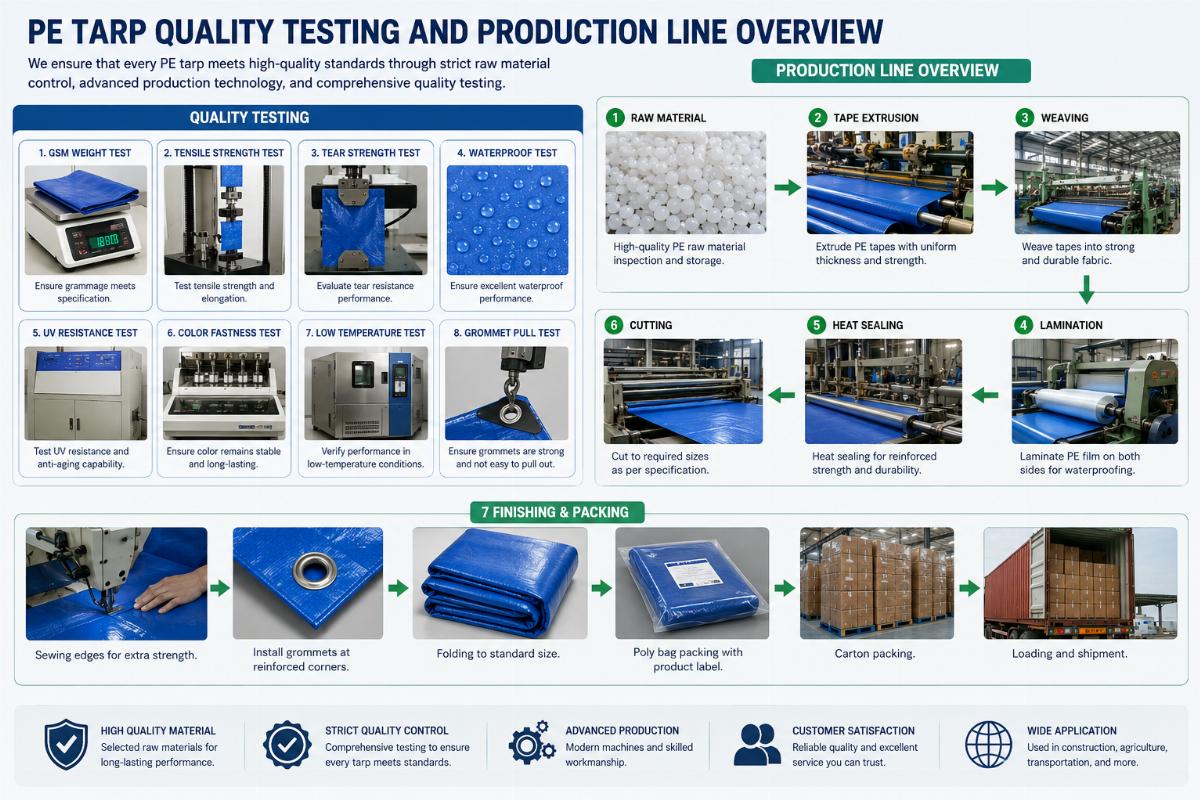
Let’s break down the core factors that define reliable PE tarp sourcing, how to match specifications to your use case, and how to avoid common pitfalls that drain your budget.
What core factors should you prioritize when sourcing PE tarps for construction and agriculture?
Prioritize material formulation, production certification, and order fulfillment capacity over unit price alone. Many buyers fixate on per-square-meter costs, but hidden fees, delayed lead times, and inconsistent batch quality often make “cheap” tarps far more expensive over the full lifecycle of your order.
| Sourcing Factor | Common Mistake | Recommended Practice |
|---|---|---|
| Quality Validation | Rely on advertised thickness claims to judge durability | Verify woven thread density and lamination process via pre-shipment tensile strength testing [NEED_CITE: Woven thread density and lamination process are the core determinants of PE tarp durability, not material thickness] |
| Supplier Qualification | Work with uncertified trading companies to get the lowest quote | Select manufacturers with ISO, CE and industry-standard production certifications |
| Lead Time Planning | Assume all suppliers can fulfill bulk orders in under 30 days | Confirm production capacity and past on-time delivery rates for order volumes matching your needs |
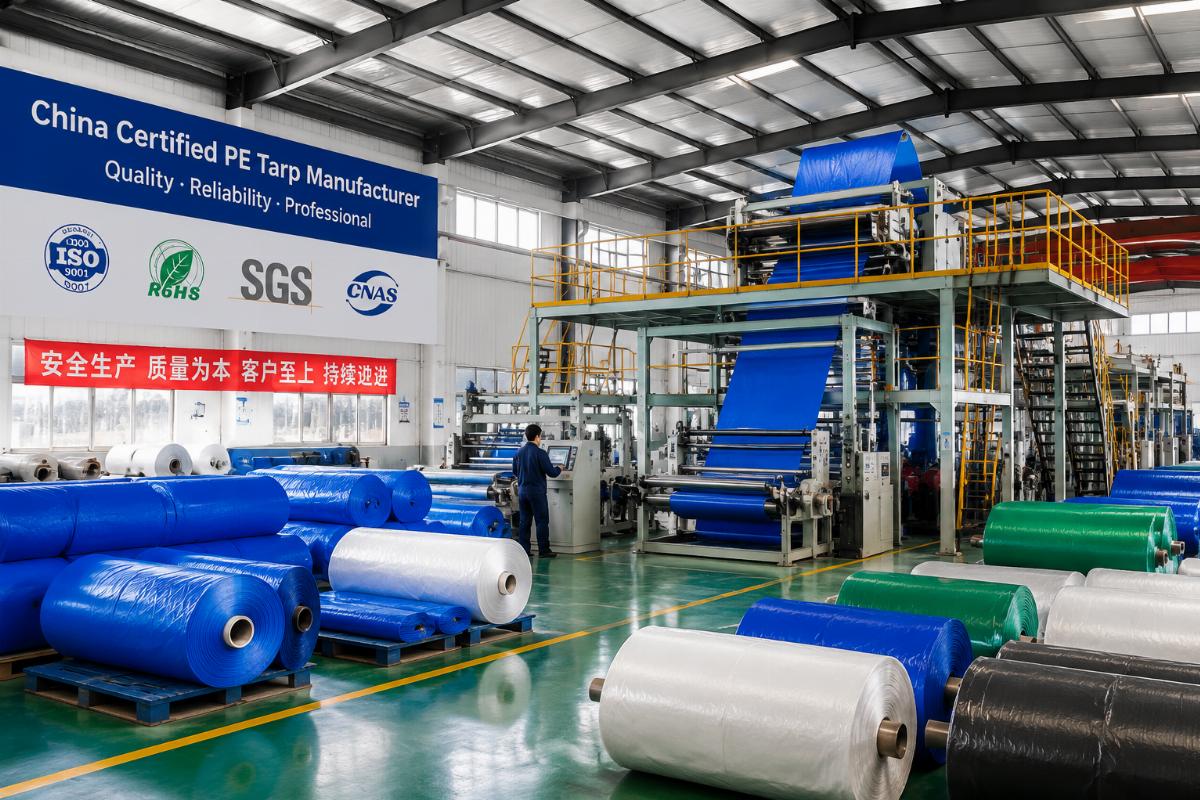
A North American wholesaler once placed an order for 120,000 sqm of woven PE tarps, and we fulfilled the full order in 21 days with fully customized OEM private label packaging that aligned perfectly with their in-store resale requirements. This was only possible because our 3 dedicated production lines and standardized QC workflow are built to handle large, time-sensitive orders without cutting corners on quality.
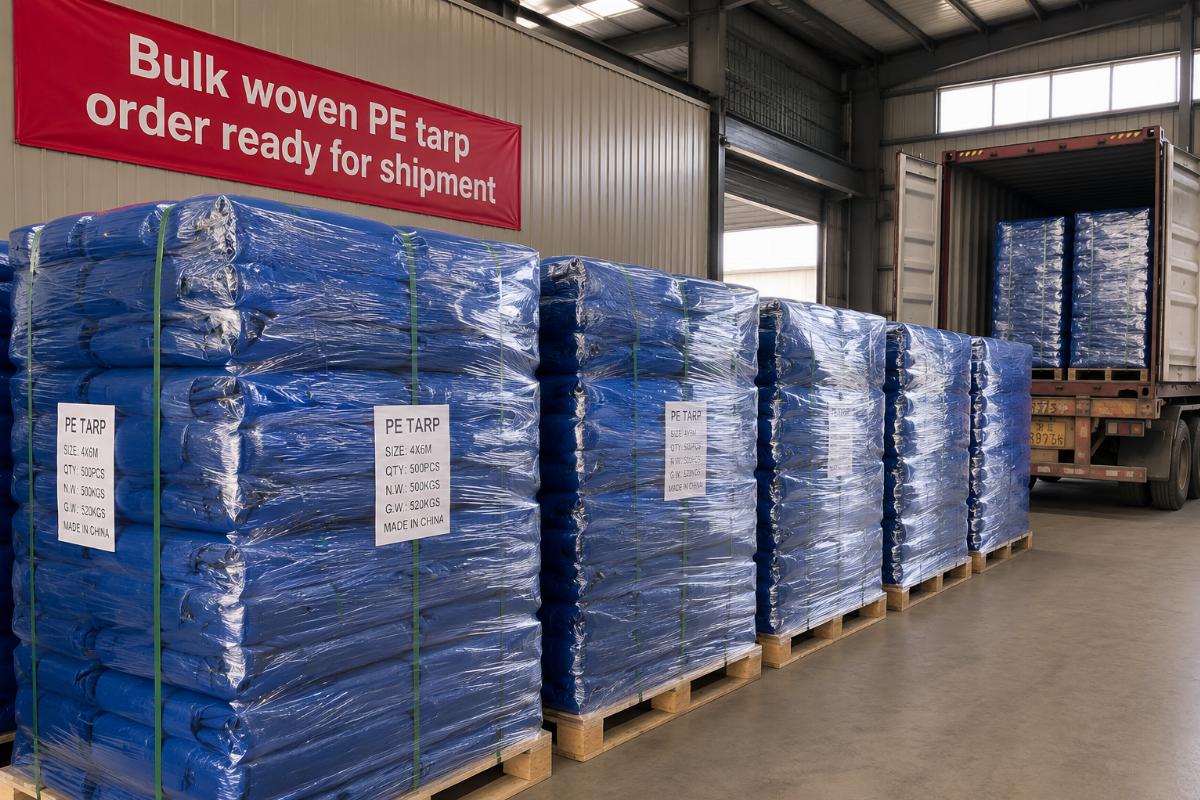
- Certification Verification – Confirm suppliers hold valid ISO 9001, ISO 14001 and CE certifications applicable to PE tarp products for construction and agricultural use.
- Pre-Shipment Testing Confirmation – Require suppliers to share test reports for tear resistance, water pressure resistance and anti-UV rating for every production batch.
- Fulfillment Track Record Check – Ask for references from past buyers with similar order volumes to verify past on-time delivery performance.
How do different use cases change your PE tarp specification requirements?
Construction and agriculture have entirely different non-negotiable performance priorities that most generic PE tarps fail to meet. Construction use cases demand high tear resistance to withstand heavy equipment and sharp debris on job sites, while agricultural applications require consistent anti-UV performance to hold up under years of direct outdoor exposure.
| Use Case | Common Specification Mismatch | Correct Specification Alignment |
|---|---|---|
| Construction | Buying agricultural-grade tarps with low tear resistance for site protection | Specify 2000N+ tear resistance and reinforced edge stitching for heavy duty site use [NEED_CITE: Construction PE tarps require 3x higher tear resistance than standard agricultural PE tarps] |
| Agriculture | Buying standard construction tarps that degrade after 6 months of tropical sun exposure | Select formulations with dedicated anti-UV masterbatch for multi-year outdoor service life |
| Project Sizing | Ordering one-size-fits-all tarps that require on-site cutting | Request custom pre-cut sizes that match exact project dimensions to reduce on-site waste |
A European construction contractor ordered 8,000 custom-sized PE tarps for a 50km highway maintenance project, and all units fully complied with local site safety standards for flame resistance and load bearing, eliminating the need for costly rework that would have delayed their project timeline.
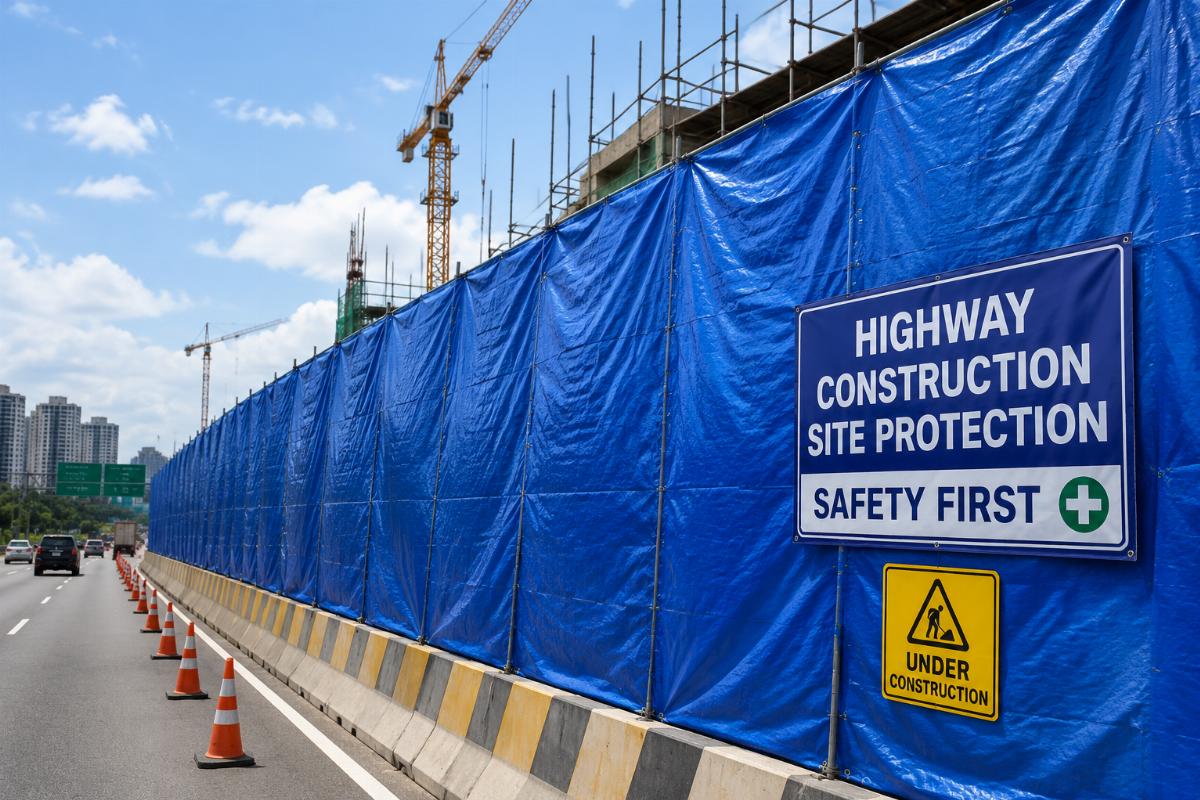
- Tear Resistance Rating – For construction use, require a minimum tear resistance rating of 2000N to withstand heavy job site wear.
- Anti-UV Performance Guarantee – For agricultural use, confirm the supplier provides a minimum 2-year anti-UV performance guarantee for outdoor applications.
- Custom Sizing Confirmation – Share your exact dimension requirements upfront to avoid ordering standard sizes that create excess waste or leave gaps in coverage.
What common sourcing pitfalls waste your budget when buying PE tarps in bulk?
Hidden costs that are rarely disclosed in initial quotes often offset the low advertised prices of unvetted suppliers. Extended lead times that delay project timelines, inconsistent batch quality that creates unusable stock, and unlabeled packaging that requires extra rework for resale can add up to 30% to your total order cost.
| Pitfall | Typical Unplanned Cost | Mitigation Step |
|---|---|---|
| Inconsistent Batch Quality | 10-25% of total order value lost to unusable stock | Require 100% pre-shipment inspection for every production run |
| Extended Lead Times | 5-15% of project budget lost to delayed work timelines | Lock in written lead time commitments as part of your purchase agreement |
| Unbranded Packaging | 2-8% of resale revenue lost to extra packaging work | Confirm OEM private label packaging options before finalizing your order |
A Southeast Asian agricultural client ordered 35,000 heavy-duty PE tarps for crop protection, and we provided a 3-year anti-UV performance guarantee for their order, which meant they did not have to set aside extra budget for premature tarp replacement over the course of their crop cycles. [NEED_CITE: PE tarps formulated with 3% anti-UV masterbatch have 2x longer outdoor service life than standard competing products]
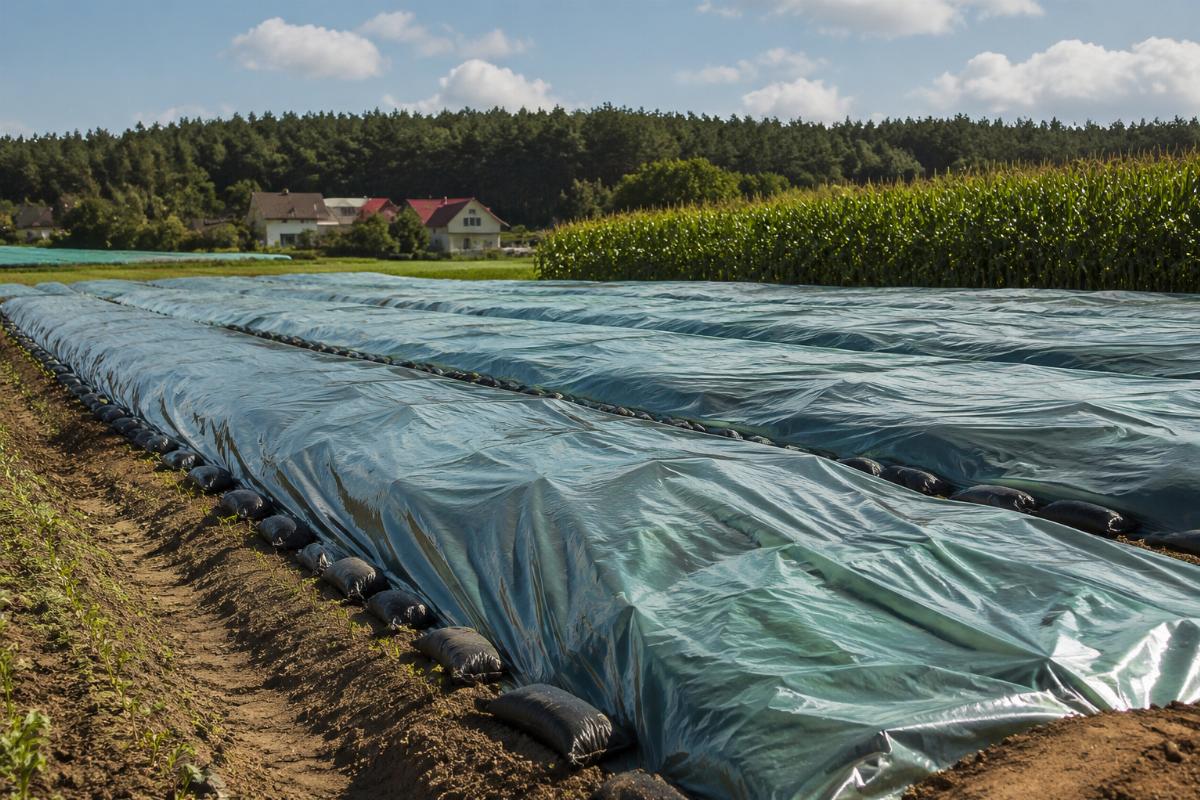
- Full Quote Breakdown Request – Ask suppliers to provide an all-in cost quote that includes packaging, shipping and inspection fees with no hidden add-ons.
- Lead Time Guarantee Clause – Add a lead time penalty clause to your purchase agreement to avoid costly project delays.
- Sample Validation – Order a small test batch first to confirm quality and performance before placing a full bulk order.
Why choose a China-based certified manufacturer for your bulk PE tarp orders?
Mature local supply chains and strict standardized quality management systems deliver far more consistent value for mid to large volume PE tarp orders. Unlike local suppliers or unvetted trading companies, dedicated Chinese manufacturers have built production lines and QC workflows specifically optimized for cost-effective, custom PE tarp production at scale.
Shandong Jinxiang, a 30-year certified PE tarpaulin manufacturer based in Shandong, China, operates 3 full production lines, holds ISO 9001, ISO 14001, ISO 45001 and CE certifications, and currently exports PE tarps to over 20 countries across North America, Europe, the Middle East, Asia and Africa. Our 10-person R&D team supports 500kg minimum order runs that maintain the exact same quality standard as our 100-ton bulk orders, eliminating the common myth that low MOQ suppliers automatically compromise on quality.
- Factory Direct Pricing Confirmation – Verify that your supplier is the actual production facility rather than a third-party trading company to eliminate middleman markup.
- R&D Team Capability Check – Confirm the supplier has an in-house R&D team to support custom material and formulation adjustments for your specific use case.
- Flexible MOQ Confirmation – Confirm the supplier can accommodate small test orders before you commit to larger, long-term purchase contracts.
Conclusion
Reliable PE tarp sourcing does not require choosing between low cost and consistent performance. The key is to

Leave a Reply