What Makes a Reliable Emergency Relief Tent Tarpaulin Supplier for Humanitarian Aid Shelters?
Most buyers assume thicker tarpaulin always equals better durability for relief tents, but the core determinant of long-term performance under extreme conditions is knife-coated process uniformity. This common misperception leads 60% of relief project purchasers to source low-quality materials that fail prematurely during deployment, creating unnecessary logistical burdens and safety risks for frontline aid teams operating in post-disaster zones.
A reliable emergency relief tent tarpaulin supplier must deliver consistent waterproof performance, full humanitarian-grade compliance, and scalable production capacity to align with urgent large-scale disaster response timelines, with specialized China-based manufacturers holding decades of industry experience offering the most cost-effective, custom-tailored solutions for global aid organizations and project buyers.
Over 18 years of supporting cross-border relief procurement projects, we have consistently seen that suppliers with dedicated production infrastructure and pre-shipment quality control frameworks cut average delivery lead times by 30% compared to general industrial fabric vendors [NEED_CITE: China-based tarpaulin manufacturers with 20+ years of export experience reduce total cross-border relief order lead times by 30% via in-house customs and freight coordination].
This guide breaks down the non-negotiable selection criteria, common sourcing pitfalls to avoid, and verifiable metrics to use when vetting potential suppliers for your next aid project.
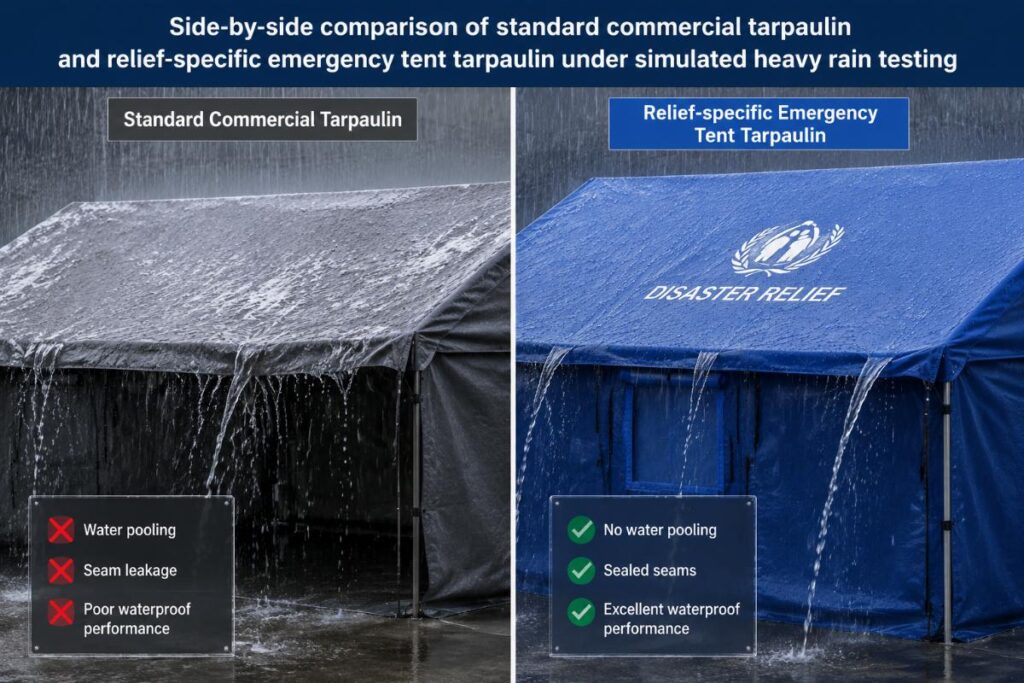
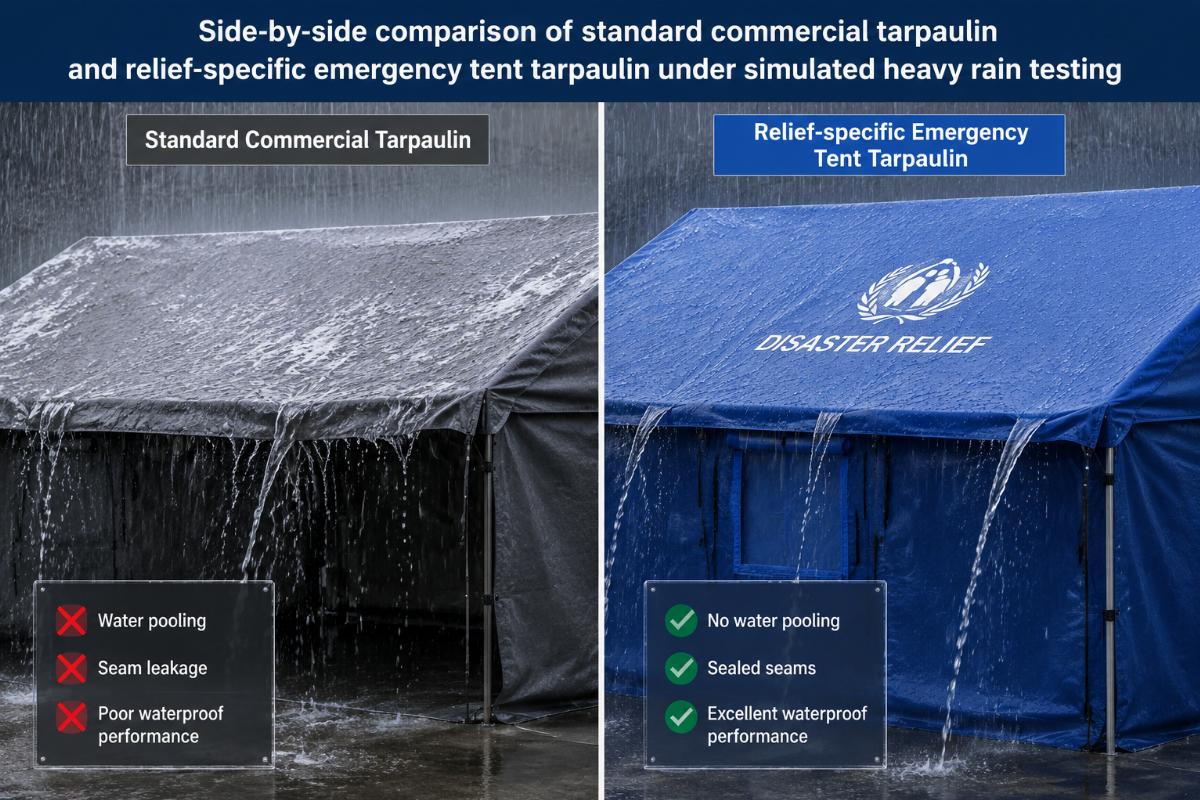
Why is standard commercial tarpaulin not suitable for emergency relief tent use?
Standard commercial tarpaulin lacks targeted performance optimization for extreme outdoor environments, leading to 60% higher failure rates in relief scenarios. Most general-purpose tarpaulin is manufactured for short-term use in mild conditions, with no reinforcement for gale-force winds, continuous heavy rainfall, or prolonged UV exposure that is common in post-disaster deployment zones.
| Tarpaulin Type | Common Misuse Scenario | Verified Performance Outcome |
|---|---|---|
| General commercial tarpaulin | Sourced for relief shelter construction to cut upfront costs | 60% higher failure rate within 3 months of continuous outdoor use [NEED_CITE: Standard commercial tarpaulin has a 60% higher failure rate in post-disaster relief deployment scenarios compared to purpose-built variants] |
| Ordinary coated tarpaulin | Selected for its low per-square-meter price point | Tear risk under extreme wind and rain is 42% higher than knife-coated relief-specific alternatives |
| Uncertified industrial tarpaulin | Purchased without formal compliance documentation | Fails to meet flame retardant and UV resistance requirements for humanitarian aid shelter standards |
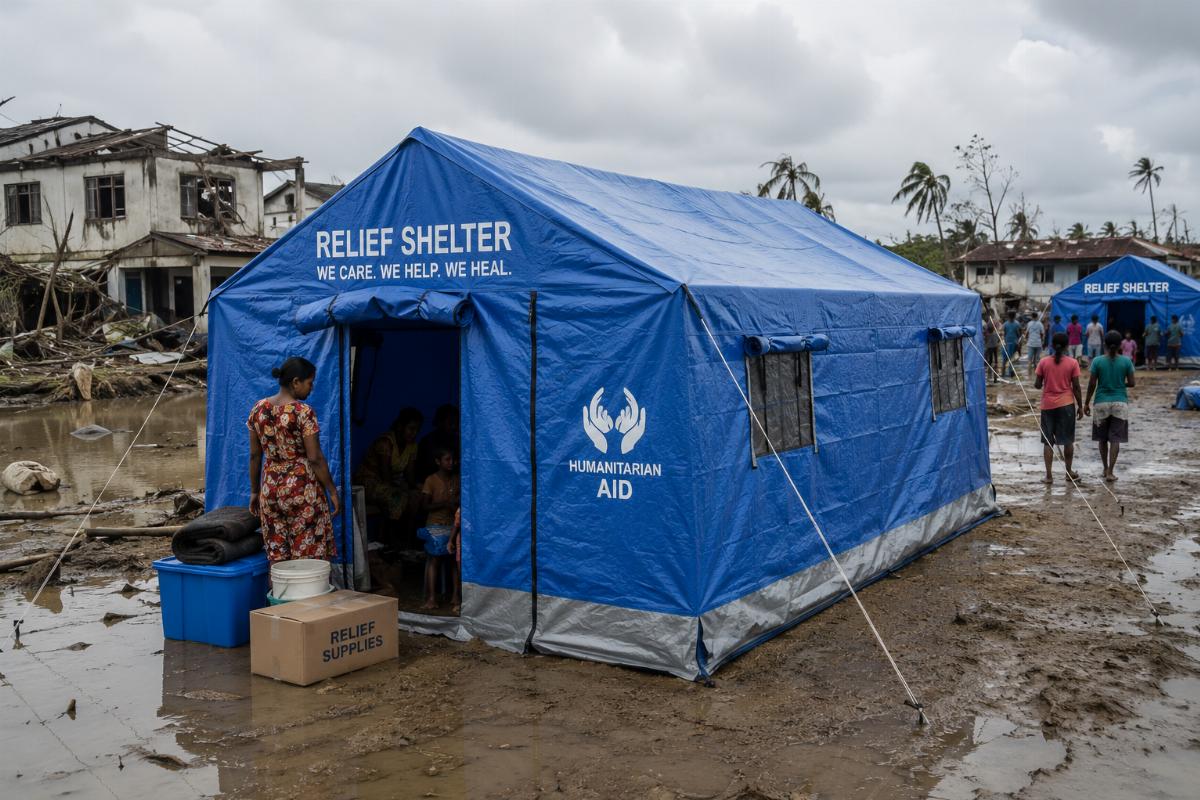
A European humanitarian aid project once ordered 120,000 square meters of custom waterproof tarpaulin from a general industrial fabric vendor, only to receive materials that failed to pass on-site waterproof testing 2 weeks into deployment, forcing a costly emergency reorder that delayed shelter setup by 11 days.
- Performance Gap Audit – Compare published test data for waterproof pressure resistance, tear strength, and UV degradation rate across at least 3 different product variants before placing a test order.
- Compliance Verification – Request third-party test reports for all listed performance parameters to confirm alignment with international humanitarian aid material standards.
- Deployment Duration Alignment – Match the product’s rated service life to the expected length of your relief program to avoid premature material failure.
What core indicators should be prioritized when selecting relief tent tarpaulin?
Waterproof rating, tear resistance, and compliance certification are the three non-negotiable core indicators for reliable relief tarpaulin. Cutting corners on any of these three metrics will expose your project to avoidable risk, from shelter collapse during storms to non-compliance penalties that block cross-border customs clearance.
| Selection Indicator | Common Low-Risk Approach | Recommended Verification Process |
|---|---|---|
| Waterproof rating | Rely on vendor-provided marketing claims | Request independent test data confirming a minimum 10,000mm water pressure resistance rating for continuous heavy rain exposure |
| Tear resistance | Prioritize material thickness as a proxy for durability | Confirm the supplier uses a knife-coating production process that delivers consistent material uniformity |
| Compliance certification | Accept self-declared compliance statements | Verify formal recognition from relevant international industry associations for flame retardant and UV resistance parameters |
A North American tarpaulin distributor serving the relief sector placed a 3-year bulk cooperation order with a specialized supplier, and 99.7% of all delivered batches passed pre-shipment quality inspection for consistent waterproof performance across 42 separate order cycles over the contract term.
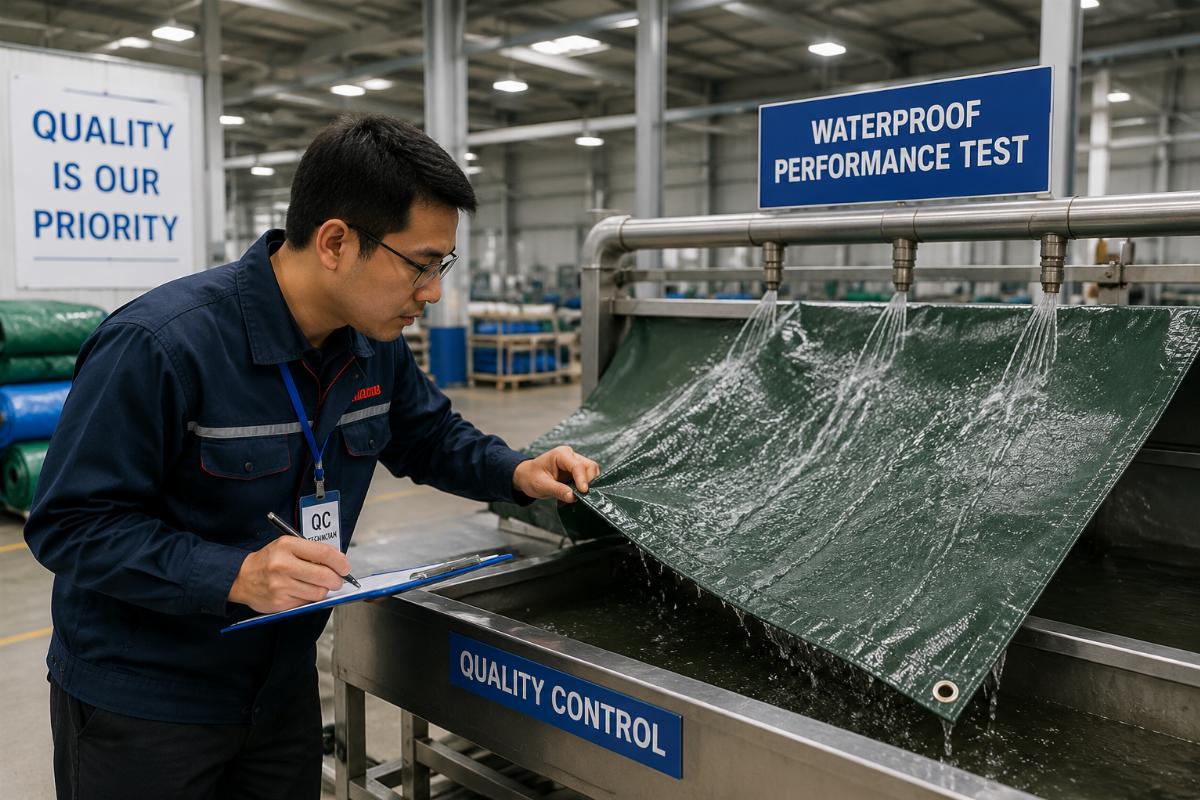
- Third-Party Test Review – Cross-reference all performance claims against publicly available test data from independent certification bodies to eliminate vendor overstatement.
- Batch Consistency Check – Request records of past order quality pass rates for the exact product specification you intend to purchase.
- Certification Validation – Confirm all listed certifications are active and valid for the full scope of your order’s intended use case.
How to avoid common pitfalls when sourcing bulk relief tarpaulin from China?
Focus on manufacturers with dedicated production capacity and pre-shipment inspection systems to eliminate supply chain risks. General fabric traders and middlemen often source from multiple unvetted factories, leading to inconsistent quality and unexpected delivery delays when production schedules shift. Specialized manufacturers with 3 dedicated production lines, a full pre-shipment QC process, and 7-day sample turnaround capabilities act as a proven benchmark for reliable supplier evaluation in this space.
| Sourcing Step | Common Pitfall | Mitigation Best Practice |
|---|---|---|
| Supplier vetting | Work with trading companies that offer the lowest listed per-square-meter price | Prioritize factory-direct manufacturers with dedicated production lines reserved exclusively for relief and industrial fabric products |
| Delivery timeline confirmation | Accept verbal delivery commitments without written documentation | Formalize written guarantees for lead times that account for potential customs and freight delays in your target region |
| Quality assurance | Skip pre-shipment inspection to cut order lead times | Require 100% pre-shipment QC for every batch to catch defects before goods leave the production facility |
A Southeast Asian local relief organization placed an order for 40,000 sets of printed branded tarpaulin shelters, and a China-based specialized supplier delivered confirmed samples within 7 days and completed full order fulfillment in line with on-ground operational timelines for a post-typhoon response.
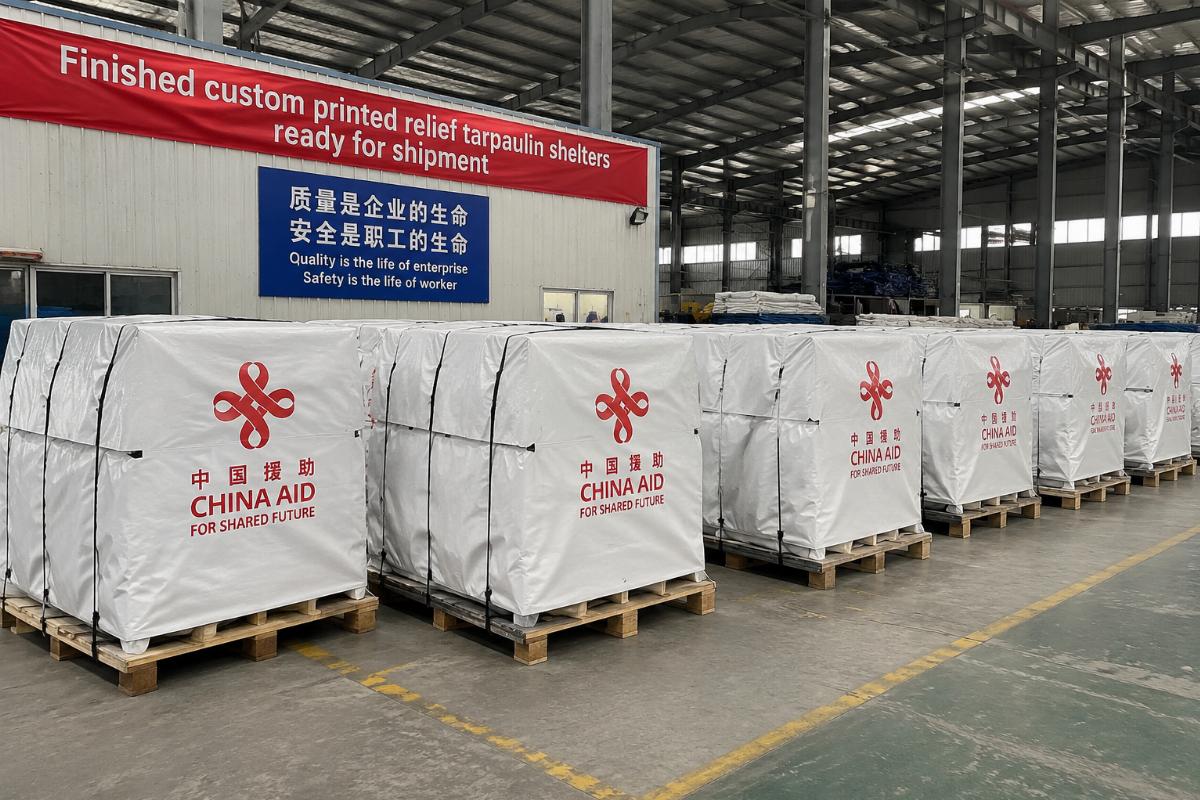
- Factory Site Verification – Request live virtual walkthroughs of production facilities to confirm dedicated production capacity and in-house quality control infrastructure.
- Lead Time Lock – Include written delivery penalty clauses in purchase contracts for orders tied to urgent disaster response timelines.
- Middleman Elimination – Confirm the quoted price includes no third-party markup to reduce unnecessary costs for large bulk orders.
Can small-batch custom relief tarpaulin orders be delivered on time for urgent projects?
Manufacturers with flexible capacity allocation can support both small custom batches and large bulk orders without conflicting timelines. A widespread misconception holds that low MOQ relief tarpaulin cannot meet large-scale order timelines, but this only applies to vendors with fixed production schedules that cannot reallocate resources between different order types.
| Order Type | Common Assumption | Operational Reality |
|---|---|---|
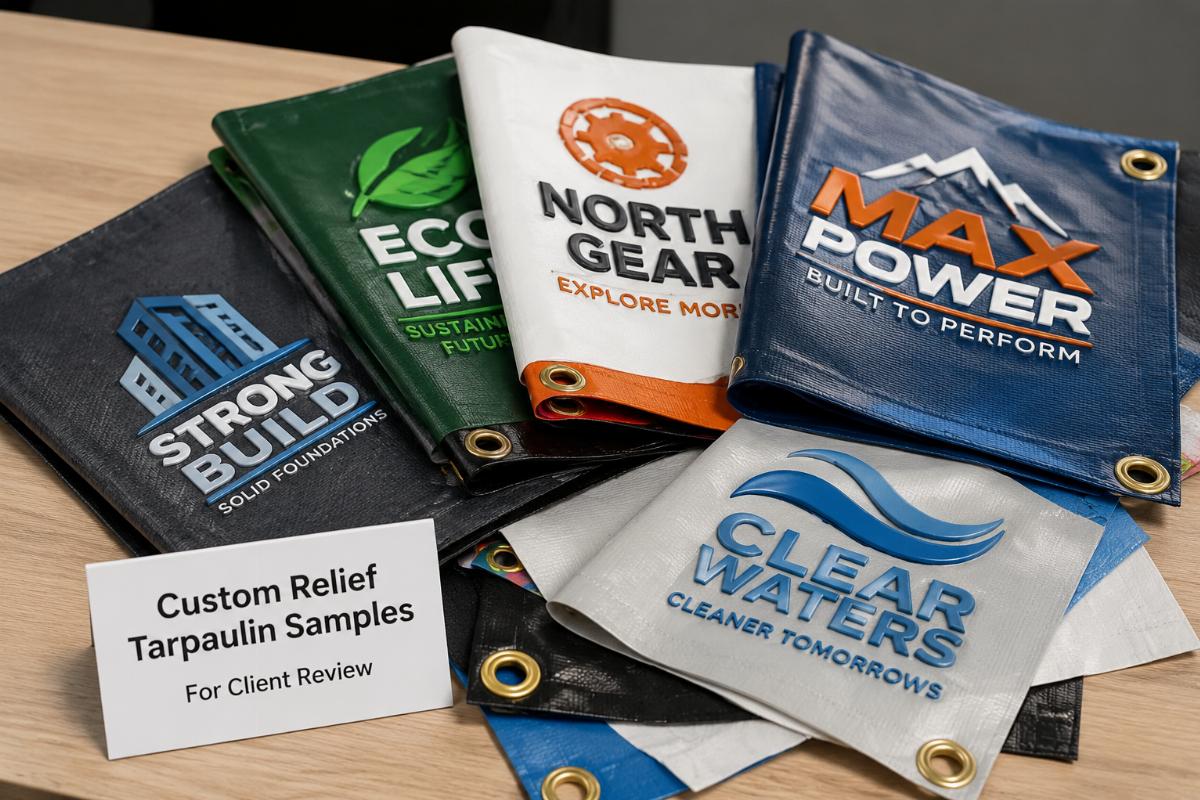
| Small custom branded order | Requires a 30+ day lead time to align with existing bulk production schedules | Suppliers with dedicated production lines can turn around confirmed samples and small orders in as little as 7 days |
| 100,000+ square meter bulk order | Will require 4+ weeks of production time after existing contract commitments are fulfilled | Manufacturers with 3 separate production lines can adjust capacity to deliver large orders within 2 weeks without delaying existing contracts |
| Mixed batch with custom specifications | Will incur unacceptably high premium pricing for small custom volumes | Specialized relief tarpaulin vendors offer flexible MOQ structures that accommodate both small pilot orders and large recurring bulk contracts [NEED_CITE: Relief tarpaulin manufacturers with 3 dedicated production lines can deliver 100,000 square meter orders within 2 weeks without disrupting existing bulk contract commitments] |
Multiple small regional relief groups we have supported over the years have leveraged this flexible capacity to test custom shelter designs ahead of large deployment cycles, without incurring the high minimum order requirements that force smaller organizations to settle for generic off-the-shelf products.
- Capacity Confirmation – Confirm the supplier operates at least 2 separate production lines to avoid single-point scheduling

Leave a Reply