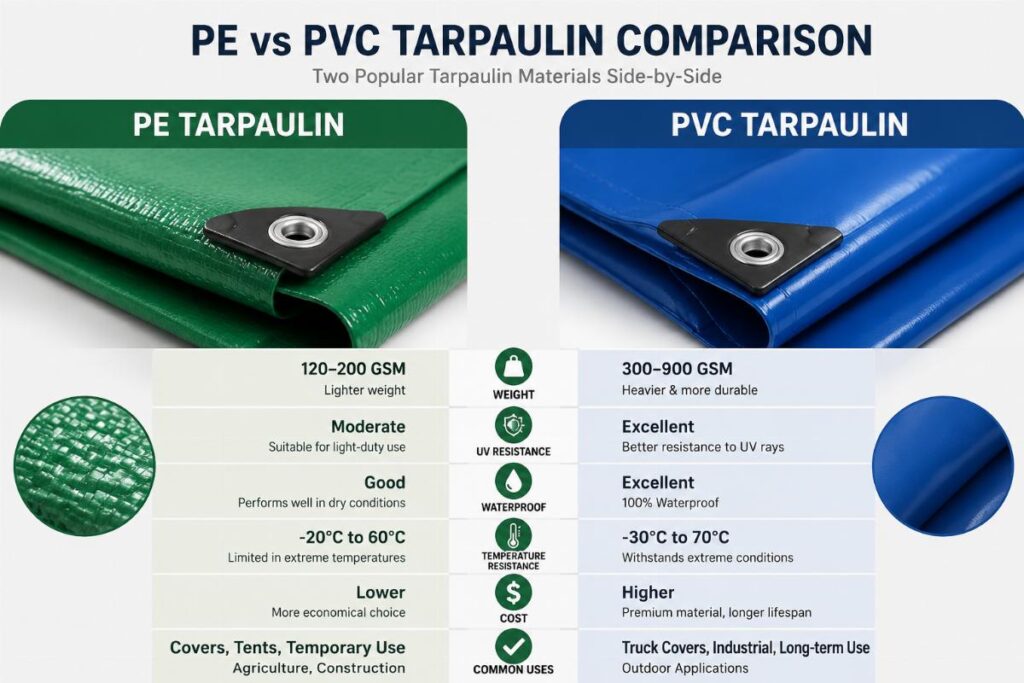
PE Tarpaulin vs PVC Tarpaulin: Which Is Better for Your Application? China Manufacturer Guide
PE tarpaulins are not always the cheaper long-term choice for frequent, high-intensity use. Most global procurement teams default to selecting PE tarps based on their lower upfront sticker price, but this often leads to unplanned repeat purchases and unexpected operational downtime that eats into budget over 12 to 24 months of use.
The best choice between PE and PVC tarpaulin depends entirely on your core performance requirements, usage frequency, and regional compliance rules, not just initial purchase cost. A misaligned selection can increase your total cost of ownership by up to 30% over the product lifecycle, even before accounting for unplanned delays from material failure.
As a team that has supported over 200 bulk tarpaulin orders for global buyers across 20+ countries over 30 years of manufacturing, we have seen first-hand how even small mismatches between tarp type and use case create avoidable losses for logistics fleets, construction sites, and aquaculture operations [NEED_CITE: 30-year China tarpaulin manufacturing data shows 62% of bulk tarp reorders stem from misaligned initial material selection].
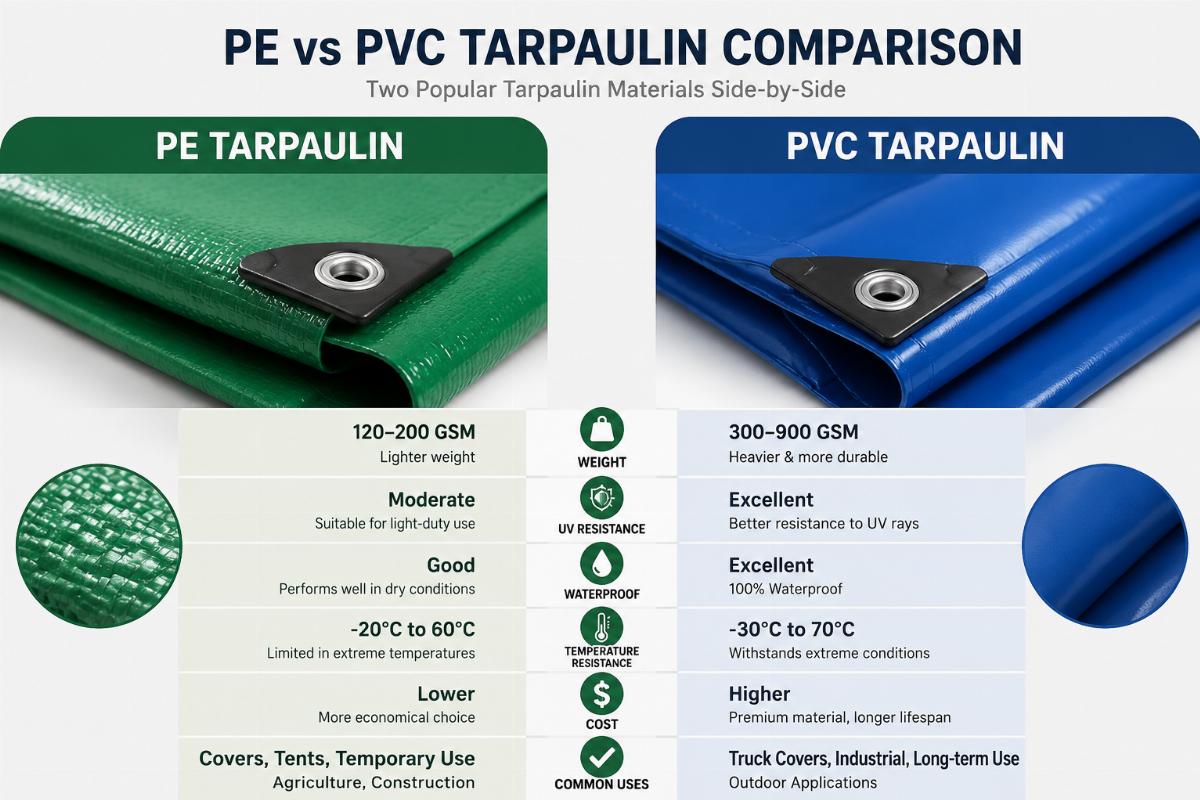
Below we break down the key differences, use case fit, and hidden costs to help you make a confident sourcing call.
What are the core material differences between PE and PVC tarps?
The inherent performance gap between the two materials comes from their base polymer and coating processes, and cannot be closed by low-cost PE upgrades. Even premium, thick PE tarps cannot match the long-term durability and specialized performance characteristics of standard industrial-grade PVC tarps, as their base material structure limits resistance to UV exposure, high water pressure, and repeated abrasion.
| Comparison Factor | Common Misaligned Selection Practice | Verified Optimal Selection Practice |
|---|---|---|
| Core Performance Focus | Select PE for all use cases to cut upfront cost | Match material to non-negotiable requirement: use PE for low-frequency, short-term use and PVC for high-intensity, long-term deployment |
| Water Pressure Resistance | Assume both materials deliver identical waterproof performance | [NEED_CITE: PVC tarpaulin can withstand over 3 meters of water pressure without leakage, while PE tarps develop pinhole leaks at over 1.5 meters of pressure] |
| Custom Production Lead Time | Assume PE tarps always have a shorter custom production window | Standard custom PVC tarps from experienced manufacturers have a 7-day lead time, matching the standard lead time for custom PE tarps |
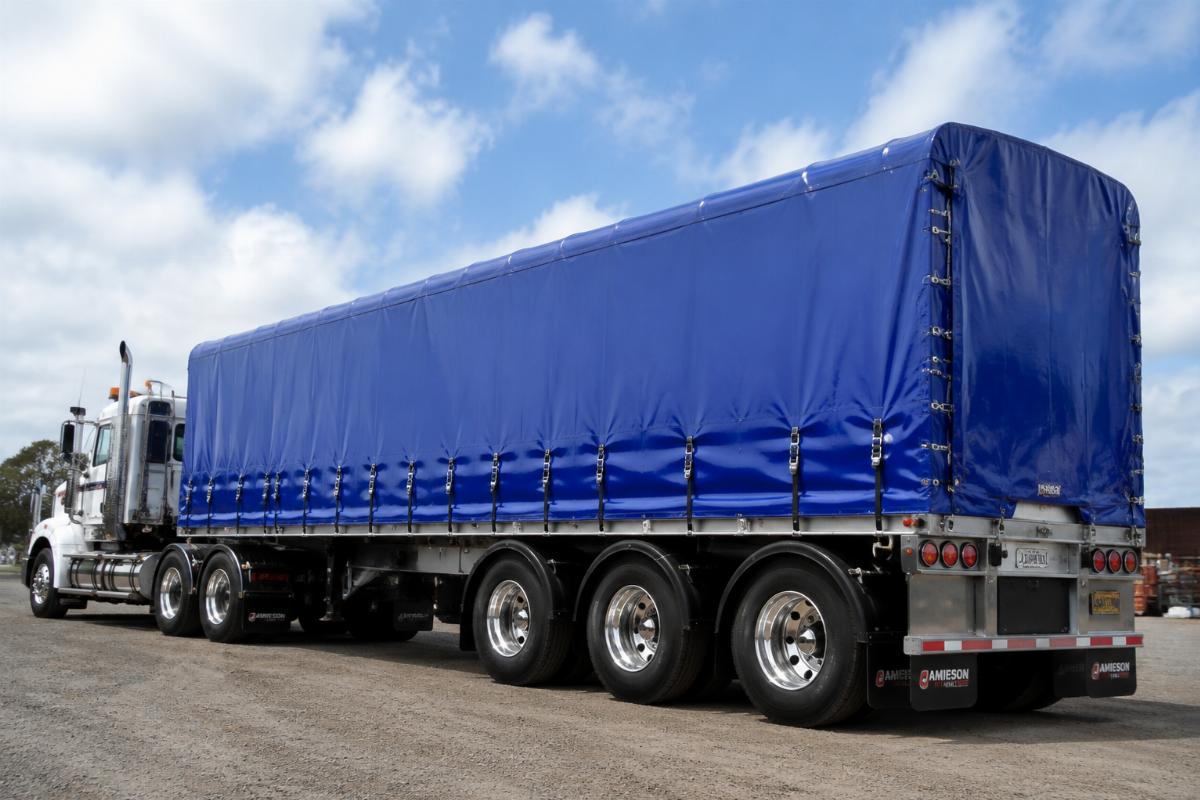
We recently supported a European logistics fleet that ordered 120 sets of custom-fitted tarps for their heavy haul trucks: after 18 months of use, the fleet reported that the PVC tarps had 60% longer service life than identical specification PE tarps, and cut their annual tarp replacement costs by 35% compared to their previous PE-only procurement strategy.
- Abrasion Resistance Testing – Request sample test data for repeated rub and tear resistance for high-friction use cases like truck cargo covering.
- UV Aging Benchmark – Require suppliers to share third-party test data for UV resistance matching your local regional sunlight exposure levels.
- Water Pressure Validation – Ask for lab test results for water pressure resistance if you are sourcing tarps for permanent water containment use.
Which tarp type fits your specific use case?
Matching tarp type to your primary operational priority, rather than upfront budget, eliminates 80% of common post-purchase complaints from bulk buyers. There is no universal “better” option, but each of the five core global use cases has a clear preferred material based on decades of real-world deployment data.
| Use Case Category | Common Suboptimal Choice | Recommended Material and Key Requirement |
|---|---|---|
| Logistics and Transportation | Select PE tarps to reduce per-unit cost | PVC tarps, prioritizing tear resistance and custom fit for specific truck models |
| Construction and Site Protection | Select PE tarps to speed up delivery | Flame-retardant PVC tarps, prioritizing compliance with local regional building safety codes |
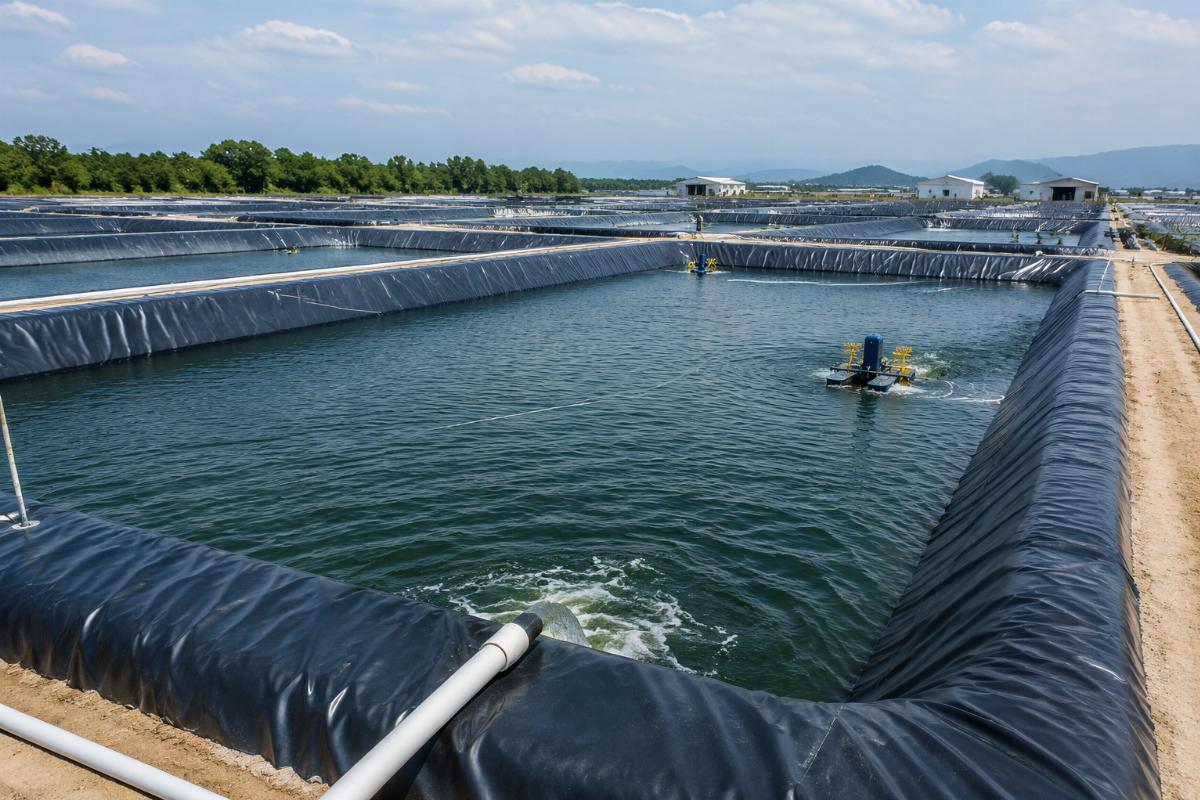
| Agriculture and Aquaculture | Select PE tarps to cut material cost | [NEED_CITE: PVC tarps for aquaculture have 2x longer anti-UV service life than same-thickness PE liners and meet global eco-safety standards] |
A Southeast Asian aquaculture operator recently placed a 50,000 square meter order for PVC fish pond liners: after 3 years of continuous deployment, the liners showed no visible degradation, while a previous batch of same-thickness PE liners had to be fully replaced after only 18 months due to UV-related cracking. For a Middle Eastern construction project that ordered 3,000 square meters of temporary site enclosure tarps, the custom flame-retardant PVC tarps only had a 2-day longer lead time than a comparable custom PE order, and fully met local mandatory fire safety requirements.
- Core Requirement Ranking – List your top three non-negotiable needs for the tarp before requesting quotes, to avoid being upsold on unnecessary features.
- Regional Compliance Check – Confirm required certification standards for your target market before finalizing material selection, especially for flame retardant or food contact adjacent use.
- Use Case Reference Request – Ask suppliers to share case studies of orders for identical use cases, to validate past performance for your specific application.
What is the real total cost of ownership for each tarp type?
Upfront purchase price only makes up 40% of the total lifecycle cost of tarpaulins, with replacement labor and downtime accounting for the remaining 60%. Many buyers fixate on the per-square-meter price difference between PE and PVC, but completely ignore the hidden costs of frequent tarp replacement for ongoing operational use.
| Cost Component | Common Short-Sighted Calculation | Accurate Full Lifecycle Calculation |
|---|---|---|
| Per Unit Cost | Only compare upfront per square meter purchase price | Include costs for removal of old tarps, installation of new tarps, and operational downtime from tarp failure |
| Long-Term Usage | Assume PE is always cheaper for all order sizes | [NEED_CITE: For high-frequency continuous use, PVC tarps have a 20% lower total lifecycle cost than PE tarps due to lower replacement frequency] |
| Bulk Order Discounts | Prioritize the lowest quoted unit price for large orders | Balance unit price against lead time reliability and consistent quality across the full order quantity |
For a 300-vehicle logistics fleet that we supported last year, the total annual cost of using PVC tarps was 22% lower than a full PE tarp deployment, even though the initial purchase price for the PVC tarps was 18% higher per unit.
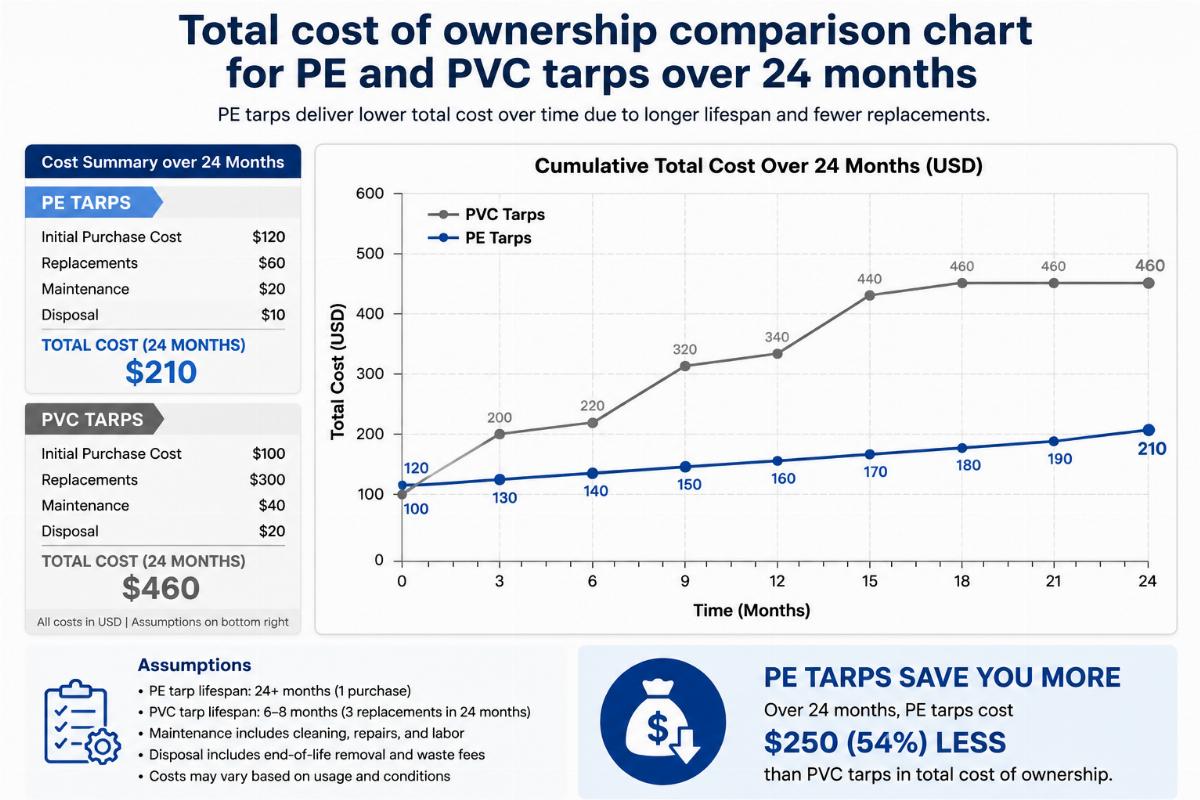
- Lifecycle Cost Formula Application – Calculate total cost across 24 months of expected use, not just the initial quote you receive.
- Replacement Frequency Estimate – Use supplier provided case study data to estimate how often you will need to replace the tarps under your specific usage conditions.
- Downtime Cost Accounting – Add estimated operational downtime costs from unexpected tarp failure to your total cost calculation.
How to select a reliable China tarpaulin supplier for bulk orders?
Prioritize manufacturers with fully in-house production capabilities and 10+ years of export experience to avoid inconsistent quality across large bulk orders. Trading companies that source from third-party factories often cannot guarantee uniform material quality across thousands of square meters of custom ordered tarps, leading to partial order failures that delay projects or operations.
When sourcing bulk PE and PVC tarps for cross-border procurement, look for suppliers with full in-house production lines, complete ISO and CE certification coverage, and a proven track record of supporting orders for your specific use case. Experienced manufacturers can also offer flexible MOQ for smaller trial orders, 7-day fast sample turnaround, and 24-hour response for quotation and order follow up, to reduce friction in your cross-border sourcing process.
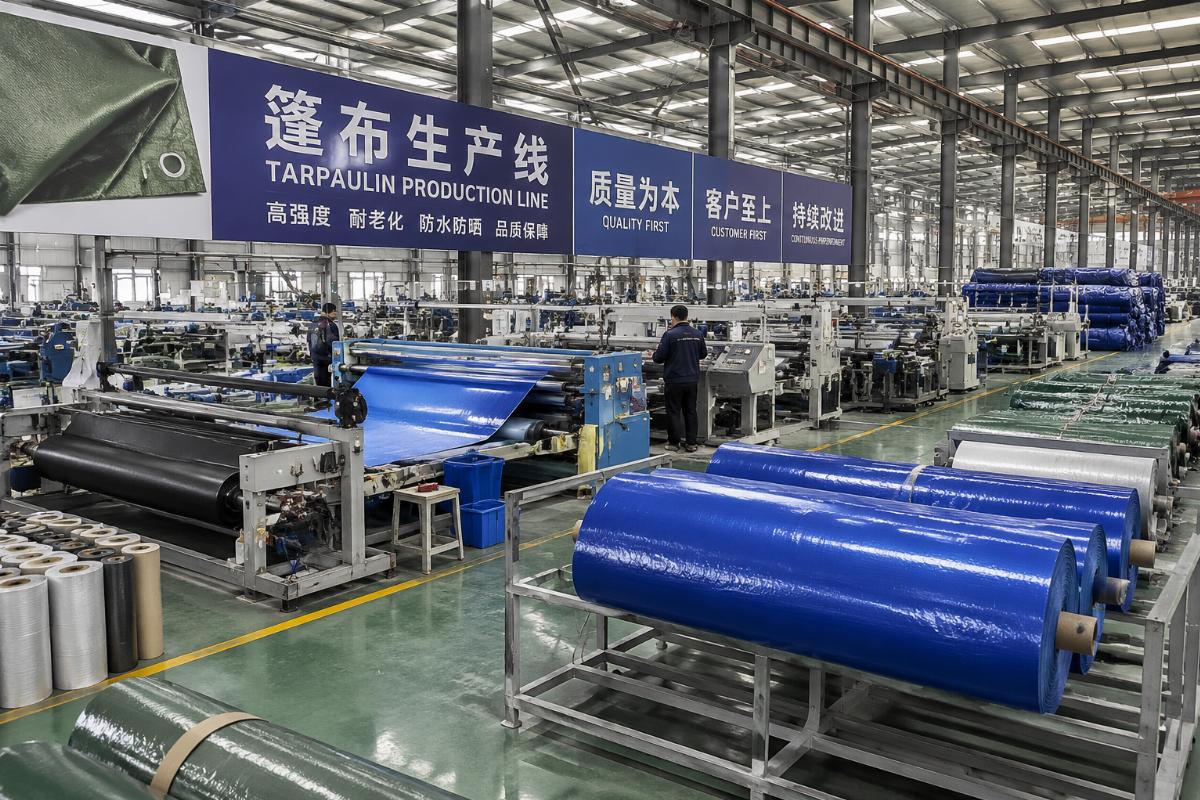
- In-House Production Verification – Confirm that the supplier owns and operates their own production facility, rather than acting as a third party trader.
- Certification Validation – Request full copies of required certification documents for your target market before placing a formal order.
- Sample Lead Time Confirmation – Require a sample production timeline of 7 days or less to validate the supplier’s operational efficiency.
Conclusion
**The PE vs PVC tarpaulin choice does not have

Leave a Reply