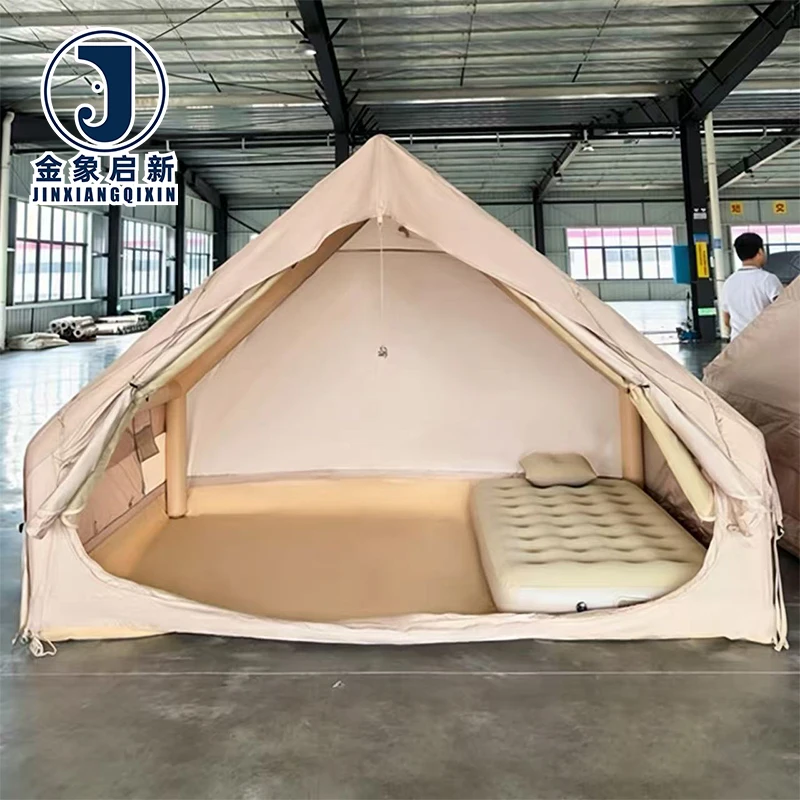
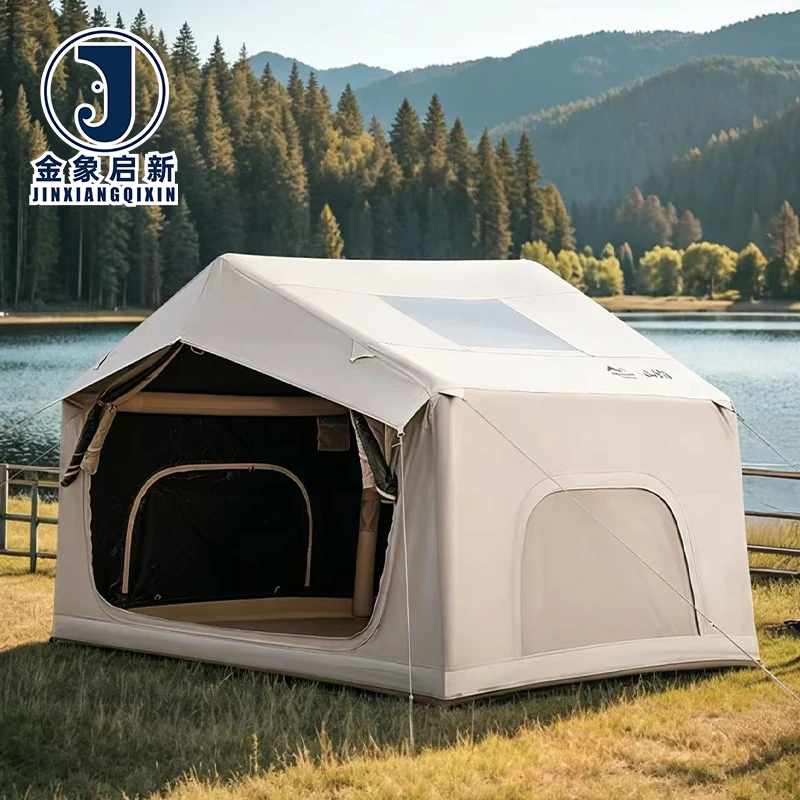
Description
Roll-to-Roll Consistency — Full-process QA and 12-point digital inspection on every inflatable tent fabric roll, ensuring uniform colour, weight, and coating across your container load.
Technical Specifications
| Parameter | Value |
|---|---|
| Product Type | Inflatable Tent Fabric |
| Core Material | PVC Tarpaulin |
| Waterproof Performance | 10,000mm hydrostatic head (verify against current batch test report) |
| UV Resistance | 72-hour accelerated aging test (verify against current batch test report) |
| Flame Retardant | Available in flame retardant grades — confirm the grade required for your market |
| Anti-static | Available with anti-static treatment — confirm the standard required for your market |
| Seam Strength | Minimum 35N/cm (verify against current batch test report) |
| Thickness Tolerance | ±0.1mm (verify against current batch test report) |
| Key Features | Waterproof, tear-resistant, OEM & ODM supported |
Application Suitability
| Application | Exposure & Requirement |
|---|---|
| Commercial camping tent production | Repeated inflation cycles, internal air pressure load, weld seam integrity, multi-panel colour match |
| Rental company gear supply | Frequent assembly and packing, user handling abrasion, UV exposure across seasons, cleaning chemical contact |
| Adventure tourism operator equipment | Remote field deployment, weather extremes, rapid setup demand, transport-induced creasing |
| Outdoor retail wholesale distribution | Shelf presentation consistency, roll-to-roll colour uniformity, standardized GSM for buyer specification matching |
Why Roll Consistency Matters More Than a Quoted GSM for Inflatable Tent Fabric
A stated GSM means nothing when the roll you cut weighs less than what you paid for.
Purchasing inflatable tent fabric by the roll introduces a specific risk: the GSM written on the quotation does not always match the material that arrives at your cutting table. When rolls in a single shipment vary in coating weight, your automated cutting lines produce panels that behave differently under inflation pressure. Some panels hold shape while others sag, and the finished tents ship with inconsistent performance that triggers warranty claims [NEED_CITE: ISO 1421 tensile and tear test methods for coated fabrics]. The problem compounds when multiple rolls feed into one production run — colour shift between rolls becomes visible once panels are welded side by side on the finished tent.
Batch Uniformity Across Container Loads
When you order inflatable tent fabric roll wholesale, you need every roll in the shipment to behave identically on your production line. Coating weight deviation between rolls causes variation in stiffness, which affects how the material feeds through automated cutters and how seams align during welding. Our production runs maintain colour and GSM consistency through in-process QA checkpoints, giving you predictable material behaviour from the first roll to the last in your container.
Coating Weight and Base Fabric Matching for Inflatable Structures
Inflatable tent manufacturing demands that the PVC coating bonds fully to the base fabric, because air pressure places constant stress on the material in every direction [NEED_CITE: coating adhesion test methods for PVC tarpaulin]. The base fabric denier and weave pattern must match the coating weight to deliver balanced tensile and tear performance. A heavier coating on a light base fabric creates a stiff roll that cracks at fold points during packing, while too little coating on a heavy base leaves the weave exposed and vulnerable to water ingress at seam lines.
Reading the Specifications That Actually Affect Tent Performance
GSM alone does not tell you how the inflatable tent fabric will perform under air pressure. The base fabric denier and the thread count per centimetre determine how the material resists tearing when a puncture occurs — a high-denier yarn in a tight weave stops tear propagation far more effectively than a loose weave at the same GSM. The coating method also changes the outcome: knife-over-edge coating produces a smooth surface that welds cleanly at seam lines, while dip-coating can leave uneven thickness that creates weak points where panels join. For inflatable tents that undergo repeated inflation and deflation, the coating must remain flexible without becoming tacky in heat or brittle in cold, which is why the formulation matters as much as the weight.
The Hidden Cost of Specifying on Price Per Kilogram Alone
Choosing inflatable tent fabric based on the lowest cost per kilogram often delivers rolls that are lighter than the quoted GSM, because the coating has been applied thin to save material. The finished tent loses air pressure faster, the seams separate under load, and your customers return the product [NEED_CITE: common failure modes in PVC inflatable structures]. A batch with inconsistent colour forces you to sort rolls manually, wasting material and production time. When flame retardant or anti-static treatment is claimed without a test certificate, the tent fails compliance inspection at the destination market and the entire shipment is rejected.
Why Production Line Buyers Source Here
Three full production lines with 36 sets of professional processing equipment give us the capacity to fill container-load orders for inflatable tent fabric without splitting your batch across multiple production runs, which is where colour variation originates. The 10-person R&D team develops samples for custom width, colour, and coating formulations, so you confirm the exact roll specification before committing to bulk. A dedicated QA/QC protocol inspects every roll before dispatch, recording GSM, colour, and coating weight in a digital batch record that ships with your documentation.
Documentation & Verification
- Material specification sheet listing GSM, base fabric denier, coating type, and Pantone colour reference per roll
- Pre-shipment inspection record confirming 100% roll-by-roll check against your order specification
- Roll packing list with individual roll weight, dimensions, and net weight for container load planning
- Test reports for waterproof, UV, and flame retardant grades where applicable to your order
- ISO and CE certificates included for destination market compliance submissions
Fabrication, Handling & Storage
- Set heat welder temperature and dwell time to match the PVC coating formulation — request our welding parameter guide for the specific roll grade supplied
- Store rolls upright on pallets in a shaded, ventilated area to prevent flat spots that cause tracking errors on automated cutters
- Avoid folding inflatable tent fabric rolls in cold conditions, as PVC stiffens and may crease permanently below the recommended handling temperature
- Use compatible PVC adhesive for field repairs, ensuring the surface is clean and dry before patch application
- Plan cutting layout to minimize offcuts across the roll width, and mark roll direction to maintain panel grain consistency in the finished tent
What We Need to Quote Your Roll Order
Provide the target GSM, required roll width, and annual volume so we can match the correct production line and coating formulation to your inflatable tent fabric requirements. Confirm whether your destination market requires flame retardant or anti-static certification, and specify any custom colour or printing needs. Let us know if you need sample rolls sent for trial cutting and welding on your equipment before the bulk order is scheduled.
Frequently Asked Questions
Q: How do I verify that the GSM on the invoice matches the rolls I receive?
A: Each roll ships with a packing list recording its individual weight and dimensions, allowing you to calculate the actual GSM on arrival. Our pre-shipment inspection record documents the measured coating weight per roll before dispatch. For independent verification, cut a measured sample from the roll and weigh it against the stated specification to confirm compliance.
Q: Can you match colour consistently across multiple rolls in one order?
A: Colour consistency is maintained by running your entire order as a single production batch on one coating line. The in-process QA team checks colour against your approved reference at multiple checkpoints during production. Digital batch records document the colour reading for each roll, and any roll falling outside tolerance is removed before packing.
Q: What custom widths and roll lengths are available for my cutting equipment?
A: Rolls are produced in custom widths to match your automated cutting table, reducing edge waste and eliminating the need for panel joining. The 10-person R&D team develops a sample roll in your required width and coating formulation for approval before bulk production runs begin. Minimum order quantities apply per colour and specification.
Q: How is container loading planned by roll count and weight?
A: The roll packing list details each roll’s net weight, diameter, and length, enabling precise container load planning before shipment. Rolls are packed vertically on pallets to prevent deformation during transit. We provide a loading diagram showing roll placement to maximize container utilization while protecting the material from compression damage.
Q: What is the sample development lead time for a trial order?
A: Sample rolls reflecting your specified GSM, width, colour, and coating formulation are developed for your evaluation before bulk commitment. The sample goes through the same coating line and QA process as production rolls, ensuring the bulk order matches the approved sample exactly. Confirm your specification requirements and we provide a sample schedule with your quotation.