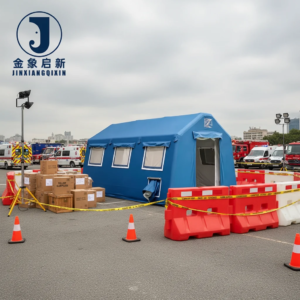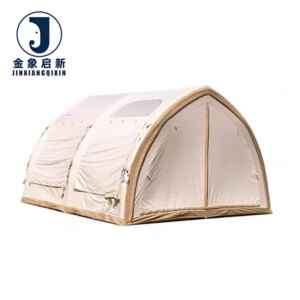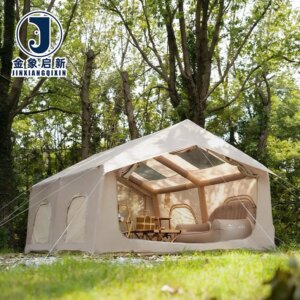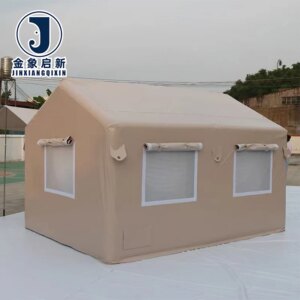
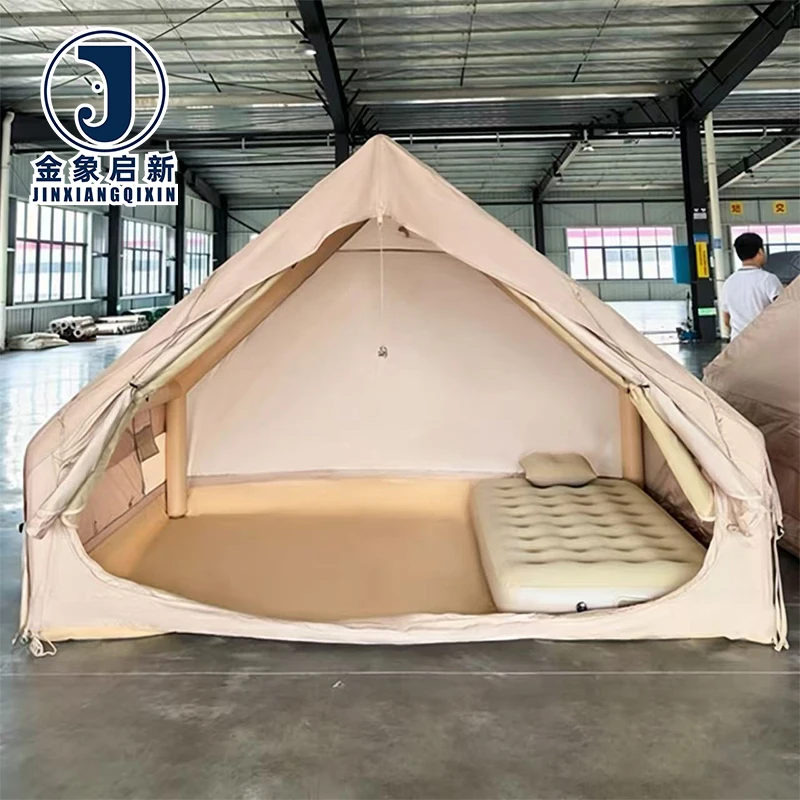
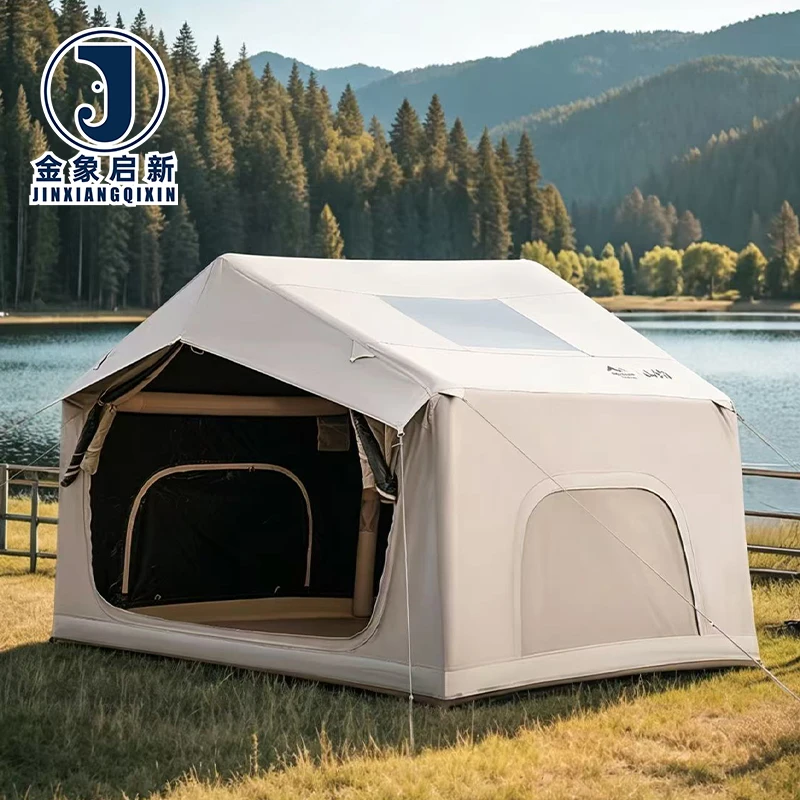
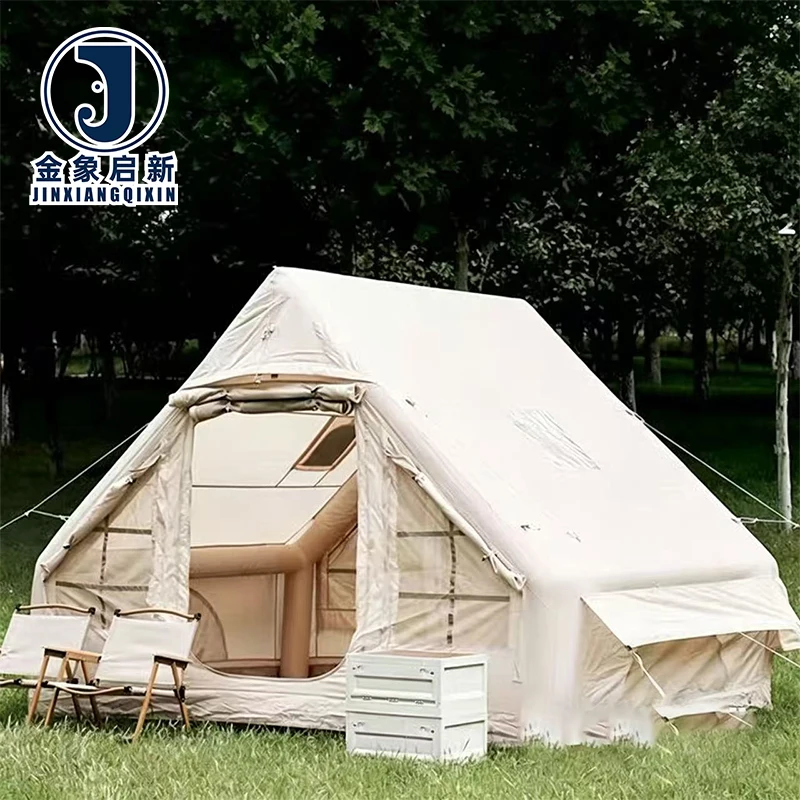
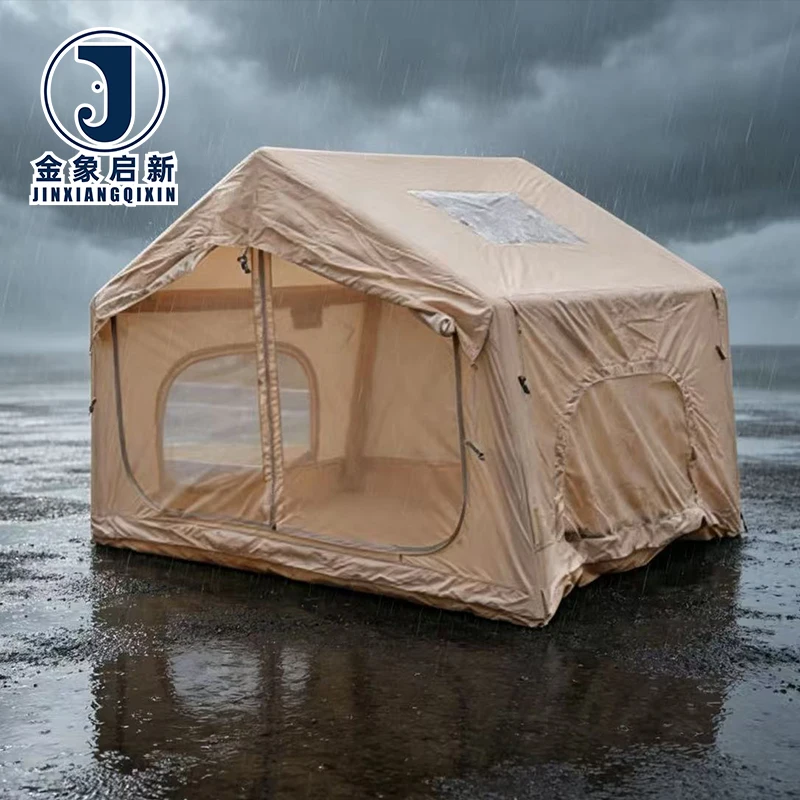
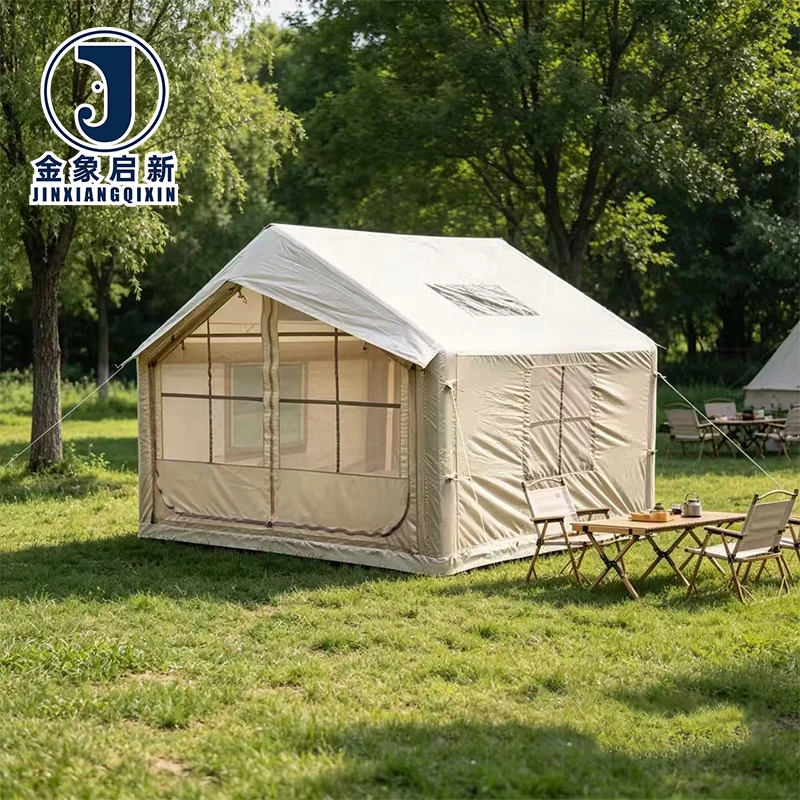
Description
Roll Stock Consistency — 3 full production lines and 36 sets of professional equipment ensure batch-to-batch colour and coating uniformity for inflatable tent fabric rolls shipped in volume.
Technical Specifications
| Parameter | Value |
|---|---|
| Product Type | Inflatable Camping Tent |
| Core Material | PVC tarpaulin |
| Product Category | PVC Tent |
| Capacity Range | 1-12 Person |
| Season Rating | Four-Season |
| Deployment | Quick Automatic Opening |
| Key Features | Waterproof, tear-resistant |
| UV Resistance | Available — confirm test basis for your market |
| Fire Retardancy | Available in flame retardant grades — confirm the grade required for your market |
| Anti-Static | Available — surface resistance to confirm to your standard |
| Customization | OEM & ODM (sample customization, pattern printing, material selection, product design) |
| Certifications | ISO9001, ISO14001, ISO45001, CE |
Application Suitability
| Application | Exposure & Requirement |
|---|---|
| Outdoor event infrastructure | Repeated inflation cycles, wind loading at seam junctions, UV exposure over multi-day installations |
| Temporary construction site shelters | Year-round weather exposure, abrasion from ground contact, rapid deployment demands |
| Emergency response deployments | Extreme temperature swings, transport abrasion, need for immediate structural integrity on inflation |
| Commercial outdoor activities | High foot traffic proximity, frequent pack-and-redeploy cycles, branding visibility on fabric surface |
| Mobile field operations | Remote logistics, limited repair capability on site, four-season thermal and moisture exposure |
Why Welded Seams Fail Before the Fabric Does on Inflatable Structures
Weld integrity depends on coating adhesion and weight consistency, not just fabric tensile strength.
Inflatable tent structures concentrate mechanical stress at the seams where air beams meet the shell. When coating weight varies between rolls or adhesion to the base fabric is inconsistent, the heat-welded joint becomes the weakest point in the entire structure. I have reviewed field failure reports where inflatable shelters deflated under wind load not because the PVC tarpaulin tore, but because the seam peeled apart at a coating-to-substrate interface that was never verified before welding. For manufacturers buying Inflatable Tent Fabric by the roll, the cost of a seam failure in the field far exceeds the cost of pre-production weld testing. [NEED_CITE: seam peel strength testing methods for coated fabrics per ISO 1421]
Coating Weight Control Across Production Batches
When you order multiple rolls of Inflatable Tent PVC Tarpaulin custom, the coating weight must remain uniform from the first roll to the last. Even minor deviations in GSM affect how the material responds to hot-air or high-frequency welding. Our production process monitors coating application at each stage, giving inflatable tent manufacturers the predictable weld behaviour they need across an entire container load.
Roll-to-Roll Colour Matching for Large Tent Orders
Colour variation between rolls becomes immediately visible once panels are welded side by side on a finished inflatable structure. We control pigment dosing and coating formulation to maintain colour consistency within a production run. For buyers sourcing inflatable tent fabric in custom colours or printed branding, we supply reference samples for approval before bulk production begins. [NEED_CITE: colour fastness and batch matching standards for coated technical textiles]
Understanding How Base Fabric and Coating Interact
The PVC tarpaulin used for inflatable tent manufacturing derives its performance from the relationship between base fabric construction and coating formulation. The base fabric denier and weave density determine tear propagation resistance, while the coating provides waterproofing and the surface that accepts welded seams. A higher GSM does not automatically mean a stronger fabric if the base fabric weave is loose or the coating bond is weak. Inflatable tent manufacturers need to evaluate both components together — requesting a material specification sheet that states base fabric construction alongside coating weight, rather than relying on GSM alone. The coating method also influences weld parameters; knife-coated fabrics typically offer stronger adhesion to the base yarn, which translates to more forgiving heat-weld windows during fabrication. Surface finish — whether glossy or matte — affects both print adhesion for branded tent panels and the ease of cleaning after field use. Fire-retardant grades, when specified for your market, must be verified against the applicable standard before the order is confirmed, as different regions require different certifications. [NEED_CITE: fire classification standards for temporary structures and tent fabrics]
The Hidden Cost of Specifying on Price per Kilogram Alone
When purchasing decisions focus solely on cost per kilogram, the material that arrives may meet the quoted GSM on paper but fail during fabrication. A roll that is lighter than agreed will weld differently than the sample you tested. A fire-retardant claim without a supporting test report means the finished inflatable tent may not pass site inspection. Colour drift across a multi-roll order forces fabricators to reject panels and reorder, adding weeks to project timelines. These consequences are preventable when buyers request pre-production samples and verify specifications against documented test results before committing to full production. [NEED_CITE: common causes of coated fabric specification disputes in bulk procurement]
What Makes This Supply Chain Reliable for Roll Buyers
Nearly 30 years of focused PVC coating production means the process variables that affect weld behaviour and colour matching are controlled, not left to chance. Three full production lines provide the capacity to fill container orders with consistent roll stock without splitting production across incompatible equipment. A 10-technician R&D team develops custom samples within days, letting inflatable tent manufacturers validate material choices before placing bulk orders. Dedicated QA and QC staff inspect every roll before shipment, catching coating weight deviations and surface defects that would otherwise reach your welding tables. Full OEM and ODM capability — from pattern printing to custom sizing — means you specify what you need and receive material built to that specification. ISO 9001, ISO 14001, ISO 45001, and CE certifications provide the compliance documentation that procurement departments and site auditors require.
Documentation & Verification
- Material specification sheet stating GSM, base fabric denier, weave, and coating type for each roll
- Test reports for fire-retardant grade and UV treatment supplied against the standard you specify
- Pre-shipment inspection record confirming 100% QC check on every roll before dispatch
- ISO 9001, ISO 14001, ISO 45001, and CE certificates available for compliance files
- Roll packing list detailing quantity, weight, and colour reference per container load
- Certificate of origin and customs documentation supporting international shipment
Fabrication, Handling & Storage
- Request weld parameter recommendations matched to the specific PVC tarpaulin coating weight you order
- Verify surface finish compatibility with your chosen printing or branding method before production
- Store rolls upright on pallets in climate-controlled space to prevent flat-spot deformation and surface creasing
- Allow material to acclimatise to workshop temperature before unrolling to avoid thermal shock to the coating
- Use manufacturer-recommended cleaning agents to preserve coating integrity and surface finish over repeated use
- Plan panel cutting layout to minimise seam count on curved inflatable air-beam sections
Starting Your Material Specification
Provide the inflatable structure dimensions, expected deployment environment, and any fire-retardant or anti-static standards your market requires. Confirm whether you need fabric by the roll or pre-cut panels, along with target colour references and annual volume. Request sample rolls to validate weld parameters and surface finish on your own fabrication equipment before committing to production volume.
Frequently Asked Questions
Q: How do I verify GSM on arrival against the quotation for inflatable tent fabric rolls?
A: Request a material specification sheet that documents the agreed GSM, base fabric construction, and coating weight for each roll. On receipt, cut a measured sample from each roll and weigh it against the stated value. Our pre-shipment inspection records include per-roll weight verification, providing a baseline you can cross-check independently.
Q: What fire-retardant grades are available and how do they map to my market’s safety standards?
A: Fire-retardant treatment is available in multiple grades depending on your destination market. Confirm the specific standard required — such as regional building material or temporary structure classifications — before order placement. We supply test reports mapped to the standard you specify, ensuring your finished inflatable tents pass site inspection and regulatory audits.
Q: How do you control batch colour consistency across multiple rolls of the same inflatable tent order?
A: Pigment formulation and coating dosing are controlled at every production stage. We supply reference samples for approval before bulk manufacturing begins, and our QA team checks colour against the approved standard before dispatch. This process prevents visible variation when adjacent panels are welded together on the finished structure.
Q: What is the lead time and MOQ for custom width, colour, or printed inflatable tent fabric?
A: Lead times and minimum order quantities depend on the specific customisation requested, including width, colour matching, and pattern printing complexity. Our R&D team develops custom samples within days so you can evaluate the material before production. Contact us with your specification to receive a confirmed timeline and volume requirement for your project.
Q: What welding and seam parameters do you recommend for your inflatable tent PVC tarpaulin?
A: Optimal weld temperature, pressure, and speed depend on the specific coating weight and surface finish of the PVC tarpaulin you order. We provide fabrication guidance matched to your material specification so your production team can dial in hot-air or high-frequency welding settings. Testing sample material on your own equipment before full production is always recommended.