
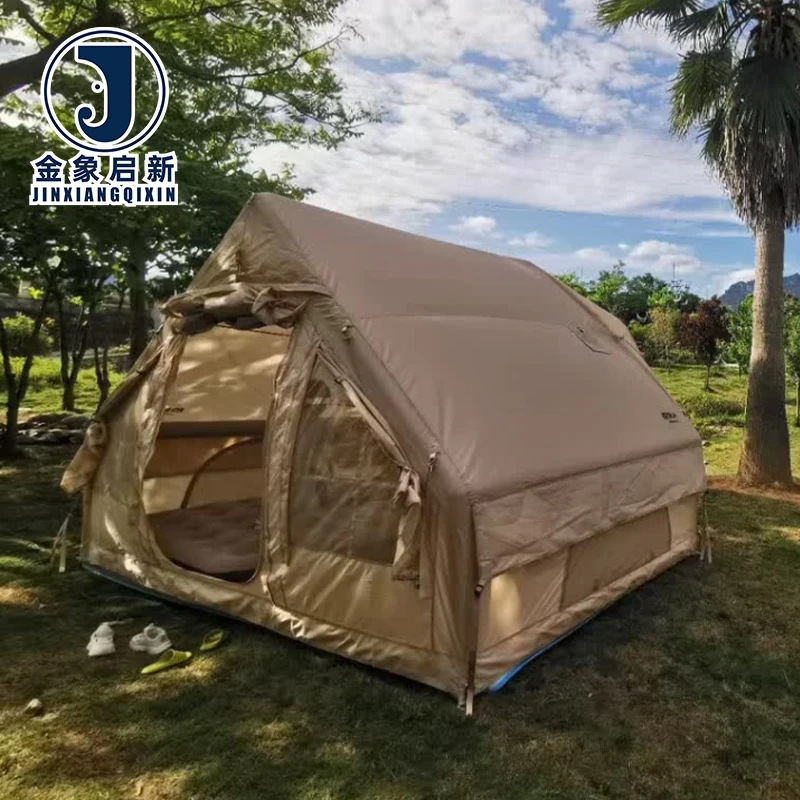
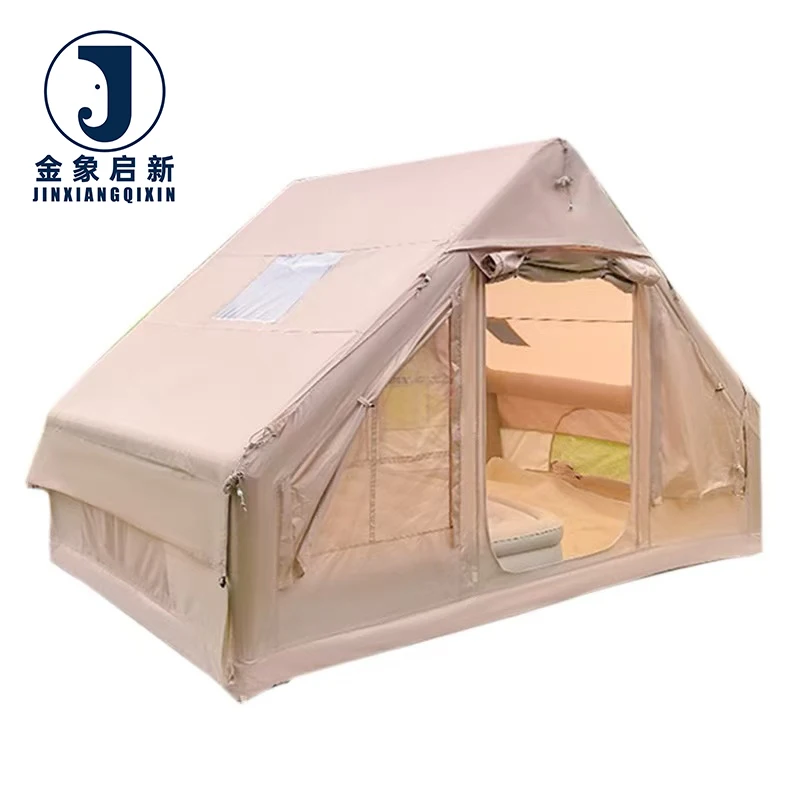

Description
Proven Roll Consistency — Dedicated QA/QC at every production stage ensures roll-to-roll colour and coating uniformity for inflatable tent fabric runs, verified through 100% pre-shipment inspection before dispatch.
Technical Specifications
| Parameter | Value |
|---|---|
| Product Type | Inflatable Tent Fabric roll / wholesale |
| Coating Material | PVC tarpaulin |
| Material Thickness Options | 0.4mm – 0.8mm |
| Waterproof Rating | 2000mm (source value — verify against manufacturer catalog) |
| Tear Strength | 180N minimum (test standard not stated in source) |
| Flame Retardant Grade | UL94 V-2 |
| UV Treatment | Anti-UV (test basis not stated in source) |
| Finish | Single-layer lightweight design |
| Customization | OEM & ODM: size adjustment, color customization, logo printing |
| Sample Lead Time | 5–7 days standard; +2–3 days for customization |
| Production Lead Time | 45 days for standard configurations |
| Annual Output Capacity | Supports orders of 1,000+ units |
| Reserve Capacity | 30% for rush orders |
| Inspection Points | 7 stages from raw material incoming to final packaging |
| Standards | ISO 9001, ISO 14001, ISO 45001, CE, UL94 V-2 |
| Warranty | 2-year on material defects |
Application Suitability
| Application | Exposure & Requirement |
|---|---|
| Tent and inflatable structure manufacturing | Roll-fed cutting, heat welding, consistent batch colour across panels |
| Commercial camping site outfitting | Repeated inflation cycles, UV exposure, ground moisture, guest turnover |
| Outdoor event temporary shelters | Rapid deployment, wind load, weather exposure, frequent pack-up |
| Expedition and field operation bases | Remote logistics, temperature variation, abrasion from transport |
| Large-scale festival and sports event covers | Crowd safety flame retardant compliance, high-visibility branding |
Why Batch Colour Variation Derails an Inflatable Tent Production Run
Roll-to-roll colour matching at the coating stage prevents visible panel mismatch once the structure is inflated on site.
When fabricators cut panels from multiple rolls of PVC tarpaulin and sew or weld them into a single inflatable tent shell, even a slight hue shift between rolls becomes obvious under daylight. Buyers who have sourced Inflatable Tent Fabric roll / wholesale from suppliers without in-line colour control often discover the mismatch only after panels are joined — at which point the entire batch may need rework or rejection. [NEED_CITE: visual colour variance in coated fabric panels under natural light conditions]
The cost is not limited to wasted material. Production schedules slip, containers are held, and the fabricator’s credibility with the end client suffers. Consistent pigment dosing, controlled coating temperature, and batch-tracked raw material input are the operational levers that determine whether every roll in a shipment reads as the same colour to the eye.
Coating Uniformity Across the Full Roll Width
Inflatable tent panels are cut from wide PVC tarpaulin rolls, and any variation in coating thickness across the web shows up as uneven stiffness or gloss. The 0.4mm to 0.8mm thickness range available here covers lightweight camping shelters through to heavier commercial-grade structures. Maintaining that tolerance from edge to edge of each Inflatable Tent Fabric roll / wholesale unit is what allows fabricators to cut panels without rejecting the outer edges.
Weld Integrity at Inflation Stress Points
An inflatable tent relies on sealed seams that hold under continuous internal air pressure. The PVC coating formulation must support high-frequency or hot-air welding without burning through or leaving porous weld lines. Flame retardant performance to UL94 V-2 means the fabric meets a recognised ignition resistance standard, but weld quality depends equally on coating chemistry and the fabricator’s temperature settings. Confirming weld peel strength on sample panels before committing to a full roll order avoids seam failures in the field. [NEED_CITE: PVC tarpaulin heat welding parameters for inflatable structure fabrication]
Reading the Specification Sheet Beyond Thickness
Material thickness alone does not predict how an inflatable tent fabric will behave under load. Tear strength at 180N minimum gives a baseline for resistance to cut propagation at stress points — corners, valve openings, and tie-down attachments. The base fabric denier and weave density work together with the PVC coating weight to determine overall tensile performance. A lighter coating on a dense base fabric can outperform a heavier coating on a loose weave, which is why requesting the full material specification sheet matters more than comparing thickness figures in isolation. Waterproof rating of 2000mm indicates the hydrostatic head the coating can withstand before moisture penetration, a relevant figure for rain-exposed commercial shelters. Anti-UV treatment is stated as available — confirm the specific test standard required for your target market to ensure long-term colour and tensile retention outdoors.
What Happens When the Wrong Roll Stock Reaches the Cutting Table
Fabricators who accept delivery without verifying roll-to-roll consistency face compounding problems. A batch with uneven coating adhesion may delaminate at the weld line after weeks of inflation cycles. Rolls with insufficient anti-UV treatment fade unevenly once installed side by side at a commercial camping site. Flame retardant grades that do not match local fire safety codes can result in event permits being revoked mid-season. [NEED_CITE: fire safety compliance requirements for temporary event structures by region] These failures trace back to procurement decisions made before the fabric left the factory.
Sourcing From a Facility Built for Volume Roll Production
Three full production lines and 36 sets of professional equipment support bulk Inflatable Tent Fabric roll / wholesale orders with controlled lead times. A 10-person R&D team develops custom colour matches, thickness adjustments, and printed branding samples before full production begins. The seven-stage inspection protocol checks coating weight, adhesion, colour reference, and roll packing integrity at points where defects are still correctable. ISO 9001, ISO 14001, and ISO 45001 certifications underpin the management systems governing each production run. Sample turnaround within five to seven days for standard specifications allows fabricators to validate material before container quantities are committed.
Documentation & Verification
- Material specification sheet listing PVC coating type, thickness, colour reference, and treatment details per roll batch
- UL94 V-2 test report for flame retardant grade aligned to commercial shelter fire safety requirements
- UV resistance test documentation — request specific standard applicable to your destination market
- Pre-shipment inspection record confirming roll-to-roll colour and coating consistency across the full order
- Roll packing list with batch numbers enabling traceability from container back to production date
- Certificate of origin and customs documentation supporting international freight clearance
Fabrication, Handling & Storage
- Set hot-air welder temperature to match PVC coating thickness — test on 0.4mm or 0.8mm offcuts first to avoid burn-through at seams
- Allow rolled PVC tarpaulin to acclimatise to workshop temperature before unrolling to prevent creasing and coating stress fractures
- Store Inflatable Tent Fabric roll / wholesale units vertically on pallets to prevent flat-spot deformation along the bottom curve
- Use mild detergent for cleaning finished inflatable panels — solvent-based cleaners may degrade the anti-UV surface treatment
- Plan panel cutting layout to minimise cross-grain seams where tear strength of 180N minimum may be directionally dependent
- Protect roll ends with edge caps during transport to prevent coating damage at the outer layers from impact
Before You Request a Quotation
Provide the intended application, expected deployment frequency, and the environmental conditions the inflatable structures will face. Specify required roll width, thickness preference within the 0.4mm to 0.8mm range, and any colour or logo printing requirements. Indicate your target market so that the correct flame retardant and UV test documentation can be prepared. Confirm whether you need raw roll stock for your own cutting and welding, or finished panels shipped to your assembly line.
Frequently Asked Questions
Q: How is batch-to-batch colour consistency maintained across rolls?
A: Pigment dosing is controlled at the mixing stage with reference to a master colour standard, and each batch is compared under controlled lighting before coating. Roll production runs for a single order are scheduled consecutively to minimise drift. A pre-shipment colour check against the approved sample confirms match before dispatch.
Q: How do I verify GSM and thickness upon arrival?
A: Each roll ships with a packing list noting batch number and stated specification. On receipt, cut a measured sample from the roll edge, weigh it on a calibrated scale, and compare against the quoted GSM. Thickness can be checked with a digital micrometer at multiple points across the roll width.
Q: Does UL94 V-2 meet the fire safety standards in my market?
A: UL94 V-2 is a widely recognised vertical burn classification, but local regulations for temporary event structures and commercial camping shelters vary. Check with your regional fire authority or event permitting office to confirm whether UL94 V-2 is accepted or whether a different standard applies.
Q: What roll width and length should I specify for inflatable tent panel cutting?
A: Choose a roll width that minimises off-cut waste against your largest panel dimension. Wider rolls reduce the number of welded seams in the finished structure. Confirm available stock widths and custom slitting options, then calculate the linear metres per roll needed to complete one tent shell.
Q: What are the key considerations when heat welding this PVC fabric?
A: Welding temperature and dwell time must match the coating thickness — 0.4mm material requires lower heat input than 0.8mm to avoid burn-through. Always run test welds on offcuts and perform peel tests before production. Weld strength should equal or exceed the fabric tear resistance to prevent seam-first failures.