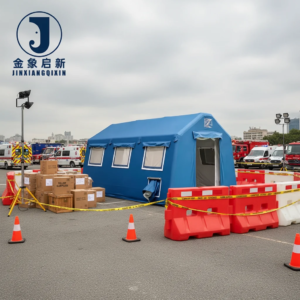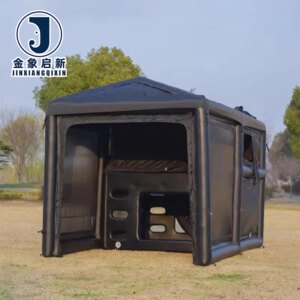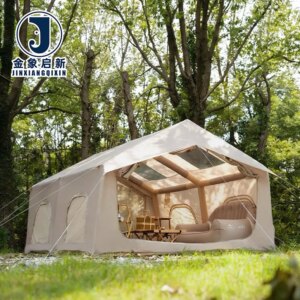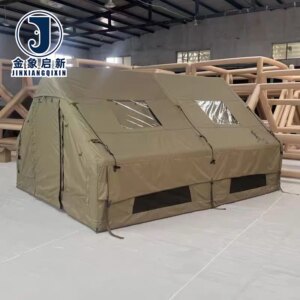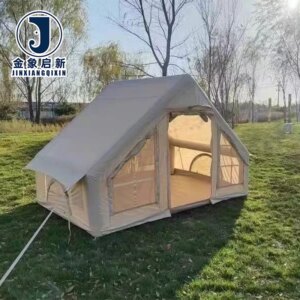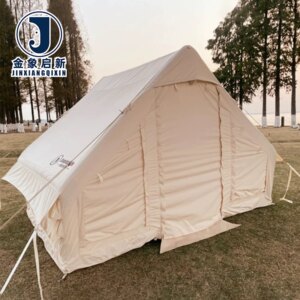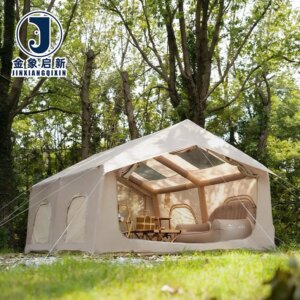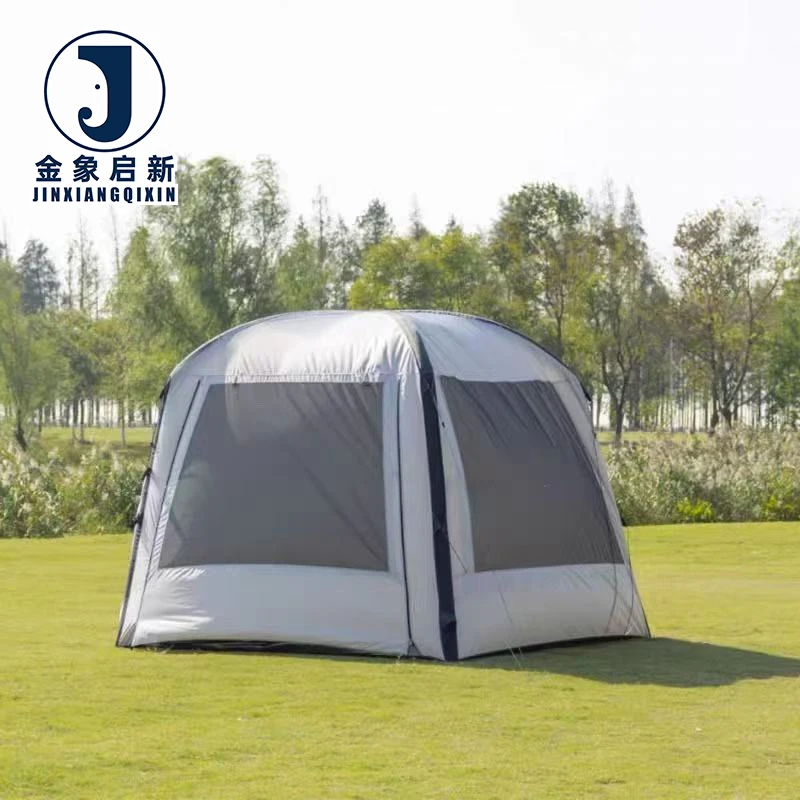

Description
Roll-to-Roll Consistency — Three full production lines with 36 sets of processing equipment and a 10-technician R&D team maintain colour, coating weight, and finish uniformity across every roll in a bulk PVC inflatable tent fabric wholesale shipment.
Technical Specifications
| Parameter | Value |
|---|---|
| Product Type | PVC Inflatable Tent Fabric |
| Core Material | PVC tarpaulin (PVC knife-coated fabric) |
| Coating Material | PVC |
| Flame Retardant Grade | DIN 4102 B1 |
| UV Resistance | 2000-hour accelerated aging tested |
| Waterproof Rating | 1000mm water column |
| Wind Load Resistance | Up to 12m/s |
| Air Retention | 72-hour pressure hold without top-up |
| Air Leakage Rate | <0.5% per hour |
| Seam Strength | 250N minimum |
| Material Thickness Tolerance | ±0.1mm |
| Hardware Durability | 500-cycle operation tested |
| Key Features | Waterproof, UV-resistant, tear-resistant, fire-retardant, anti-static |
| Customization Options | Custom dimensions, Pantone color matching, logo printing, ventilation systems, door types |
| Certifications | ISO9001, ISO14001, ISO45001, CE |
Application Suitability
| Application | Exposure & Requirement |
|---|---|
| Inflatable and glamping tent manufacturing by the roll | Bulk fabric must show identical colour and surface finish across consecutive rolls to prevent visible panel mismatches once cut and welded into finished tent structures |
| Commercial camping ground operations | Four-season deployment demands verified UV stabilisation and waterproof integrity through repeated inflation cycles, rain exposure, and ground moisture contact |
| Outdoor event and exhibition structures | High-visibility temporary installations require consistent matte or glossy surface appearance across large panel areas, with flame retardant certification matching venue safety requirements |
| Industrial temporary shelters and site accommodations | Continuous occupancy in harsh environments requires proven air retention on inflatable frames and resistance to abrasion from repeated assembly and teardown |
Why Colour Drift Between Rolls Costs More Than the Fabric Itself
A single shade variation across rolls in one order can force an entire tent panel run to be rejected after cutting.
When you buy PVC inflatable tent fabric wholesale for commercial tent production, the material is cut into panels and welded together. If two adjacent rolls carry even a slight colour shift, the difference becomes visible once the panels are joined side by side under natural light. [NEED_CITE: visual colour tolerance standards for coated fabrics in architectural and tent applications] The cost of re-cutting from new stock, delayed production schedules, and strained client relationships far exceed the savings from choosing a lower-priced supplier who does not control batch dyeing tightly.
Batch Dyeing Control and Roll Matching
Maintaining colour uniformity across a multi-roll PVC inflatable tent fabric wholesale order starts at the coating stage. Each production run uses matched pigment batches, and consecutive rolls are compared under controlled lighting before release. This matters most when a glamping tent manufacturer cuts panels from several rolls for a single structure — any deviation shows immediately on the finished tent surface.
Coating Weight Uniformity Across the Web
Consistent coating thickness across the full width of each roll ensures that air retention and structural rigidity remain predictable during inflation. Variations in PVC coating weight can lead to uneven stiffness, which affects how the inflatable frame holds shape under wind load. Our production lines monitor coating application continuously to keep thickness within ±0.1mm tolerance roll after roll. [NEED_CITE: relationship between coating uniformity and inflatable structure performance]
Interpreting the Specification Sheet for Purchasing Decisions
The DIN 4102 B1 flame retardant grade indicates that the fabric meets a specific European fire classification for building and construction materials, which many commercial campgrounds and event venues require for temporary structures. The 2000-hour accelerated UV aging test provides a basis for estimating outdoor colour and strength retention, though actual field life depends on local solar intensity and seasonal conditions. Waterproof performance at 1000mm water column, combined with verified seam strength at 250N minimum, defines how the material behaves under sustained rain and internal air pressure from inflation.
The Hidden Cost of Specifying on Price per Kilogram Alone
When procurement teams focus exclusively on unit cost, the typical outcome is material that arrives lighter than quoted, with coating weight sacrificed to hit the price point. For inflatable tent structures, underweight fabric means reduced air retention — the frame deflates faster and requires more frequent top-ups, undermining the quick-setup advantage that inflatable designs promise. [NEED_CITE: coating weight verification practices in PVC tarpaulin procurement] Welds on thinner material also fail earlier, typically at the flex points where the inflatable beam bends during wind gusts, leading to warranty claims that trace back to the original material specification.
Why Sourcing Volume PVC Inflatable Tent Fabric Here Reduces Production Risk
Three dedicated production lines allow concurrent runs of different widths and colours without cross-contamination, supporting mixed-SKU bulk orders efficiently. A 10-technician R&D team develops Pantone-matched samples within days, so colour approval happens before the main production run begins rather than after. Every roll passes through 100% pre-shipment inspection with digital quality records tied to the batch number. [NEED_CITE: pre-shipment inspection standards for coated technical fabrics] The facility holds ISO9001, ISO14001, ISO45001, and CE certifications, providing documentation that commercial tent buyers can submit directly to venue authorities or project specifiers.
Documentation & Verification
- Material specification sheet per roll stating coating type, base fabric construction, and colour reference
- DIN 4102 B1 flame retardant test report and UV aging test data included with each shipment
- Pre-shipment inspection record with digital quality report linked to batch number
- Roll packing list detailing roll count, individual roll weight, and net/gross weight per pallet
- Certificate of origin and customs documentation prepared for destination country requirements
Fabrication, Handling & Storage
- Set hot-air welding temperature and dwell time to match PVC knife-coated fabric thickness for consistent seam strength above 250N
- Store rolls upright on pallets in a dry, shaded area to prevent surface creasing that affects print adhesion
- Allow cold-transported rolls to reach ambient temperature before unrolling to avoid coating micro-cracking
- Use PVC-compatible cleaners only — solvent-based products may degrade the knife-coated surface layer
- Plan panel cutting layout to maximise yield from each roll width and minimise offcut waste
Request a Quotation with Your Production Requirements
To provide an accurate PVC inflatable tent fabric wholesale quotation, share your required roll width, total metreage, target colour with Pantone reference if applicable, and any flame retardant or UV treatment level your end market mandates. If you need custom logo printing or specific ventilation panel integration, include artwork files and panel dimensions so our R&D team can prepare a matched sample before bulk production begins.
Frequently Asked Questions
Q: How do you verify GSM and coating weight on each roll before shipping?
A: Every roll in a PVC inflatable tent fabric wholesale order is sampled and weighed during pre-shipment inspection. The measured coating weight and base fabric GSM are recorded on a digital quality report linked to the roll number, and this documentation ships with the order so you can cross-check on receipt.
Q: Does the DIN 4102 B1 rating satisfy fire safety requirements in my destination market?
A: DIN 4102 B1 is widely accepted across European construction and temporary structure regulations. For markets outside Europe, share the specific fire classification your local authority requires, and we will confirm whether the current formulation meets it or if an alternative grade is needed.
Q: How do you control colour consistency across multiple rolls in one order?
A: Pigment batches are matched at the mixing stage, and consecutive rolls are compared under standardised lighting before release. If your order spans multiple production runs, we retain reference samples from the first run to ensure subsequent rolls match within agreed tolerance.
Q: What information do I need to provide for custom width or Pantone colour orders?
A: Specify the required roll width, total metreage, Pantone colour code, and any surface finish preference. Our R&D team produces a sample swatch for your approval before scheduling the full production run, ensuring colour and finish match your specification.
Q: How are rolls packed for container loading to prevent transit damage?
A: Rolls are packed upright on pallets with protective end caps and stretch wrap to prevent crushing and moisture ingress. A detailed roll packing list accompanies each container, listing roll count, individual weights, and dimensions for efficient warehouse receiving.