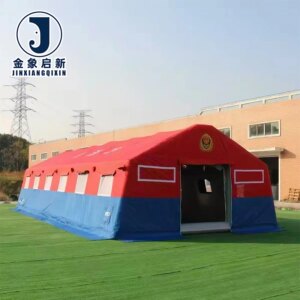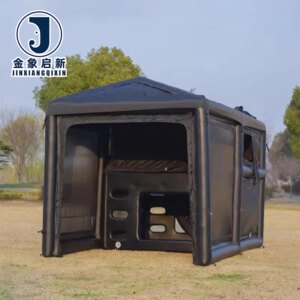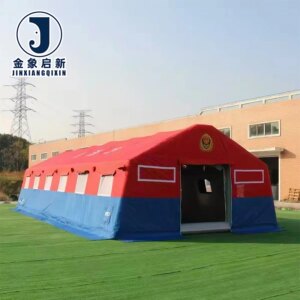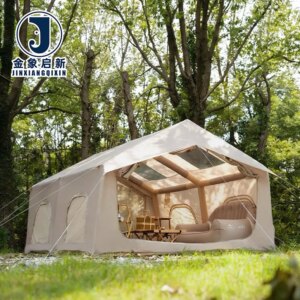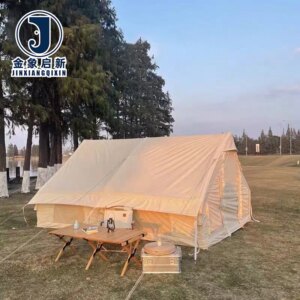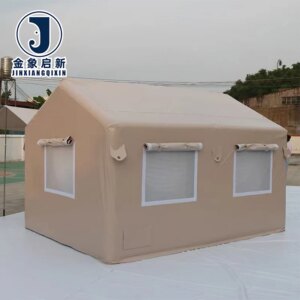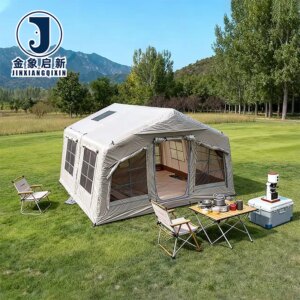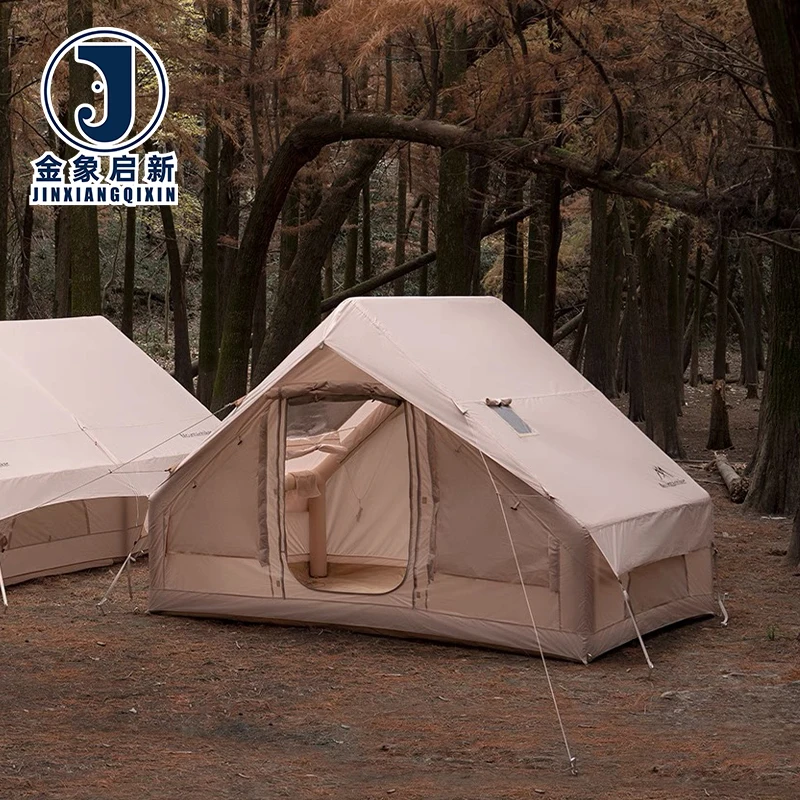
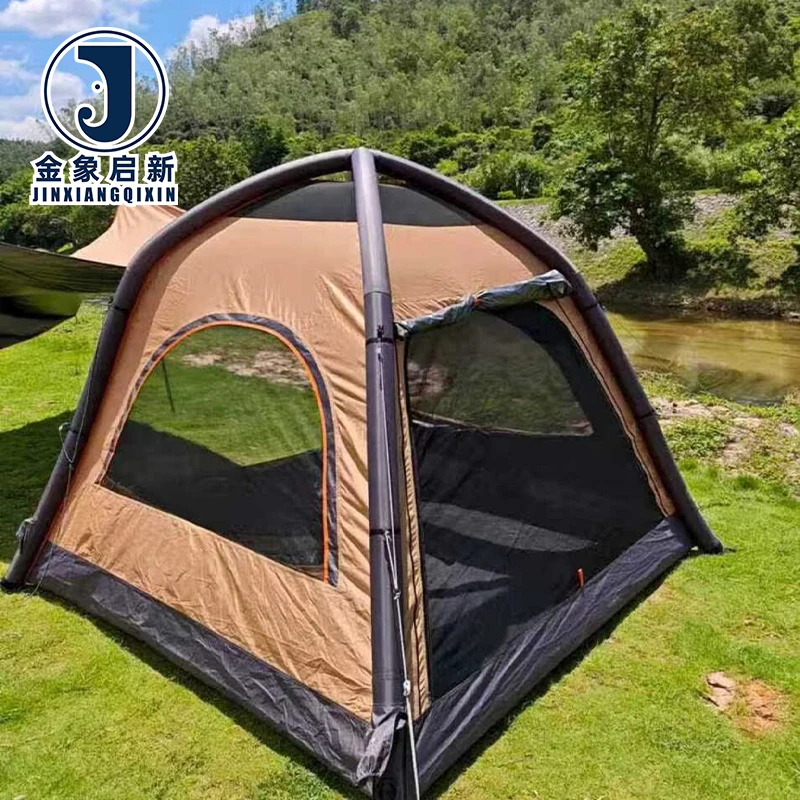
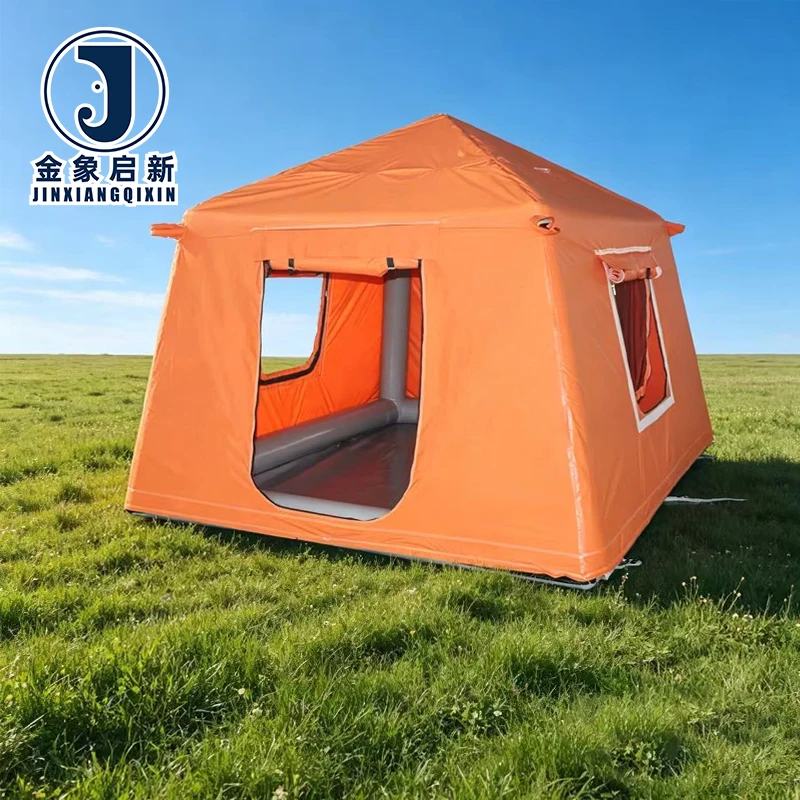

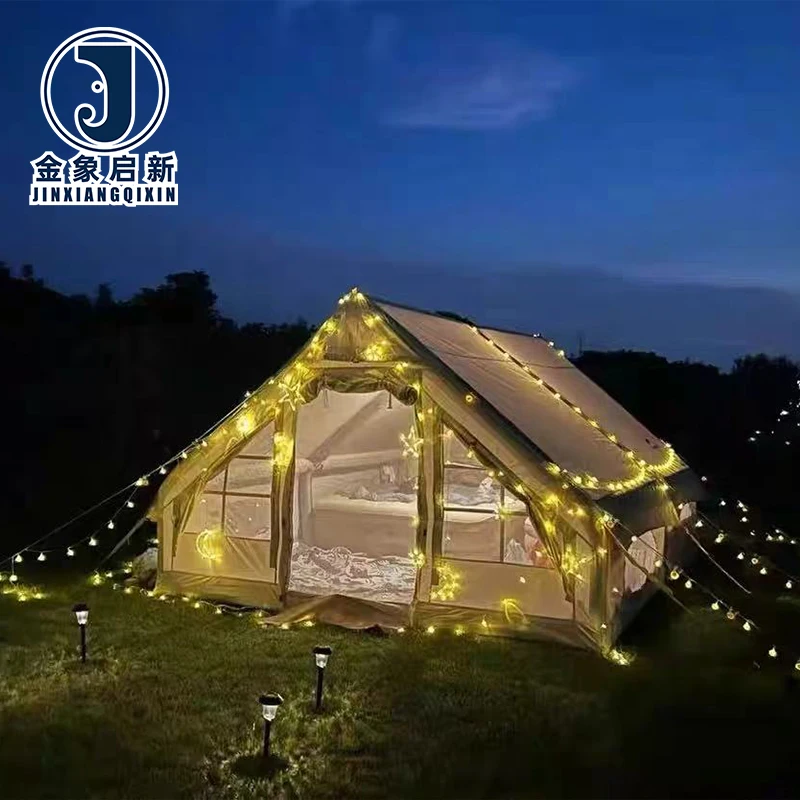
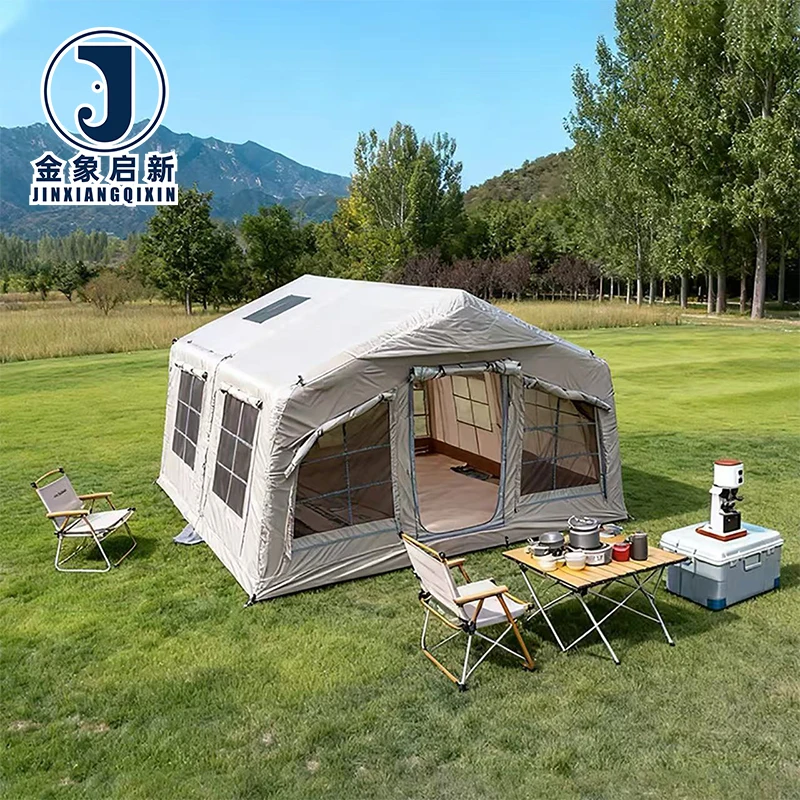
Description
Roll-to-roll consistency — three full production lines and dedicated QA at every coating stage keep batch colour and weight uniform across inflatable tent fabric orders.
Technical Specifications
| Parameter | Value |
|---|---|
| Product Type | Inflatable Tent |
| Core Material | PVC Tarpaulin |
| Coating Method | PVC knife-coated fabric |
| Capacity | 4-6 Person |
| Opening Mechanism | Quick Automatic Opening |
| Construction | Single Layer |
| Waterproof Rating | waterproof (grade not stated in source) |
| UV Treatment | UV-resistant (test basis not stated in source) |
| Tear Resistance | tear-resistant (test basis not stated in source) |
| Flame Retardant Grade | not stated |
| Customization | OEM & ODM — material selection, product design |
| Quality Control | Full-process inspection with dedicated QA & QC staff |
| Pressure Retention Test | 24-hour pressure retention testing before shipment |
| Certifications | ISO9001, ISO14001, ISO45001, CE |
Application Suitability
| Application | Exposure & Requirement |
|---|---|
| Temporary site offices for construction projects | Continuous UV exposure, wind loading, repeated inflation cycles, dust and debris abrasion |
| Mobile equipment shelters for outdoor events | Rapid deployment timelines, frequent transport and handling, variable weather conditions |
| Auxiliary storage facilities for logistics operations | Long-term outdoor exposure, waterproof integrity, resistance to mechanical contact |
| Commercial summer outdoor operations | Extended sun exposure, high ambient temperatures, guest-facing aesthetic consistency |
| Operational team field deployments | Remote environment logistics, single-person setup requirement, multi-week continuous use |
Why Roll Consistency Matters More Than Stated GSM for Inflatable Tent Fabric
A uniform coating weight across every roll is what keeps inflatable tent structures performing identically from one deployment to the next.
Buyers who specify inflatable tent fabric often receive rolls that meet the quoted GSM on paper but vary in coating thickness once unrolled on the factory floor. That variance shows up as uneven inflation behaviour, visible colour shifts between panels cut from different rolls, and weld seams that behave differently under the same heat-setting parameters. When you are producing PVC Inflatable Tent roll stock for commercial shelter manufacturers, even small batch-to-batch deviations compound across a production run [NEED_CITE: coated fabric batch consistency and its effect on welded seam strength].
How Knife-Coated PVC Delivers Airtight Performance for Inflatable Structures
Inflatable tent fabric demands a coating that bonds completely to the base fabric so that air cannot migrate through the material under sustained internal pressure. PVC knife-coated fabric achieves this by forcing the coating compound into the weave under blade pressure, filling the interstices between yarns. The result is a continuous membrane that holds pressure through repeated inflation and deflation cycles without delamination at flex points.
Pressure Retention as a Proxy for Coating Integrity
Every unit undergoes 24-hour pressure retention testing before shipment. This is not a spot check — it verifies that the coating layer, the welded seams, and the valve interfaces all maintain airtightness under sustained load. For Inflatable Tent Fabric wholesale buyers, this test record is the most reliable indicator that the material will perform once it reaches the end user’s deployment site [NEED_CITE: airtightness validation methods for inflatable coated fabric structures].
What Base Fabric Denier and Coating Weight Actually Control
The tear resistance of inflatable tent fabric is a function of both the base fabric denier and the coating weight acting together. A heavier coating does not compensate for a loosely woven base — the yarns themselves must resist propagation once a puncture initiates. Conversely, a tightly woven high-denier base with insufficient coating will allow air permeation under pressure. Knife coating addresses both requirements by embedding the PVC compound into a dense weave, creating a composite where the fabric carries the tensile load and the coating seals the structure. Available in flame retardant grades — confirm the grade required for your market before specifying. UV resistance is documented per batch; request the ISO 4892-2 test report for your order to verify outdoor exposure expectations.
The Hidden Cost of Specifying on Price Per Kilogram Alone
When PVC inflatable tent fabric is sourced on price per kilogram without verifying coating adhesion and base fabric density, the material may pass a weight check but fail under inflation pressure. Coating that sits on the surface rather than penetrating the weave will peel at the weld line after a handful of setup cycles. Manufacturers then face warranty claims on tents that lose pressure within hours of deployment — a failure that traces back to the raw material, not the fabrication process [NEED_CITE: coating adhesion failure modes in PVC coated fabrics under cyclic inflation].
Why Manufacturers Source Inflatable Tent Fabric Here
Three full production lines running PVC coated fabric mean capacity is available for both sampling and volume runs without sacrificing lead time. The 10-person R&D team handles material selection and product design for OEM and ODM projects, developing samples within days for custom width, colour, or print requirements. Full-process inspection with dedicated QA and QC staff catches coating weight variance at the line, not at the loading dock. ISO9001, ISO14001, ISO45001, and CE certifications are maintained as working systems, not display certificates. Twenty-four hour pressure retention testing on every unit before shipment provides documented proof of airtightness for your own quality records.
Documentation & Verification
- Material specification sheet stating base fabric denier, coating method, and PVC compound reference
- Waterproof test report per ASTM D751 and UV resistance report per ISO 4892-2 supplied per batch
- Tear strength documentation per ISO 13937-2 available with pre-shipment inspection record
- Roll packing list with net weight, roll count, and dimensions for container loading calculation
- Certificate of origin and customs documentation for cross-border PVC Inflatable Tent roll procurement
- 24-hour pressure retention test record included with each shipment batch
Fabrication, Handling & Storage
- Heat-weld PVC knife-coated fabric at temperatures matched to coating thickness — test weld parameters on scrap from each roll before production runs
- Store Inflatable Tent Fabric rolls upright on pallets to prevent flat-spotting and permanent creasing of the coated surface
- Avoid dragging rolls across unprotected concrete floors to prevent abrasion damage to the outer coating layer
- Deploy in low-temperature environments only after allowing rolls to acclimate — cold PVC knife-coated fabric is susceptible to cracking if flexed before warming
- Clean with mild detergent and soft cloth only; solvent-based cleaners may degrade the PVC coating surface and compromise airtightness
Before You Request a Quote
Provide your target deployment environment, expected inflation duration per cycle, and any fire classification your end market requires. Confirm whether you need PVC Inflatable Tent roll stock in standard widths or custom slit widths, and indicate annual volume so that batch consistency can be planned across your production schedule. If pattern printing or logo branding is required, share artwork files early so that colour matching samples can be developed alongside material samples.
Frequently Asked Questions
Q: How is roll-to-roll colour consistency controlled across a bulk inflatable tent fabric order?
A: Every production run uses a single compounded batch of PVC coating material, mixed to the confirmed colour reference before it reaches the coating line. In-process QA checks colour under standardised lighting at multiple points during the run. Pre-shipment inspection compares rolls side by side before packing, and any roll outside tolerance is pulled before it enters the container.
Q: What UV resistance documentation accompanies each shipment of inflatable tent fabric?
A: UV resistance is tested per ISO 4892-2 and a test report is available for each batch. Because outdoor exposure conditions vary by geography and season, we recommend requesting the report for your specific production batch and sharing it with your end-market compliance team to confirm it meets local expectations for continuous sun exposure.
Q: What custom widths and minimum order quantities apply to PVC Inflatable Tent roll stock?
A: Custom slit widths are available based on your cutting layout and panel dimensions. Minimum order quantities depend on whether you are ordering a standard stock colour or a custom-matched colour, since custom colours require a dedicated coating compound batch. Share your required widths and annual volume so we can confirm minimums and container loading efficiency.
Q: How does the pattern printing and logo branding process work on inflatable tent fabric?
A: Artwork is reviewed for colour separation and placement relative to roll edges and weld zones. A printed sample is produced on the same PVC knife-coated fabric specified for your order so you can verify colour accuracy, registration, and adhesion before full production begins. Printing is completed before the fabric is slit and rolled for shipment.
Q: How are fabric rolls protected during container transport to prevent coating damage?
A: Each roll is wrapped in protective film and packed upright on pallets to avoid compression marks and edge damage. The roll packing list documents roll count, individual roll weight, and total shipment weight so you can verify the consignment on arrival and plan your warehouse handling accordingly.