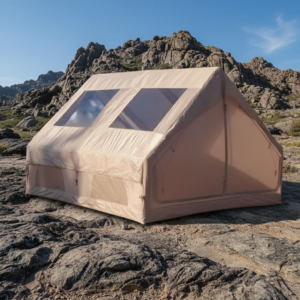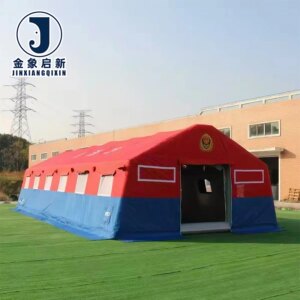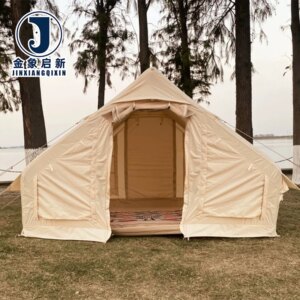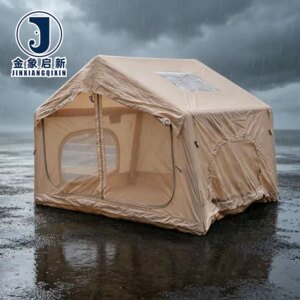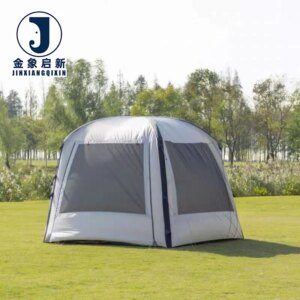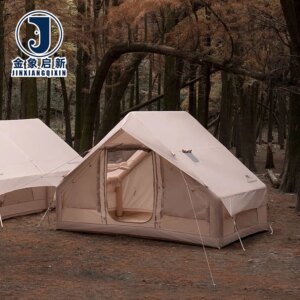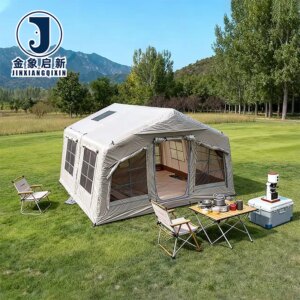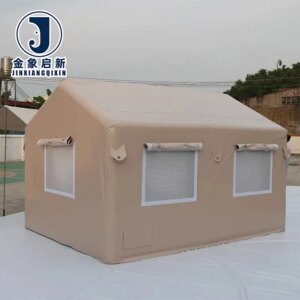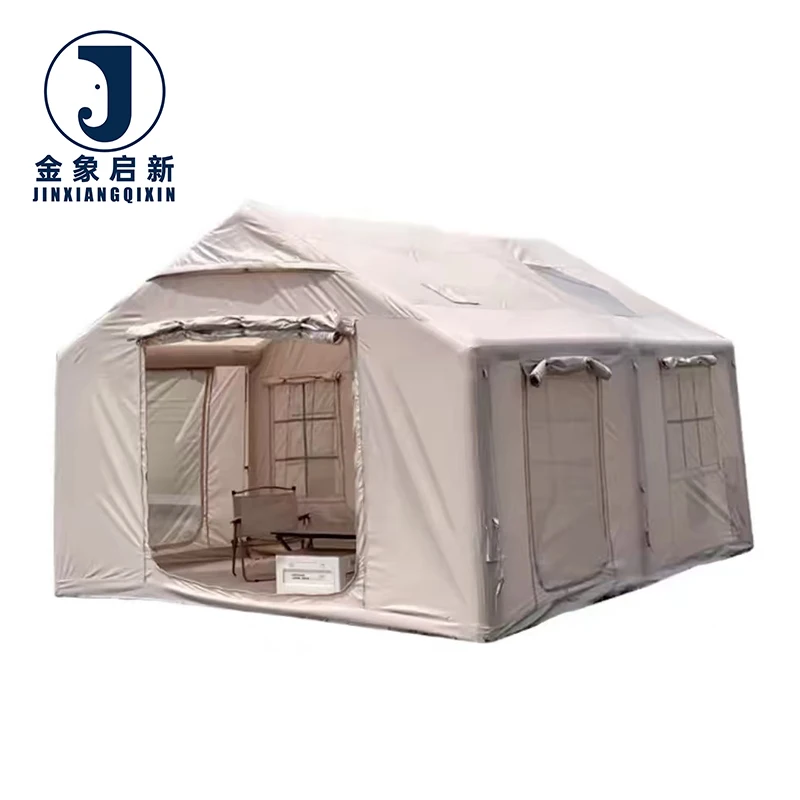
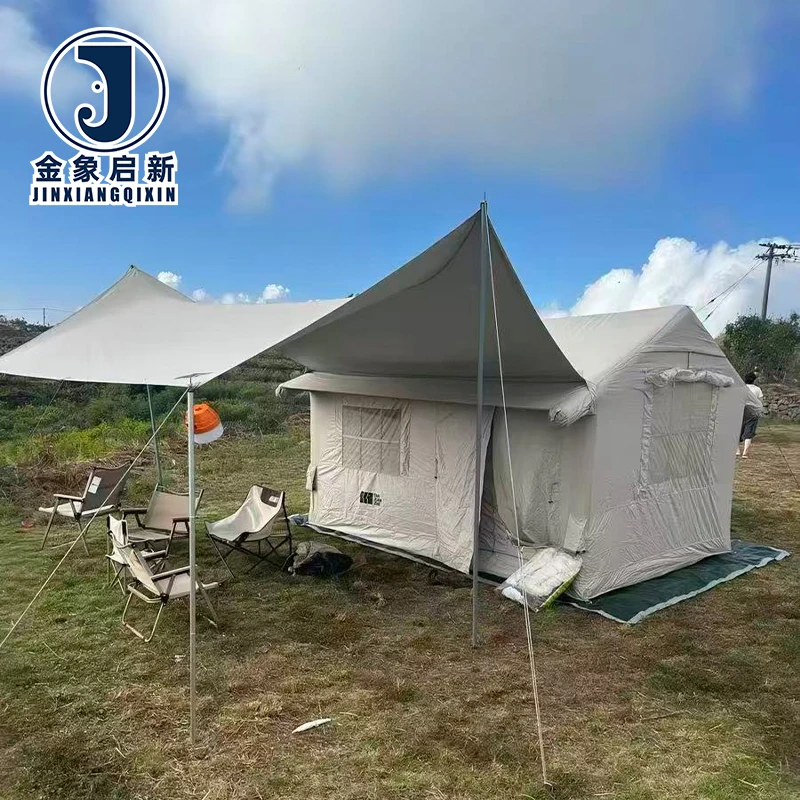
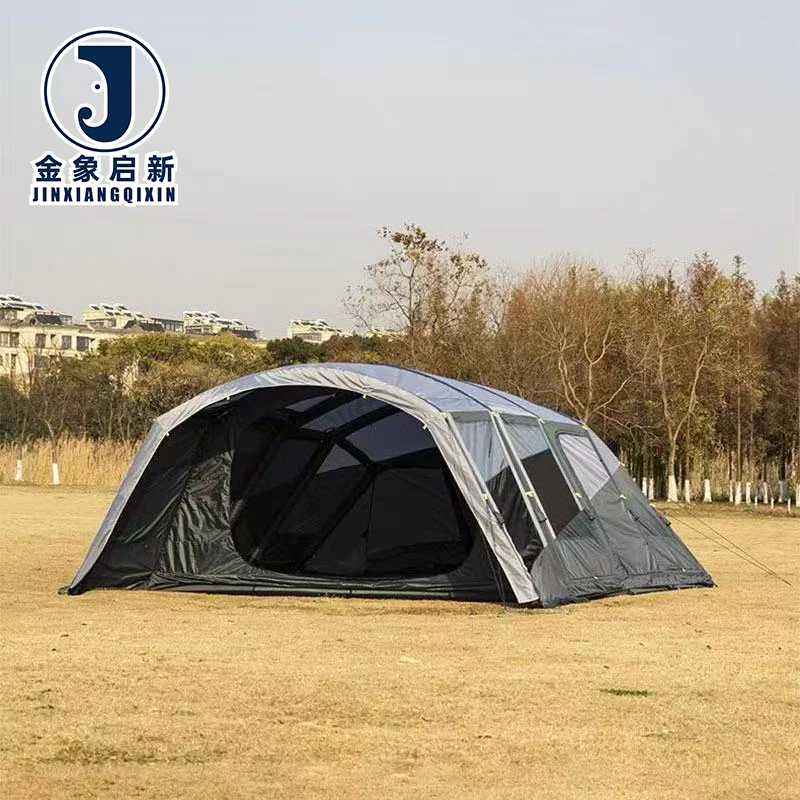
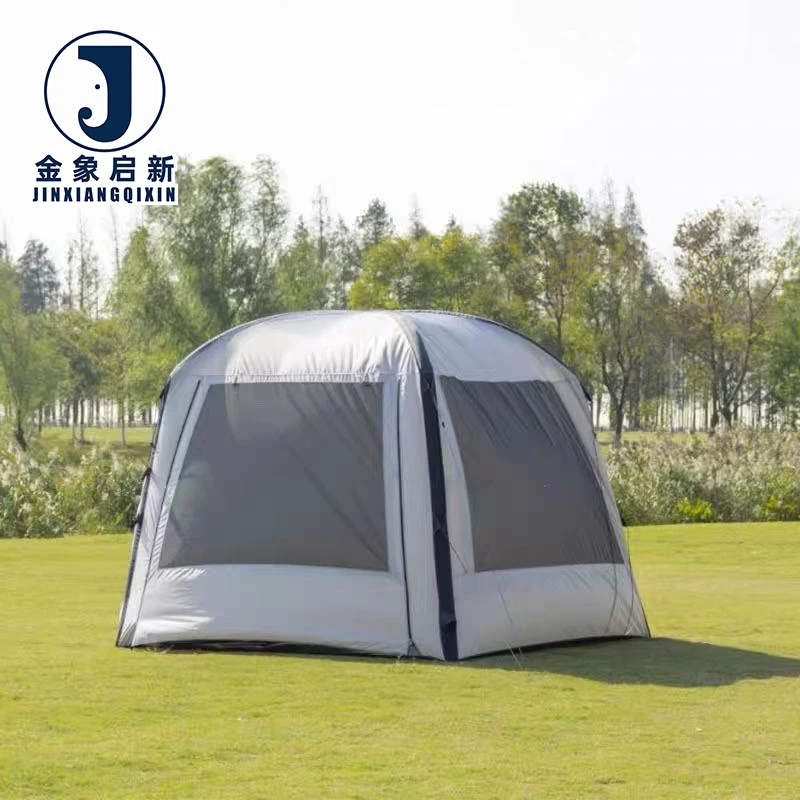
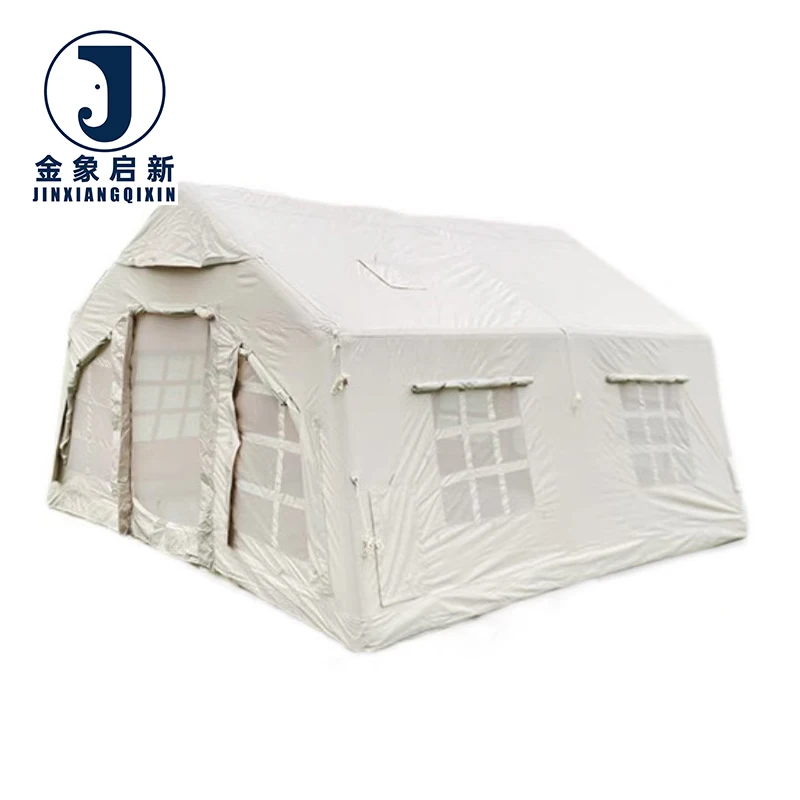
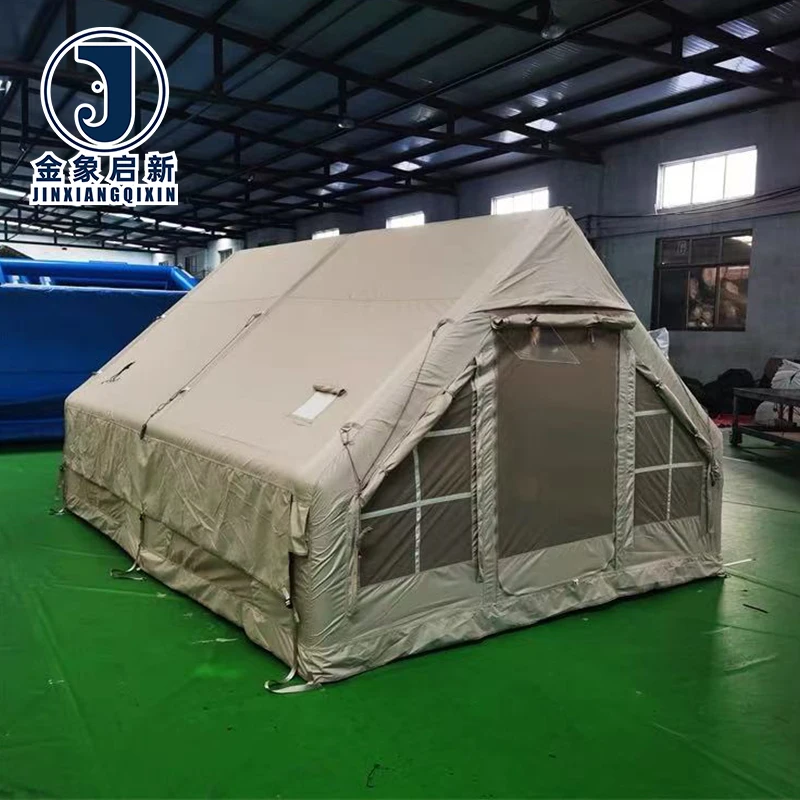
Description
Batch-to-Batch Consistency — every roll of inflatable tent fabric undergoes 100% inspection before dispatch, with colour and coating weight verified against the material specification sheet to eliminate lot variation.
Technical Specifications
| Parameter | Value |
|---|---|
| Product Type | Inflatable Tent |
| Core Material | PVC tarpaulin |
| Capacity | 3-5 person |
| Construction | Single layer |
| Key Performance | UV protection (test basis not stated in source), automatic inflatable, four-season use |
| Customization Service | OEM & ODM, sample customization, pattern printing |
| Quality Control | Full-process quality inspection with dedicated QA & QC staff |
| Standards | ISO 9001, ISO 14001, ISO 45001, CE |
Application Suitability
| Application | Exposure & Requirement |
|---|---|
| Disaster relief operations | Rapid deployment in unpredictable terrain, four-season thermal swings, sustained UV exposure |
| Temporary site shelters for construction projects | Abrasion from tools and materials, wind loading, repeated relocation across phases |
| Emergency storage facilities for logistics hubs | Heavy item stacking, forklift traffic proximity, weather ingress prevention |
| Mobile command centers during industrial emergencies | Extended occupancy, partition flexibility, reliable inflation under continuous use |
Why Roll-to-Roll Colour Variation Matters on Inflatable Tent Fabric Orders
Visible colour mismatch between adjacent rolls is one of the most common complaints in bulk inflatable tent fabric procurement.
When a distributor unloads a container and finds two rolls with slightly different hues, every cut panel sewn side by side reveals the inconsistency. This is not a cosmetic nuisance — it triggers buyer rejections, return freight, and contract penalties. Inflatable tent wholesale orders amplify the problem because multiple tents are often deployed together at a single relief site or event venue. The variation becomes obvious the moment structures stand next to each other. [NEED_CITE: ISO 105-A02 grey scale for assessing colour fastness in coated textiles]
Managing Bulk Volume with Stable Output Capacity
Three full production lines running in parallel mean that inflatable tent fabric roll orders can be scheduled without bottlenecking on a single machine. When a distributor places a full-container order, the material is produced within a continuous run rather than split across separated batches. This continuity is what keeps dye lots matched and coating weight uniform from the first roll to the last.
Consistency Controls Across Wholesale Shipments
Each roll passes through dedicated QA and QC checkpoints before it leaves the facility. Coating weight is measured and logged, colour is compared against the approved reference, and surface defects are flagged for removal. For inflatable tent wholesale buyers who resell to fabricators or end users, this inspection discipline means the material they receive matches the specification sheet they quoted against. [NEED_CITE: standard coating weight verification methods for PVC tarpaulin per ISO 2286]
Reading the Specification Sheet Beyond the Headline Numbers
The PVC tarpaulin core used in this inflatable tent fabric is specified by its base fabric construction and coating method, not by weight alone. A heavier GSM does not automatically translate to higher tear resistance if the base weave is loose or the denier is low. The single-layer construction relies on the coating adhesion and base fabric tensile properties working together. UV protection is available — confirm the grade required for your target market, since desert deployments and temperate climates demand different treatment levels. Pattern printing and branding can be applied across bulk rolls, but the surface finish must be compatible with the ink system used.
The Hidden Cost of Inconsistent Roll Specifications
A roll that arrives lighter than the GSM stated on the quotation does not just reduce durability — it changes the heat-sealing parameters on the fabrication floor. Welding temperature and dwell time are calibrated to a specific coating thickness; when the material is thinner than expected, seams can burn through or fail to bond. For inflatable tent wholesale orders, a single underweight roll in a batch can produce tents whose welded seams fail during inflation testing, wasting labour and delaying the entire shipment. [NEED_CITE: thermal welding parameters and coating thickness correlation for PVC tarpaulins]
Why Procurement Teams Source Inflatable Tent Fabric Here
A 10-person R&D team handles material selection and sample development, so custom width or colour requests are resolved at the sample stage before production begins. The 36 sets of professional processing equipment support multiple concurrent roll orders without cross-contamination of dye lots. Pre-shipment inspection covers every roll individually, not just a statistical sample from the batch. Roll packing lists detail count, weight, and container loading plans so freight forwarders can optimise space. OEM and ODM customization runs through the same quality system as standard grades.
Documentation & Verification
- Material specification sheet confirming PVC base fabric and coating type per roll
- Pre-shipment inspection record with individual roll weight verification
- Roll packing list detailing roll count, net weight, and container loading sequence
- UV and flame-retardant test reports provided where applicable grades are specified
- Certificate of origin and customs documentation for international bulk shipments
- ISO 9001, ISO 14001, ISO 45001, and CE certificates available per shipment
Fabrication, Handling & Storage
- Heat-seal temperature and dwell time must match the PVC coating thickness on each roll batch
- Store rolls upright on pallets to prevent flat-spot creasing across the PVC tarpaulin surface
- Allow single-layer fabric to acclimatise before unrolling in cold conditions to avoid coating crack
- Use compatible PVC adhesive for field repairs on welded seams and puncture points
- Plan cutting layout to minimise offcuts when working with fixed roll widths for tent panels
- Avoid stacking heavy items on stored rolls to prevent permanent deformation of the coating
What We Need to Quote Your Roll Order Accurately
Provide the target application and the environmental conditions the inflatable tent fabric will face — desert UV, cold-weather deployment, or mixed four-season use. Confirm the roll width and linear metre quantity required per colour, along with any pattern printing or branding requirements. Let us know whether you need raw roll stock for your own fabrication line or finished cut-to-size panels.
Frequently Asked Questions
Q: How is batch colour consistency maintained across multiple rolls in a single order?
A: Every roll is produced within a continuous dye lot and checked against the approved colour reference at inspection. Rolls that fall outside the tolerance band are separated before packing. For inflatable tent fabric orders spanning multiple containers, we schedule production in the smallest number of continuous runs possible to minimise lot variation.
Q: What roll width and length options are available for inflatable tent fabrication?
A: Width and length depend on stock grades and production scheduling at the time of order. Custom widths are available with specific lead times and minimums. Submit your required panel dimensions and we will recommend the roll format that minimises cutting waste for your inflatable tent production line.
Q: How is container loading optimised for wholesale roll shipments?
A: The roll packing list specifies count, net weight, and loading sequence matched to the container type. Rolls are packed to maximise cubic utilisation while preventing compression damage. We provide the loading plan before dispatch so your freight forwarder can confirm the arrangement.
Q: Can I order custom colour or printed rolls, and what are the minimums?
A: Pattern printing and custom colours are available across bulk roll orders. Minimums and lead times depend on the colour count and print complexity. We develop a sample roll for your approval before committing the full production run, so you can verify colour accuracy and print registration.
Q: What is the sample approval process before placing a full container order?
A: We produce a sample based on your specification — width, colour, GSM, and any treatment grade. You evaluate the sample for fabric hand, coating adhesion, and colour match. Once approved, the sample becomes the production reference, and bulk rolls are inspected against it before shipment.