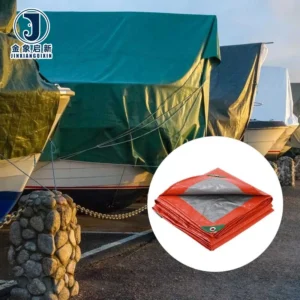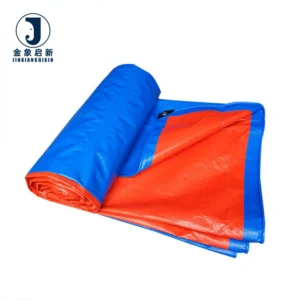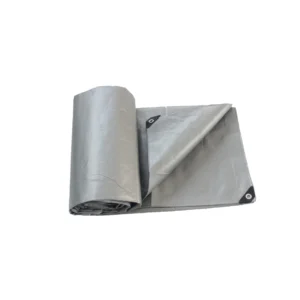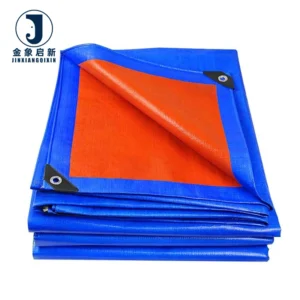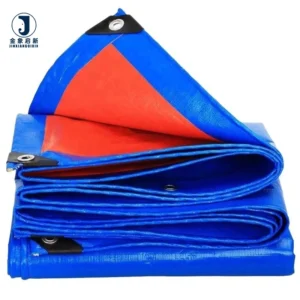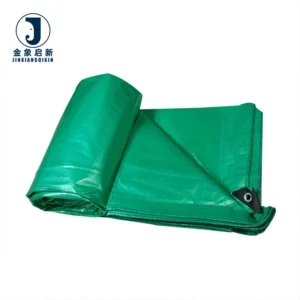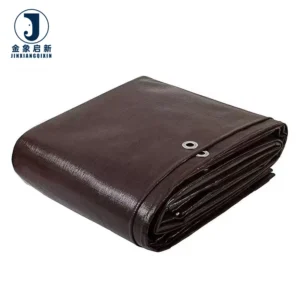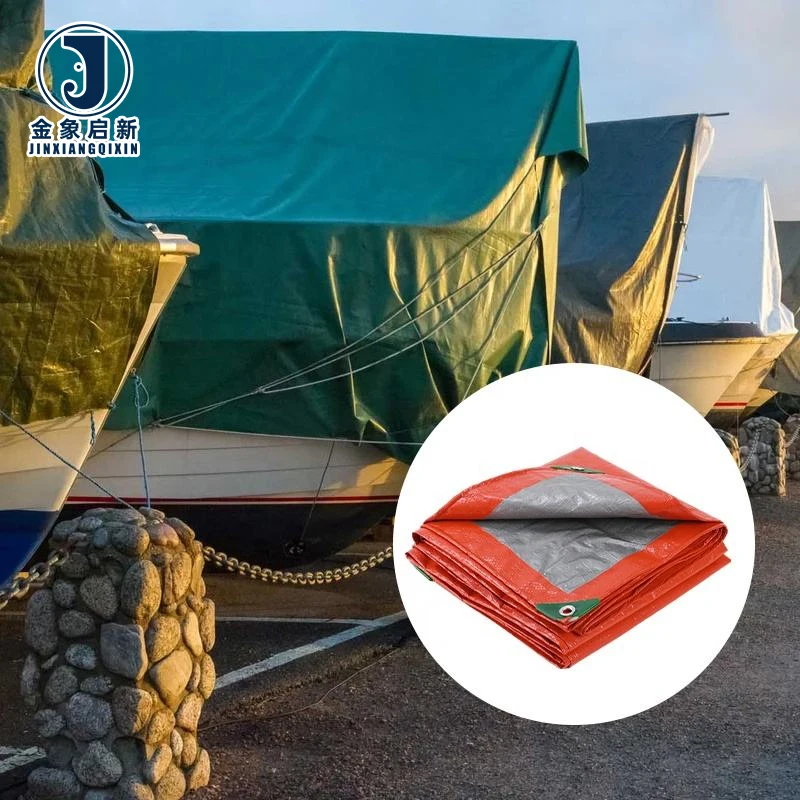
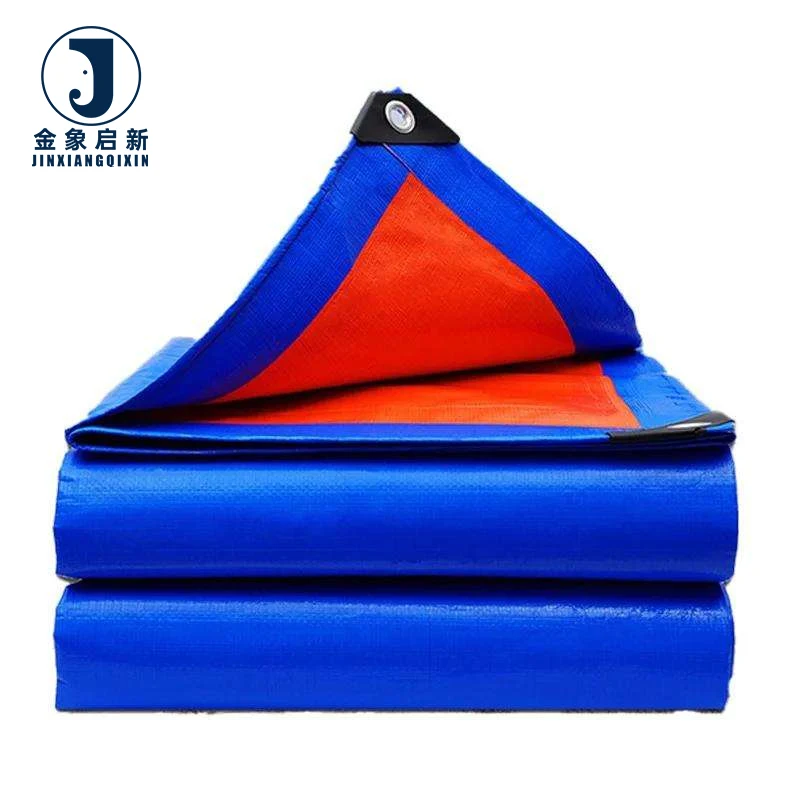
Description
Proven Process Control — dedicated QA/QC at every production stage verifies roll weight and thickness consistency before dispatch, giving buyers predictable cutting yields and uniform appearance across an entire container of PE Tarpaulin roll stock.
Technical Specifications
| Parameter | Value |
|---|---|
| Product Type | PE Tarpaulin |
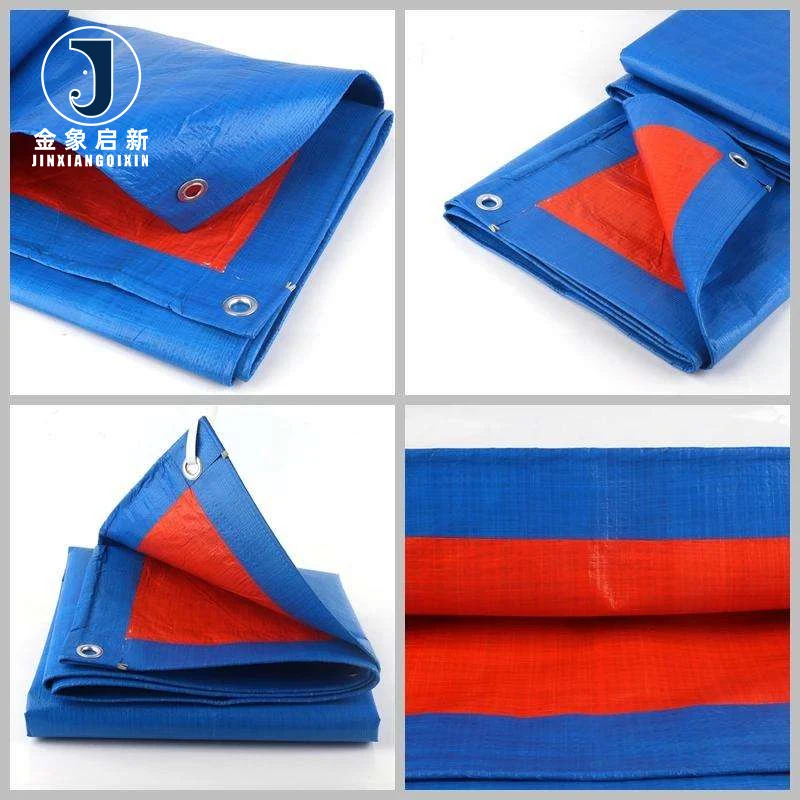
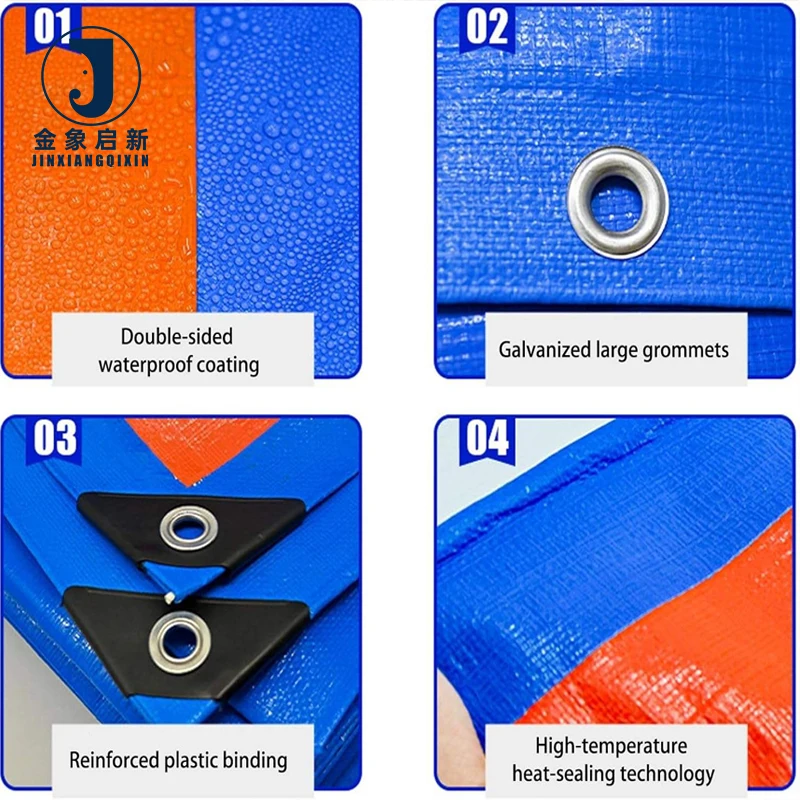
| Material | Polyethylene (HDPE fabric cross weaving, LDPE plastic lamination both sides) |
| Construction Option | 3 layers (1 fabric + 2 coating) / 5 layers (2 fabric + 3 coating) |
| Weight (Lightweight) | 80-110 g/m² |
| Weight (Medium) | 120-150 g/m² |
| Weight (Heavy-duty) | 160-240 g/m² |
| Overall Weight Capability | 40-500 g/m² |
| Total Thickness (Lightweight) | 0.18-0.22 mm |
| Total Thickness (Medium) | 0.22-0.28 mm |
| Total Thickness (Heavy-duty) | 0.30-0.35 mm |
| Mesh Count (Lightweight) | 8×8 |
| Mesh Count (Medium) | 10×10 |
| Mesh Count (Heavy-duty) | 12×12 |
| Mesh Density Range | 5×5 to 20×20 |
| Tensile Strength (Lightweight) | Meridian 300-500 / Latitude 250-450 N/5cm |
| Tensile Strength (Medium) | Meridian 500-800 / Latitude 400-700 N/5cm |
| Tensile Strength (Heavy-duty) | Meridian 900-1200 / Latitude 700-1000 N/5cm |
| Color | Custom color supported |
| Size | Custom size supported |
| Grommet Center Spacing | 39.4 Inches |
| Surface | Double waterproof surfaces |
| Corner & Edge Treatment | Reinforced corners, rustproof grommets |
| UV Treatment | Available (test basis not stated) |
| Water Resistance | Waterproof |
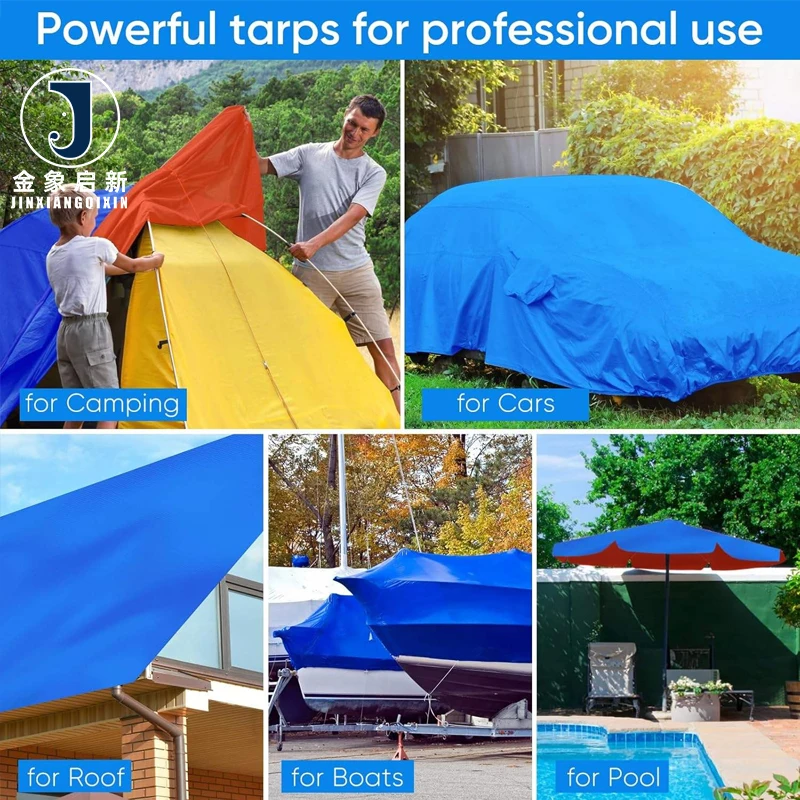
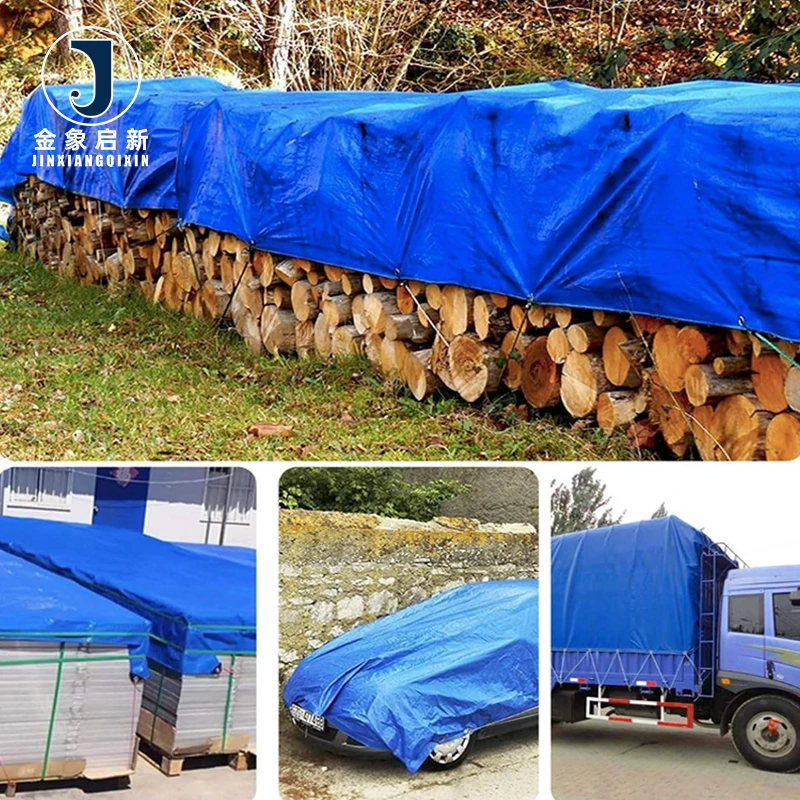
Application Suitability
| Application | Exposure & Requirement |
|---|---|
| Agricultural covering | Prolonged sunlight exposure, contact with fertilizers and organic matter, lightweight handling required |
| Warehouse coverage | Dust and moisture ingress prevention, long-term static tension on large spans |
| Truck tarpaulin | Constant flexing from road vibration, wind abrasion, variable weather conditions |
| Industrial protective cover | Mechanical abrasion from equipment surfaces, puncture risk from sharp edges, UV exposure outdoors |
| Outdoor canopy tents | Frequent assembly and folding, water runoff pooling, moderate wind uplift forces |
Colour Shifts Between Rolls in the Same Shipment — The Hidden Cost of Inconsistent Batch Control
Colour consistency across a bulk PE Tarpaulin roll order is a function of raw material dosing and extrusion temperature control, not a lucky coincidence.
Tarpaulin distributors and importers consolidating mixed GSM and colour into a single container often discover visible shade variation the moment two panels hang side by side on site. This mismatch forces fabricators to sort rolls manually, delaying cutting schedules and generating waste from unusable off-cuts that cannot be matched into a finished product. [NEED_CITE: colour consistency standards for coated and laminated fabrics]
Roll-to-Roll Weight Verification as a Non-Negotiable Gate
GSM stated on the quotation but not verified on arrival represents a direct financial loss for anyone buying PE Tarpaulin roll stock by the container. Lighter material than agreed reduces tensile capacity and accelerates tear propagation under load. Our production process includes in-line weight sampling at defined intervals along each roll, ensuring the stated GSM is maintained from core to outer wrap. This practice protects distributors who resell by weight grade and contractors who specify based on structural calculations.
Mesh Density and Its Direct Link to Tear Behaviour
Mesh count determines how load distributes across the woven HDPE substrate before the LDPE coating bears any stress. A 5×5 weave allows tears to propagate between widely spaced yarns, while a 12×12 or 20×20 weave forces tear energy to dissipate across multiple intersections. [NEED_CITE: relationship between mesh density and tear propagation in woven polyethylene fabrics] For bulk buyers stocking multiple grades, understanding this relationship prevents specifying a lightweight 8×8 grade for an application that demands heavy-duty tear resistance.
Why Construction Layers Matter for Waterproof Integrity
The choice between 3-layer and 5-layer PE Tarpaulin construction directly affects puncture resistance and long-term waterproof reliability. A single fabric layer sandwiched between two LDPE coatings provides adequate protection for agricultural and temporary applications. The 5-layer variant, with two woven fabric layers and three coating applications, introduces a redundant barrier — if the outer coating is mechanically damaged, the inner fabric and second coating maintain water exclusion. This distinction matters for fabricators producing finished covers where warranty exposure extends beyond initial delivery.
Understanding GSM in Context of Base Fabric and Coating Balance
GSM alone tells you nothing about how a PE Tarpaulin roll will perform under tension or abrasion. A 150 g/m² material with a dense 12×12 base fabric and thin coating will outperform a 150 g/m² material with a loose 8×8 weave and thick coating in tensile strength, while the latter may offer better puncture resistance. The ratio of base fabric weight to coating weight determines whether strength comes from the woven structure or from the laminated film. Buyers specifying by GSM without understanding this balance risk selecting material that fails at the wrong failure point for their application. [NEED_CITE: coated fabric tensile and tear test methods per ISO 1421]
The Cost of Specifying Without Verifying Coating Adhesion
When LDPE lamination separates from the HDPE woven base under flexing or temperature cycling, the exposed fabric yarns degrade rapidly under UV exposure and moisture ingress. This delamination failure mode is invisible at the time of delivery and only reveals itself after weeks of field use. For importers managing warranty claims, specifying peel strength requirements and verifying coating adhesion during pre-shipment inspection prevents costly returns and reputational damage downstream. [NEED_CITE: peel strength testing methods for laminated polyethylene fabrics]
Why Procurement Decisions Made Here Scale Predictably
Three full production lines and 36 sets of professional equipment provide the capacity to fill mixed-grade container orders within typical multi-week lead times, maintaining batch consistency across every PE Tarpaulin roll produced in a single run. A 10-person R&D team handles custom colour matching, width configuration and sample development, enabling importers to consolidate diverse specifications into one shipment. Dedicated QA/QC at every production stage — from yarn extrusion through weaving, coating and final winding — ensures that the material shipped matches the material quoted. Samples are developed within days for custom colour or print requirements, allowing approval before bulk production commits resources. Full export documentation accompanies every dispatch, reducing customs clearance friction at destination ports.
Documentation & Verification
- Material specification sheet confirming GSM, mesh count, layer construction and colour reference for each roll grade
- 100% pre-shipment inspection record with individual roll weight verified against quoted GSM
- Roll packing list detailing count, dimensions and weight per roll for container loading planning
- Batch colour reference card retained for future reorder matching
- Certificate of origin and ISO/CE certification included with export documentation
Fabrication, Handling & Storage
- Heat sealing temperature must match LDPE coating melt point; test on off-cuts before setting production parameters
- Reinforced corners and rustproof grommets at 39.4-inch spacing distribute tie-down loads across the woven substrate
- Store PE Tarpaulin rolls upright on core to prevent flat-spot deformation and edge creasing
- Unroll in ambient temperature conditions; cold-stiffened LDPE coating may crack if flexed below recommended handling temperature
- Use mild detergent for cleaning; solvent-based cleaners degrade the LDPE surface and reduce waterproof integrity
- Cut rolls on flat surfaces with rotary blades to avoid fraying the HDPE woven edge
Inquiry Direction for Bulk Roll Procurement
Specify your target GSM grade, mesh density preference and required roll width to receive an accurate quotation with container loading calculations. Confirm whether you require raw roll stock for in-house fabrication or pre-cut sheets with eyelet reinforcement. Provide a Pantone or physical colour reference if custom colour matching is needed, and indicate your annual volume to access tiered bulk pricing. Request a sample roll for approval before committing to full production if colour consistency is critical for your application.
Frequently Asked Questions
Q: What is your MOQ by roll count and by colour?
A: Minimum order quantities vary by grade and colour specification. Standard stock grades in common widths typically require lower roll counts, while custom colours require a minimum batch size to maintain dye consistency across the production run. Contact our sales team with your specific GSM and colour requirements for an accurate MOQ quotation.
Q: How do you guarantee colour consistency across rolls in one order?
A: Every roll in a production batch is manufactured from the same LDPE compound mix under controlled extrusion temperatures. In-line colour sampling during production catches shade drift before it compounds. A batch colour reference is retained for comparison during pre-shipment inspection, ensuring roll-to-roll uniformity across your entire container.
Q: Can mixed widths and GSM grades share a single container?
A: Yes, our production and packing system supports mixed-grade and mixed-width consolidation into a single container shipment. Each roll is individually labelled with its specification, weight and dimensions. A detailed roll packing list accompanies the shipment, enabling efficient warehouse sorting upon arrival.
Q: How is GSM verified before shipment?
A: Weight verification occurs at multiple stages during production and again during 100% pre-shipment inspection. Individual roll weights are recorded on the packing list, and random samples are cut and weighed against the quoted GSM specification. The inspection record accompanies your documentation package.
Q: What lead time applies to custom colour or custom width roll stock?
A: Custom colour production requires typical multi-week lead times to allow for compound mixing, sample approval and full-batch manufacturing. Standard widths in stock grades may be available for faster dispatch. Confirm your required delivery schedule at inquiry stage so we can plan production allocation accordingly.