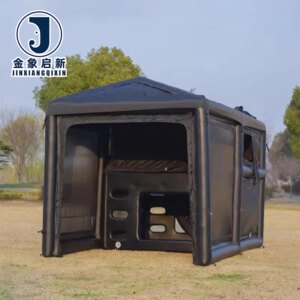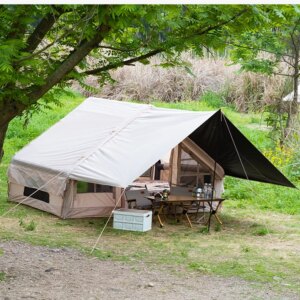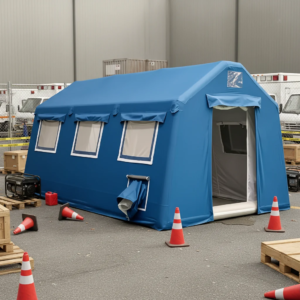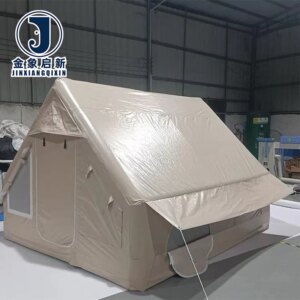
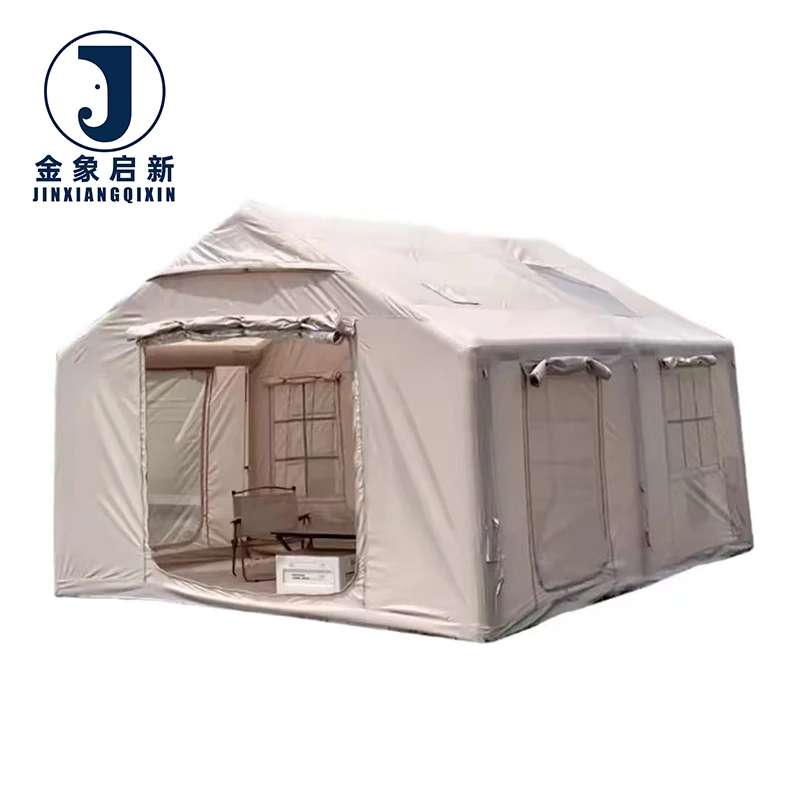
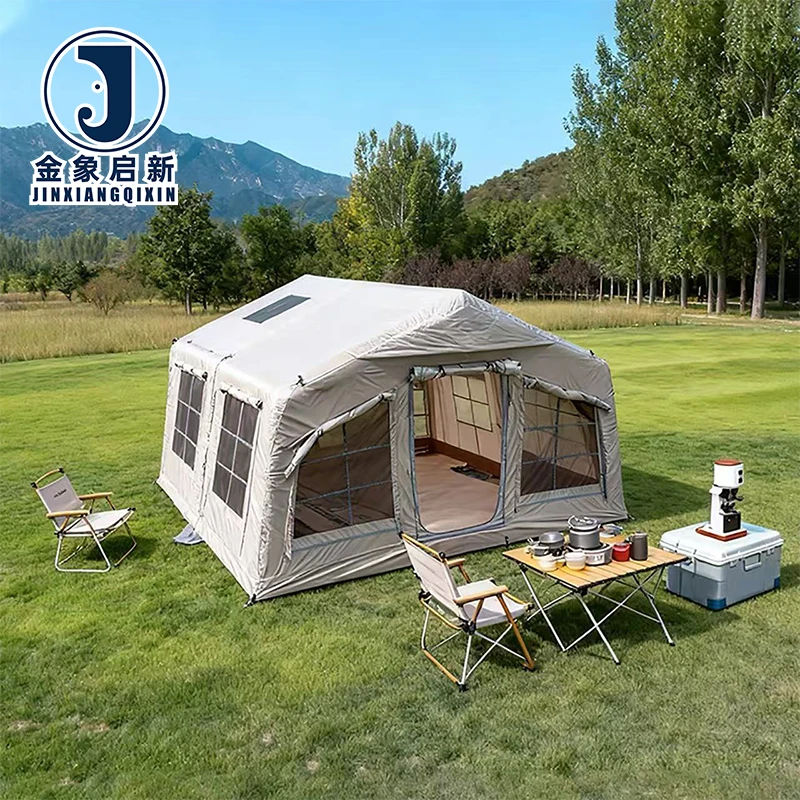
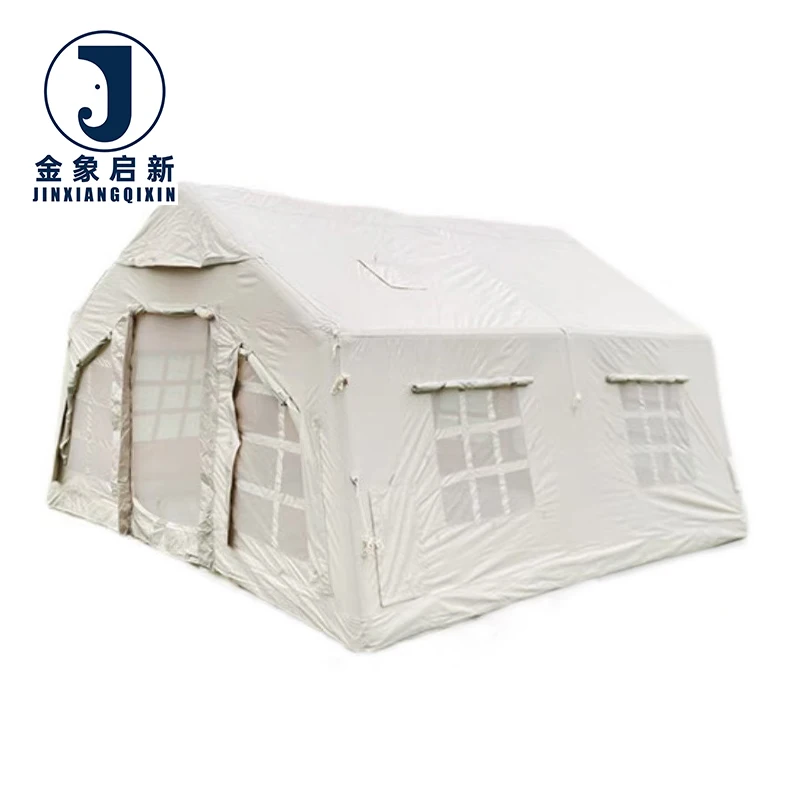
Description
Process Controlled Output — Three full production lines and 36 sets of professional equipment ensure every roll of PVC inflatable tent fabric meets batch-to-batch consistency for bulk wholesale orders.
Technical Specifications
| Parameter | Value |
|---|---|
| Product Type | Inflatable Tent Fabric |
| Core Material | PVC coated fabric |
| Product Form | Extended type, single layer construction |
| Key Performance | Waterproof, windproof, 4-season suitable, quick automatic opening |
| Flame Retardant | Available in flame retardant grades — confirm the grade required for your market (grade not stated in source) |
| UV Treatment | Available with UV stabilization — request test basis for your specific exposure conditions (test basis not stated in source) |
| Customization Service | OEM & ODM (sample customization, pattern printing) |
| Quality Control System | Strict full-process inspection, 24-hour inflation testing before shipment |
| Manufacturing Standards | ISO9001, ISO14001, ISO45001, CE |
Application Suitability
| Application | Exposure & Requirement |
|---|---|
| Temporary Site Offices | Daily human traffic, equipment movement, sustained weather exposure requiring structural stability |
| Emergency Command Centers | Rapid deployment pressure, critical reliability in disaster-affected environments, multi-day continuous use |
| Equipment Storage Shelters | Protection from moisture ingress, dust contamination, and temperature fluctuations for sensitive machinery |
| Material Distribution Stations | High-frequency access, load handling proximity, weather resistance for stored supplies |
| Remote Project Locations | Extended isolation from maintenance support, harsh environmental conditions, self-sustaining durability |
Why Roll-to-Roll Consistency Matters More Than Quoted GSM for Inflatable Tent Fabric
Inconsistent coating weight across rolls forces fabricators to adjust heat-sealing parameters mid-production, causing weld failures.
When procuring inflatable tent roll stock, buyers often focus on the stated GSM without verifying actual delivered weight. A roll measuring lighter than specified at the warehouse means the coating thickness varies, directly affecting how the material responds to high-frequency welding equipment. Fabricators running automated production lines cannot compensate for material variation without stopping to recalibrate, creating bottlenecks and scrap waste [NEED_CITE: coating weight variance impact on welding consistency].
Colour deviation between rolls in the same shipment becomes immediately visible once multiple tents deploy side by side at an emergency site or industrial project. Fleet operators and procurement agencies specifying a unified appearance across dozens of units face rejection or costly rework when batch matching fails. This problem originates from insufficient pigment control during the coating process rather than surface finishing.
Batch Matching Protocols for Wholesale Inflatable Tent Fabric Orders
Maintaining colour and weight consistency across a multi-roll wholesale inflatable tent fabric shipment requires dedicated QA checkpoints at each production stage. Raw PVC compound batches must originate from the same mixing lot to eliminate pigment drift, while coating line parameters including temperature, roller pressure, and line speed remain locked throughout the run. Any deviation triggers automatic rejection before the roll proceeds to winding.
Pre-shipment inspection verifies each roll against the order specification, documenting actual GSM, width measurement, and colour reference under standardized lighting conditions. Rolls falling outside tolerance are segregated and replaced, ensuring only conforming material enters the container. This systematic approach prevents the scenario where a fabricator discovers colour mismatch only after cutting and welding several units.
Production Capacity and Lead Time Reliability for Volume Orders
Three full production lines operating with 36 sets of professional processing equipment provide the throughput necessary for substantial inflatable tent roll commitments without compromising quality control. The 10-person R&D team handles sample development, pattern printing customization, and specification refinement before full-scale production begins, reducing the risk of costly corrections after the order enters the coating line [NEED_CITE: OEM sample approval process for coated fabric].
OEM and ODM capabilities extend beyond basic sizing to include custom pattern printing for fleet identification, project branding, or emergency response organization marking. Pattern alignment across sequential rolls ensures continuity when fabricators join panels during tent assembly, maintaining professional appearance on deployed structures.
Understanding How Coating Method and Base Fabric Interact
PVC coated fabric performance depends on the interaction between base fabric construction and coating application method, not simply the total GSM figure. A heavier base fabric with thinner coating may show higher tensile strength but reduced abrasion resistance compared to a lighter base with thicker coating layers. The denier of the yarn and the weave density determine how load distributes across the fabric structure, influencing tear propagation behaviour when the material experiences puncture or stress concentration.
The coating method — whether knife-over-roll, dip coating, or calendering — affects how deeply the PVC penetrates the base fabric weave. Deeper penetration improves adhesion and delamination resistance but can reduce fabric flexibility, which matters for inflatable structures that must fold compactly for transport and deploy rapidly under air pressure. Surface finish selection between glossy and matte influences cleanability, print adhesion for branding applications, and UV reflection characteristics.
Flame retardant performance requires specific chemical additives integrated into the PVC compound during mixing, not simply applied as a surface treatment. Different markets mandate different classification systems — some reference DIN 4102 B1, others require NFPA 701 compliance, and certain jurisdictions accept local building material fire ratings. Confirming the applicable standard for your target market before production prevents certification delays and import rejection [NEED_CITE: international flame retardant classification standards for temporary structures].
The Hidden Cost of Specifying Material Without Application Context
Selecting inflatable tent fabric based solely on price and GSM creates downstream failures that far exceed the initial savings. Material too light for the intended air pressure and wind load experiences seam stress beyond design limits, causing welded joints to separate while the fabric itself remains intact. This failure mode points to specification mismatch rather than manufacturing defect, yet the end user bears the consequence in field conditions.
Conversely, over-specifying material weight for a short-term emergency shelter application wastes budget and complicates logistics. Heavier fabric increases packed volume and weight, reducing the number of units per transport container and slowing deployment speed when rapid response matters. The correct specification balances durability requirements against deployment frequency, storage duration, and environmental severity.
Inadequate UV stabilization leads to surface chalking and embrittlement in applications with sustained sun exposure, but excessive UV treatment adds cost without benefit for units stored indoors or deployed only during overcast conditions. Matching the stabilization package to actual field exposure prevents both premature degradation and unnecessary expense [NEED_CITE: UV degradation mechanisms in PVC coated polyester].
Why Procurement Teams Source Inflatable Tent Roll Stock Here
Nearly 30 years of focused coated fabric production has built deep process control over coating weight accuracy and adhesion performance, directly addressing the GSM verification concern that plagues bulk buyers. Every roll undergoes weight measurement before dispatch, with results documented on the pre-shipment inspection record provided to the buyer.
The dedicated QA and QC staff at every production stage means defects are caught before reaching the winding station, not discovered at the customer’s warehouse. This systematic approach eliminates the frustration of receiving rolls with coating voids, colour streaks, or dimensional variation that disrupt fabrication schedules.
Sample development within days for custom width, colour, and print requirements allows buyers to validate specifications before committing to full production volume. The 10-technician R&D team handles material selection consultation, ensuring the proposed specification matches the application requirements rather than defaulting to generic grades.
Full documentation packages accompany every shipment, including material specification sheets stating base fabric construction and coating details, ISO and CE certificates, certificates of origin, and customs support documentation. This completeness prevents import clearance delays and provides traceability for quality audits.
The 9,180 square meter facility with three full production lines supports substantial volume commitments while maintaining the batch consistency that fleet operators and distributors require for repeat orders.
Documentation & Verification
- Material specification sheet documenting base fabric denier, weave density, and coating weight for each roll
- Pre-shipment inspection record showing measured GSM, width, and colour reference per roll
- Roll packing list with individual roll identification, net weight, and container loading sequence
- Certificate of origin and customs documentation supporting cross-border shipment clearance
- Test reports for waterproof performance and wind resistance available per batch upon request
Fabrication, Handling & Storage
- Heat sealing parameters must account for PVC coating thickness variation — conduct test welds on each roll before production runs
- Store rolls horizontally on pallets in climate-controlled conditions to prevent permanent creasing that affects inflatable chamber geometry
- Avoid stacking heavy objects on stored rolls, as compression marks transfer to finished tent surfaces after inflation
- Use compatible PVC adhesive for field repairs, matching the coating chemistry to ensure bond strength
- Plan cutting layout to minimize waste, accounting for pattern repeat distance on printed rolls
- Clean finished surfaces with mild detergent solutions — aggressive solvents degrade the PVC coating and reduce service life
Requesting a Quotation for Your Inflatable Tent Fabric Requirements
Provide your target application and deployment environment so the technical team can recommend appropriate material weight and treatment specifications. Specify required roll width, estimated annual volume, and whether you need plain stock or custom pattern printing for identification purposes.
Indicate any mandatory compliance requirements for your destination market, including flame retardant classifications or specific test standards that must accompany the shipment. Confirm whether you require sample approval before full production, particularly for custom colours or printed designs where batch matching is critical.
Frequently Asked Questions
Q: How is GSM verified on arrival and what does the pre-shipment inspection cover?
A: Every roll undergoes weight measurement during pre-shipment inspection, with actual GSM recorded on the inspection report provided with your shipment. The inspection also covers width verification, colour consistency check under standardized lighting, surface defect examination, and dimensional accuracy. You receive documented evidence before the container departs, not after discovering discrepancies at your warehouse.
Q: How do you control colour consistency across multiple rolls in one order?
A: Colour matching begins with raw PVC compound from the same mixing lot for your entire order. Production line parameters remain locked throughout the run, and each roll undergoes visual comparison against the approved reference under controlled lighting conditions. Rolls showing deviation are segregated before packing, ensuring your shipment contains only matched material that will deploy uniformly across multiple tent units.
Q: What custom widths, colours and print options are available, and what are the minimums?
A: The facility supports custom width slitting, Pantone or RAL colour matching, and pattern printing for fleet identification or branding purposes. Sample development occurs before full production to validate your requirements. Minimum quantities depend on the specific customization scope — contact the technical team with your exact specifications to receive accurate lead time and volume guidance for your inflatable tent roll requirements.
Q: How are rolls packed and loaded to avoid creasing or surface damage in transit?
A: Each roll receives individual protective wrapping before horizontal pallet loading in the container. The packing sequence prevents compression damage during ocean freight, and the roll packing list documents loading position for efficient unloading. This method preserves the coating surface integrity and prevents permanent creasing that would affect inflatable chamber formation during tent deployment.
Q: Can you provide matched test reports for waterproof and wind-resistance performance per batch?
A: Test reports documenting waterproof performance and structural integrity under wind load are available for each production batch. The 24-hour inflation testing protocol on finished units verifies pressure retention and seam integrity before dispatch. Request specific test documentation when placing your order to ensure reports accompany your shipment and support your compliance or quality audit requirements.