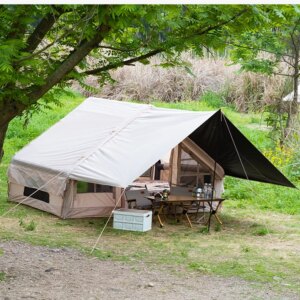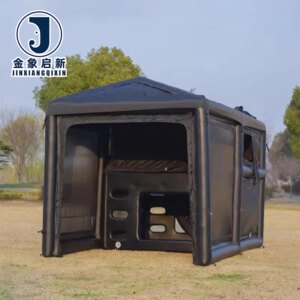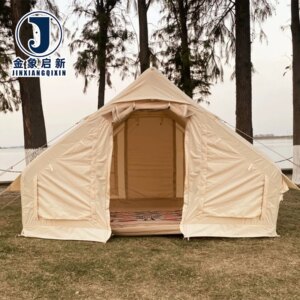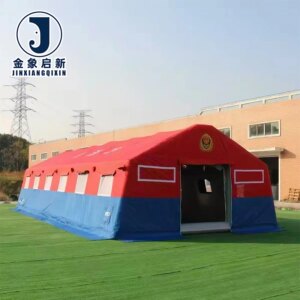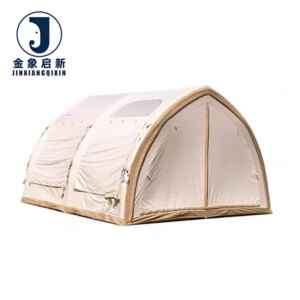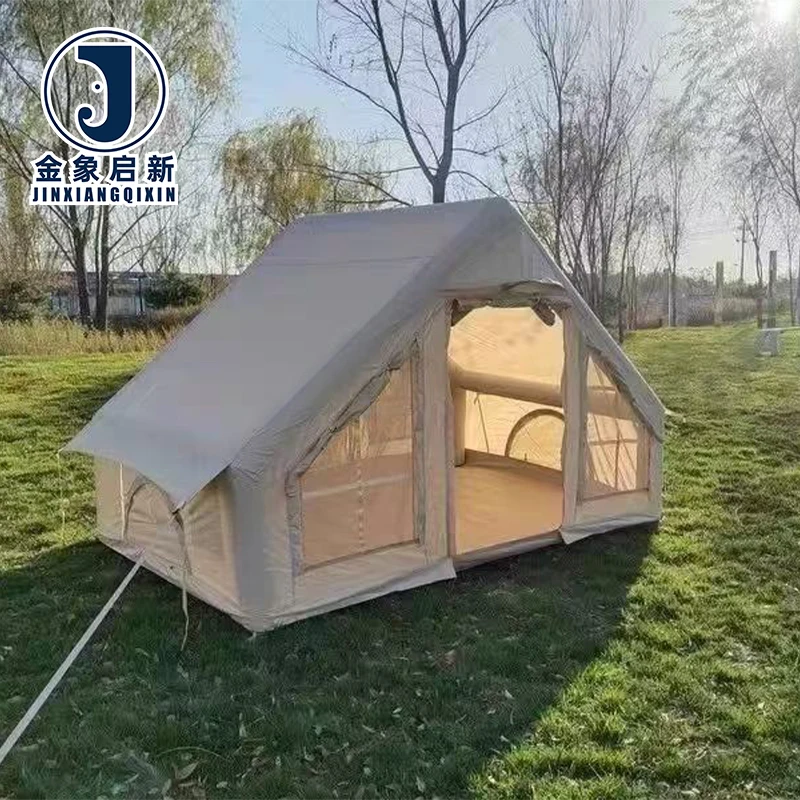
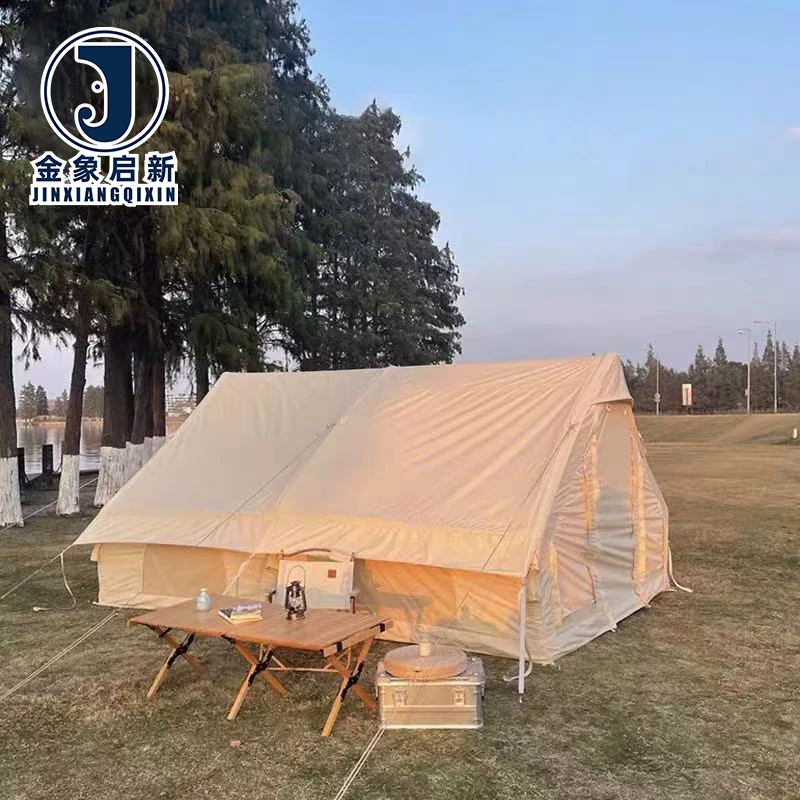
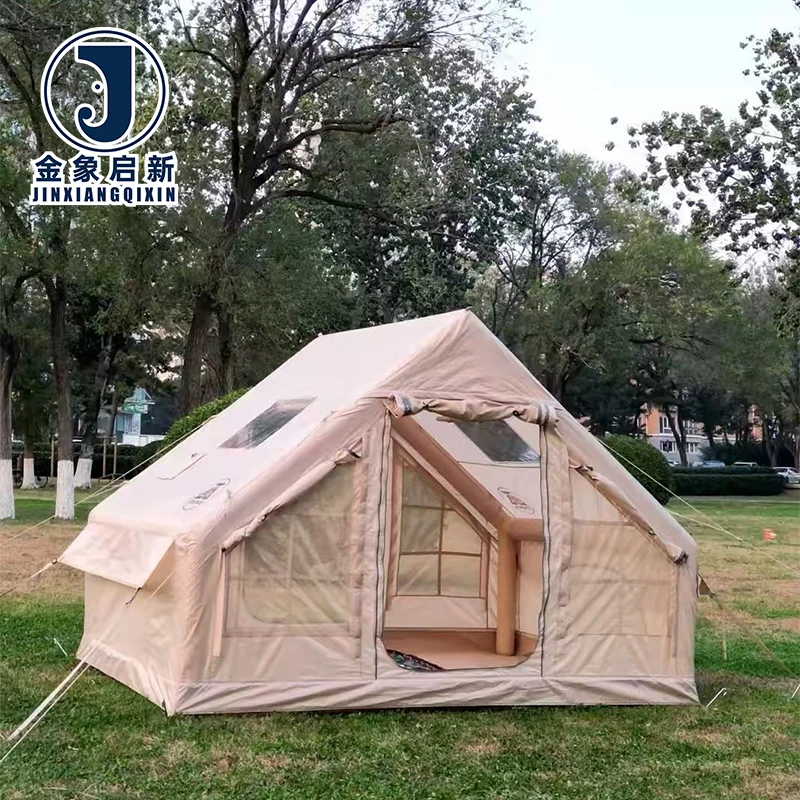
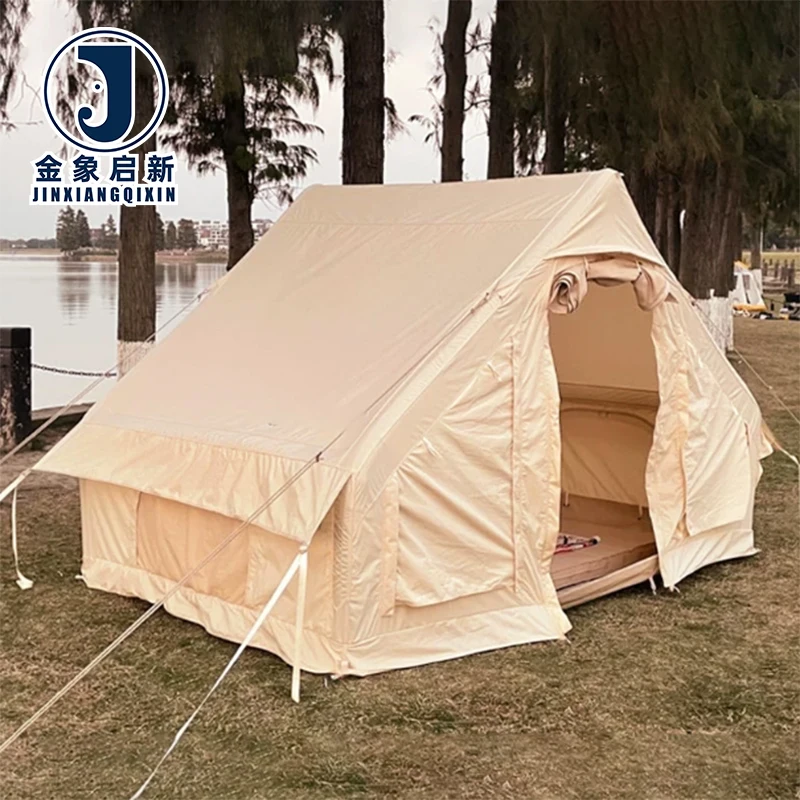
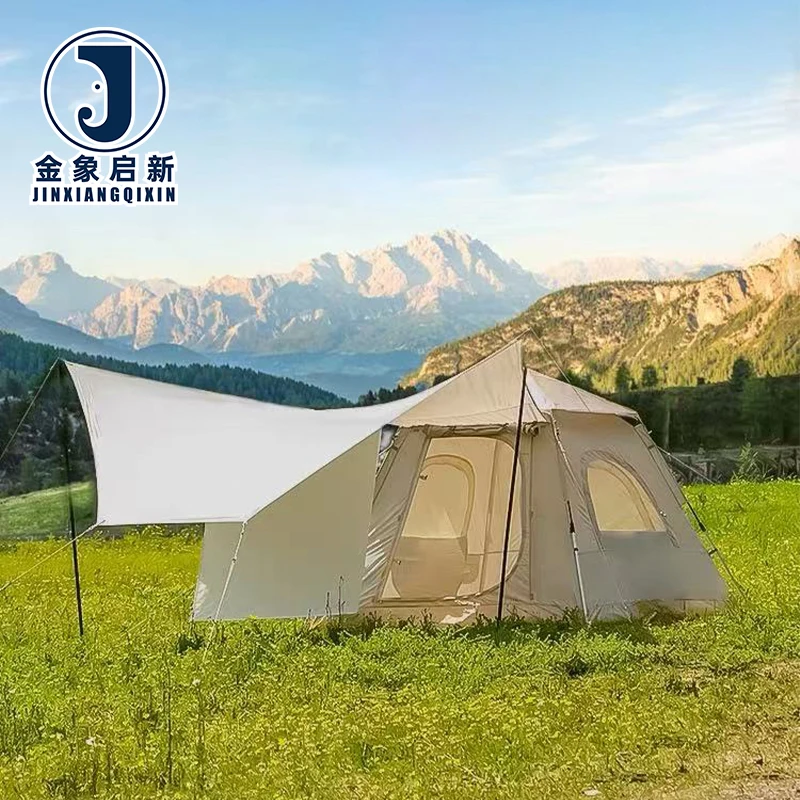
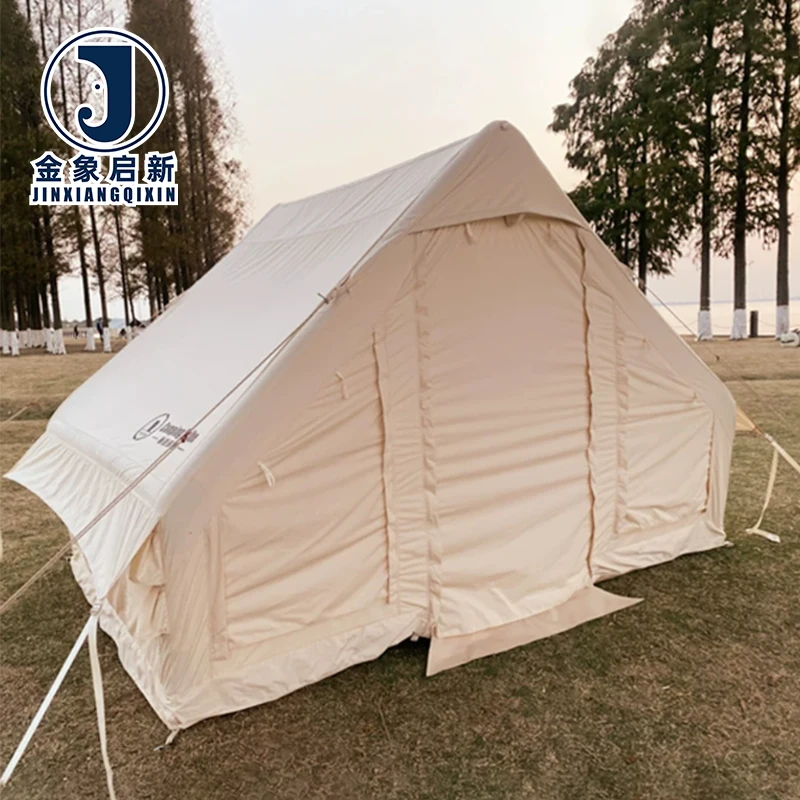
Description
Batch-to-Batch Consistency — every roll of PVC inflatable tent fabric undergoes in-process weight and colour verification against the order specification before leaving the production line.
Technical Specifications
| Parameter | Value |
|---|---|
| Product Type | Inflatable Tent |
| Core Material | PVC Tarpaulin |
| Key Performance | Waterproof, UV-resistant (test basis not stated in source), Tear-resistant, Fire-retardant (grade not stated in source), Anti-static (standard not stated in source) |
| Customization Service | OEM & ODM customization, sample customization, pattern printing |
| R&D Team Scale | 10 technicians |
| Production Lines | 3 full production lines |
| Processing Equipment | 36 sets of professional processing equipment |
| Standards | ISO9001, ISO14001, ISO45001, CE |
Application Suitability
| Application | Exposure & Requirement |
|---|---|
| Emergency disaster relief shelters | Rapid deployment, all-weather protection, repeated inflation and deflation cycles |
| Temporary storage facilities | Constant UV exposure, wind load stress, abrasion from stacked inventory |
| Construction site accommodations | Heavy dust ingress, mechanical contact damage, flame-retardant compliance on active sites |
| Emergency response centers | High-frequency setup and teardown, transport vibration, multi-climate storage |
| Industrial temporary structures | Long-term outdoor siting, chemical residue exposure, structural air-beam pressure |
Why Roll Consistency Matters More Than Quoted GSM for Inflatable Tent Fabric Buyers
A single shade shift or coating weight deviation between rolls can halt a production line and force an entire batch rework.
When sourcing PVC inflatable tent fabric by the roll, buyers frequently encounter material that arrives lighter than the GSM stated on the quotation, or with visible colour variation once multiple rolls are cut and welded side by side into a single inflatable structure. These inconsistencies are not cosmetic defects — they create structural weak points at seam junctions where air-beam pressure concentrates, and they force fabricators to sort and reject partial rolls, driving up per-unit cost well beyond the quoted price [NEED_CITE: tensile and tear test methods for coated fabrics per ISO 1421].
Volume Supply and Roll-to-Roll Uniformity
Maintaining colour and coating consistency across a multi-roll order of custom inflatable tent fabric demands process control at every stage — from base fabric tensioning through coating application to final winding. This facility operates three full production lines with dedicated QA checkpoints between each stage, ensuring that the GSM verified at the start of a run matches the last roll produced.
Batch Documentation That Travels With Your Shipment
Each roll in an inflatable tent fabric order ships with a packing list that records roll number, net weight, and batch reference. This traceability allows fabricators to match material certificates to specific rolls on the warehouse floor, reducing receiving inspection time and simplifying quality audits for downstream customers.
Understanding How GSM, Base Fabric and Coating Interact
The stated GSM of a PVC tarpaulin roll is the combined weight of the base polyester fabric and the PVC coating on both sides. A higher GSM does not automatically mean a stronger material — a roll with a denser base weave and thinner coating can outperform a heavier roll built on a loose weave loaded with filler. For inflatable tent applications, the base fabric denier and weave density determine how well the material resists tear propagation at weld lines, while the coating weight governs waterproofing and surface durability. The coating method also affects peel strength at heat-welded seams, which is critical for air-beam structures that flex under internal pressure. Specifying GSM without confirming the base fabric construction leaves a gap that can only be closed by reviewing the material specification sheet for each batch [NEED_CITE: DIN 4102 fire classification for building materials].
The Hidden Cost of Specifying on Price Alone
Purchasing decisions based solely on quoted GSM and unit price often surface problems only after the material arrives: rolls that measure below the stated weight, colour differences visible when panels from different rolls are joined, or welded seams that fail during inflation testing because the coating composition varied between batches. For inflatable tent manufacturers running continuous production, these defects translate into line stoppages, partial roll write-offs, and delayed shipments to end customers. The cost of a single rejected batch typically exceeds any per-metre savings from the original quotation [NEED_CITE: coated fabric peel strength and weld integrity standards].
Why Inflatable Tent Fabricators Source From This Facility
Nearly 30 years of coated fabric production provides the process knowledge required to hold coating weight within tolerance across long production runs, which is essential for roll-stock buyers who cannot afford batch variation.
A 10-person R&D team handles custom width, colour matching and pattern printing in-house, with sample development turnaround measured in days rather than weeks.
Three full production lines and 36 sets of processing equipment support the volume requirements of container-load orders while maintaining the flexibility to run short batches of specialised widths.
Dedicated QA and QC staff inspect every production stage, with 100% pre-shipment inspection ensuring that only verified rolls enter the packing area.
Documentation & Verification
- Material specification sheet confirming GSM, base fabric denier and coating weight per roll
- UV resistance and fire-retardant test reports matching the grade stated on the original quotation
- Pre-shipment inspection record documenting roll-by-roll weight and visual checks
- Roll packing list with batch number, net weight and roll count for receiving verification
- Certificate of origin and customs documentation for cross-border shipment clearance
Fabrication, Handling & Storage
- Heat-weld parameters must be adjusted when switching between rolls of different coating weights to maintain seam peel strength
- Store PVC inflatable tent fabric rolls upright on pallets to prevent flat-spot deformation of the coating surface
- Avoid stacking heavy objects on horizontal rolls during transport to prevent permanent crease marks in the PVC coating
- Use mild detergent for surface cleaning — solvent-based cleaners may degrade the coating finish over repeated applications
- Plan cutting layouts to minimise weld seams across air-beam stress zones where inflation pressure concentrates load
Requesting a Quotation for Inflatable Tent Roll Stock
Provide your required roll width, target GSM range, annual volume estimate and any colour or printing specifications so the technical team can recommend the appropriate base fabric and coating combination. Confirm whether your end-market requires specific fire-retardant or anti-static grades, as available treatments vary by certification standard. Sample rolls can be produced for approval before committing to a full production order.
Frequently Asked Questions
Q: Can you supply inflatable tent fabric by the roll with consistent GSM and colour across the entire order?
A: Every production run includes in-process coating weight checks and colour verification at multiple stages. Rolls are inspected individually before packing, and the packing list records batch-level weight data so you can confirm consistency on arrival. Colour matching is controlled against approved reference standards for each order.
Q: Do you provide test reports for fire-retardant and anti-static treatment with each shipment?
A: Test reports for fire-retardant and anti-static grades are issued based on the specification confirmed at the quotation stage. Confirm the exact certification standard required for your market before production begins, and the corresponding report will accompany the shipping documentation package.
Q: What custom sizing, printing and material options are available for inflatable structure applications?
A: Custom roll widths, lengths, colours and pattern printing are handled by the in-house R&D team. OEM and ODM specifications are supported, with sample rolls developed within days for your approval before bulk production commences.
Q: How do you handle sample development and approval before committing to a bulk roll order?
A: Provide your application requirements, target specifications and any colour or printing references. The R&D team produces sample rolls for your evaluation. Once approved, the sample specification is locked as the production standard for your bulk order.
Q: What documentation is included for import compliance and material traceability?
A: Each shipment includes a material specification sheet, relevant test reports, pre-shipment inspection record, roll packing list with batch references, certificate of origin and customs support documentation as required by the destination country.