
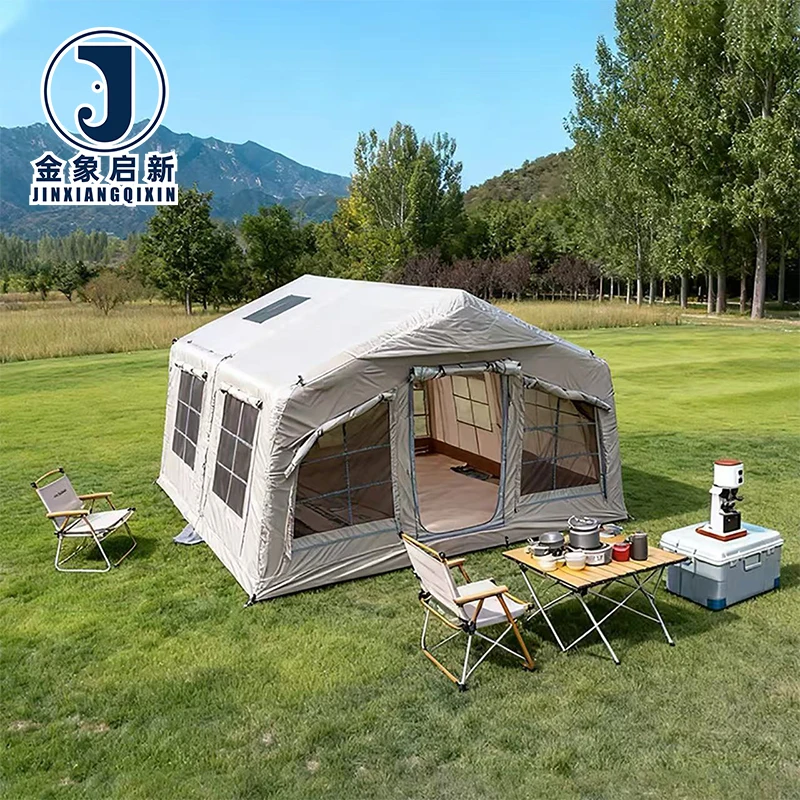
Description
Consistent Roll Output — Three full production lines maintain batch-to-batch colour and weight uniformity across large-volume inflatable tent fabric orders, verified through in-line inspection at every coating stage.
Technical Specifications
| Parameter | Value |
|---|---|
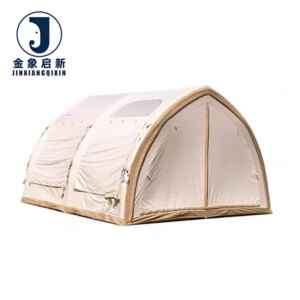
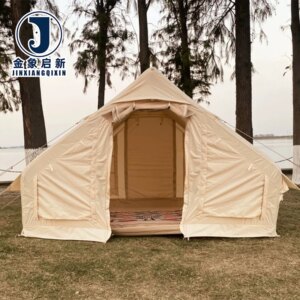
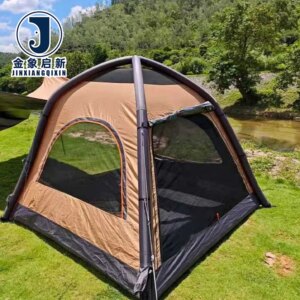
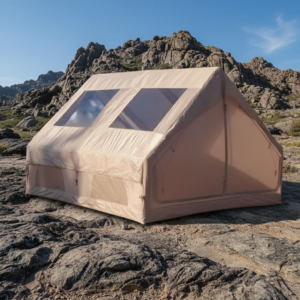
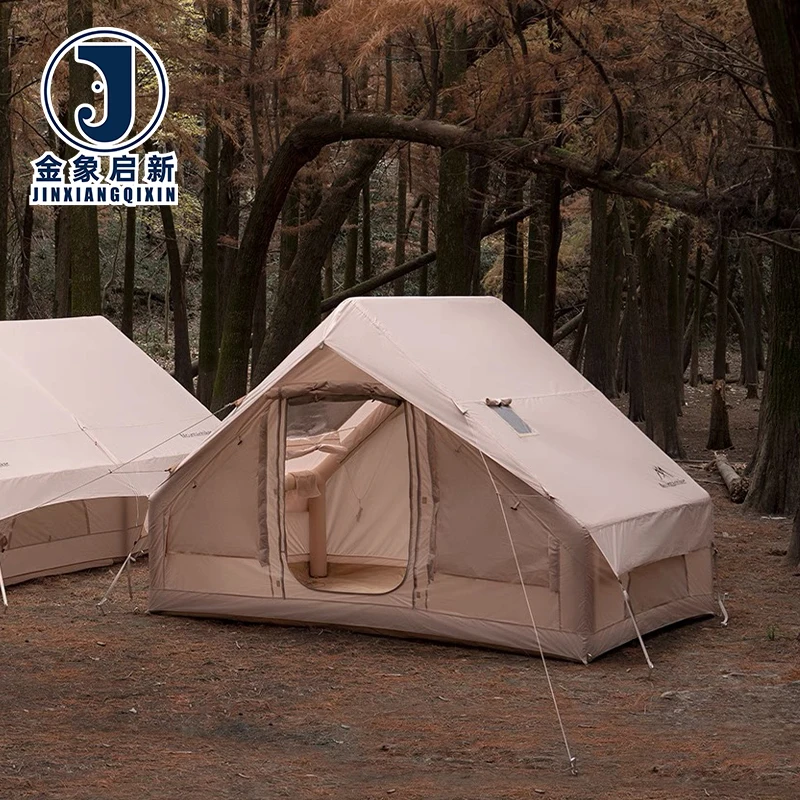
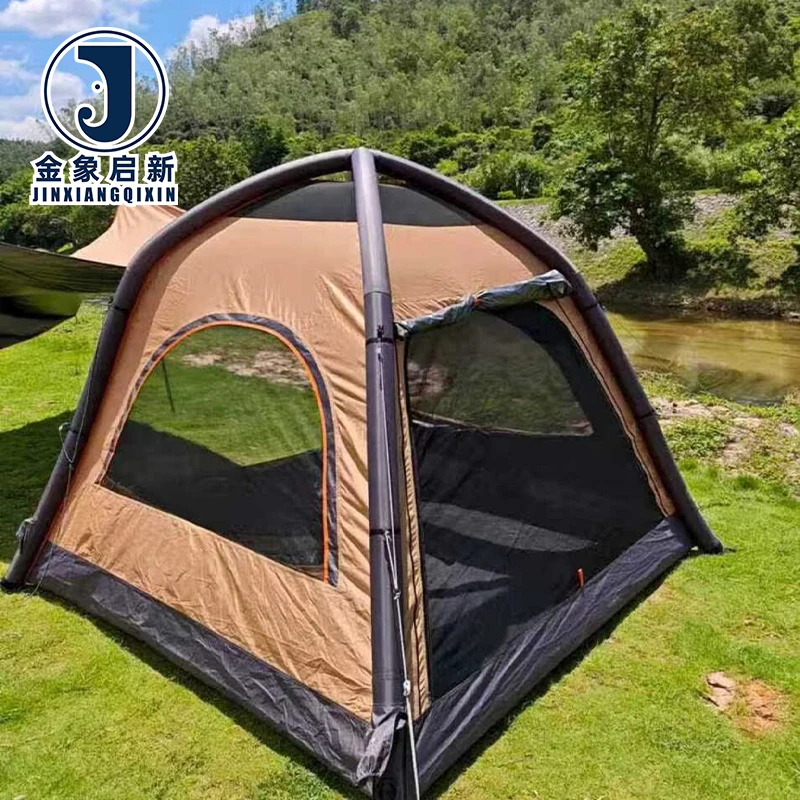
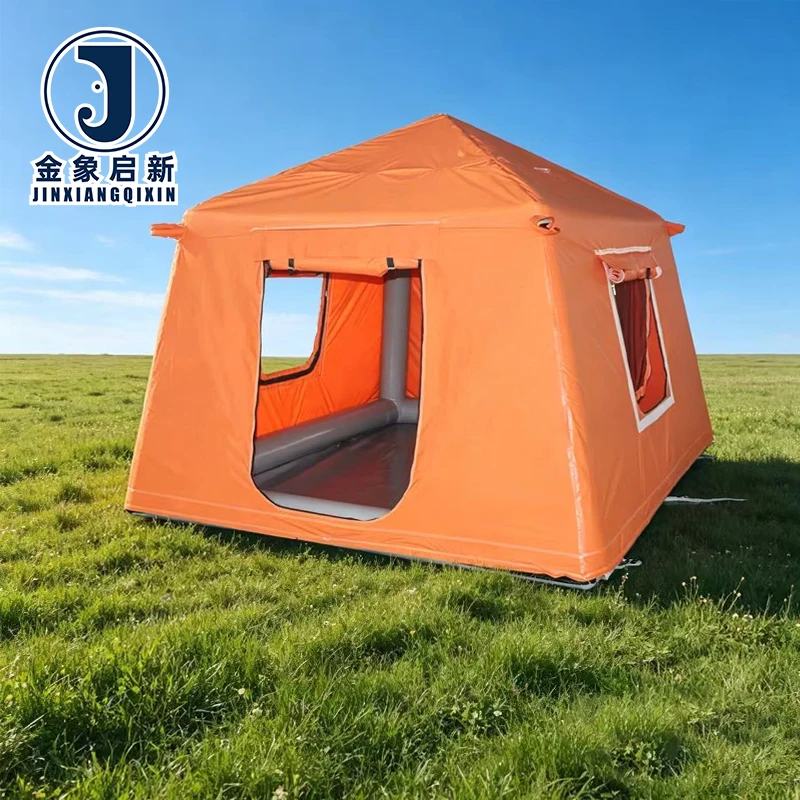
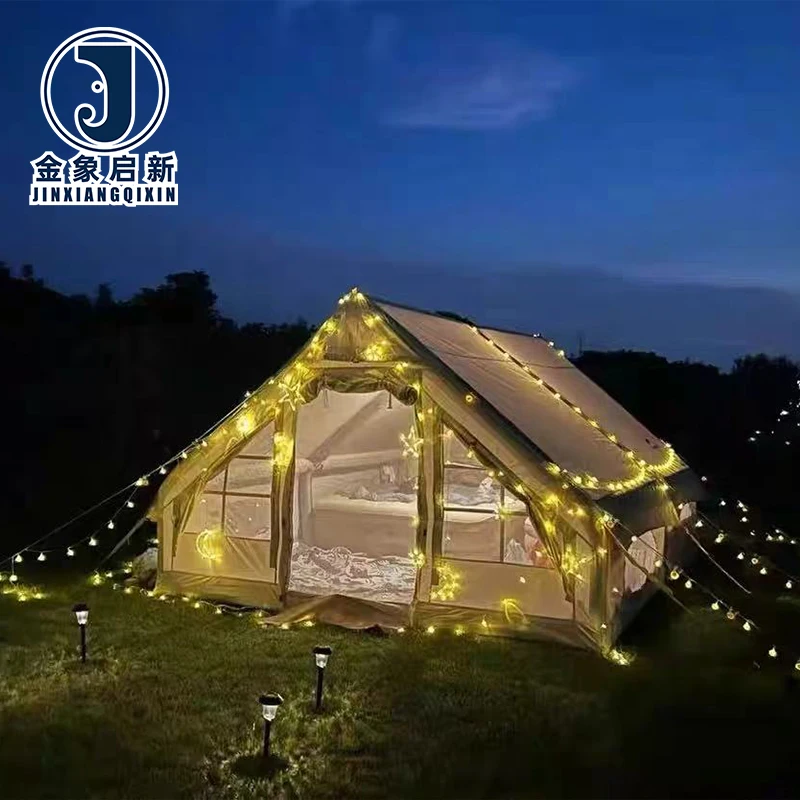
| Product Type | PVC Inflatable Camping Tent 4-6 Person |
| Core Material | PVC knife-coated tarpaulin fabric |
| Waterproof Rating | Tested to ASTM D751 |
| Tear Strength | Tested to ISO 13937-2 |
| UV Resistance | Tested to ISO 4892-2 |
| Flame Retardant Grade | Available — confirm the grade required for your market |
| Anti-Static | Not confirmed — enquire if required for your application |
| Construction | Single layer |
| Capacity | 4–6 person |
| Opening Mechanism | Quick automatic opening |
| Airtightness Validation | 24-hour pressure retention test before shipment |
| Customization | OEM & ODM — material selection, product design |
| Standards | ISO 9001, ISO 14001, ISO 45001, CE |
Application Suitability
| Application | Exposure & Requirement |
|---|---|
| Temporary site offices — construction projects | Rain, wind loading, ground contact, repeated inflation cycles |
| Mobile equipment shelters — outdoor events | UV exposure, crowd proximity, rapid deploy and teardown |
| Auxiliary storage — logistics staging | Dust, moisture ingress, forklift abrasion at base panels |
| Commercial summer outdoor operations | Continuous sun exposure, thermal expansion of air beams |
| Field team shelters — infrastructure projects | Remote transport, temperature variation, single-person setup |
Why Roll-to-Roll Colour Varies and What It Costs Tent Makers
Colour drift between rolls in a single shipment forces fabricators to reject entire panels once they are heat-welded side by side.
When a tent manufacturer cuts inflatable tent fabric from multiple rolls and the shade shifts by even a few delta-E units, the finished product looks patchwork. Buyers who ordered a uniform run for a commercial client face returns or rework. The problem rarely shows on a single sample swatch — it appears only after dozens of rolls enter production [NEED_CITE: colour consistency measurement methods for coated textiles]. Batch-level pigment dosing and inline spectrophotometer checks are what separate a usable container load from a costly write-off.
How Knife Coating Controls the Air Beam Envelope
PVC knife-coated fabric forms the structural skin of inflatable tent air beams and canopy panels. The coating penetrates the base weave under controlled pressure, creating a continuous film that resists both air permeation and water ingress. For inflatable tent manufacturers, this means welded seams can achieve bond strength close to the fabric body itself — a critical factor when internal pressure cycles repeatedly during use.
Pressure Retention as the Real Quality Gate
Every completed inflatable tent unit undergoes a 24-hour pressure retention test before dispatch. This catches micro-leaks at seam intersections and valve mounts that a visual inspection would miss. Fabricators sourcing PVC inflatable tent fabric roll stock benefit from this discipline because the same coating adhesion standards apply whether the output is a finished tent or a roll destined for a third-party cutting table [NEED_CITE: air permeability test methods for coated fabrics ISO 9237].
Reading the Spec Sheet Beyond GSM
GSM alone tells you how much material is on the roll, not how it will behave under inflation pressure. Base fabric denier and weave density determine how load transfers across the yarn network — a lighter but tighter weave can outperform a heavier, looser one in tear propagation. Knife-coated construction adds coating weight on both faces, so a stated GSM reflects the combined system. For inflatable structures, peel strength between coating and base matters more than total weight because delamination at a weld line causes sudden deflation. Surface finish — glossy or matte — affects both heat-weld consistency and print adhesion for branded tent panels [NEED_CITE: tensile and tear test methods for coated fabrics per ISO 1421].
The Hidden Cost of Specifying on Price Per Kilogram
Buyers who source inflatable tent material wholesale on a price-per-kilogram basis without verifying batch-level coating weight often receive rolls that meet the GSM average but fall short at the thin end of the tolerance band. Thinner coating at the low extreme means weaker heat-weld adhesion at those points — exactly where air beam stress concentrates. The result is a seam that fails months into field use, after the tent has passed initial acceptance [NEED_CITE: weld strength variability in PVC coated fabric production runs]. Reworking warranty claims on deployed inflatables costs far more per unit than the material saving on the original roll purchase.
Why Manufacturers Source Here
Nearly three decades focused on coated fabric production gives this facility process depth across coating weight control and adhesion management — both critical for inflatable tent fabric that must hold air under variable temperature. Three full production lines and 36 sets of professional equipment support bulk roll output with on-time container loading, reducing the risk that a tent manufacturer’s cutting schedule stalls waiting for material. A 10-technician R&D team handles OEM and ODM requests from material selection through product design, including custom width and colour matching for branded tent runs. Dedicated QA and QC staff inspect at every production stage, and a 100 percent pre-shipment check ensures roll-to-roll consistency that fabricators can rely on when planning cut yield. The 24-hour pressure retention protocol applied to finished units demonstrates the same airtightness discipline that underpins the roll stock itself.
Documentation & Verification
- Material specification sheet stating base fabric denier, coating type, and colour reference per batch
- Pre-shipment inspection record with ASTM D751 waterproof, ISO 13937-2 tear, and ISO 4892-2 UV results
- Roll packing list with container loading plan by roll count and gross weight for freight booking
- ISO 9001, ISO 14001, ISO 45001, and CE certificates traceable via order reference number
- Batch-level weight verification per roll against the stated GSM before dispatch
Fabrication, Handling & Storage
- Heat-weld temperature windows shift with coating weight — confirm weld settings per roll batch received
- Store PVC inflatable tent fabric rolls upright on pallets to prevent flat-spot creasing on the coating face
- Allow cold-stored rolls to reach workshop temperature before unrolling to avoid coating micro-cracking
- Cut layout planning should account for roll width to minimise offcuts on air beam gusset panels
- Clean matte-finish surfaces with mild detergent only — solvents degrade the PVC coating bond
- Field repair of punctures requires compatible PVC adhesive and a patch cut from the same coating weight
What to Include in Your Enquiry
Specify the end-use environment — continuous sun, seasonal deployment, or cold-climate operation — so the correct UV and low-temperature formulation can be matched. Confirm whether you need roll stock only or finished OEM units, along with target roll width and annual volume. If your market mandates a flame retardant grade, state the standard so the appropriate formulation is quoted. Request a sample roll or finished unit for weld parameter validation before committing to full production.
Frequently Asked Questions
Q: How is roll-to-roll colour consistency controlled across a bulk order?
A: Inline spectrophotometer readings are taken at intervals during coating, and each roll is cross-referenced against the approved master swatch. Any roll falling outside the agreed delta-E tolerance is flagged before packing. This prevents shade variation from reaching the cutting table and keeps large-volume tent runs visually uniform.
Q: What width and roll length options are available for inflatable tent fabric?
A: Rolls are produced in custom widths suited to tent panel cutting layouts, and roll length is set to match container loading efficiency. OEM buyers specify their preferred dimensions during the sampling stage, and the R&D team confirms feasible tolerances before bulk production begins.
Q: How is GSM verified on arrival and what documentation supports the quoted weight?
A: Each roll carries a batch-level weight record from the pre-shipment inspection. Buyers can perform a cut-sample weigh-in on receipt and cross-check against the packing list. Any discrepancy beyond the stated tolerance triggers a resolution process backed by the inspection record.
Q: How are welded seams tested to ensure they hold under inflation pressure?
A: Completed inflatable tent units undergo a 24-hour pressure retention test that exposes every welded joint to sustained internal load. Seam peel strength is also sampled per production batch to ISO methods. This catches adhesion failures before units ship, protecting fabricators from field warranty claims.