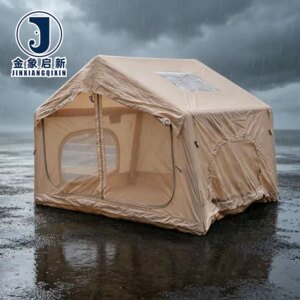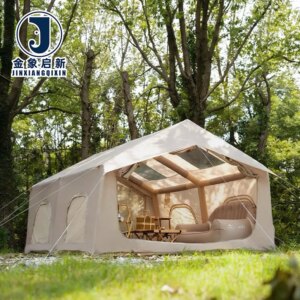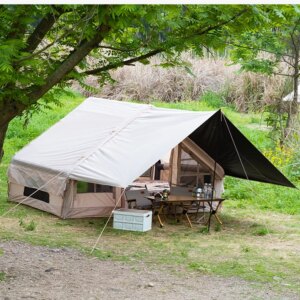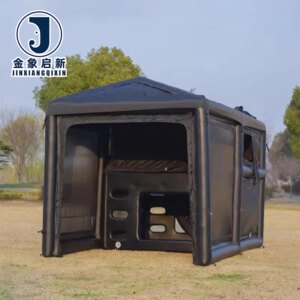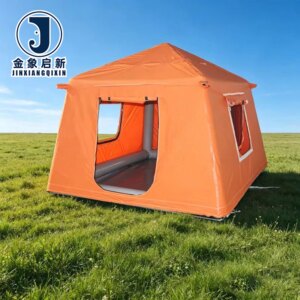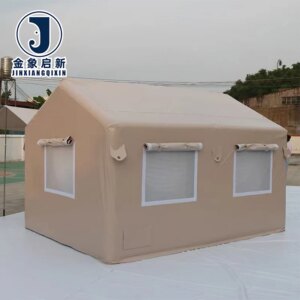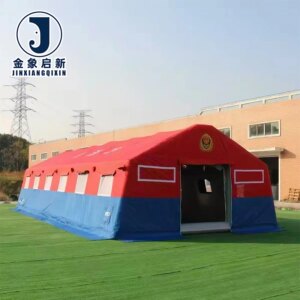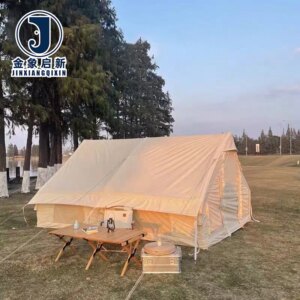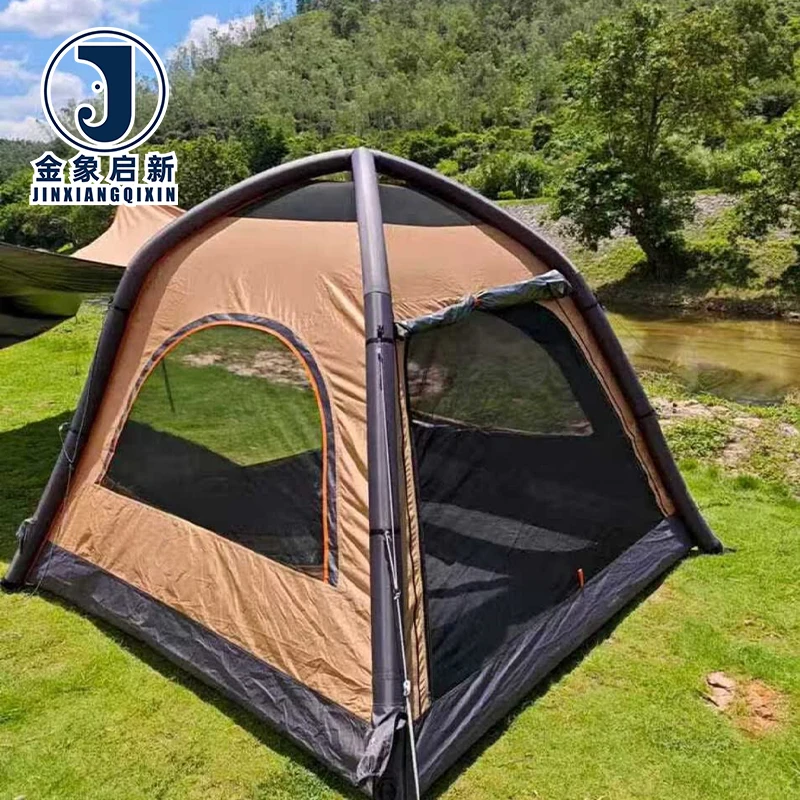
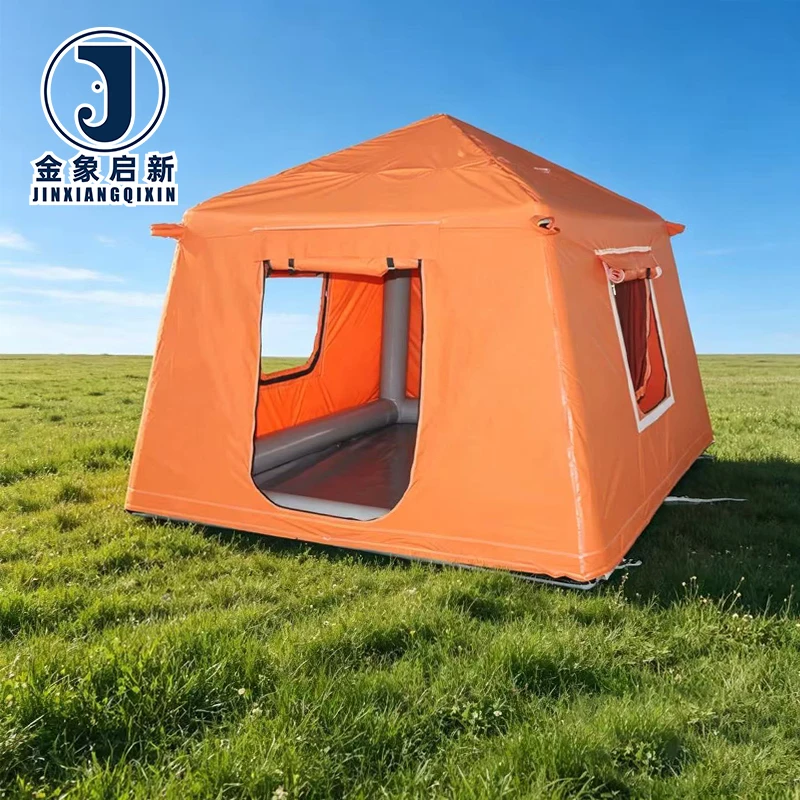
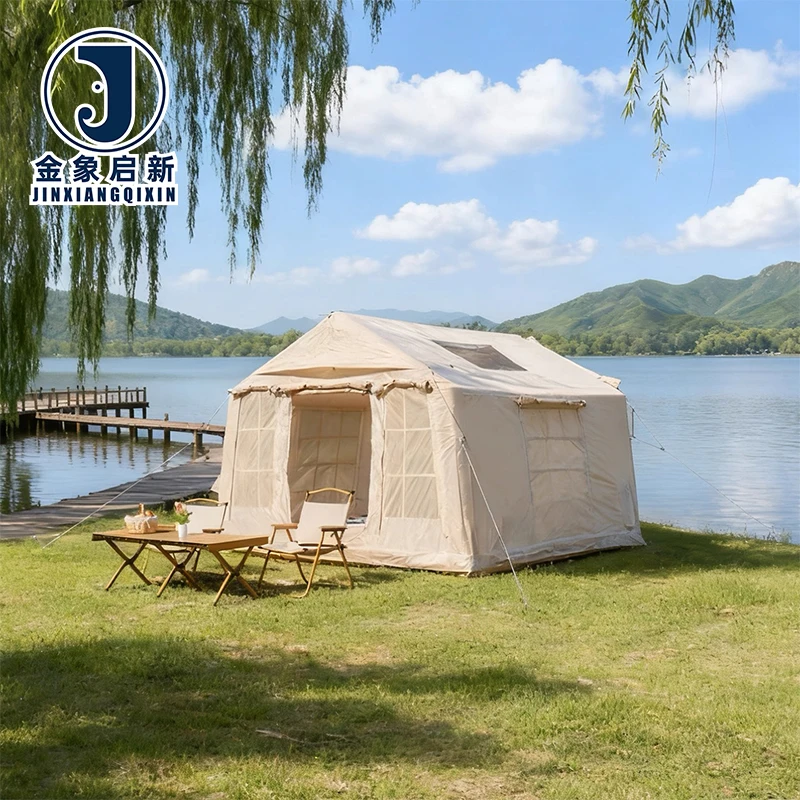
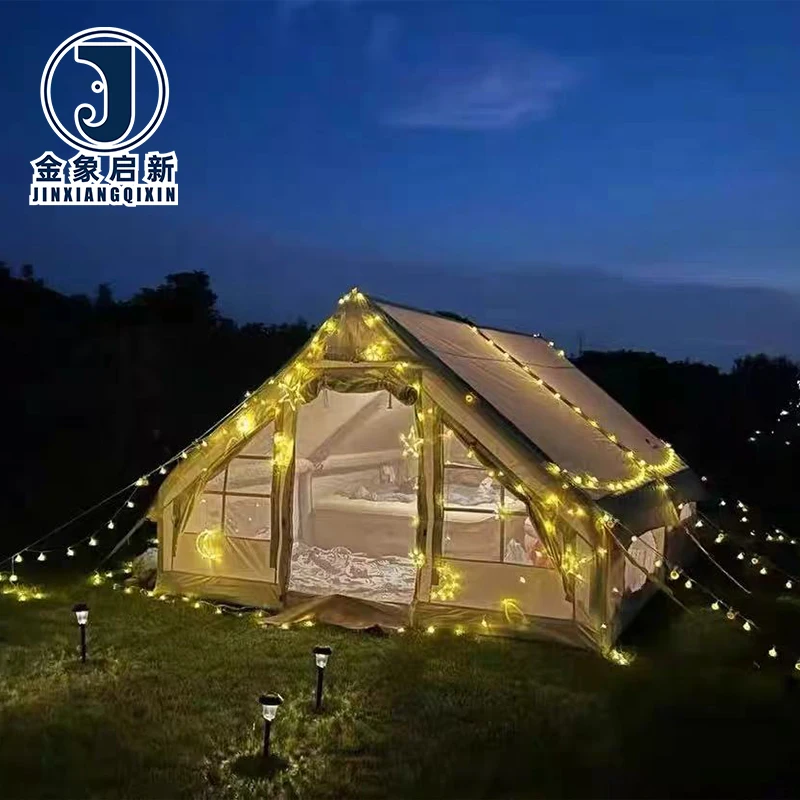
Description
Batch-to-batch roll consistency — backed by three full production lines with dedicated QA checkpoints ensuring uniform GSM, colour, and coating adhesion across every Inflatable Tent Fabric roll in your shipment.
Technical Specifications
| Parameter | Value |
|---|---|
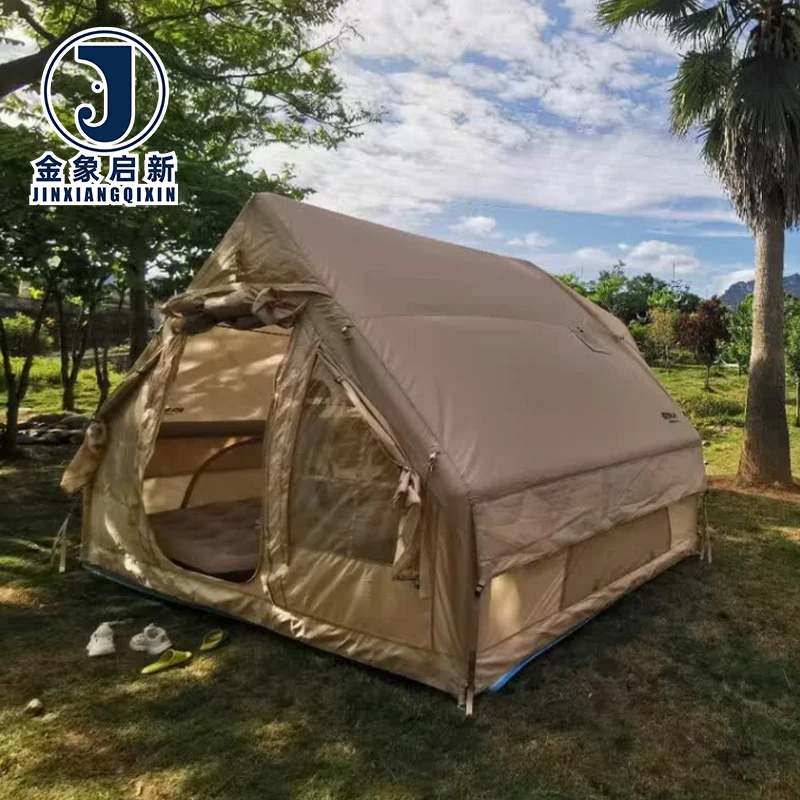
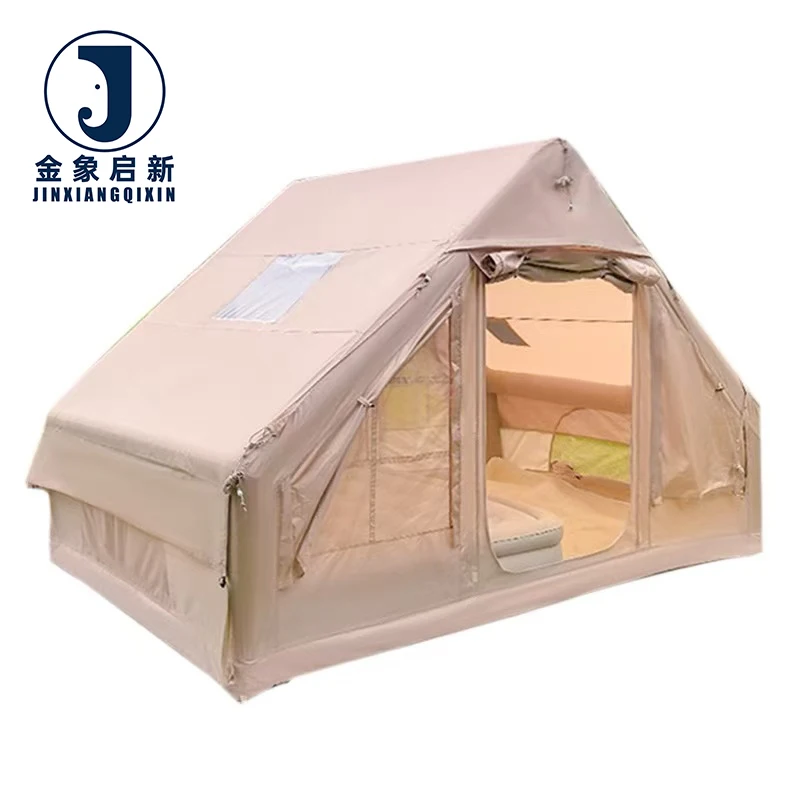
| Product Type | Inflatable Tent |
| Core Material | PVC Coated Fabric |
| Key Performance | Waterproof, UV-resistant (test basis not stated in source), Tear-resistant, Fire-retardant (grade not stated in source), Anti-static (standard not stated in source) |
| Structure | Single layer construction |
| Capacity | 8-10 Person |
| Season Rating | 4 Season |
| Customization | OEM & ODM: sample customization, pattern printing, size adjustments, material thickness modifications |
| Production Lines | 3 full production lines |
| Processing Equipment | 36 sets of professional processing equipment |
| R&D Team | 10 technicians |
| Quality Control | Full-process inspection with dedicated QA & QC staff |
| Sample Lead Time | 7-10 working days |
| Standards | ISO 9001, ISO 14001, ISO 45001, CE |
Application Suitability
| Application | Exposure & Requirement |
|---|---|
| Inflatable tent manufacturers buying fabric by the roll | Consistent colour and GSM across multiple rolls for large-volume production runs |
| Membrane and inflatable structure fabricators | Reliable air-holding weld seams and coating adhesion under repeated inflation cycles |
| Event and emergency shelter producers | Rapid deployment structures requiring waterproof, tear-resistant PVC coated fabric |
| Tent and awning workshops sourcing bulk roll stock | Roll-to-roll uniformity in width and coating weight to reduce cutting waste |
What Roll-to-Roll Colour Drift Costs an Inflatable Tent Fabric Roll Buyer
Colour variance between rolls in the same order becomes visible once panels are welded side by side on the factory floor.
When you source inflatable tent fabric roll stock for production, a shade difference that looks negligible on a sample swatch turns obvious across a full tent canopy. We have seen buyers reject entire batches after cutting and welding because two rolls from the same container did not match under daylight. The rework cost is not just the fabric — it is the labour, the welding time, and the missed shipment deadline. [NEED_CITE: colour measurement tolerances for coated fabrics in industrial applications]
Maintaining Uniformity Across High-Volume Roll Output
Producing inflatable tent fabric roll wholesale quantities requires process discipline at every stage. The coating weight must remain stable from the first metre to the last, and the colour paste must be mixed to the same formulation for every batch within an order. Our three production lines allow us to run a single order on one line from start to finish, eliminating the cross-line variation that occurs when an order is split between machines.
How We Control the Variables That Matter Most
Coating adhesion directly affects how well your welded seams perform during inflation and deflation cycles. If the PVC layer delaminates from the base fabric at a flex point, the air beam fails. Our 36 sets of processing equipment include dedicated coating and curing stages designed to maintain bond strength consistently. Each production run is sampled at set intervals, and the QA team checks coating weight against the specification before the roll proceeds to winding. [NEED_CITE: peel strength test methods for PVC coated fabrics per ISO standards]
Reading the Specification Sheet Beyond GSM
GSM tells you the total weight per square metre, but it does not distinguish between a heavy base fabric and a thick coating. A roll with a dense polyester base and moderate coating will tear differently than one with a light base and heavy coating, even at the same GSM. For inflatable tent applications, the base fabric denier and weave density determine how well the material resists puncture and holds air under pressure. The coating thickness governs waterproofness and weld-ability. Ask for the full breakdown — base fabric weight and coating weight separately — rather than relying on the headline number alone. The finish also matters: a glossy surface sheds dirt more easily on outdoor installations, while a matte surface may be preferred for printed branding where glare interferes with visibility.
The Hidden Cost of Ordering Without Batch Consistency Guarantees
A tent manufacturer once received a container of PVC coated fabric where the GSM varied noticeably between rolls. The lighter rolls welded at different temperatures than the heavier ones, so the production team had to stop and recalibrate the heat welder between every roll change. That downtime compounded across a full production schedule. Separately, rolls with inconsistent coating thickness produced uneven weld lines — some panels passed air-hold testing while others leaked at the seams, forcing rework. [NEED_CITE: impact of coating weight variation on heat welding parameters for PVC fabrics]
Why Manufacturers Source Inflatable Tent Fabric Here
Our 9,180 m² facility with three full production lines gives you the capacity to fulfil container-load orders of inflatable tent fabric roll stock without splitting your batch across multiple production runs. The 10-person R&D team develops custom samples — including pattern printing, thickness adjustments, and colour matching — within 7-10 working days so you can validate the material before committing to volume. Every roll passes through dedicated QA and QC inspection at multiple stages: incoming base fabric check, in-line coating weight verification, and final pre-shipment audit. We supply ISO 9001, ISO 14001, ISO 45001, and CE documentation with each shipment, giving your compliance team the traceability they need. The 36 sets of professional processing equipment support custom widths and roll lengths without the extended lead times that smaller operations require.
Documentation & Verification
- Material specification sheet listing GSM, base fabric denier, coating composition, and colour reference for each roll
- Batch-specific quality inspection report covering waterproof rating, tensile strength, and flame resistance where applicable
- Pre-shipment inspection record confirming roll-to-roll consistency before container loading
- Certificate of origin and customs documentation supporting export compliance
- Roll packing list cross-referenced to batch numbers for traceability
Fabrication, Handling & Storage
- Set heat welder temperature based on the PVC coating thickness stated on the material specification sheet before running production
- Store rolls upright on pallets to prevent flat spots that show as creases when unrolled for cutting
- Allow cold-stored rolls to acclimatise before unrolling to avoid cracking the PVC coating at low temperatures
- Match welding speed to the coating weight — heavier-coated rolls need slower travel for full fusion
- Use mild detergent for cleaning finished inflatable tents to preserve the surface finish of the PVC coated fabric
- Plan cutting layouts around the roll width to minimise offcut waste on curved tent panel patterns
Before You Request a Quote
Tell us the annual roll volume you need so we can align production scheduling and confirm batch consistency across your order. Share the fire-retardant grade or anti-static standard required in your destination market, as available grades vary by regulation. Specify your target roll width, colour references, and whether you need pattern printing or plain stock.
Frequently Asked Questions
Q: How is colour consistency maintained across rolls in the same order?
A: We produce your full order on a single production line using one colour paste batch to eliminate cross-line and cross-batch variation. The QA team checks colour against the reference standard at set intervals during coating. A pre-shipment inspection record confirms roll-to-roll colour uniformity before the container is loaded.
Q: How is GSM verified on arrival against the quotation?
A: Each roll ships with a batch-specific inspection report stating the measured coating weight and total GSM. We use calibrated scales at multiple checkpoints during production. If your receiving team finds a discrepancy on arrival, the roll packing list and batch number allow us to trace the exact production run and investigate immediately.
Q: What custom width and roll length options are available for inflatable tent fabric?
A: Our three production lines and 36 sets of processing equipment support custom widths and roll lengths beyond standard stock sizes. The R&D team develops a sample roll in 7-10 working days so you can test cutting yield and welding behaviour before we run the full order. Minimums depend on the specification you choose.
Q: What are the recommended welding techniques for PVC inflatable tent fabric?
A: Hot-air and wedge welding both work, but the optimal temperature and travel speed depend on the coating thickness. We recommend running test welds on sample pieces from your actual production roll before starting full fabrication. Our technical team can share baseline parameters once you confirm the coating weight you have selected.
Q: What documentation accompanies each shipment?
A: Every container ships with a material specification sheet, batch-specific quality inspection report, roll packing list, certificate of origin, and our ISO 9001, ISO 14001, ISO 45001, and CE certificates. Fire-retardant test reports are included where the grade has been confirmed at the order stage.