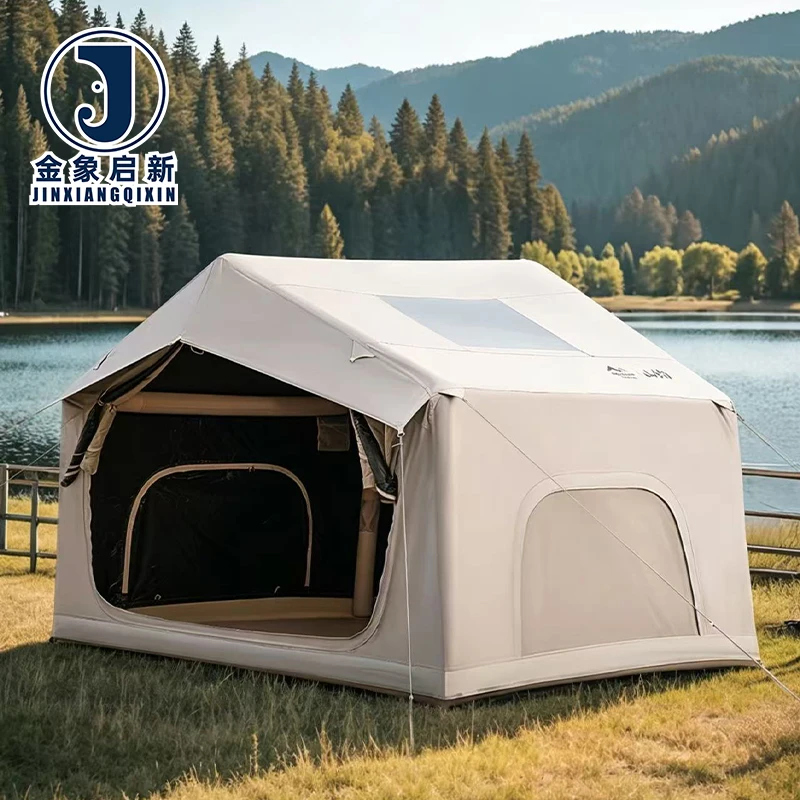
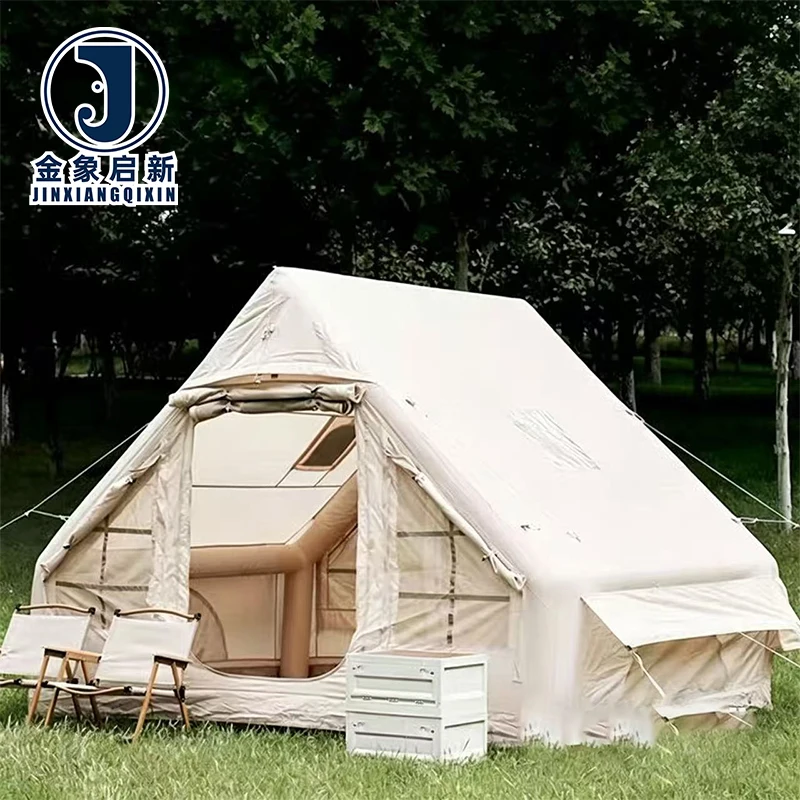
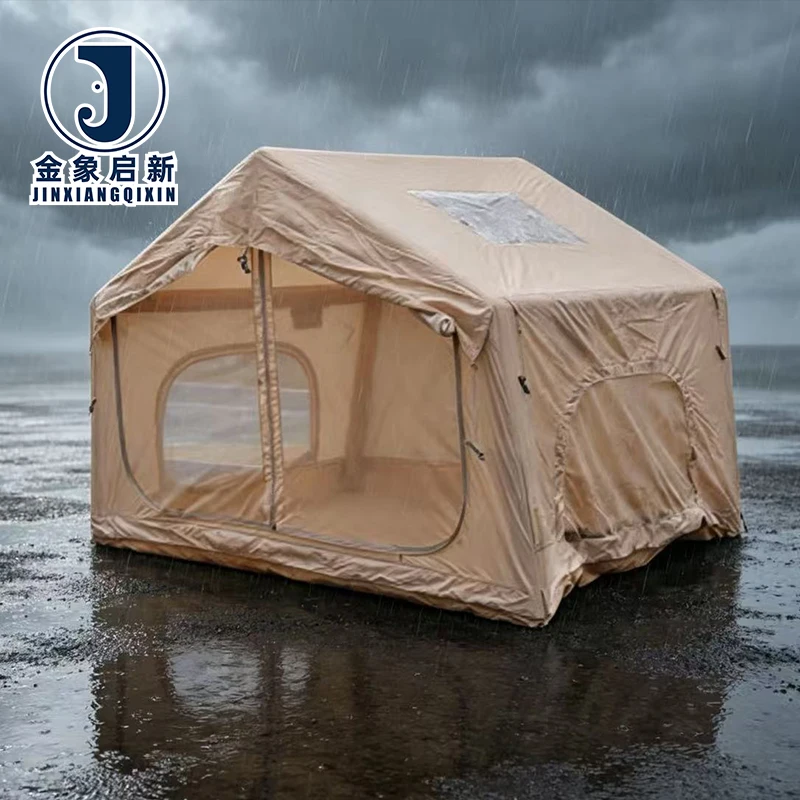
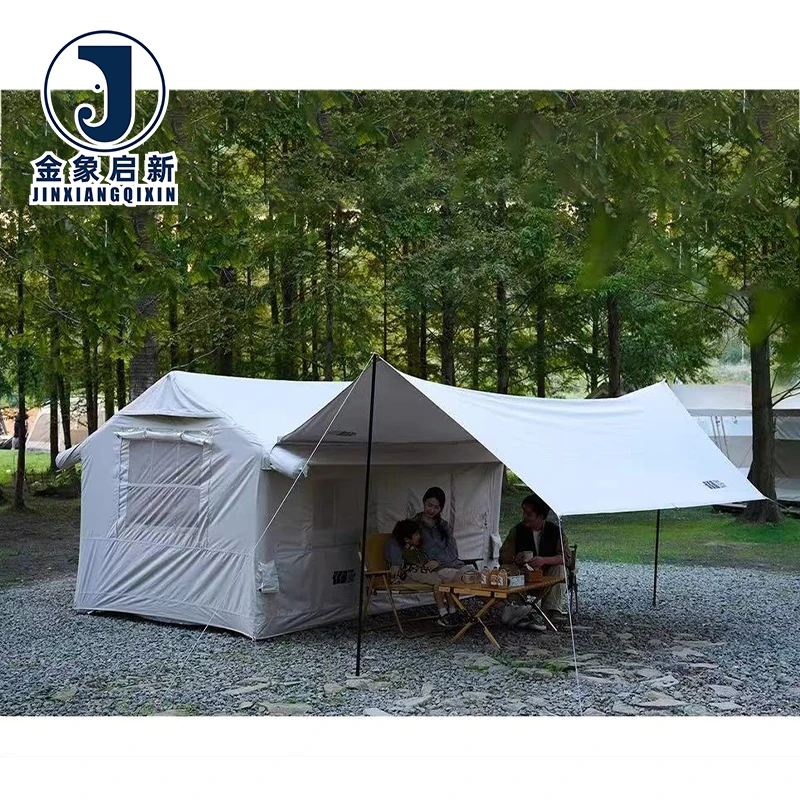
Description
Batch-Verified Roll Consistency — every roll of PVC inflatable tent fabric is checked for coating weight and colour uniformity against the order specification before dispatch.
Technical Specifications
| Parameter | Value |
|---|---|
| Product Type | Inflatable Tent Fabric |
| Core Material | PVC Tarpaulin |
| Product Form | Roll stock for inflatable structure fabrication |
| Construction | Single layer coated fabric |
| Waterproof | Yes (test basis not stated) |
| UV Resistance | Yes (test basis not stated) |
| Tear Resistance | Yes (test basis not stated) |
| Customization | OEM & ODM — sample customization, pattern printing |
| Flame Retardant | Available in flame retardant grades — confirm the grade required for your market |
| Standards | ISO9001, ISO14001, ISO45001, CE |
Application Suitability
| Application | Exposure & Requirement |
|---|---|
| Commercial inflatable tent manufacturing | Repeated inflation cycles, seam stress at air chambers, transport folding and abrasion |
| Expedition and event logistics | Rapid deployment in varied weather, UV exposure, frequent pack and unpack cycles |
| Equipment rental fleet operations | High-frequency handling, mechanical stress at inflation points, cleaning chemical exposure |
| Temporary industrial site accommodation | Continuous outdoor exposure, wind load on membrane surfaces, thermal expansion and contraction |
Why Batch Consistency Matters More Than the Quoted GSM for PVC Inflatable Tent Fabric
A roll that matches the quoted GSM but varies in coating adhesion or colour from the next roll in the same shipment will cause more production disruption than a minor weight deviation.
When sourcing PVC inflatable tent wholesale bulk fabric, buyers often anchor on GSM as the sole quality indicator. Yet inflatable tent manufacturers regularly face a more costly problem: rolls within the same container arriving with visible colour differences or inconsistent coating weight distribution, forcing segregation on the cutting table and re-matching across production batches [NEED_CITE: tensile and tear test methods for coated fabrics per ISO 1421]. The waste is not just material — it is the labour hours spent re-cutting panels and the delayed container that misses its shipping window.
How Roll-to-Roll Uniformity Is Maintained Across Bulk Shipments
Maintaining consistent PVC inflatable tent wholesale bulk supply across a multi-roll order requires in-process QA checkpoints at every coating and winding stage. Our three full production lines run with dedicated quality monitoring, where coating weight is sampled at set intervals across the web width and along the roll length. This approach catches drift before a full roll is wound — rather than discovering the variation during your pre-production inspection.
Each roll is logged against the order batch, so colour and weight data can be traced back to the specific production run. For inflatable tent manufacturers running repeated production cycles, this traceability means reorders can be matched to the original batch parameters, reducing the sampling burden on subsequent purchases.
Weld Seam Integrity at Inflation Stress Points
Inflatable tent structures concentrate mechanical stress at air chamber seams and valve attachment zones. The PVC tarpaulin core material used for these applications must maintain predictable heat-weld behaviour across the entire roll surface. Variations in coating composition or plasticiser distribution can cause inconsistent weld strength, where some seams hold under full inflation pressure while others delaminate at the bond line [NEED_CITE: DIN 4102 fire classification for building materials].
A single layer construction keeps the fabric lightweight and portable for field deployment, but it also means every seam carries the full inflation load without a secondary layer sharing the stress. Consistent coating formulation across the roll width ensures that weld parameters set on the first panel will produce the same bond strength on the last.
Reading the Specification Sheet Beyond the GSM Number
The quoted GSM of a PVC tarpaulin tells you the total weight per square metre, but it does not reveal how that weight is distributed between the base fabric and the coating layers. Two rolls can share the same GSM yet perform very differently: one with a heavier base fabric and thinner coating will show higher tensile strength, while another with a lighter base and thicker coating may offer better abrasion resistance but lower tear propagation resistance. For inflatable tent applications where the membrane must flex under inflation pressure and resist puncture during ground contact, understanding this balance is essential.
The single layer construction means the base fabric denier and weave density directly govern how the material behaves when the air chamber is pressurised. A tighter weave limits elongation under load, maintaining the tent’s designed shape, while a looser weave allows more stretch — which can cause sagging in larger spans. Coating adhesion to the base fabric determines whether the PVC layer stays bonded through repeated fold-and-unfold cycles typical of commercial rental and expedition use.
The Hidden Cost of Specifying on Price Per Kilogram Alone
When inflatable tent fabric is selected primarily on cost per kilogram, the downstream consequences rarely show up on the purchase order. A lighter coating may reduce material cost but can compromise waterproof integrity at seam welds, where the coating must flow and fuse under heat. A base fabric with lower denier yarns may meet the GSM target through heavier filler loading, yet fail to resist tear propagation when the tent is dragged across rough ground during setup [NEED_CITE: roll-to-roll consistency verification methods in coated fabric production].
Colour inconsistency between rolls in the same order forces the manufacturer to either sort and match panels — adding labour and time — or ship tents with visible colour variation that the end customer rejects. For commercial rental operations where fleet appearance matters, this single issue can trigger return claims that far exceed the initial fabric savings.
Why Buyers Source Inflatable Tent Fabric From This Facility
Nearly 30 years of coated fabric production provides the process depth needed to control coating weight and adhesion — the two properties that determine whether inflatable tent seams hold under pressure. This experience is applied directly to the PVC tarpaulin grades used for inflatable structures.
Three full production lines and 36 sets of professional processing equipment give the capacity to fulfil bulk roll orders without splitting production across subcontracted lines where consistency control is harder to maintain.
A 10-technician R&D team handles custom width, colour matching, and pattern printing requests, developing samples within days so buyers can validate material performance against their own product specifications before committing to a bulk order.
Dedicated QA/QC at every production stage, with 100% pre-shipment inspection, means every roll of PVC inflatable tent wholesale bulk fabric is verified for weight, colour, and coating quality before it leaves the facility.
ISO9001, ISO14001, ISO45001, and CE certifications provide the compliance documentation that commercial outdoor equipment manufacturers need for their own quality management systems and market entry requirements.
Documentation & Verification
- Material specification sheet stating GSM, base fabric type, and coating composition for each roll batch
- Colour reference and batch matching record to confirm roll-to-roll consistency across the shipment
- ISO9001, ISO14001, ISO45001, and CE certificates included with dispatch documentation
- Pre-shipment inspection record with roll-by-roll weight and visual check data
- UV and flame retardant test reports provided for applicable grades upon request
- Certificate of origin and customs documentation for international roll shipments
Fabrication, Handling & Storage
- Heat-weld PVC tarpaulin seams using temperature and dwell settings matched to the single layer coating weight
- Store rolls upright on cores to prevent flat-spot creasing that weakens the coating at fold lines
- Allow cold-stored rolls to acclimatise before unrolling to avoid cracking the PVC coating surface
- Use compatible PVC cleaning agents to avoid plasticiser extraction from the coated surface
- Plan panel cutting layout to maximise roll width utilisation and minimise offcut waste
- Repair field damage with PVC-compatible adhesive patches matched to the coating formulation
What to Share When Requesting a Quote
To provide an accurate specification and sample, share the intended end-use environment — including expected UV exposure levels, temperature range, and inflation pressure requirements. Specify the roll width and length needed for your cutting layout, along with any custom colour references or pattern printing requirements. Let us know whether you require flame retardant certification for your target market, and confirm the annual volume so we can align production scheduling to your delivery windows.
Frequently Asked Questions
Q: How is colour consistency controlled across multiple rolls in one inflatable tent fabric order?
A: Each production batch is monitored for colour uniformity using reference standards matched to your order specification. Rolls are inspected side by side before dispatch, and batch records link each roll to its production run data. If a reorder is placed, the original batch parameters are used to match colour and coating weight, reducing the need for re-sampling on repeat purchases.
Q: What customisation options exist for width, printing, and branding on inflatable tent roll stock?
A: Custom widths, pattern printing, and branding are available through our OEM and ODM service, supported by a 10-technician R&D team. Samples are developed within days for your approval before bulk production. Minimum order quantities and lead times vary based on the print complexity and width requested — share your design files for a specific assessment.
Q: How can I verify that the GSM and coating weight match the quotation when rolls arrive?
A: Each shipment includes a pre-shipment inspection record documenting roll-by-roll weight verification against the stated specification. We recommend conducting your own sample cut-and-weigh check on receipt. If any discrepancy is found, the batch traceability records allow us to identify the affected production run and resolve the issue promptly.
Q: What documentation is included with a bulk PVC inflatable tent fabric shipment?
A: Dispatch documentation includes a material specification sheet, roll packing list, pre-shipment inspection record, ISO9001, ISO14001, ISO45001, and CE certificates, and certificate of origin. UV or flame retardant test reports are provided for applicable grades. This package supports your incoming quality checks and compliance filing for your target market.
Q: What is the sample development process for custom inflatable tent fabric specifications?
A: Share your application requirements, target GSM, colour, and any treatment needs. Our R&D team produces a sample roll or swatch within days for your evaluation. Once you approve the sample, bulk production follows the same coating and finishing parameters, ensuring the delivered rolls match the validated sample in weight, colour, and performance characteristics.