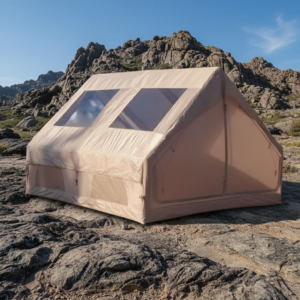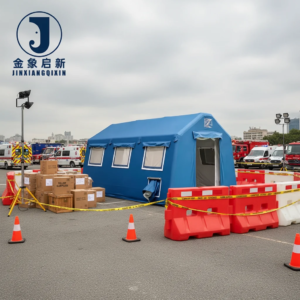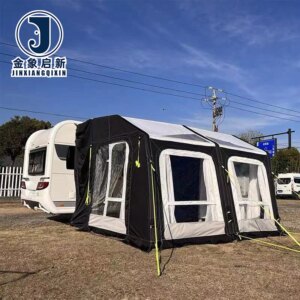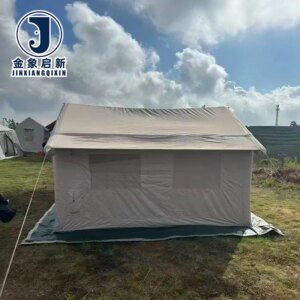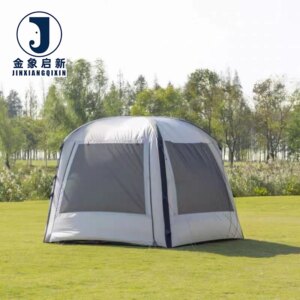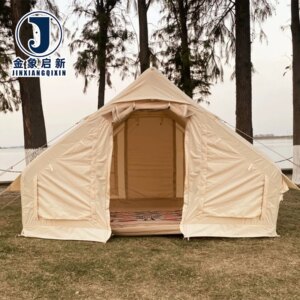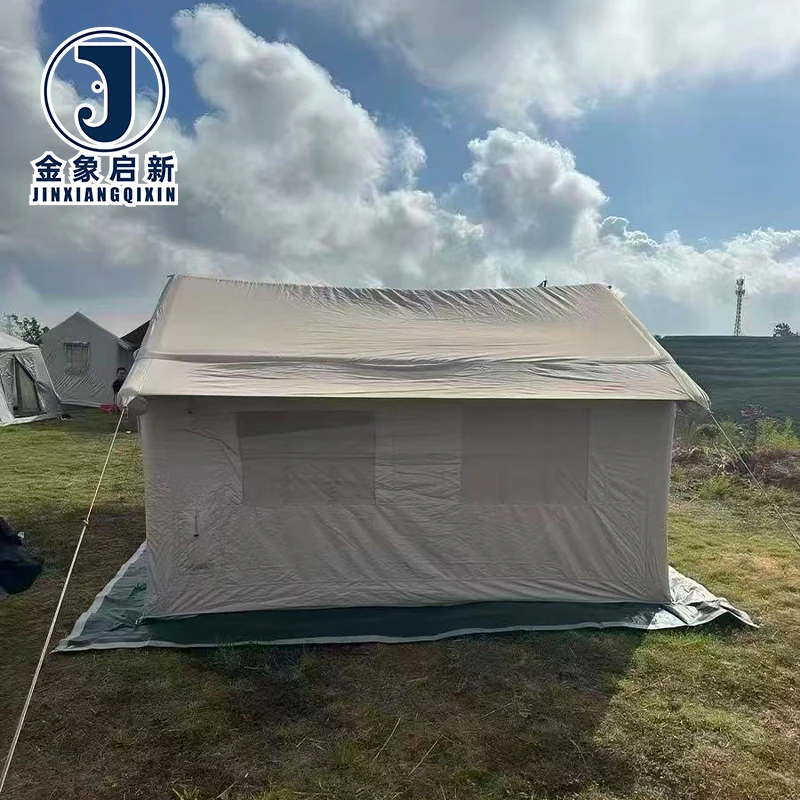
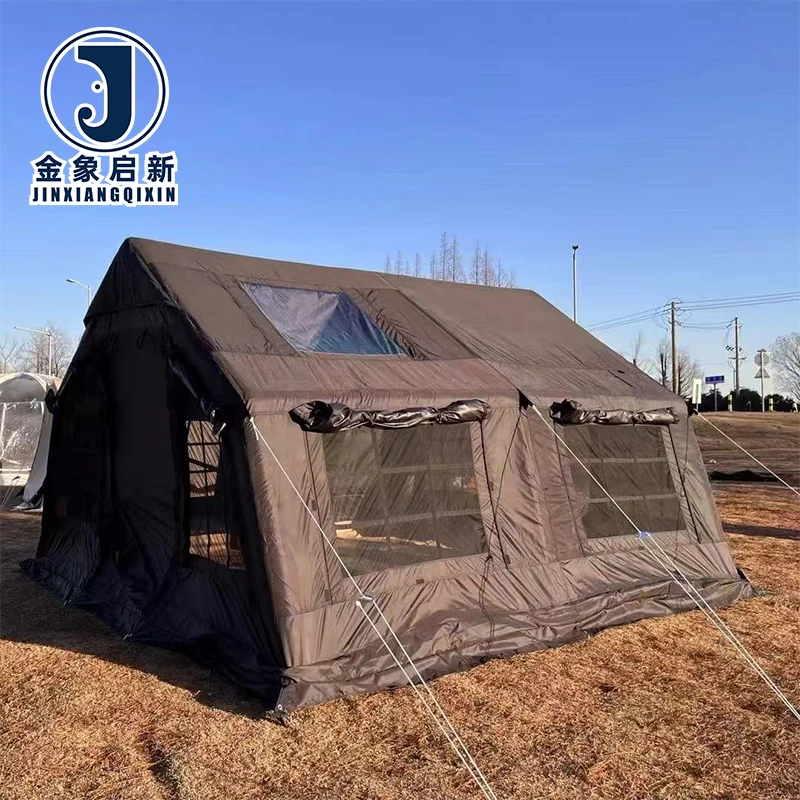
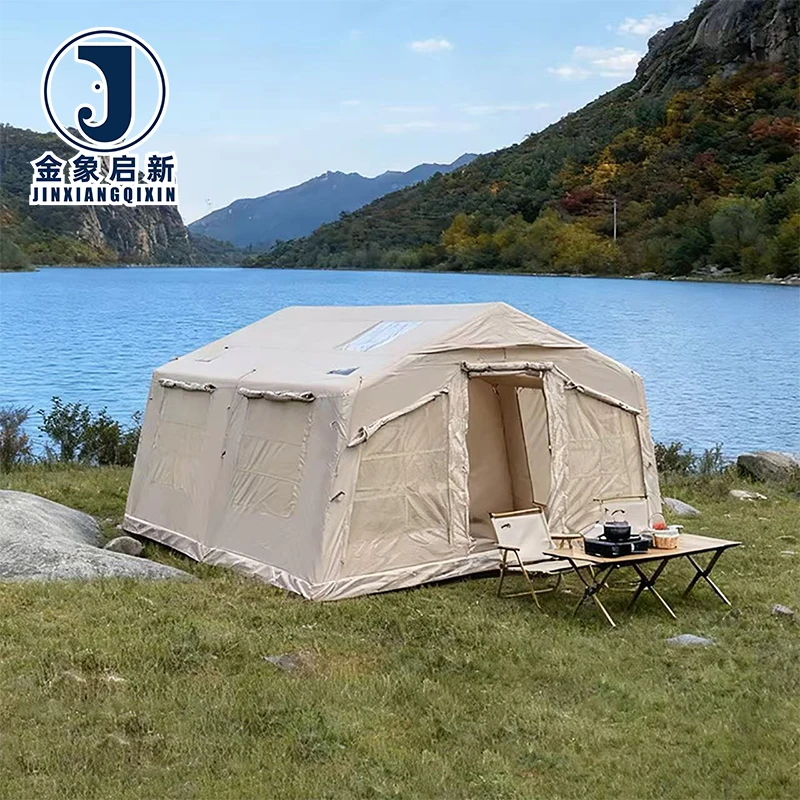
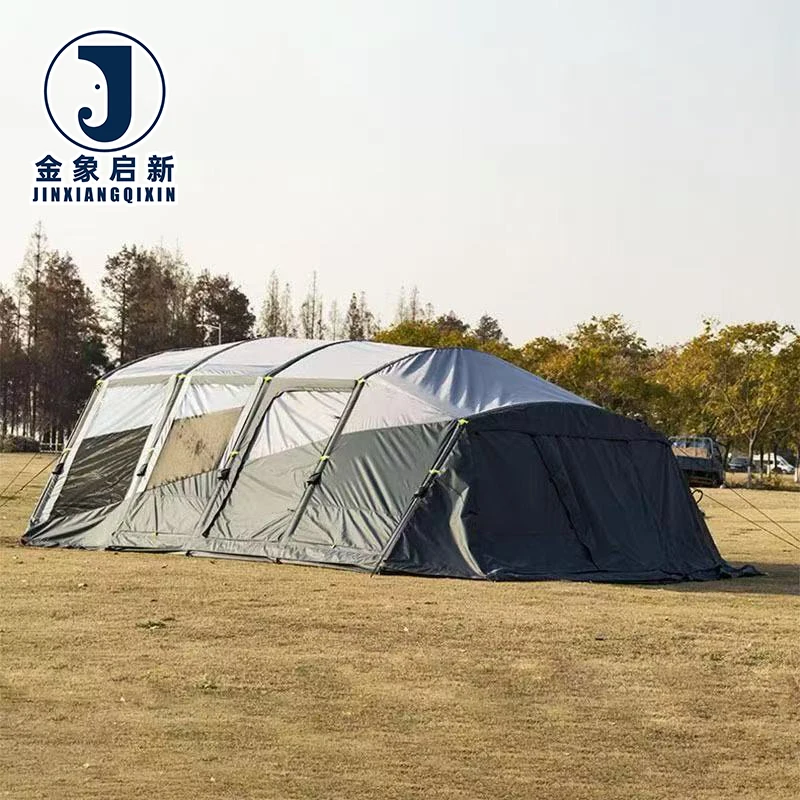
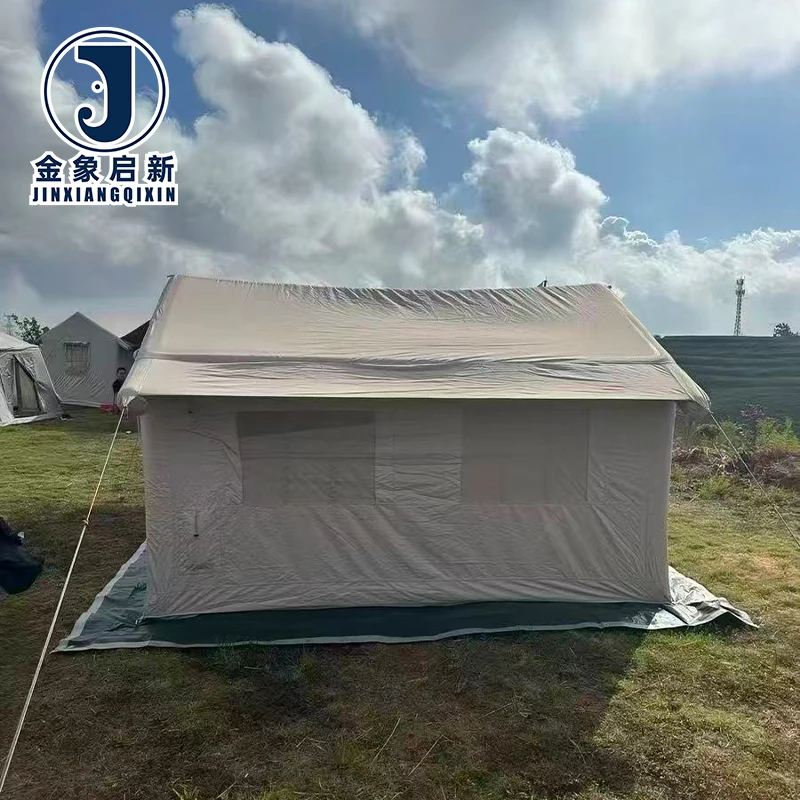
Description
Batch-Matched Roll Output — every roll of inflatable tent fabric in your container is checked for colour and GSM uniformity before dispatch, not just the sample you approved.
Technical Specifications
| Parameter | Value |
|---|---|
| Product Type | Inflatable Tent |
| Core Material | Oxford Fabric with PVC Coating |
| Construction | Single Layer |
| Season Rating | Four-Season |
| Key Features | Waterproof, UV-resistant (test basis not stated), Tear-resistant |
| Customization Service | OEM & ODM (sample customization, pattern printing) |
| Certifications | ISO 9001, ISO 14001, ISO 45001, CE |
Application Suitability
| Application | Exposure & Requirement |
|---|---|
| Construction site temporary storage | Rain ingress, dust, UV exposure, frequent assembly and teardown |
| Logistics hub emergency facilities | Rapid deployment, ground abrasion, wind loading on inflatable frame |
| Outdoor event infrastructure | Crowd contact, sun exposure, repeated inflation cycles, branding print |
| Disaster response staging areas | Extended field exposure, variable temperature, transport abrasion |
| Industrial field operations | Equipment protection, chemical splash contact, mechanical puncture risk |
Why Inflatable Tent Fabric Wholesale Orders Often Fail at Colour Match
Consistent colour across a container load requires in-process tint control, not just a lab dip approval.
When sourcing inflatable shelter fabric at volume, the sample roll looks right but the production batch drifts. Panels sewn side by side on the same structure show visible tone differences once inflated and viewed in daylight. Distributors who receive mismatched rolls face customer complaints, partial returns, and re-sorting costs that erase margin. The problem compounds when the fabric is destined for printed branding — colour shift under the print makes logos look inconsistent across units [NEED_CITE: batch colour variation in coated Oxford fabric production].
How Roll-to-Roll Consistency Is Maintained in Production
Inflatable Tent Fabric wholesale buyers need assurance that the twentieth roll in the container matches the first. This starts at the coating stage: PVC compound is mixed in a single batch for the full order quantity, eliminating tint variance between mixing runs. Oxford fabric base is drawn from the same greige lot so that weave density and base colour remain constant. During coating, line speed and oven temperature are locked to the validated recipe, preventing gloss and shade drift that occur when thermal profiles fluctuate across shifts.
The Role of Pre-Shipment Inspection in Wholesale Fabric Orders
Before container loading, every roll undergoes visual inspection against the approved colour standard under controlled lighting. GSM is verified by cutting and weighing samples from the head and tail of each roll. Rolls that fall outside tolerance are segregated and replaced before the packing list is finalised. This process means the roll packing list you receive reflects only accepted material — not sorted-out defects bundled into the shipment. For inflatable tent manufacturers running production lines, receiving uniform rolls means fewer machine stoppages and less off-cut waste [NEED_CITE: pre-shipment inspection standards for coated fabric rolls].
Reading GSM in the Context of Inflatable Tent Fabric
GSM alone does not determine how an inflatable tent fabric performs in the field. The Oxford base fabric’s denier and weave density define the tensile skeleton; the PVC coating adds waterproofing, abrasion resistance, and contributes to overall weight. A heavier coating on a low-denier base may read high on the scale but tear easily at stress points where the inflatable frame bends. Conversely, a tightly woven high-denier Oxford with a moderate coating weight delivers better tear propagation resistance and holds inflation pressure more reliably. When evaluating inflatable shelter fabric, request the base fabric specification alongside the total GSM to understand how weight is distributed between structure and coating.
What Happens When Coating Adhesion Is Overlooked
PVC coating that separates from the Oxford base under inflation pressure creates delamination bubbles, which compromise both waterproofing and structural integrity. This failure typically appears at heat-welded seams where thermal energy must penetrate the coating to fuse layers. If adhesion between coating and substrate is weak, the weld zone peels before the fabric reaches its rated tear strength. For inflatable tent producers, this means field failures during the first inflation cycle — the exact moment the end user tests the product [NEED_CITE: coating adhesion failure modes in PVC Oxford laminates].
Why Procurement Here Supports Your Production Schedule
Three full production lines and 36 sets of processing equipment mean that bulk orders of Inflatable Tent Fabric wholesale quantities are fulfilled without queuing behind smaller custom jobs. The 10-person R&D team handles sample development for custom widths and pattern printing within days, so approval cycles do not stall your procurement timeline. Dedicated QA and QC staff inspect every production stage — from greige inspection through coating to final roll winding — rather than sampling only at the end. Full-process traceability ties each roll to its production batch, giving you documentation that supports your own quality commitments to downstream customers.
Documentation & Verification
- Material specification sheet stating Oxford base denier, PVC coating weight, and total GSM per roll
- Colour match report comparing production rolls against approved standard under D65 lighting
- Pre-shipment inspection record with batch-specific GSM and visual acceptance data
- Roll packing list showing roll count, individual weights, and container loading plan
- Certificate of origin and customs documentation for international shipment clearance
Fabrication, Handling & Storage
- Heat-weld PVC-coated Oxford at temperatures validated for single-layer construction to avoid base fabric scorch
- Store rolls upright on pallets to prevent flat-spot creasing that transfers to inflated panel surfaces
- Cut panels with allowance for weld seam overlap; single-layer Oxford requires precise alignment for air-holding seams
- Use PVC-compatible cleaners only; solvent-based products degrade coating adhesion on Oxford substrate
- Inflate test one completed unit per production batch to verify seam integrity before bulk release
- Avoid prolonged direct sun exposure on stored rolls; UV-resistant treatment (test basis not stated) has limits under static storage
What to Include in Your Inquiry
Specify the inflatable tent dimensions and panel layout so that roll width can be matched to minimise off-cut waste. State your target market and any fire classification or compliance requirements so that the correct fabric grade is quoted. Confirm whether you need finished printed panels or roll stock for your own fabrication line, and indicate your annual volume to support pricing tier discussions.
Frequently Asked Questions
Q: Can you guarantee colour consistency across an entire container order?
A: Yes. All rolls for a single order are coated from one PVC compound batch using the same greige Oxford lot. Pre-shipment inspection checks every roll against the approved colour standard under controlled lighting. Rolls outside tolerance are replaced before dispatch, and the packing list reflects only accepted material.
Q: What roll widths are available for inflatable tent fabric?
A: Standard widths are available from stock, and custom widths can be produced to match your panel cutting layout. The R&D team develops width samples within days for approval before full production runs. Minimum order quantities apply to non-standard widths — confirm your required dimensions during inquiry.
Q: Do you provide test reports for UV resistance?
A: UV-resistant treatment is applied during the coating process. Test documentation availability depends on the specific grade selected. Request the test report for the grade quoted in your specification sheet so you can verify suitability for your target market’s exposure conditions.
Q: How is the product packed for container shipping?
A: Rolls are wound on cores, wrapped in protective film, and palletised for container loading. The roll packing list details roll count, individual roll weights, and total shipment weight. Container loading plans are optimised to maximise utilisation while preventing transit damage to coated surfaces.
Q: What is the MOQ for pattern printing on inflatable tent fabric?
A: Pattern printing is available as part of the OEM and ODM customization service. Minimum order quantities depend on the print complexity, colour count, and repeat length. Submit your artwork and panel dimensions during the inquiry stage so that the R&D team can confirm feasibility and minimums.