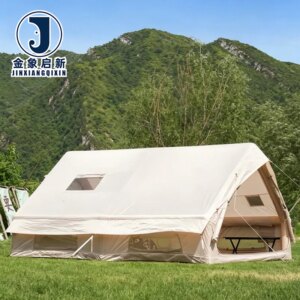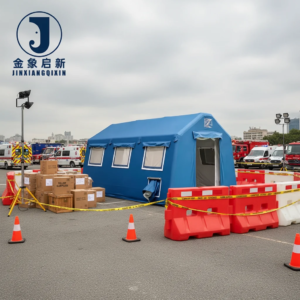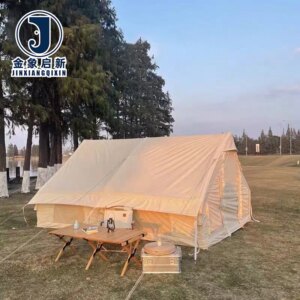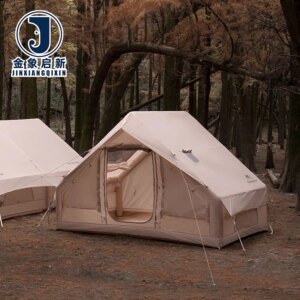
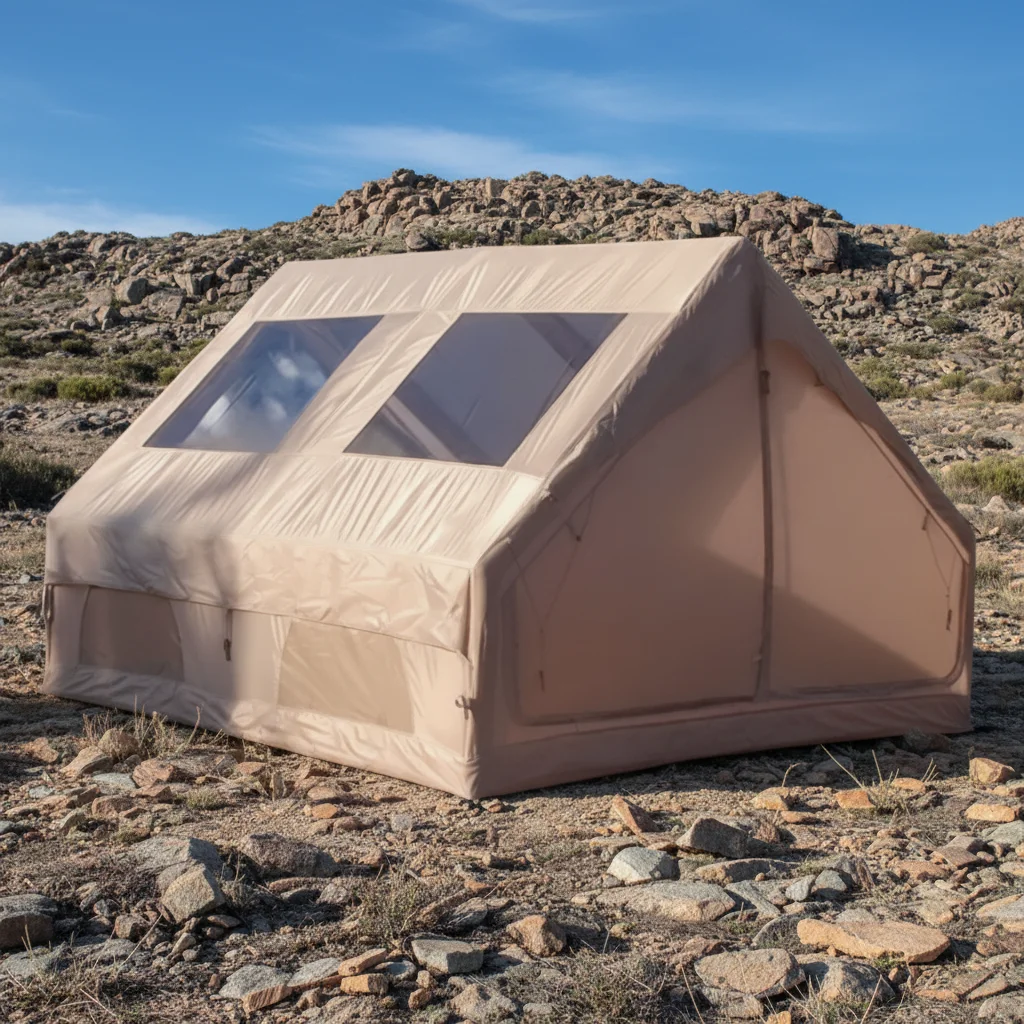

Description
Dedicated Production Control — Three full lines with 36 processing sets maintain roll-to-roll consistency on PVC inflatable tent fabric roll supply, verified at every coating stage.
Technical Specifications
| Parameter | Value |
|---|---|
| Product Type | Inflatable Tent Fabric |
| Core Material | PVC knife-coated fabric |
| Waterproof Rating | 1000mm water column |
| Flame Retardant Grade | DIN 4102 B1 |
| UV Resistance | 2000-hour accelerated aging (test basis stated) |
| Wind Load Resistance | up to 12m/s |
| Air Retention | 72-hour pressure hold, <0.5% leakage per hour |
| Seam Strength | 250N minimum |
| Material Thickness Tolerance | ±0.1mm |
| Hardware Durability | 500-cycle operation |
| Service Life | 5+ years outdoor exposure |
| Available Finishes | Custom Pantone color matching, logo printing |
| Certifications | ISO9001, ISO14001, ISO45001, CE |
Application Suitability
| Application | Exposure & Requirement |
|---|---|
| Commercial glamping sites | Continuous UV and weather exposure, guest comfort, repeated inflation cycles |
| Outdoor event facilities | Rapid deployment, temporary structural integrity, public safety compliance |
| Industrial temporary shelters | Extended field deployment, abrasion from site conditions, wind load stability |
| Construction site accommodations | Dust, moisture, heavy handling, fire safety requirements |
| Mobile exhibition spaces | Frequent transport, packing and unfolding stress, visual presentation |
Why Roll Consistency Matters More Than Quoted Weight for Inflatable Tent Manufacturers
A uniform GSM reading on a certificate means little if adjacent rolls behave differently under heat welding.
When sourcing PVC inflatable tent fabric roll wholesale, buyers frequently encounter material that passes a spot weight check but varies in coating thickness across the roll width or between production batches. This inconsistency surfaces during fabrication — weld seams on one roll hold at the specified temperature while the next roll requires adjustment, delaying production and increasing scrap rates. For inflatable structures that rely on airtight seams to maintain pressure over 72-hour cycles, such variation is not a cosmetic issue; it directly compromises air retention performance in the field [NEED_CITE: tensile and tear test methods for coated fabrics per ISO 1421].
Coating Uniformity Across Every Linear Meter
PVC knife-coated fabric requires precise gap control between the blade and the base substrate. Our 36 sets of professional processing equipment include coating heads that maintain consistent compound distribution across the full web width. For PVC inflatable tent fabric roll orders, this means the coating weight measured at the edge of the roll matches the center, ensuring that your cutting and welding teams work with predictable material behavior from the first meter to the last.
Batch-to-Batch Color and Weight Repeatability
Tent manufacturers producing identical units across multiple orders cannot tolerate shade shifts between batches. Our dedicated QA/QC protocol checks colour reference and weight per roll before packing. When you reorder the same Pantone specification months later, the incoming PVC inflatable tent fabric roll matches the previous delivery, so installed structures present a consistent appearance to end users.
Reading the Spec Sheet: What Thickness Tolerance Actually Controls
The ±0.1mm material thickness tolerance governs how reliably the fabric feeds through automated welding equipment and how consistently the inflatable chambers hold pressure. Thinner spots become weak points where seam strength drops below the 250N minimum, while thicker spots cause feed misalignment and uneven weld penetration. Knife-coated PVC achieves tighter tolerance than laminated alternatives because the coating bonds directly to the base yarn rather than sitting as a separate film layer [NEED_CITE: DIN 4102 fire classification for building materials]. The 1000mm waterproof rating is sustained by this uniform coating barrier, preventing localized water ingress that could degrade the base fabric over extended outdoor exposure. DIN 4102 B1 flame retardant formulation is integrated during the coating stage, so fire performance is distributed through the material rather than applied as a topical finish that can wear away.
What Happens When You Ignore Batch Consistency Data
Accepting rolls without verified per-roll inspection records leads to fabrication surprises mid-production. One roll may weld cleanly at standard temperature while the next develops brittle seams that fail during the 72-hour pressure retention test. Colour variation becomes visible when two tents from supposedly identical material are pitched side by side at a glamping site. These failures trace back to coating weight fluctuations that a single average GSM value on the order confirmation cannot reveal [NEED_CITE: coated fabric batch consistency and weld performance correlation]. Reworking seams or replacing entire panels costs far more than specifying verified roll-level documentation at the ordering stage.
Production Infrastructure Behind Roll-Stock Supply
Our three full production lines operate with scheduling flexibility to handle PVC inflatable tent fabric roll wholesale orders across custom widths and lengths. The 10-technician R&D team develops samples within 7-10 days, including Pantone color matching and pattern printing trials. Every roll undergoes an 8-point inspection system before packing, generating records you can review. Production lead time of 15-20 days for standard orders reflects realistic scheduling rather than optimistic promises. Material specification sheets accompany each shipment, stating the exact GSM, base fabric construction, and coating details for that batch.
Documentation & Verification
- Weight verification record per roll against the stated specification before dispatch
- DIN 4102 B1 test report included with each flame retardant batch
- UV accelerated aging certificate referencing the 2000-hour test basis
- Roll packing list with individual roll count, weight, and container loading plan
- Pre-shipment inspection record from the 8-point QA system
- ISO and CE certificates for import compliance
Fabrication, Handling & Storage
- Set weld temperature based on the knife-coated PVC thickness tolerance of ±0.1mm to ensure full seam penetration
- Store rolls upright on cores to prevent flat spots that distort the inflatable chamber geometry
- Allow cold-stored rolls to reach ambient temperature before unrolling to avoid coating crack damage
- Use compatible PVC solvent cements matched to the coating formulation for field repair patches
- Plan cutting layout to minimize waste given the available custom width and roll length options
What We Need to Quote Your Roll-Stock Requirement
Provide the target width per roll, annual volume estimate, and the Pantone colour reference if custom shade matching is required. Specify whether you need the DIN 4102 B1 flame retardant grade or a standard formulation, and confirm the destination market so we align test documentation accordingly. Indicate if pre-production samples are needed before the full PVC inflatable tent fabric roll order enters production.
Frequently Asked Questions
Q: How do you verify GSM on each roll before shipment?
A: Every roll in a PVC inflatable tent fabric roll order is weighed and measured individually during the 8-point inspection. The actual weight per square meter is recorded and compared against the specification sheet. Rolls falling outside tolerance are removed from the shipment. The inspection record accompanies your documentation package so you can cross-reference on arrival.
Q: How is roll-to-roll color consistency controlled across bulk orders?
A: We use Pantone system references established during the sample approval stage. Production batches are checked against the approved master swatch under standardized lighting. Each roll receives a colour verification mark before packing, ensuring that tents fabricated from different rolls in the same shipment present uniform appearance when installed.
Q: What custom width and roll length options are available?
A: Our 36 processing sets accommodate various width requirements for inflatable tent fabrication. Roll length is configured to optimize container loading and minimize handling at your facility. Provide your cutting table dimensions and typical panel sizes so we can recommend roll dimensions that reduce scrap during your production process.
Q: How are rolls protected during container transport?
A: Each PVC inflatable tent fabric roll is wrapped and packed upright on reinforced cores to prevent crushing and edge damage. The packing list details roll count and container loading plan. This method prevents flat spots and coating deformation that could affect welding performance when the material reaches your production floor.
Q: Does the DIN 4102 B1 grade satisfy fire safety requirements in my market?
A: DIN 4102 B1 is recognized across European and many international jurisdictions for temporary structures and tents. Confirm the specific fire classification your destination market requires, and we will provide the corresponding test report with your shipment. Alternative flame retardant grades are available upon specification during the inquiry stage.