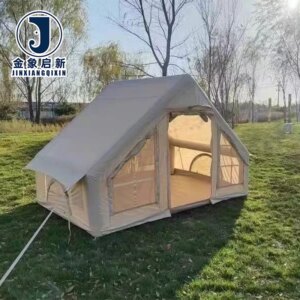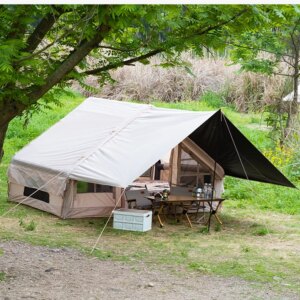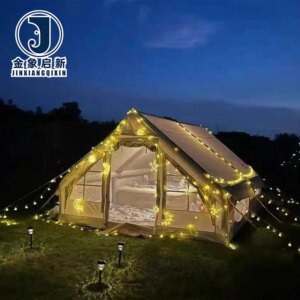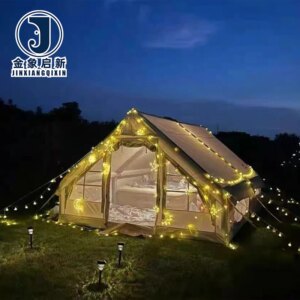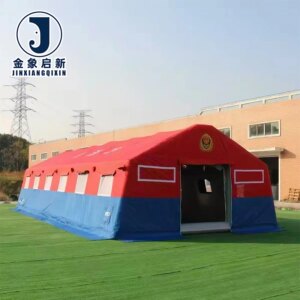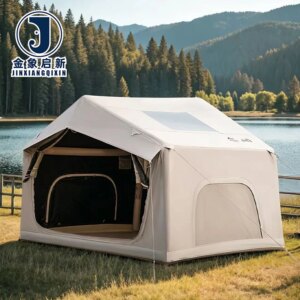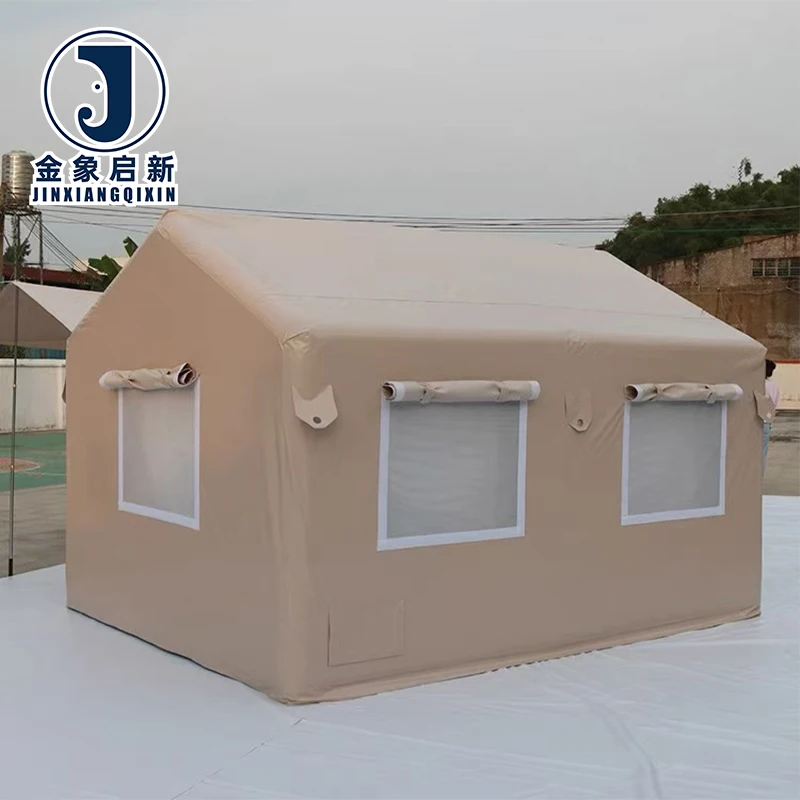
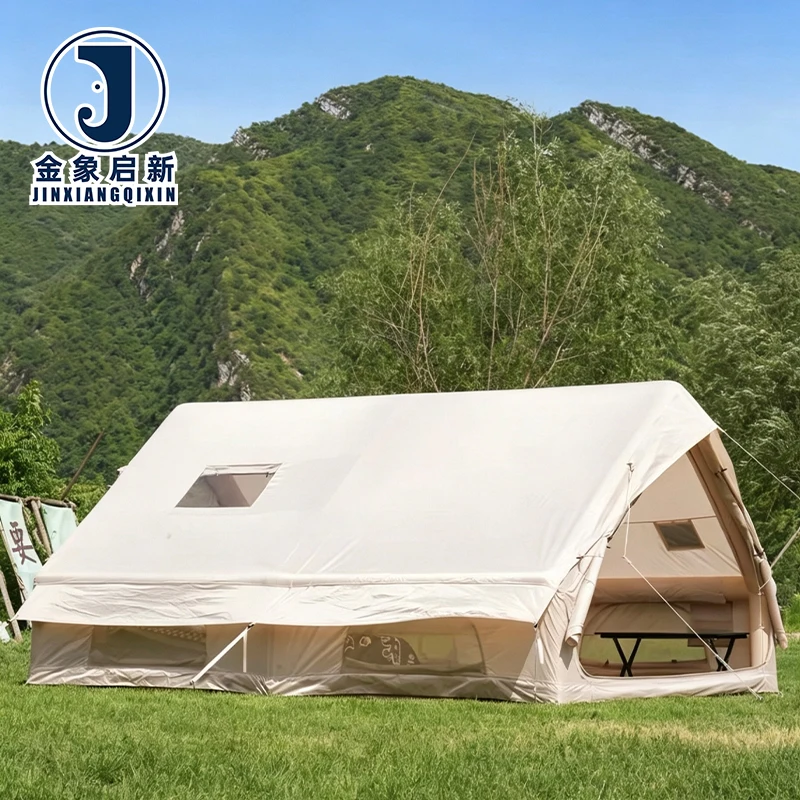
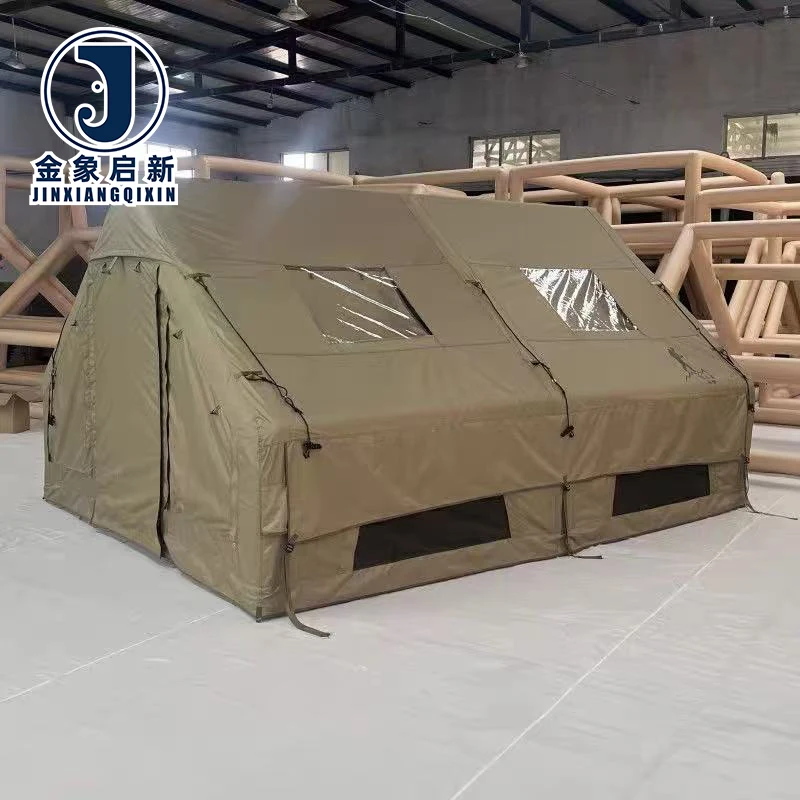
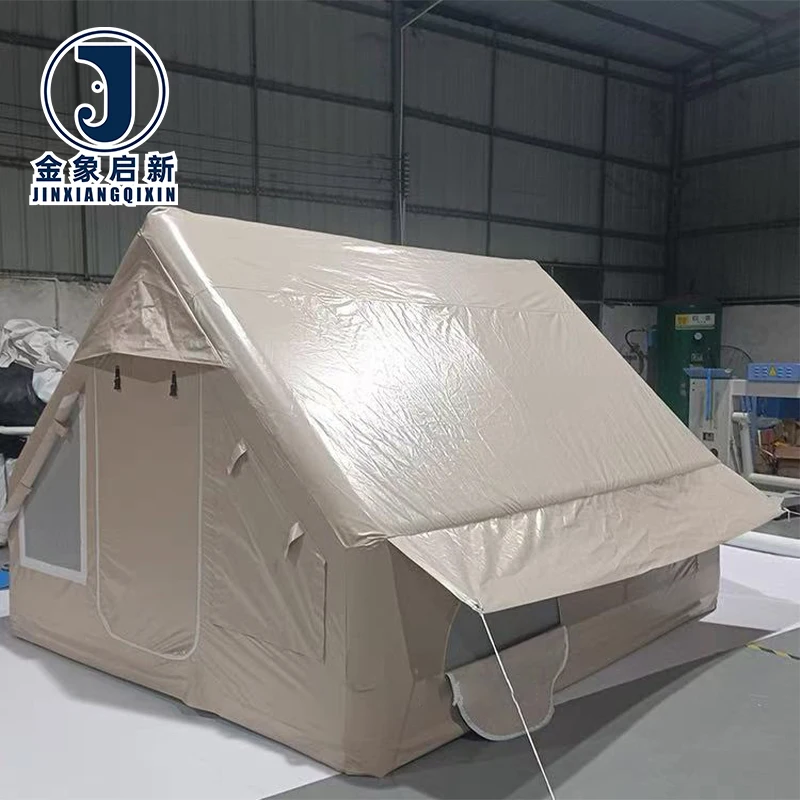
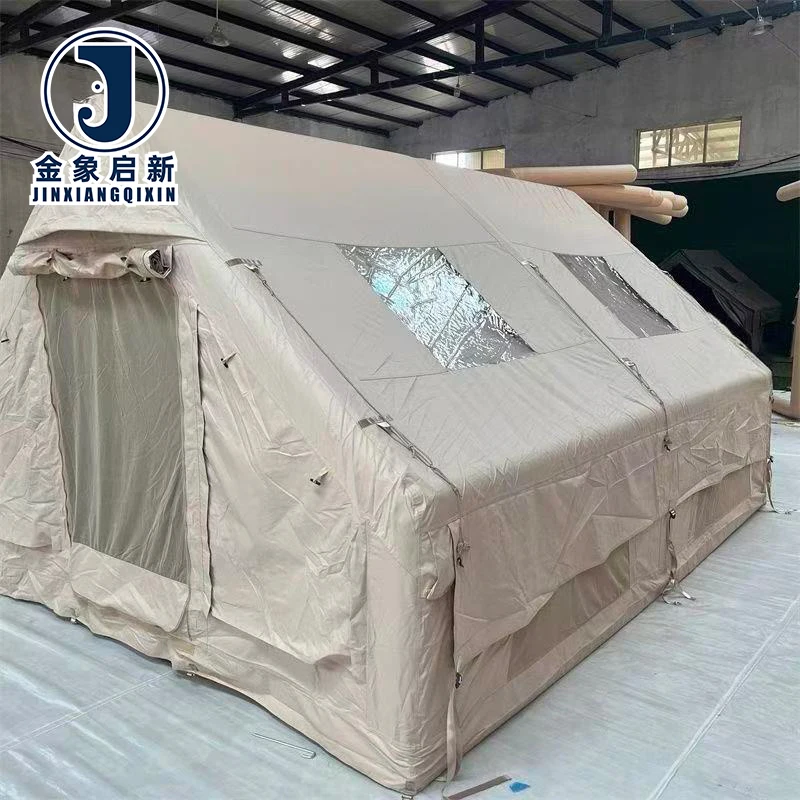
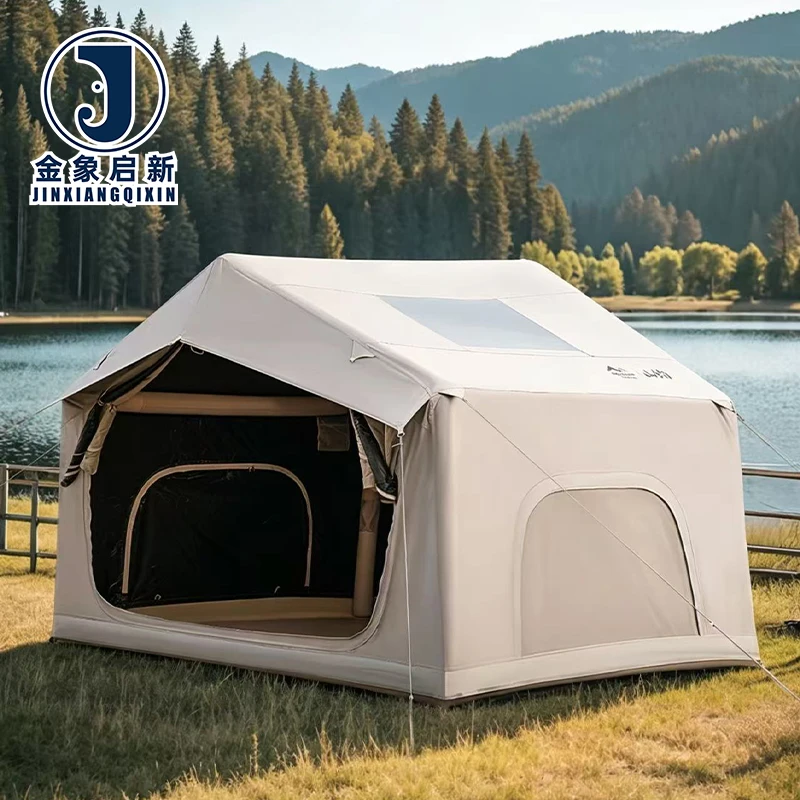
Description
Bulk Supply Reliability — 3 full production lines and 36 sets of equipment ensure consistent batch-to-batch output for wholesale inflatable tent orders, with dedicated QA&QC at every stage.
Technical Specifications
| Parameter | Value |
|---|---|
| Product Type | Inflatable Tent |
| Capacity | 6-8 persons |
| Opening Mechanism | Quick automatic opening |
| Design Feature | Four-season design |
| Construction | Single layer |
| Type | Extended type |
| Core Material | PVC tarpaulin |
| Waterproof | Yes |
| UV Treatment | UV-resistant (test basis not stated in source) |
| Tear Resistance | Tear-resistant (test basis not stated in source) |
| Flame Retardant | Available in flame retardant grades — confirm the grade required for your market |
| Customization | OEM & ODM support |
| Quality Control | Full-process quality inspection with dedicated QA&QC staff |
| Certifications | ISO9001, ISO14001, ISO45001, CE |
Application Suitability
| Application | Exposure & Requirement |
|---|---|
| Construction site command centers | Continuous outdoor exposure, wind load, frequent entry and exit abrasion at door panels |
| Logistics storage shelters | Rain ingress prevention, UV exposure during extended staging, forklift proximity puncture risk |
| Emergency response staging areas | Rapid deployment requirement, variable climate across disaster zones, repeated inflation cycles |
| Outdoor industrial events | Crowd traffic wear on flooring zones, sun bleaching on roof panels, weather variability |
| Disaster relief operations | Transport over rough terrain, deployment on uneven ground, multi-season temperature swings |
Why Colour Shifts Between Batches Undermine Wholesale Credibility
Roll-to-roll colour and material consistency is maintained through dedicated QA&QC protocols at every production stage, not left to chance at the loading dock.
Tarpaulin distributors and importers who buy PVC Inflatable Tent bulk quantities know the frustration: two containers arrive, and the second batch is visibly off-tone when erected beside the first. Buyers at trade shows or relief deployments notice immediately, and the resale margin collapses into a claims conversation [NEED_CITE: batch consistency standards for coated fabric wholesale]. This is not a dye-lot problem alone — coating weight variance across the production run alters surface gloss and perceived depth of colour, compounding the mismatch. Our systematic in-process quality checks address this before the rolls reach packing, not after the container is on the water.
Container-Load Planning and Volume Pricing for Distributors
Wholesale inflatable tent procurement is a logistics exercise as much as a material decision. Each container load is planned by unit count and weight, with packing lists structured so distributors can allocate partial shipments to sub-buyers without breaking the seal on remaining stock. PVC Inflatable Tent bulk orders ship with roll packing documentation that maps every unit to its position in the container, reducing receiving-side confusion at the warehouse.
OEM and ODM Customization at Wholesale Volume
Distributors serving event rental or emergency relief markets often need private-label printing, specific colourways for regional branding, or adjusted dimensions for local regulations. Our 10-person R&D team handles material selection, pattern printing, and custom sizing within the same production workflow — not as a separate, slower line. Samples are developed within days for custom requirements, allowing buyers to approve before the full production run commits. This matters when a single wholesale inflatable tent order may span multiple SKU variants destined for different end markets.
Reading the Spec Sheet: What Actually Matters for Inflatable Tent Fabric
The PVC tarpaulin core material determines how the inflatable structure holds pressure and resists puncture during deployment. Single layer extended-type construction reduces packed weight and volume, which directly affects container utilisation — more units per container means lower landed cost per tent at wholesale scale. The quick automatic opening mechanism relies on consistent air-hold properties in the coated fabric; if coating adhesion varies across a batch, some units will inflate slower or leak at seam points [NEED_CITE: coated fabric adhesion test methods per ISO 2411]. Four-season design means the PVC formulation must remain flexible in cold deployment scenarios without becoming brittle, and stable in high heat without excessive softening that compromises structural rigidity.
The Hidden Cost of Underspecified Material Grades
When a wholesale inflatable tent order specifies a material grade that does not match the actual deployment environment, failures appear in the field rather than at inspection. A tent deployed in high-UV regions without verified UV-resistant treatment will show surface chalking and loss of tensile integrity over the exposure period, triggering warranty claims that erode distributor margins [NEED_CITE: UV degradation testing for PVC coated fabrics]. Similarly, tents supplied to construction sites without confirmed flame retardant grades may fail site safety audits before they are ever inflated. These are not manufacturing defects — they are specification mismatches that a thorough pre-order technical review would prevent.
Why Procurement Teams Source Inflatable Tent Stock Here
Three full production lines running simultaneously allow bulk inflatable tent orders to be fulfilled within typical multi-week lead times without sacrificing the in-process QA checks that maintain consistency. The 36 sets of professional equipment cover coating, cutting, welding, and finishing under one roof, eliminating the handoff delays that occur when stages are outsourced. Full-process quality inspection with dedicated QA&QC staff means 100% inspection before shipment — every unit is checked, not spot-sampled. OEM and ODM capability supported by a 10-person R&D team enables distributors to offer customised variants without managing multiple suppliers. Documentation including ISO9001, ISO14001, ISO45001, and CE certificates ships with every order, satisfying compliance requirements across North American, European, and Asian import markets.
Documentation & Verification
- Material specification sheet stating PVC tarpaulin grade, coating details, and treatment parameters for each batch
- Pre-shipment inspection record confirming 100% unit inspection with batch-specific quality data
- Roll packing list mapping unit count, weight, and container position for logistics planning
- Certificate of origin and customs documentation supporting import clearance in destination markets
- Test reports for UV-resistant and tear-resistant properties available upon request with the applicable test basis
- ISO9001, ISO14001, ISO45001, and CE certificates included in shipment documentation package
Fabrication, Handling & Storage
- Heat welding parameters must match the single layer PVC tarpaulin thickness to avoid seam failure before fabric failure
- Store rolled units upright on pallets to prevent permanent creasing in the extended-type PVC tarpaulin construction
- Avoid dragging inflatable tent units across abrasive surfaces during deployment to protect the waterproof PVC coating
- Clean with mild detergent only — aggressive solvents may degrade the UV-resistant surface treatment
- Inspect valve and seam zones after each inflation cycle for early signs of coating delamination
- Maintain storage temperature above freezing to prevent cold-cracking in the PVC tarpaulin material during unfolding
What We Need to Quote Your Inflatable Tent Stock Order
Provide your target deployment environments and the climate range your end users operate in, so we can confirm the appropriate PVC tarpaulin grade and treatment package. Share your expected annual volume, container-load preferences, and any private-label or colourway requirements for your market. If flame retardant certification is required at the destination site, specify the grade or standard your buyers must meet so we can align the material accordingly.
Frequently Asked Questions
Q: How is roll-to-roll colour and material consistency maintained across bulk inflatable tent orders?
A: Every production stage includes dedicated QA&QC checks, with 100% inspection before shipment. Batch-specific quality reports document coating weight and colour parameters, so distributors receive uniform stock across every unit in a wholesale inflatable tent order. Pre-shipment inspection records accompany each dispatch for verification.
Q: What customization options are available and what are the MOQs?
A: OEM and ODM support covers material selection, size adjustments, pattern printing, and colour specifications. Our 10-person R&D team develops samples within days for approval before bulk production. MOQs vary by customization complexity — confirm your required variants and volume so we can provide accurate thresholds and lead times.
Q: How is UV resistance verified — what test basis supports the UV-resistant claim?
A: UV-resistant treatment is applied during the PVC tarpaulin coating process. The specific test basis and exposure duration should be confirmed against your destination market requirements. Request the applicable test report with your sample or pre-production documentation to validate suitability for your end-use climate conditions.
Q: What documentation is included with each shipment for customs and quality verification?
A: Each wholesale inflatable tent shipment includes a material specification sheet, pre-shipment inspection record, roll packing list, certificate of origin, and ISO9001, ISO14001, ISO45001, and CE certificates. This documentation package supports customs clearance and provides end buyers with verifiable quality and compliance records.
Q: How are container loads planned by unit count and weight for wholesale inflatable tent orders?
A: Container loading is planned by unit count and total weight, with a detailed packing list mapping each inflatable tent to its position. This allows distributors to receive, sort, and redistribute partial loads efficiently without breaking remaining stock seals or losing traceability across the shipment.