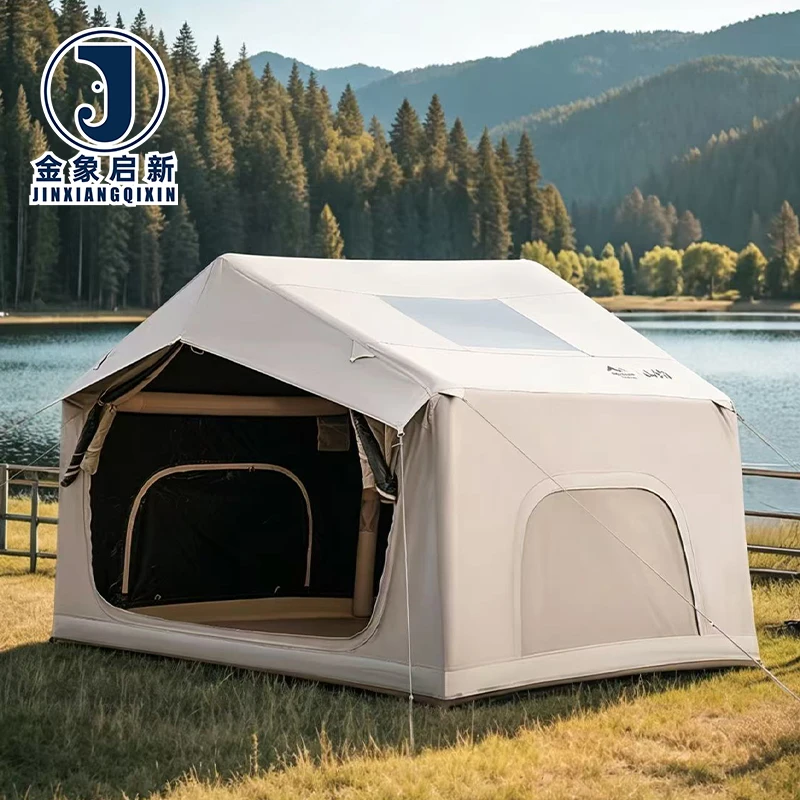
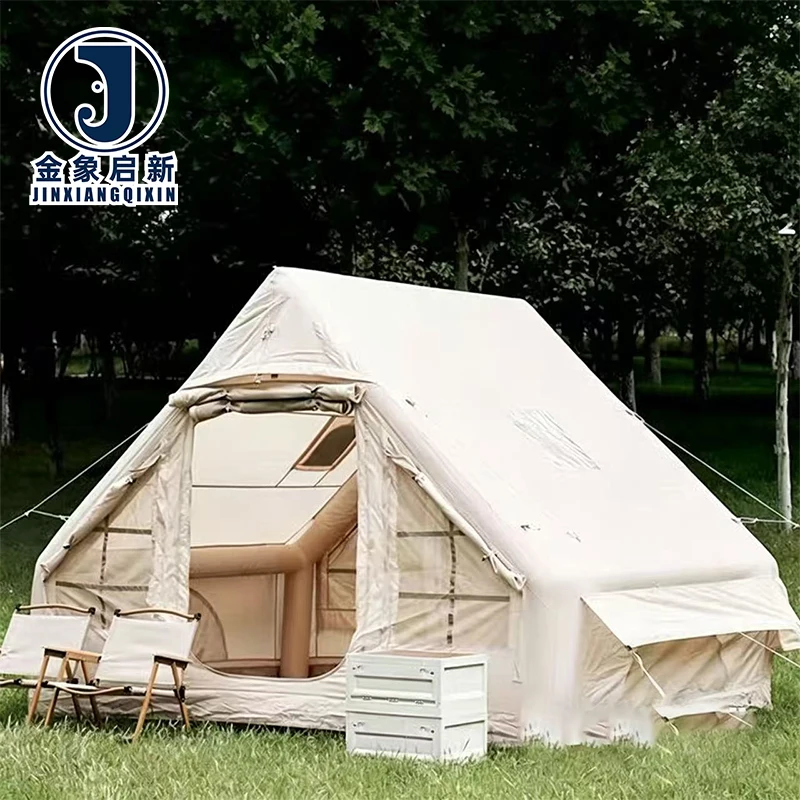
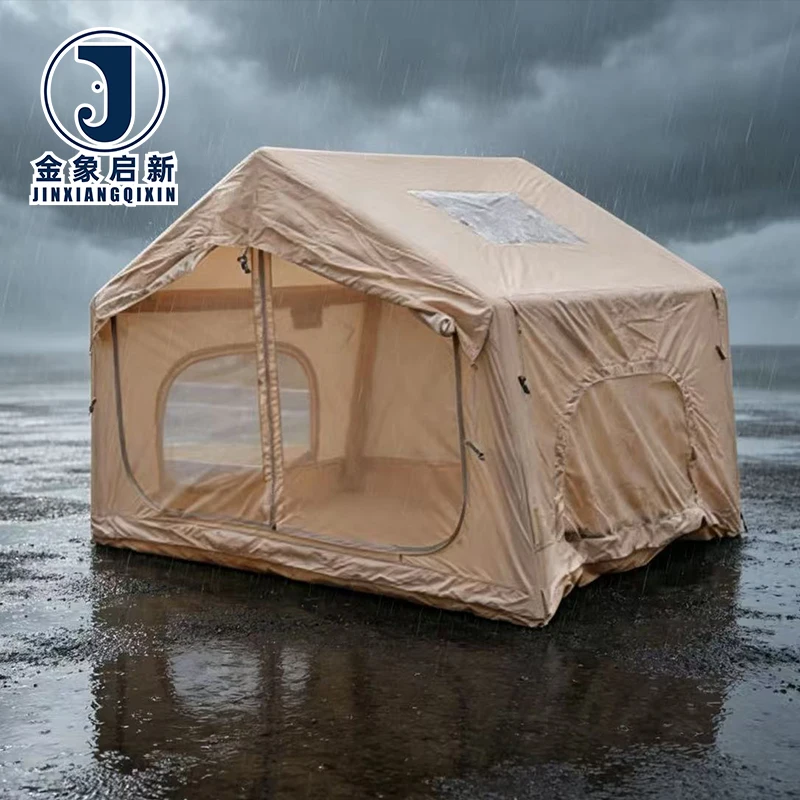
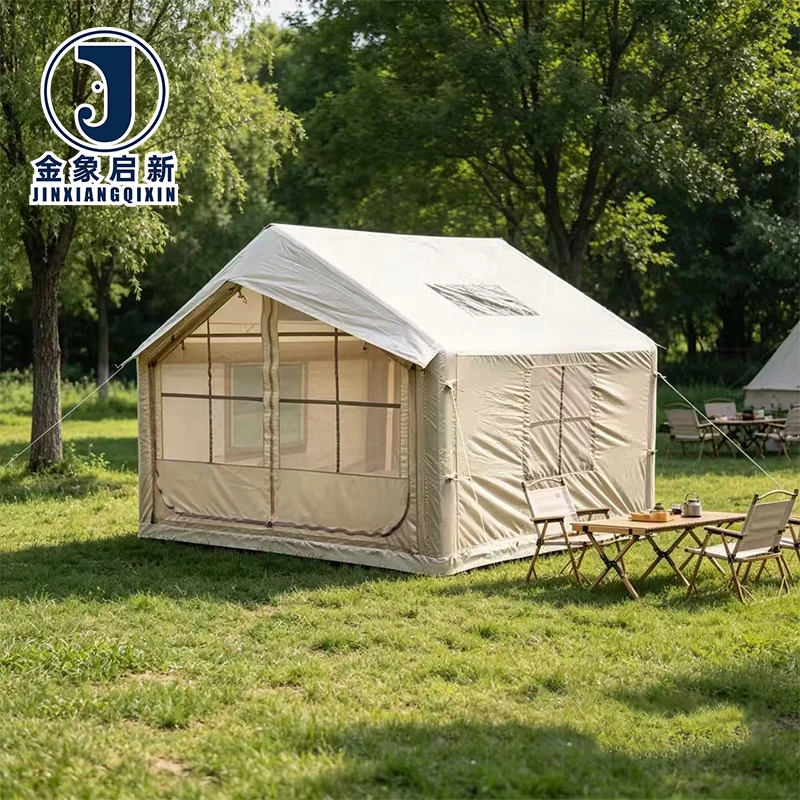
Description
Batch-consistent PVC tarpaulin roll stock — every roll of inflatable tent fabric verified for GSM, colour and coating adhesion before it leaves our 9,180 m² facility, so your cutting table never sees a surprise.
Technical Specifications
| Parameter | Value |
|---|---|
| Product Type | Inflatable Tent |
| Core Material | PVC tarpaulin |
| Key Performance | Waterproof, UV-resistant (grade not stated), tear-resistant, fire-retardant (grade not stated), anti-static (standard not stated) |
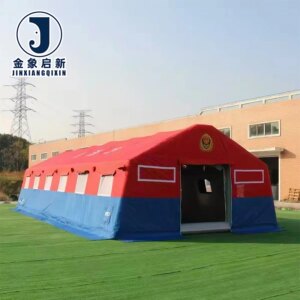
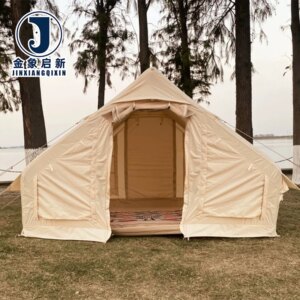
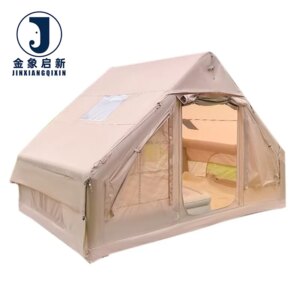
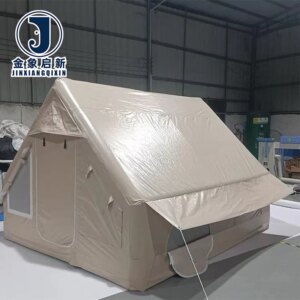
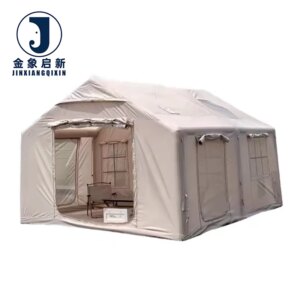
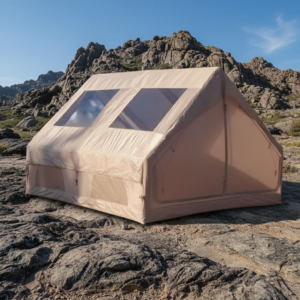
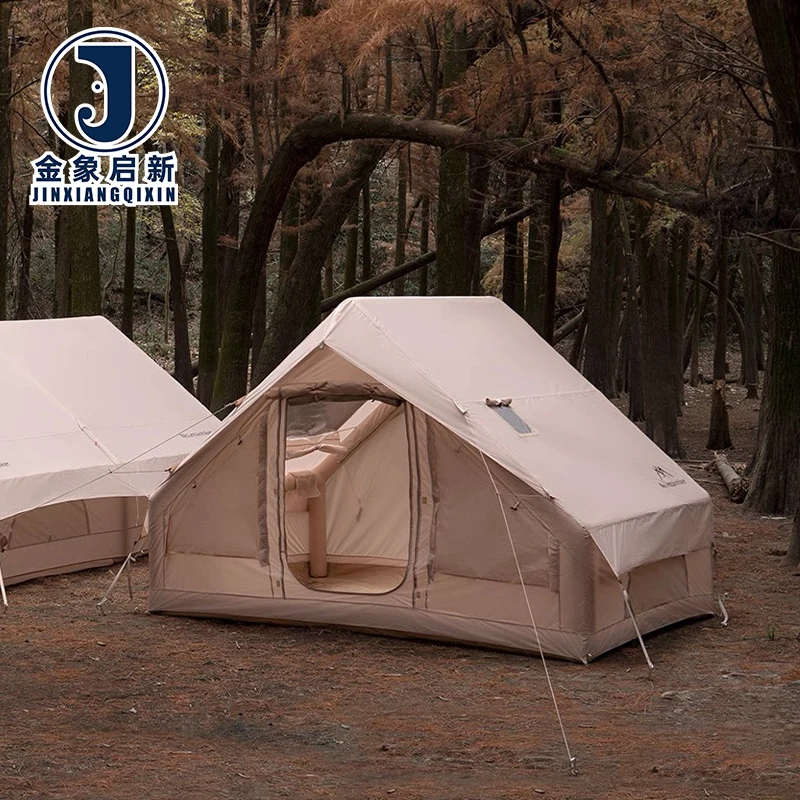
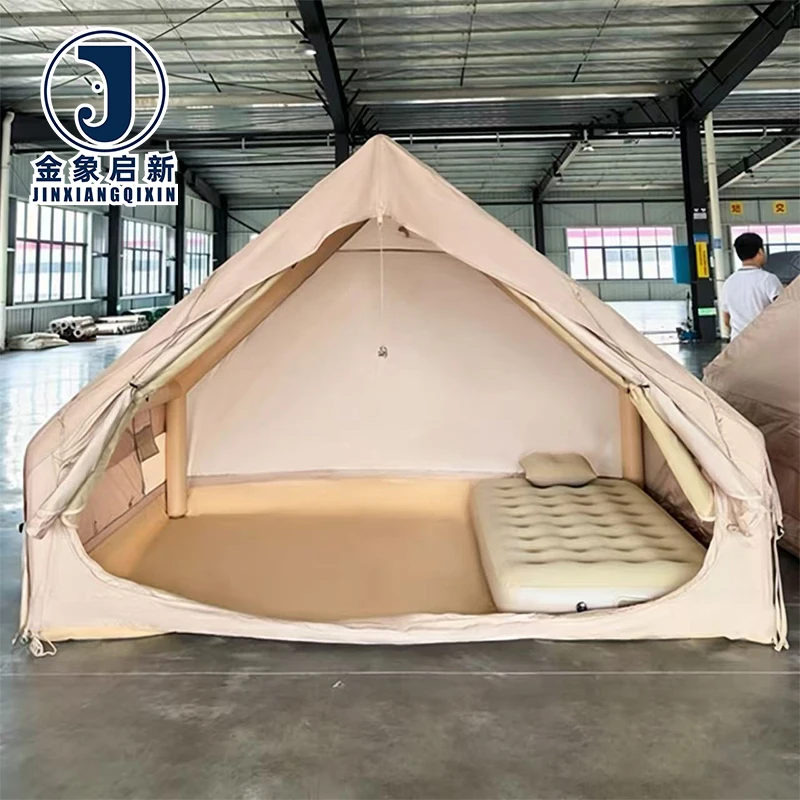
| Product Forms | Inflatable Camping Tent |
| Setup Mechanism | Quick Automatic Opening |
| Season Rating | Four-Season |
| Customization Service | OEM & ODM (sample customization, pattern printing, material selection, product design) |
| Standards | ISO9001, ISO14001, ISO45001, CE |
Application Suitability
| Application | Exposure & Requirement |
|---|---|
| Inflatable and membrane structure fabrication | Continuous roll feeding through automated welding lines, requiring uniform thickness and consistent heat-seal behaviour across the entire batch. |
| Tent and awning manufacturing | High-volume panel cutting and RF or hot-air welding, demanding colour uniformity between rolls to avoid visible panel mismatch on the finished product. |
| Tarpaulin distribution and regional stocking | Multiple GSM grades held in inventory for local tent builders, needing clear labelling, reliable roll packing and protection from compression damage during storage. |
When the Datasheet Promises More Than the Roll Delivers
Buying PVC inflatable tent fabric by the roll means you are betting your production schedule on consistency. A specification sheet only tells you what the fabric should be — the inspection record tells you what it actually is.
Too often, a fabric arrives at the warehouse looking right and weighing right on the first roll, only for the third or fourth roll to show a visible shade shift or a GSM reading that drifts outside tolerance. By the time that drift is caught on the cutting table, you have already committed labour and machine time to material that may not weld or wear uniformly. [NEED_CITE: ISO 1421 tensile and tear test methods for coated fabrics] Our in-process QA checkpoints at every production stage are designed to catch that drift before the roll is ever packed, giving you a batch you can run straight through without sorting.
Roll-to-Roll Consistency Across the Container
When you order a full container of PVC tarpaulin for inflatable tent production, the last roll must match the first. Our 10-technician R&D team locks in the coating formulation, colour reference and surface finish against an approved sample, and every subsequent roll is measured against that baseline. This matters most when your tent panels are cut from adjacent rolls and welded side by side — even a slight hue shift becomes obvious once the structure is inflated and viewed in daylight.
Custom Widths That Match Your Nesting Pattern
Standard stock widths force tent makers to accept off-cuts and extra weld seams. We supply PVC inflatable tent fabric in custom widths planned around your panel nesting layout, reducing material waste and the number of heat-sealed joints that could become failure points under inflation pressure. [NEED_CITE: hot-air welding parameters for PVC coated polyester fabrics] Whether you need a glossy face for easy wipe-down or a matte finish to reduce glare on an event structure, the surface treatment is set at the coating stage and verified before winding.
Reading the Specification Beyond the GSM Number
GSM is the figure that gets quoted first, but it tells only part of the story. The base fabric denier and weave density determine how tear propagation is arrested once a puncture occurs, while the coating weight and method — whether knife-over-roll, calendered or laminated — govern peel strength and how reliably the material holds a welded seam. A heavier coating on a low-denier base may give a high GSM reading yet still tear easily along the weft. Conversely, a tightly woven high-denier base with a leaner coating can outperform a heavier fabric in real-world inflation cycles. Surface finish also plays a role: a glossy face sheds dirt and resists moisture ingress at the coating surface, while a matte or acrylic-treated face may better accept printed branding and reduce reflection in commercial event settings. Fire-retardant grades are available — confirm the grade required for your market before ordering, as regional codes differ significantly.
The Hidden Cost of Skipping the Sample Roll
Running a full production batch on fabric you have not test-welded is a gamble. If the coating formulation differs from what your hot-air or RF equipment expects, seams can delaminate under inflation pressure even though the base fabric itself remains intact. [NEED_CITE: seam peel strength testing per ISO 1421] A sample roll lets you dial in temperature, dwell time and pressure settings on your own machines, confirm colour under your facility lighting, and validate that the surface finish accepts any printing or adhesive you plan to apply — all before the main order ships.
Why Fabricators Source Their Inflatable Tent Fabric Here
Three full production lines and 36 sets of processing equipment give us the capacity to load containers in volume while keeping lead times predictable. Every roll is inspected at coating, winding and packing stages, not just spot-checked at final QC. Our 10-technician R&D team handles custom width slitting, colour matching and formulation adjustments in-house, so specification changes do not require a new supplier. Documentation — from material spec sheets to fire-retardant test reports — is prepared per batch, not pulled from a generic library. A dedicated sample-confirmation protocol ensures that the roll you approve is the roll you receive.
Documentation & Verification
- Material specification sheet stating base fabric denier, coating weight and colour reference per roll batch
- UV and fire-retardant test reports supplied with applicable grades to support local compliance submissions
- Pre-shipment 100% inspection record detailing GSM, width and visual checks for every roll in the order
- Roll packing list with net and gross weights mapped to container loading plan for freight forwarder handover
- Certificate of origin and customs documentation prepared to match destination-country import requirements
Fabrication, Handling & Storage
- Set hot-air welder temperature to match the PVC coating formulation confirmed on your approved sample roll
- Allow custom-width rolls to relax for several hours after unrolling before cutting to minimise tension distortion
- Store rolls upright on pallets in a shaded, ventilated area to prevent compression marks on the coating surface
- Use a mild, non-solvent cleaner on glossy-finish panels to avoid softening the PVC coating top layer
- Plan panel nesting on custom-width rolls to place weld seams away from high-stress inflation zones
- Keep unopened rolls wrapped in PE film until use to prevent dust adhesion on the tacky PVC surface
What We Need to Quote Your Roll Order
Tell us the GSM grade, base fabric denier and coating weight you currently run, or the performance requirements your finished inflatable tent must meet. Share your target panel width and the number of rolls you plan to order per shipment so we can plan container loading. If your market requires a specific fire-retardant grade or anti-static level, provide the standard reference so we can match the formulation and prepare the correct test documentation. Let us know whether you need a sample roll for welding trials before committing to the full batch.
Frequently Asked Questions
Q: What GSM grades are stocked for inflatable tent fabric?
A: We produce a range of GSM grades suited to inflatable tent applications, from lighter options for portable camping structures to heavier grades for commercial event and site shelter use. The exact grade available depends on the base fabric and coating combination you specify. Request a material specification sheet for the grade that matches your tent design, and we will confirm current stock and lead time.
Q: Can I get the same colour across multiple rolls in one container?
A: Yes. Once a colour reference is approved on the sample roll, our in-process QA team checks every subsequent roll against that baseline during coating and winding. A pre-shipment inspection record documents the colour verification for each roll in your order, so panels cut from different rolls will match when welded side by side on the finished inflatable structure.
Q: Do fire-retardant rolls come with a test certificate I can show my client?
A: Fire-retardant grades are available for inflatable tent fabric, and each batch is supplied with a test report referencing the applicable standard. Because fire safety codes vary by region and application, provide the specific classification your project requires so we can match the formulation and issue the correct documentation with your shipment.
Q: What is the minimum order for a custom width or print?
A: Minimum order quantities for custom-width slitting and pattern printing depend on the GSM grade, base fabric and surface finish you select. Once you share your panel layout and container volume target, we will confirm the minimum roll count and any setup requirements so you can plan your production schedule accordingly.
Q: How are rolls packed and how many fit in a 40ft container?
A: Each roll is wrapped in PE film and packed vertically on pallets to prevent coating compression damage during transit. The number of rolls per container depends on the roll width, diameter and GSM grade you order. We provide a detailed roll packing list and container loading plan with your quotation so you can confirm freight efficiency before production begins.