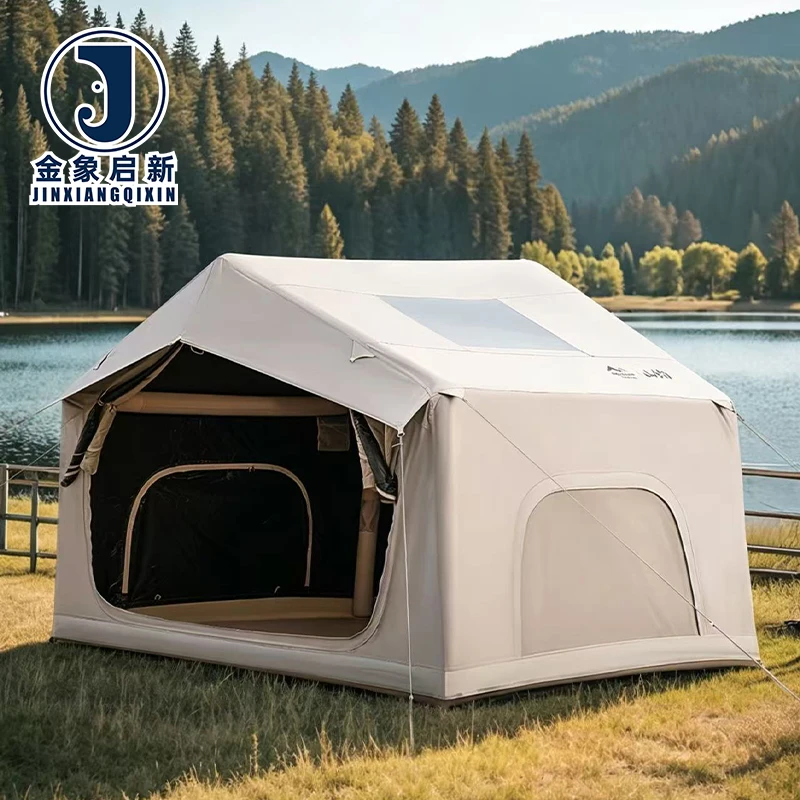
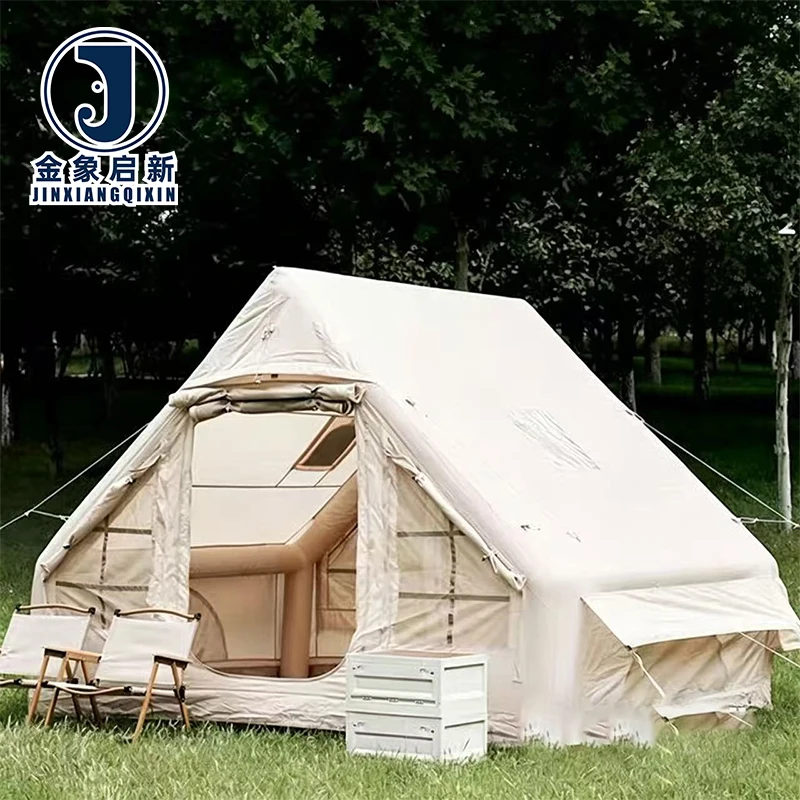
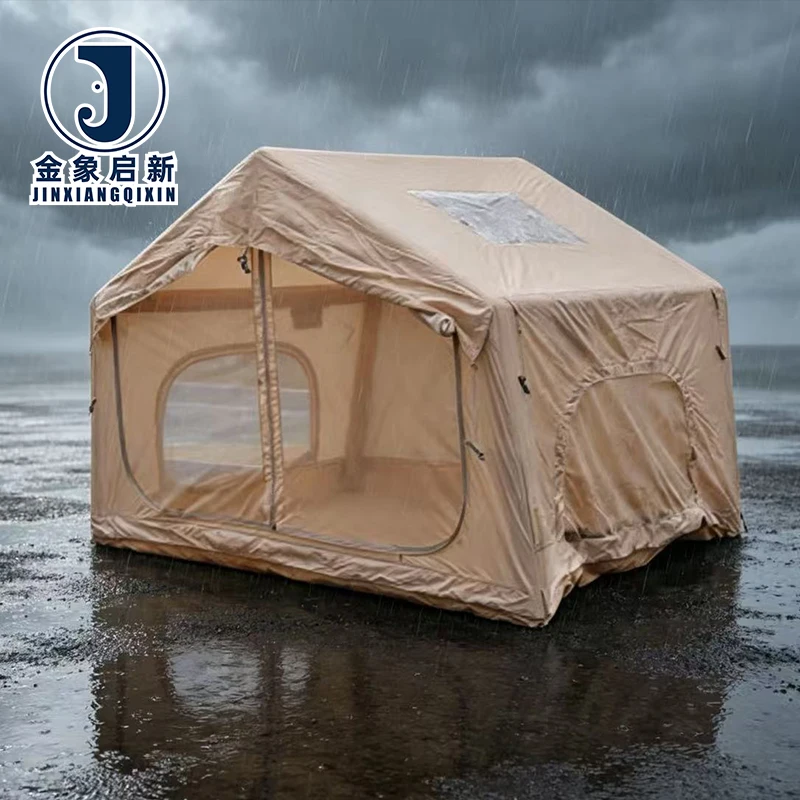
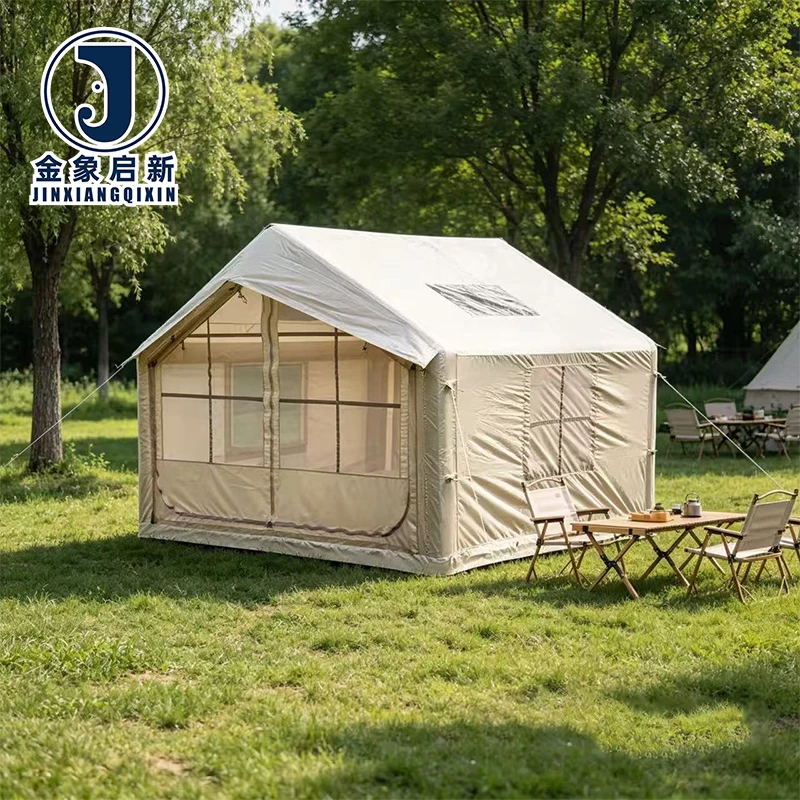
Description
Bulk Roll Consistency — PVC inflatable tent fabric delivered with matched colour and coating weight across every roll in your order, controlled through standardised production runs.
Technical Specifications
| Parameter | Value |
|---|---|
| Product Type | Inflatable Tent |
| Core Material | PVC Tarpaulin |
| Waterproof | Yes |
| UV-resistant | Available (test basis not stated in source — confirm grade for your market) |
| Fire-retardant | Available (grade not stated in source — specify required standard) |
| Anti-static | Available (surface resistance not stated — request test report) |
| Tear-resistant | Yes |
| Construction | Single layer |
| Customisation | OEM & ODM, sample development, pattern printing |
| Production Facility | 9,180 m² with 3 full production lines |
| Processing Equipment | 36 sets |
| R&D Support | 10 technicians |
| Certifications | ISO 9001, ISO 14001, ISO 45001, CE |
Application Suitability
| Application | Exposure & Requirement |
|---|---|
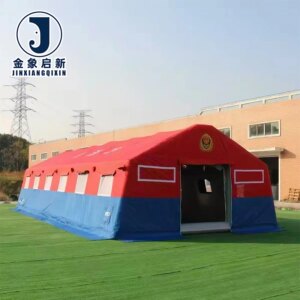
| Base camps for industrial field operations | Extended weather exposure, repeated inflation cycles, wind loading on membrane surfaces |
| Temporary shelters for outdoor equipment storage | Moisture ingress prevention, UV degradation resistance over storage periods |
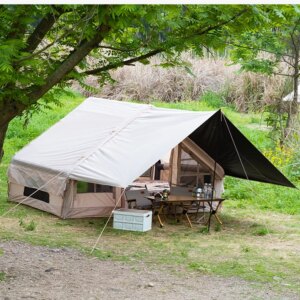
| Auxiliary facilities for commercial expedition teams | Rapid deployment, lightweight transport, resistance to ground abrasion during setup |
| Logistics field deployments in remote locations | Quick automatic opening, durability under frequent assembly and disassembly |
| Commercial outdoor trip scenarios | Multi-day weather exposure, fire safety compliance in campsite regulations |
Why Batch Colour Variation Ruins an Entire Tent Production Run
Colour drifting between rolls in the same order becomes visible the moment two panels are heat-welded side by side on the factory floor — and by then, the fabric is already cut.
Purchasing inflatable tent fabric by the roll means a single shade deviation can force you to reject an entire batch of finished tents, not just one roll. The cost of rework, delayed shipment, and damaged credibility with your own buyers far exceeds the price difference between suppliers. Sourcing an Inflatable Tent Fabric roll from a supplier who controls coating and curing parameters across the full production run is not a luxury — it is a baseline requirement for any commercial tent manufacturer. [NEED_CITE: colour consistency standards for coated textile batches]
How Roll-to-Roll Consistency Is Maintained in Coated Fabric Production
Maintaining a uniform PVC coating weight across an Inflatable Tent Fabric roll requires control over three variables simultaneously: paste viscosity, knife gap setting, and oven temperature profile. Even minor drift in any one of these produces visible variation once the fabric is unrolled and laid flat under factory lighting.
Our three production lines run dedicated batches for each confirmed order rather than mixing multiple customer specifications in a single coating session. This means your inflatable tent fabric rolls share identical raw material lots and machine settings from first roll to last.
What Wholesale Buyers Need to Verify Before Signing Off on a Roll Order
When you are purchasing inflatable tent fabric wholesale, the specification sheet tells you what was ordered — not necessarily what arrived on the dock. GSM verification on arrival is a step that many buyers skip until a lighter-than-specified roll causes seam failure during inflation testing.
Requesting a pre-shipment inspection record that includes per-roll weight checks and coating adhesion results gives you a documented baseline before the container leaves the factory. [NEED_CITE: pre-shipment inspection protocols for coated fabric rolls]
Reading the Specification Sheet: What Actually Matters for Inflatable Structures
The core material of this inflatable tent fabric is PVC tarpaulin, and its performance in an inflated structure depends on the interaction between base fabric denier, weave density, and coating weight — not any one of these in isolation. A high GSM reading achieved through heavy coating over a loosely woven base will resist puncture but may delaminate at the heat-weld line under repeated inflation pressure.
Fire-retardant and anti-static treatments are available in grades suited to different market requirements, and the correct grade depends entirely on the end-use jurisdiction and the safety standards your buyers must meet. Confirm the specific certification your market demands before production begins, as treatment chemistry and testing protocols differ significantly between standards. UV-resistant treatment is also available on request, though the appropriate test basis should be matched to the expected deployment environment and duration of sun exposure.
Pattern printing and OEM branding can be applied during the coating stage or as a secondary process, depending on the complexity of the design and the volume of the run.
The Hidden Cost of Specifying Without Fire-Retardant Certification
An inflatable tent deployed at a commercial campsite or industrial base camp must meet local fire safety regulations, and a quotation that states "flame retardant" without naming the grade or test standard provides no usable compliance documentation. When the site safety officer asks for the certificate and you cannot produce one matched to the production batch, the entire installation may be shut down.
The financial impact is not limited to the fabric cost — it includes freight, duty, fabrication labour, and the contractual penalties for delayed project delivery. Buyers who specify the required fire-retardant standard upfront and receive a batch-matched test report avoid this exposure entirely. [NEED_CITE: fire safety compliance for temporary inflatable structures]
Why Sourcing Inflatable Tent Fabric Here Works for Volume Buyers
Roll-to-roll colour and weight consistency is controlled through dedicated batch runs on three full production lines, meaning your entire order is coated under identical parameters.
Custom widths and pattern printing are handled in-house by a 10-person R&D team who develop samples before bulk production begins, so you approve the exact material that enters the coating line.
Every roll undergoes inspection before dispatch, with documentation including GSM verification, coating weight records, and a roll packing list that details count and weight for container loading planning.
The facility holds ISO 9001, ISO 14001, and ISO 45001 certifications alongside CE marking, providing the compliance framework that wholesale importers and distributors require for customs clearance in regulated markets.
Fire-retardant and anti-static grades are supported by test reports matched to batch numbers, giving you the documentation chain your end customers need for site approval.
Documentation & Verification
- Material specification sheet listing GSM, base fabric denier, and coating weight for your confirmed roll batch
- Fire-retardant and anti-static test reports matched to production batch number where applicable
- Pre-shipment inspection record confirming per-roll weight and visual checks before container loading
- Roll packing list detailing roll count, individual weights, and container loading plan for freight forwarders
- Certificate of origin and customs documentation supporting international shipment clearance
Fabrication, Handling & Storage
- Heat-weld parameters should be calibrated to the specific PVC coating weight of your inflatable tent fabric batch
- Store rolls upright on pallets to prevent flat-spot deformation on the outer coating layers
- Avoid dragging roll edges across concrete floors to protect the single-layer PVC surface from abrasion
- Allow cold-stored rolls to reach ambient temperature before unrolling to prevent coating micro-cracking
- Use PVC-compatible cleaners only, as solvent-based products can degrade the coating adhesion over time
What to Include in Your Inquiry for a Precise Quotation
Provide the target fire-retardant or anti-static standard required in your destination market so the correct treatment grade is selected from the start. Specify the roll width, estimated annual volume, and whether you need pattern printing or solid colour, as these details determine production line allocation and lead time. If you require finished cut sizes rather than full rolls, share the panel dimensions so we can calculate material utilisation and advise on the most economical roll width for your cutting layout.
Frequently Asked Questions
Q: How is batch colour consistency maintained across multiple rolls in one order?
A: Each order runs as a dedicated batch on one of three production lines using a single raw material lot. Coating paste is mixed in one session, and oven temperature profiles remain constant throughout the run. A pre-shipment inspection record documents colour reference checks per roll before the container is sealed.
Q: What fire-retardant and anti-static certifications ship with the fabric?
A: Fire-retardant and anti-static treatments are available in grades matched to different market standards. The specific grade must be confirmed during the inquiry stage so the correct chemistry is applied and a batch-matched test report is generated. ISO and CE certificates accompany every order as standard documentation.
Q: Can I order custom roll widths and what are the minimum quantities?
A: Custom widths are available through our R&D team who develop a sample for approval before bulk coating begins. Minimum order quantities depend on the requested width and whether pattern printing is included. Container loading plans are provided at the quotation stage so you can assess shipping cost efficiency.
Q: How do you verify GSM and coating weight before dispatch?
A: Every roll is weighed and measured during pre-shipment inspection. The results are recorded on a roll packing list that includes individual roll weights, total batch weight, and the container loading arrangement. This documentation ships with the order and is available in advance for your quality team’s review.