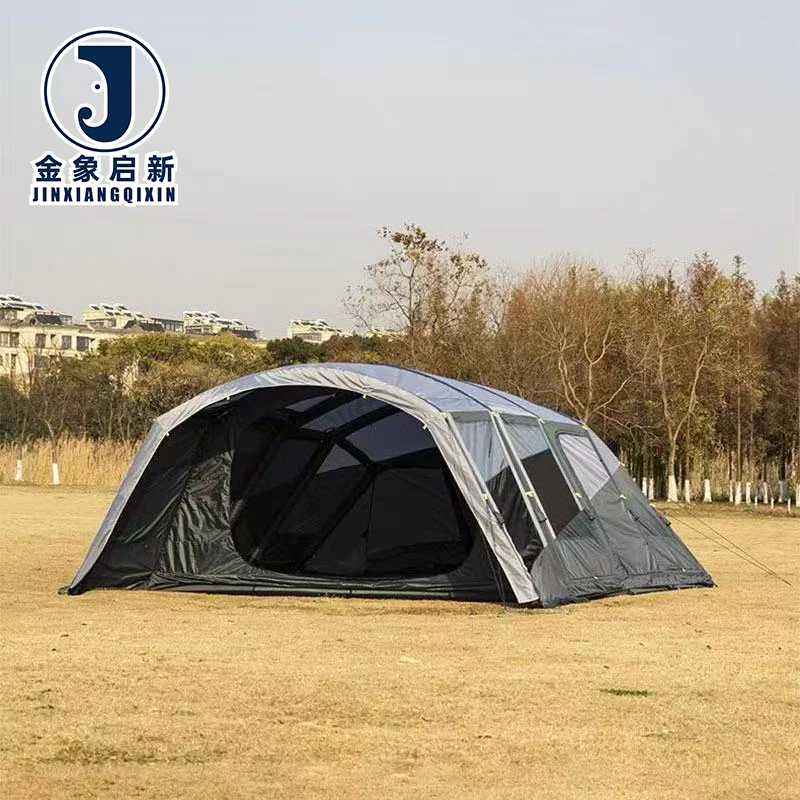
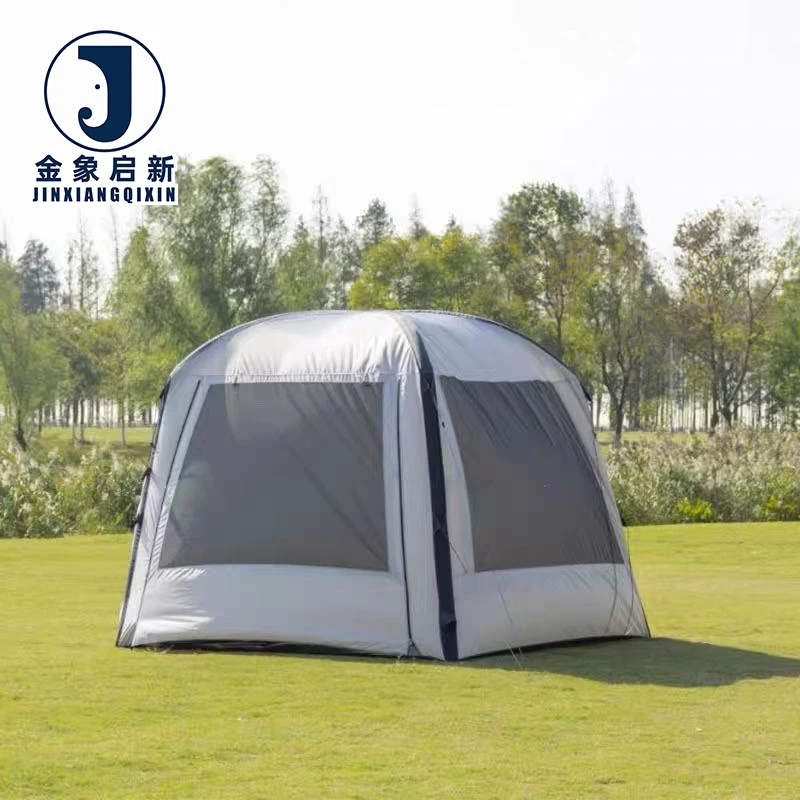
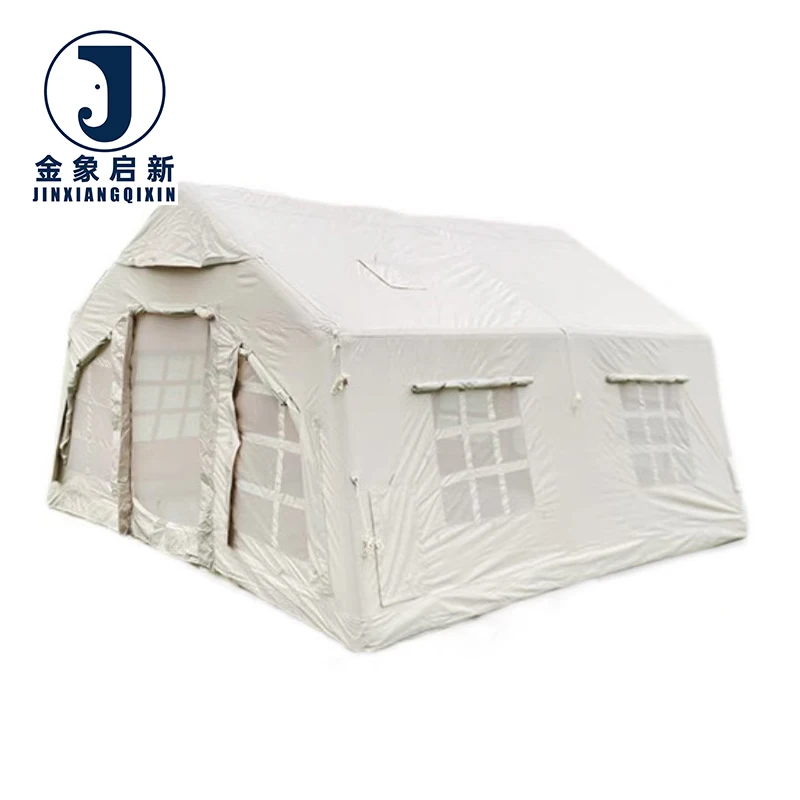
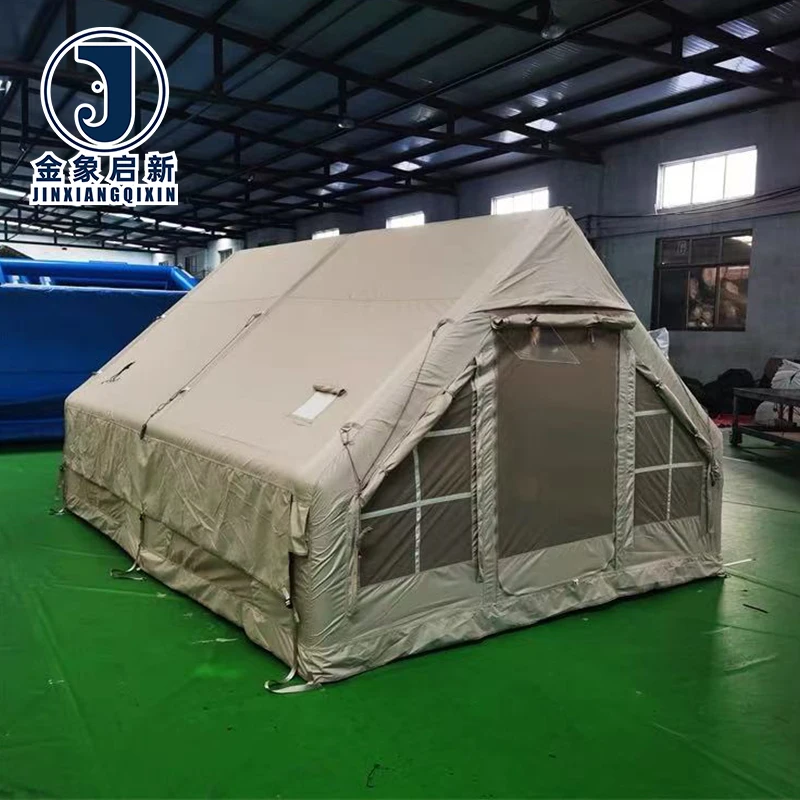
Description
Batch-matched roll stock — Every roll of inflatable tent fabric shipped from our 9,180 m² facility is coated under the same production run parameters, ensuring colour and GSM uniformity from the first core to the last in your container.
Technical Specifications
| Parameter | Value |
|---|---|
| Product Type | Inflatable Tent Fabric |
| Core Material | PVC tarpaulin |
| Construction | Single layer |
| Capacity (end-use reference) | 3–5 person shelters |
| Key Performance | Automatic inflatable compatible, four-season use, UV protection (test basis not stated in source) |
| Production Facility Area | 9,180 square meters |
| Production Lines | 3 full production lines |
| Processing Equipment | 36 sets of professional processing equipment |
| R&D Team Scale | 10 technicians |
| Customization Service | OEM & ODM, sample customization, pattern printing |
| Standards | ISO9001, ISO14001, ISO45001, CE |
Application Suitability
| Application | Exposure & Requirement |
|---|---|
| Tarpaulin distributors stocking inflatable tent fabric | Downstream buyers demand roll-to-roll colour match and consistent GSM so fabricators can cut and weld without re-calibrating seam temperatures between rolls |
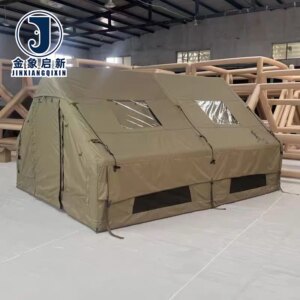
| Disaster relief and emergency preparedness procurement | Rapid deployment shelters require single-layer PVC that inflates under pressure without delamination, stored in warehouses for extended periods before deployment |
| Construction site temporary shelters | Constant outdoor UV exposure, wind-driven rain, and daily inflation-deflation cycles demand strong coating adhesion and base fabric tensile integrity |
| Mobile command centers during industrial emergencies | Structures must remain standing across seasonal temperature swings; fabric stiffness at low temperatures and softening at high heat define usable service window |
Why Batch Consistency Matters More Than Quoted GSM for Inflatable Tent Roll Procurement
A roll that matches the sample but drifts from its neighbours creates downstream waste no specification sheet can predict.
When procurement teams evaluate Inflatable Tent Fabric wholesale options, the focus lands heavily on stated GSM and tensile figures. Yet in our experience working with distributors and fabricators, the most costly discrepancies arise when roll-to-roll colour and coating weight vary within the same shipment. A fabricator welding seams on an inflatable tent structure adjusts temperature based on the first roll they process; if the next roll carries a slightly different coating thickness, the seam either fails under pressure or burns through. [NEED_CITE: ISO 1421 tensile and tear test methods for coated fabrics]. This is not a quality defect in the traditional sense — each roll may individually pass specification — but the batch inconsistency forces the fabricator to sort, re-test, and discard material that was already paid for and shipped.
What Roll-to-Roll Uniformity Means for Volume Buyers
Buying Inflatable Tent Roll material in container quantities means you are committing to a production run, not a single sample. Our coating lines run under monitored parameters so that PVC weight per square meter, colour reference, and surface finish hold within the same tolerance band from the first roll to the last loaded into your container. For fabricators producing inflatable emergency shelters, this uniformity means welding parameters set on day one remain valid through the entire production batch, reducing scrap and re-work.
Colour Matching Across Multi-Roll Orders
When inflatable tents are installed side by side at a disaster relief staging area or a construction site camp, even minor shade variation between structures is immediately visible. We control colour consistency by batching pigment into the PVC compound at the mixing stage rather than relying on surface tinting. Each roll leaving our line carries the same colour reference code tied to your order, so procurement teams can specify with confidence that a re-order placed months later will match existing stock. [NEED_CITE: colour fastness and batch matching standards for coated textiles].
Reading Between the Specification Lines
Single-layer PVC tarpaulin construction for inflatable tent applications requires a careful balance: the base fabric must carry enough denier and weave density to hold inflation pressure without stretching, while the coating must be thick enough to seal air yet flexible enough for repeated folding and packing. GSM alone does not reveal this balance. A roll with high coating weight but low base fabric density will feel heavy but tear easily along the weft; conversely, a tightly woven base with thin coating will resist tearing but lose air through micro-pores. Understanding the relationship between base fabric specification and coating weight lets buyers evaluate Inflatable Tent Fabric wholesale offers beyond the headline GSM number.
The Hidden Cost of Specifying on Weight Alone
Procurement teams that select inflatable tent fabric based on a target GSM without verifying base fabric construction often discover the problem only after fabrication. Coating adhesion that passes a peel test on the sample may fail at the weld line when the base fabric varies in weave tightness from roll to roll. Fabricators building automatic inflatable structures depend on predictable heat-seal behaviour; inconsistent base fabric density shifts the optimal weld temperature window, leading to seams that either delaminate under inflation pressure or scorch the coating surface. These failures are rarely caught in pre-shipment inspection because the test cuts are taken from random points, not from the specific seam zones where flex stress concentrates. [NEED_CITE: heat-seal failure analysis in PVC coated fabric structures].
Why Industrial Buyers Source Inflatable Tent Roll Stock Here
Our 10-person R&D team develops sample rolls within days for custom width, colour, or printed branding requirements, so you confirm material behaviour before committing to container volume. Three full production lines and 36 sets of professional equipment give us the capacity to hold your order slot and deliver on schedule, even during peak demand cycles across multiple export markets. Dedicated QA and QC staff inspect every roll against your specification sheet before packing, verifying coating weight, colour reference, and surface finish against agreed tolerances. Nearly three decades of focused coated fabric production means our process control is built on accumulated data, not trial and error, reducing the variability that causes downstream fabrication issues.
Documentation & Verification
- Material specification sheet stating PVC coating weight, base fabric construction, and colour reference for each roll batch
- Pre-shipment inspection record confirming batch colour consistency and coating adhesion before container loading
- Roll packing list detailing roll count, individual roll dimensions, and total weight for customs clearance
- Certificate of origin and customs support documentation included for international wholesale shipments
- ISO9001, ISO14001, ISO45001, and CE certificates provided with order documentation
Fabrication, Handling & Storage
- Heat-seal temperature settings should be verified on each roll before production runs, as PVC coating composition affects weld behaviour
- Store rolls upright on pallets in a covered area to prevent compression marks on the single-layer PVC surface
- Avoid storing near heat sources that can cause PVC coating to soften and bond to adjacent roll layers
- When cutting patterns for inflatable tent panels, nest pieces to maximise yield from each roll width and minimise seam count
- Use compatible PVC adhesive for field repairs on single-layer construction; test adhesion on a scrap piece first
What We Need to Quote Your Inflatable Tent Fabric Order
To provide an accurate specification and lead time, please share your target roll width and length, annual volume estimate, and whether you require plain stock or custom colour and pattern printing. Let us know the end-use application — disaster relief shelters, construction site structures, or distributor stock — so we can recommend the appropriate base fabric construction and coating weight. If your market requires specific fire classification or UV test documentation, confirm the standard applicable in your destination country so we can include the correct test report with your shipment.
Frequently Asked Questions
Q: How is batch colour consistency maintained across multiple rolls in one order?
A: Pigment is compounded into the PVC at the mixing stage before coating, so colour is integral to the material rather than a surface application. Every roll in your order is produced under the same line parameters and checked against your confirmed colour reference before packing, ensuring visual uniformity when tents are deployed side by side.
Q: What roll widths and lengths are available for bulk inflatable tent fabric?
A: We produce standard stock widths suited to inflatable tent panel cutting, with custom widths available on request through our OEM and ODM service. Roll length is configured to optimise container loading by weight and volume. Confirm your required dimensions and target container quantity when requesting a quotation.
Q: How is container loading optimised for roll stock volume shipments?
A: Rolls are packed upright or horizontally based on diameter and width to maximise container space while preventing compression damage. A detailed packing list with roll count, individual weight, and total shipment weight is provided before dispatch so you can plan warehouse receiving and downstream logistics.
Q: What documentation is provided to verify material specifications on arrival?
A: Each shipment includes a material specification sheet stating PVC grade, base fabric details, and colour reference, along with a pre-shipment inspection record. Certificates covering ISO9001, ISO14001, ISO45001, and CE are included, plus certificate of origin and customs documentation for your import clearance process.
Q: What are the minimum order quantities for custom width, colour, or printed rolls?
A: Custom specifications carry minimum quantities that vary by the degree of customisation required — custom colour has a lower threshold than custom width or printed branding. Our R&D team develops sample rolls for your approval before bulk production begins, so you can confirm the material meets your fabrication requirements prior to committing volume.