Description
Batch-Matched Roll Supply — every roll in your container weighed and colour-checked against the production sample before dispatch, targeting shade and GSM consistency across the full shipment.
Technical Specifications
| Parameter | Value |
|---|---|
| Product Type | PE Tarpaulin |
| Base Fabric | HDPE weaving |
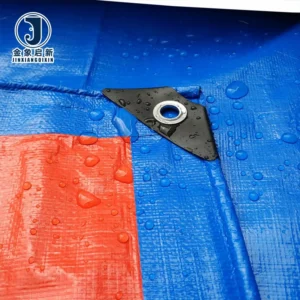
| Coating / Lamination | LDPE lamination on both sides |
| Weight Range | 50 gr/m² to 220 gr/m² (confirm the grade for your order) |
| Thickness | 0.2 mm – 0.4 mm (8 mil – 16 mil) |
| Weave Density Options | 6×6, 6×7, 7×7, 7×8, 8×8, 9×9, 8×10, 10×10, 12×12, 14×14, 14×16 |
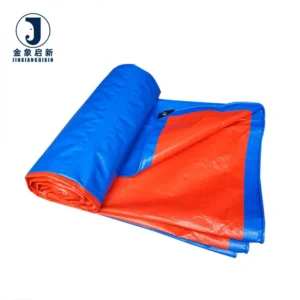
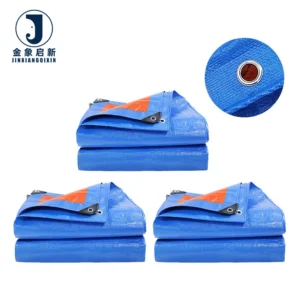
| Roll Width Options | 6 ft, 8 ft, 10 ft, 12 ft, 2 m, 4 m, 6 m |
| Roll Length Options | 100 yards, 100 meters, or custom |
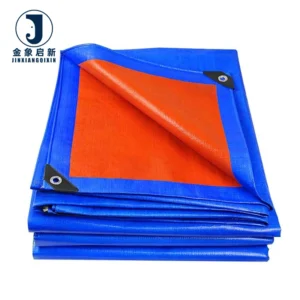
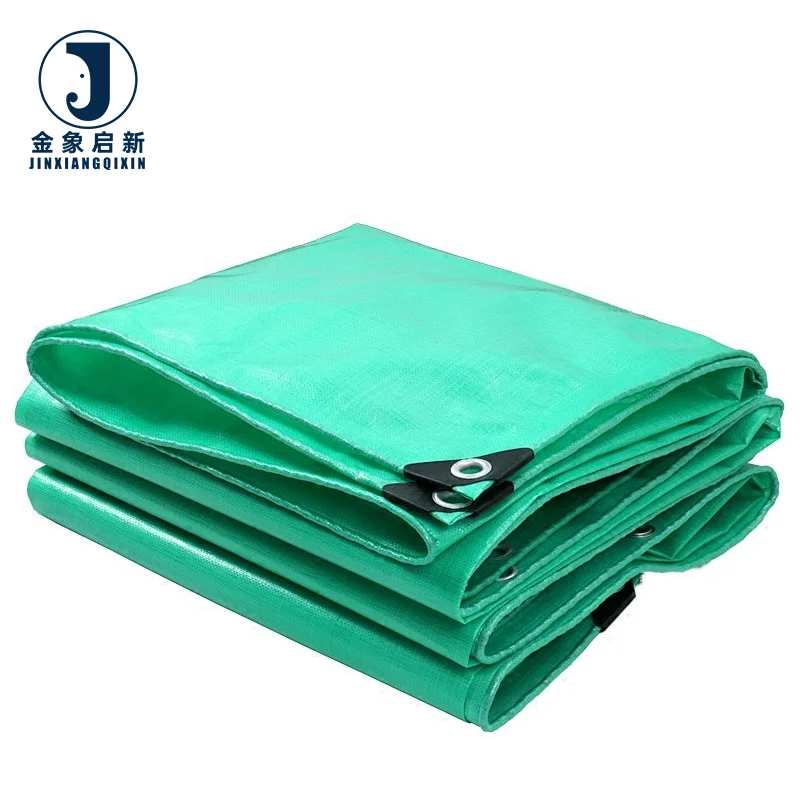
| Finished Edge | PP rope reinforced hem on all four sides |
| Eyelets | Galvanized, spaced every 3 ft or 1 m |
| Corner Reinforcement | Plastic corner patches |
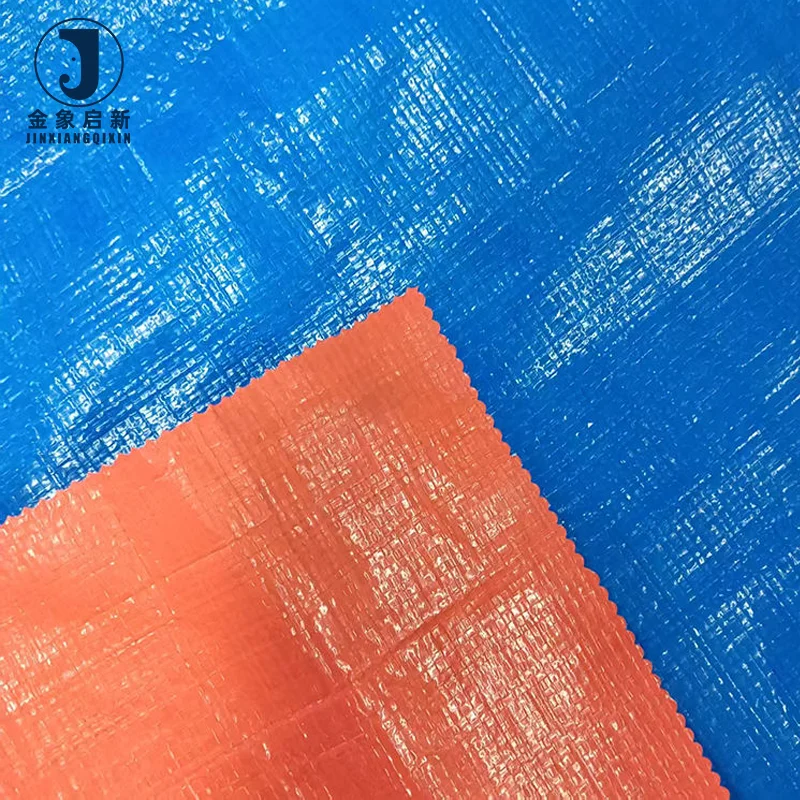
| Colour Options | Blue, Blue/Orange, Green, Grey, Black, Clear, Grey/Green, Orange, or custom |
| UV Treatment | Available (test basis not stated — request report) |
| Mildew Resistance | Yes |
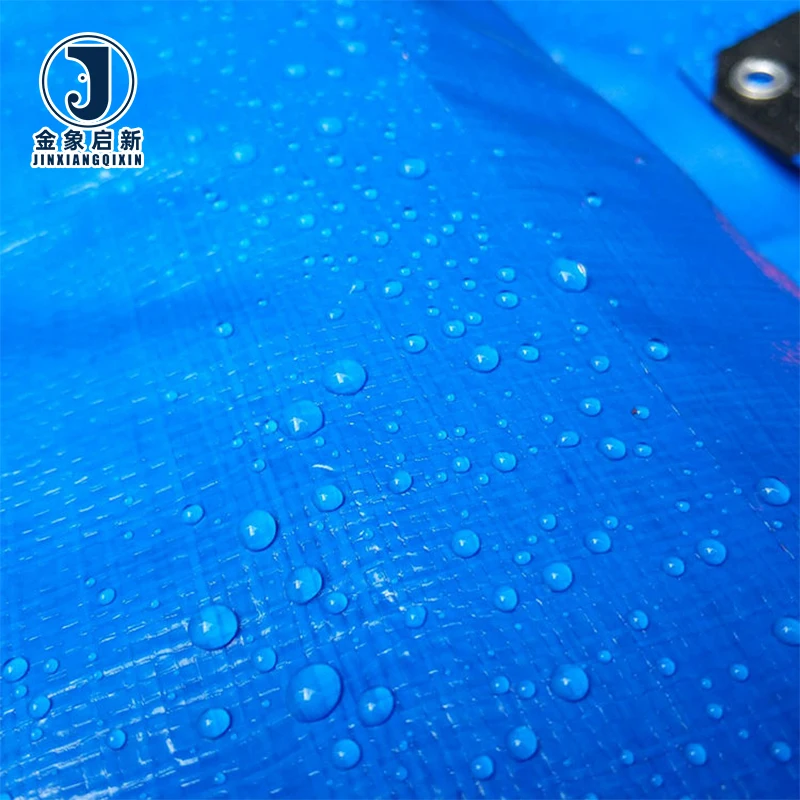
| Waterproof | Yes |
| UV Treatment | Available (test basis not stated) |
Application Suitability
| Application | Exposure & Requirement |
|---|---|
| Tarpaulin distribution & import | Container-load ordering with predictable GSM and colour matching across all rolls in the shipment |
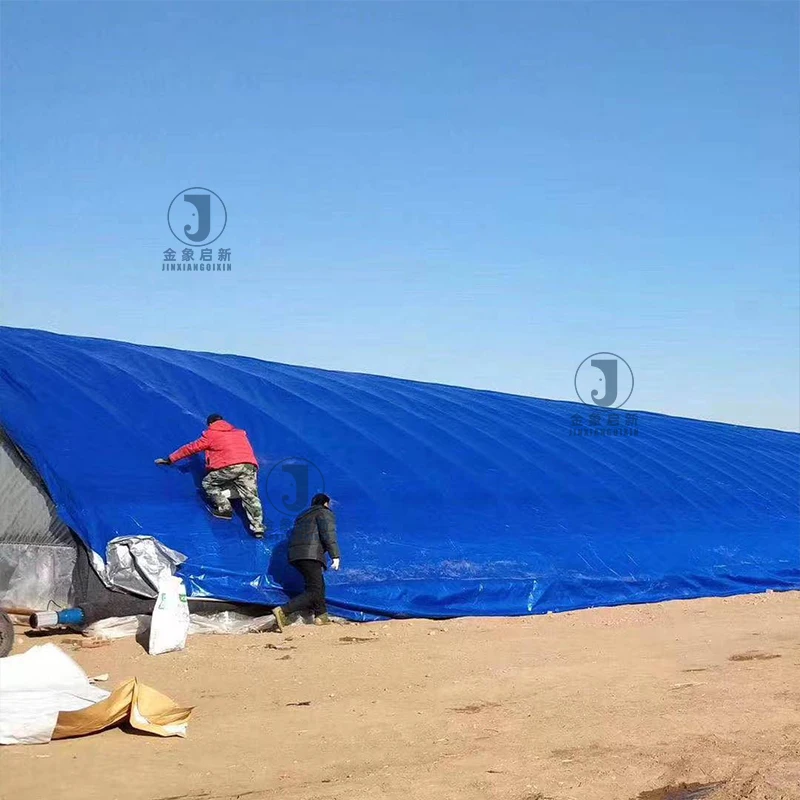
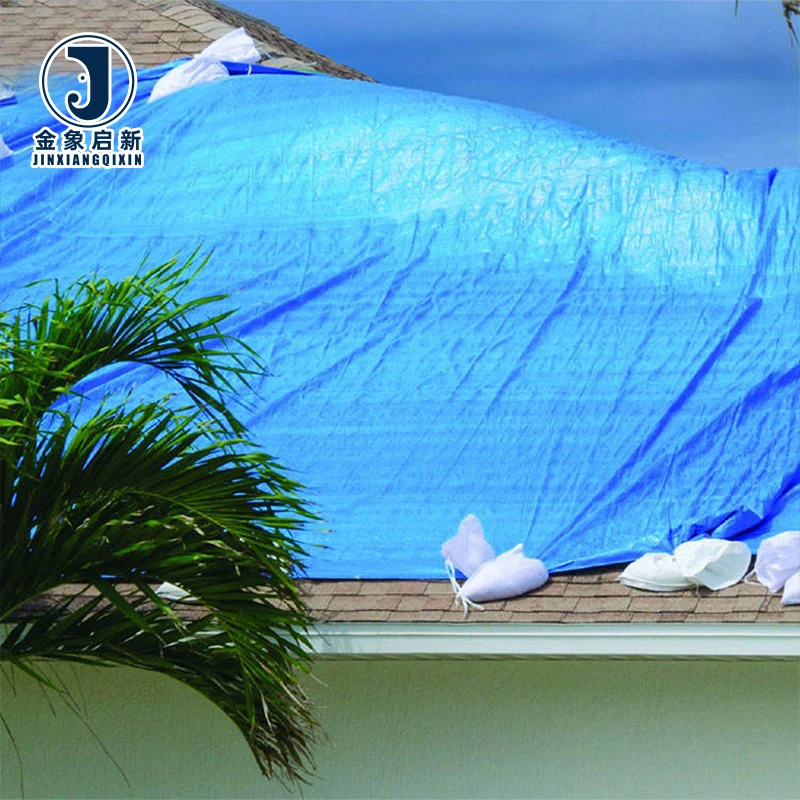
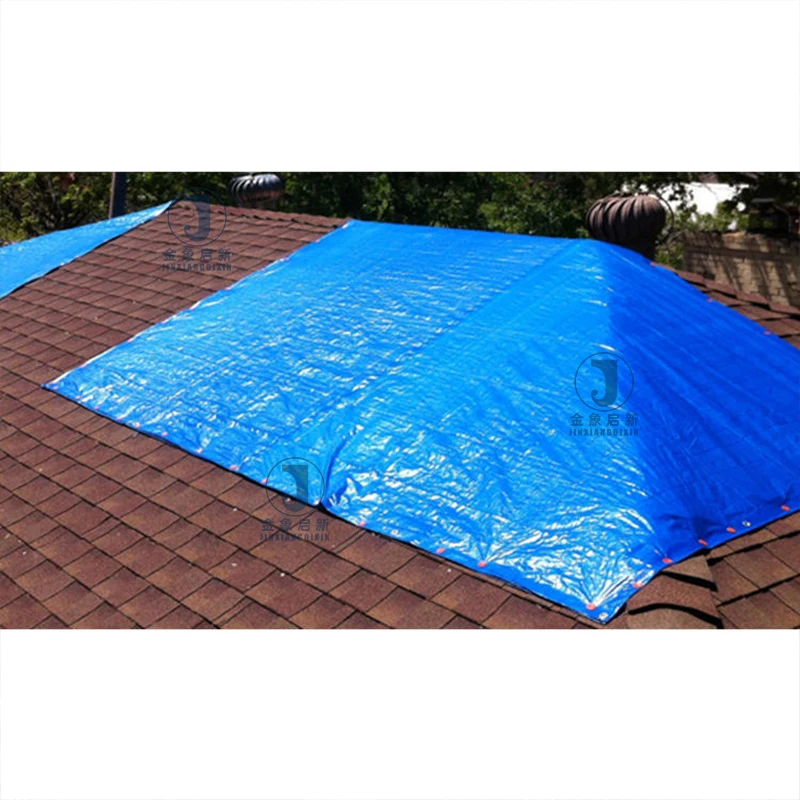
| Construction site covering | Scaffolding wrap and material protection requiring waterproof barrier, abrasion resistance from site handling |
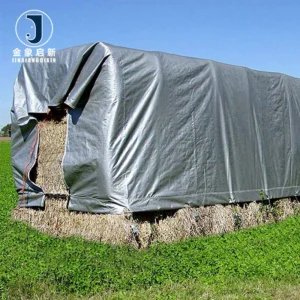
| Agricultural crop and timber storage | Prolonged outdoor exposure to sun and rain, mildew resistance for damp organic loads |
| Finished-tarp fabrication | Converting roll stock into cut sizes with eyelets and hems, requiring consistent weave for clean welding and sewing |
| Truck and transport load covering | Road weather exposure, tie-down abrasion at contact points, wind flex during transit |
Why Roll-to-Roll Consistency Decides Your Resale Reputation
Colour drift between rolls is visible the moment two sheets are hung side by side on a job site.
When you import a full container of PE Tarpaulin Roll wholesale bulk stock, you are not buying for a single project — you are selling onward to retailers and contractors who expect every roll on their shelf to match. A shade difference that looks minor at the factory inspection table becomes a complaint once two pieces are installed next to each other on a scaffold or a truck bed. Weight variation works the same way: a 120 gr/m² roll that arrives at 105 gr/m² fails the buyer’s weigh-check and triggers a claim. [NEED_CITE: weight verification methods for PE woven fabrics per ISO 3801]
These are not rare events in bulk fabric trade. They happen when production batches are mixed, when extrusion pressure varies across shifts, or when dye lots are not locked to a single order. The cost is not just the replacement roll — it is the freight, the delay, and the credibility loss with your downstream buyer.
Weave Density as Your Primary Purchasing Lever
The weave count — whether 6×6, 8×8, or 14×14 — is the structural backbone of every PE Tarpaulin Roll wholesale bulk order. A higher mesh count packs more HDPE tapes per square inch, which directly increases both tensile load capacity and resistance to tear propagation. For distributors sorting their inventory into light-duty, medium-duty, and heavy-duty tiers, mapping weave density to end-use is the clearest way to segment your catalogue without ambiguity.
Each density tier also maps to a GSM band, so specifying by mesh count gives you a built-in verification check when rolls arrive at your warehouse. A 10×10 weave landing at 80 gr/m² instead of its typical 100–120 gr/m² range signals that the base fabric was underspec before lamination even started.
How LDPE Lamination Quality Affects Downstream Fabrication
Double-side LDPE lamination provides the waterproof barrier and the surface that your fabrication team will heat-weld or sew. The adhesion between the LDPE film and the HDPE woven base determines whether the laminate delaminates during welding or after prolonged sun exposure. When adhesion is weak, welded seams peel at the edges under tension — and the failure appears at the customer’s site, not yours. [NEED_CITE: peel strength test methods for laminated fabrics per ISO 2411]
For converters buying PE Tarpaulin Roll wholesale bulk to produce finished tarps with eyelets and reinforced hems, consistent lamination thickness across the roll width is equally important. Uneven coating weight causes some sections to weld too hot while others fail to bond, slowing your production line and raising scrap rates.
Reading the Specification Sheet Beyond GSM
GSM tells you the total mass per square metre, but it does not tell you how that mass is distributed between the HDPE base and the LDPE laminate. Two rolls can both read 100 gr/m² yet behave very differently: one may have a heavier base fabric with a thin coating, giving high tear strength but lower waterproof redundancy; the other may carry a thicker laminate on a lighter weave, offering better water holdout but reduced mechanical strength. Understanding this split matters when you specify PE Tarpaulin Roll wholesale bulk for a particular end-use — construction scaffolding wrap needs tear resistance, while pond covering prioritises waterproof integrity.
Thickness, measured in mil or millimetres, correlates with puncture resistance but not with tensile strength. A thicker laminate may resist abrasion better yet add little to the load-bearing capacity of the fabric. Weave density and tape denier remain the primary drivers of structural performance. Width selection — from 2 m up to 6 m — affects how many panels you need to weld together for large covers, with wider rolls reducing seam count and potential leak paths. [NEED_CITE: relationship between weave density and tensile properties in woven PE fabrics]
The Hidden Cost of Accepting Unverified Roll Stock
Every container that arrives with mixed shades, short-weight rolls, or inconsistent lamination creates downstream losses that multiply well beyond the invoice value. Retailers reject mismatched inventory, contractors delay projects waiting for replacement material, and your reputation erodes in a market where buyers talk to each other. [NEED_CITE: supply chain cost of quality failures in imported textile goods]
Fabricators who discover lamination adhesion problems mid-production run face halted lines, wasted eyelets and PP rope, and partial rolls that cannot be sold as first quality. For distributors, a single bad shipment can cost an entire season’s repeat orders from a key contractor account.
Why Buyers Consolidate Their PE Roll Orders Here
Three full production lines and 36 sets of professional equipment give us the capacity to fill container-load PE Tarpaulin Roll wholesale bulk orders within standard lead times, without splitting your shipment across multiple production windows that create batch variation.
A 10-person R&D team handles custom width, colour matching, and sample development in days rather than weeks, so you can confirm shade and hand-feel before committing a full container. Dedicated QA and QC inspection at every production stage means that GSM, colour, and lamination adhesion are checked during the run — not only at the final audit — reducing the chance that off-spec rolls are packed and shipped. Every order is backed by 100% pre-shipment inspection with a written record, giving you documented evidence to show your own buyers and reducing disputes at receiving.
Documentation & Verification
- Material spec sheet listing GSM, weave count, and HDPE/LDPE composition for each roll
- Pre-shipment inspection record with measured weight and colour check per roll
- Roll packing list detailing container load breakdown by tonnage and volume
- Certificate of origin and customs documentation included with every shipment
- Colour reference card signed off before bulk production begins
Fabrication, Handling & Storage
- Heat-weld at temperatures matched to the LDPE lamination grade to avoid delamination at seam edges
- Store rolls upright on hard paper tubes to prevent creasing that weakens the HDPE weave
- Galvanized eyelets suit outdoor exposure; confirm spacing matches your tie-down pattern before ordering
- For 6 m wide rolls, use adequate handling equipment to avoid stretching the woven base during unrolling
- Clean with mild detergent only — harsh solvents degrade the LDPE surface and reduce waterproof integrity
- Finished tarps folded into poly bags should be stored away from direct sunlight until dispatch to preserve UV treatment
Planning Your PE Tarpaulin Roll Order
To help us match your exact requirements, please share the end-use application and the exposure conditions your buyers face — outdoor duration, abrasion level, and any fire-safety or UV treatment expectations. Specify your preferred roll width, length, and GSM or weave density, along with colour requirements and whether you need custom Pantone matching. If you are also ordering finished cut sizes alongside roll stock, provide the cut dimensions and eyelet spacing so we can consolidate your container for maximum loading efficiency.
Frequently Asked Questions
Q: How do I verify that the GSM on arrival matches what was quoted?
A: Every shipment includes a pre-shipment inspection record showing measured weight per roll. On arrival, cut a known-area sample from a random roll, weigh it on a calibrated scale, and compare against the spec sheet. We document the GSM range for your specific weave density so your receiving team knows the acceptable tolerance before they start checking.
Q: Will every roll in my container be the same colour?
A: We assign a single dye lot to each container order and check shade against the signed-off reference card during production. Our in-process QA targets roll-to-roll colour consistency so your downstream buyers see a uniform range on the shelf. If your order requires a custom colour, we send a lab-dip sample for your approval before the bulk run starts.
Q: What are the lead times and minimums for custom width or colour?
A: Custom widths outside the standard 2 m to 6 m range and custom colours require a sample development stage, typically completed within days. Minimum order quantities depend on the width and GSM selected. Container-load orders generally meet the threshold for custom runs, and we confirm the exact minimum and lead time at the quotation stage based on your specification.
Q: How should I calculate container loading for my order?
A: Loading capacity depends on your chosen packing method. Rolls on hard paper tubes, bales, and cartons each yield different tonnage per 20-foot or 40-foot container. We provide a detailed loading plan with your quotation showing total rolls or bales, weight, and volume so you can plan freight costs accurately before confirming the order.
Q: Can I get UV treatment test evidence with my shipment?
A: UV treatment is available across our PE tarpaulin range, but the specific test basis should be confirmed for your market requirements. Request the test report at the inquiry stage so we can supply documentation aligned with the standard your buyers or regulators require. We include the applicable UV treatment details on the material specification sheet shipped with your order.