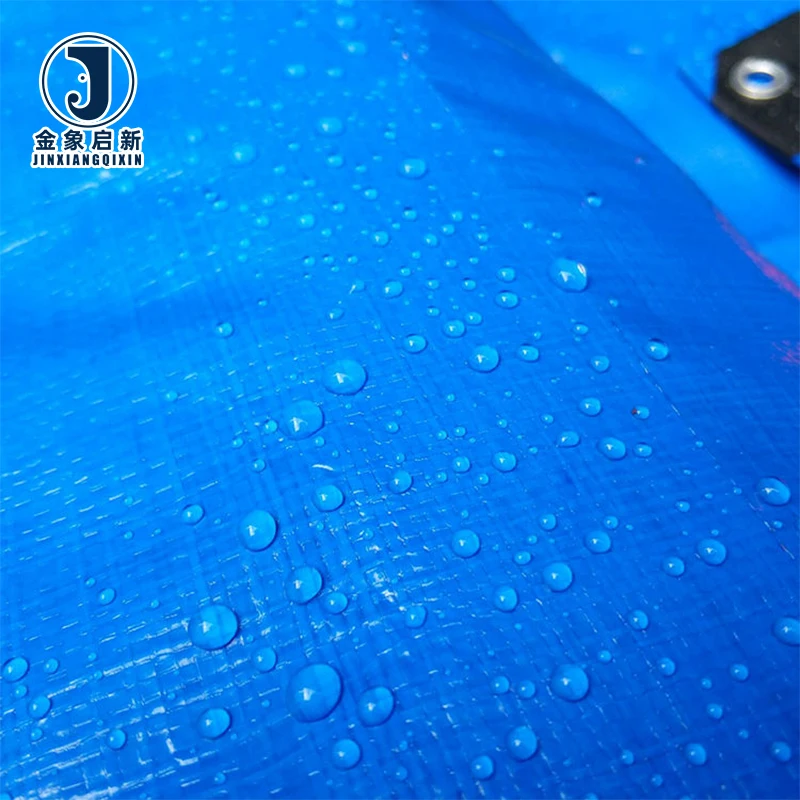
Description
Verified Bulk Capacity — Three full production lines maintain consistent colour, weave density, and roll-to-roll weight for every wholesale shipment of PE tarpaulin.
Technical Specifications
| Parameter | Value |
|---|---|
| Product Type | PE Tarpaulin |
| Fabric Weight | 45gsm ~ 400gsm |
| Material | HDPE weaving with LDPE lamination on both sides |
| Weave Count | 6×6, 8×8, 10×10, 12×12, 14×14 |
| Roll Width | 6ft, 8ft, 10ft, 12ft or 2m, 4m, 6m |
| Roll Length | 100 yards, 100 meters, or custom |
| Thickness | 0.2-0.4mm / 8 mil-16 mil |
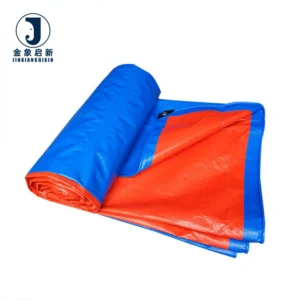
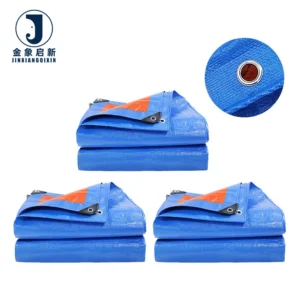
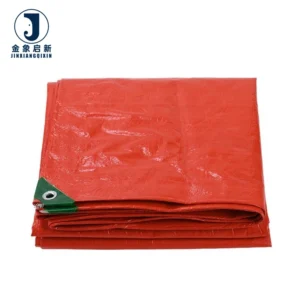
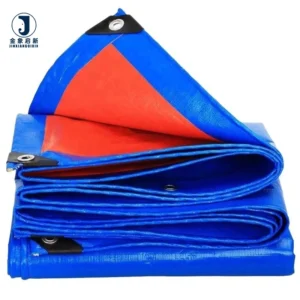
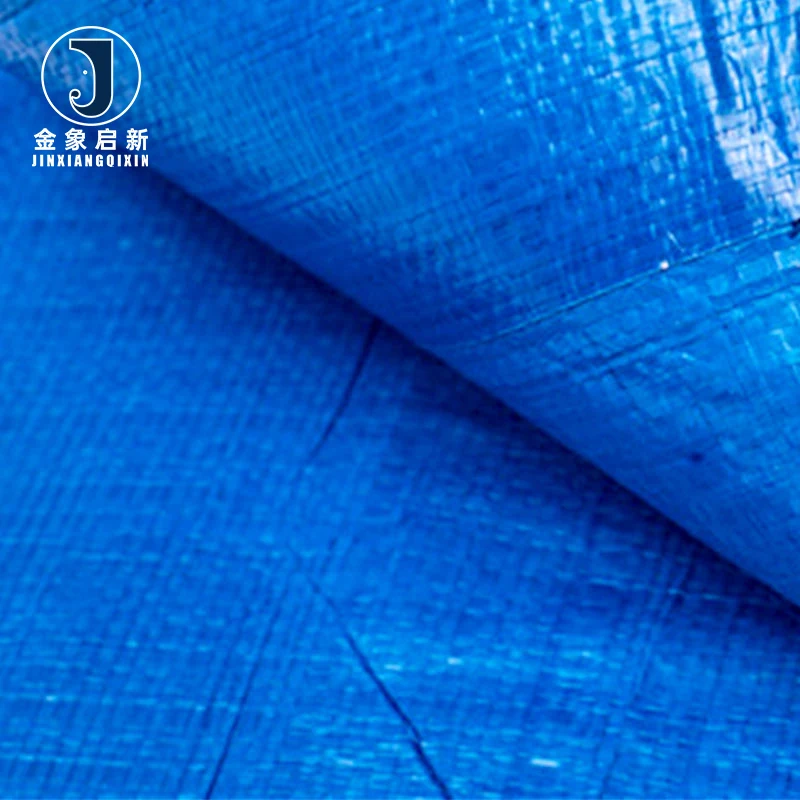
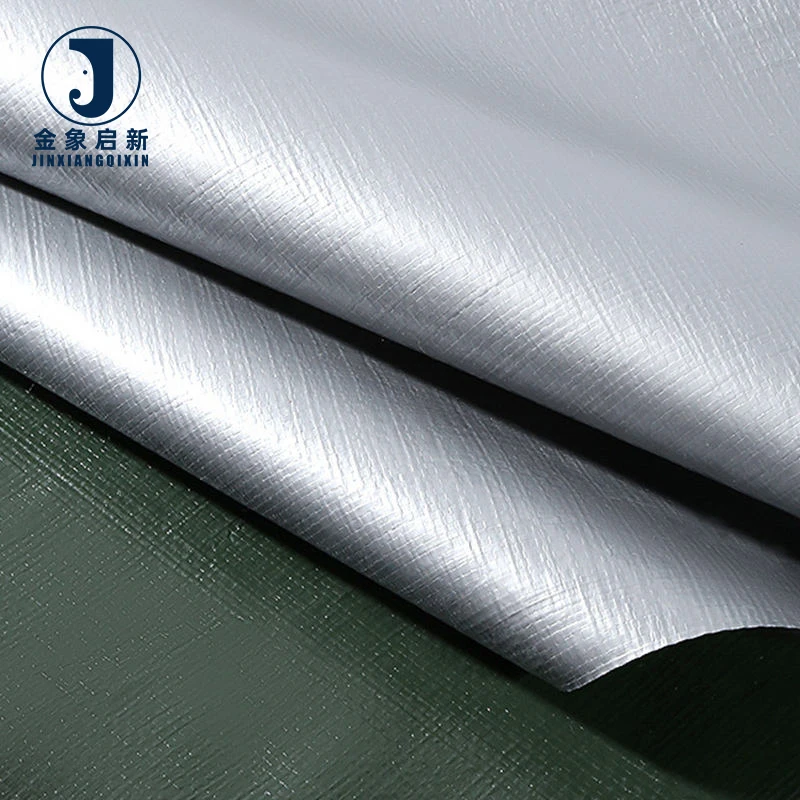
| Color | Blue, Blue/Orange, Green, Grey, Black, Clear, Grey/Green, Orange, or any pantone color |
| Flame Retardant Treatment | NFPA701 (confirm specific pass rating for your market) |
| UV Treatment | Available (test basis not stated in source) |
| Hemming Margin | 4cm unless specified |
| Roping | All four sides |
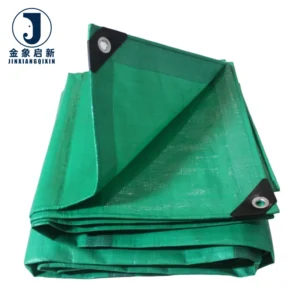
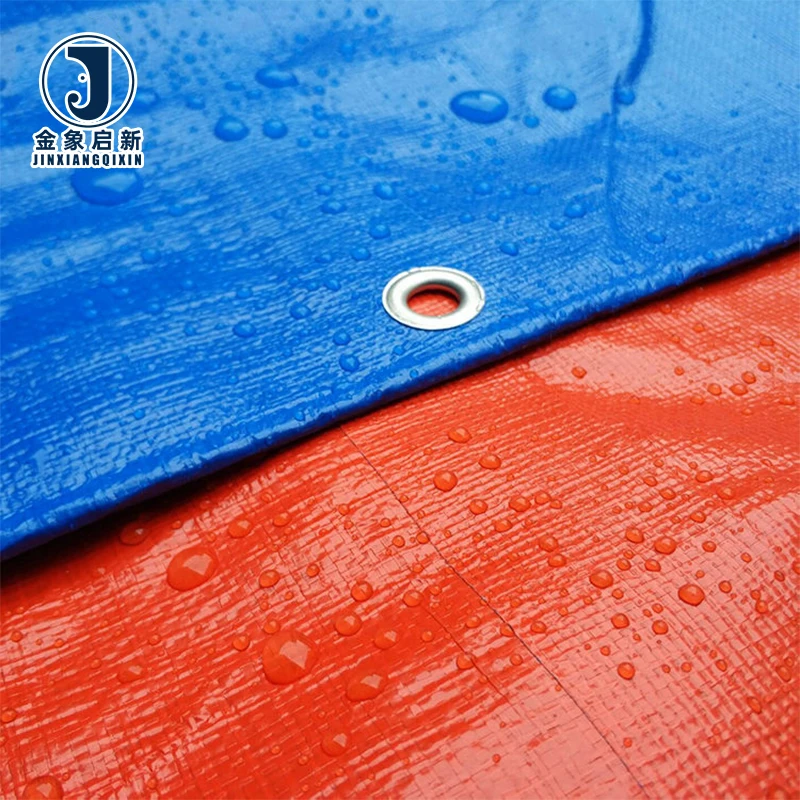
| Eyelets | PC, brass, aluminum |
| Corner Guards | PP or PE |
| Key Features | Waterproof, washable, tear resistant, mildew proof, anti-aging |
Application Suitability
| Application | Exposure & Requirement |
|---|---|
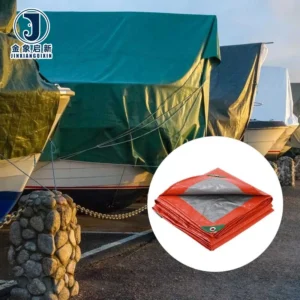
| Truck and trailer load covering | Road vibration, flex at load points, abrasion from tie-downs, weather exposure |
| Construction site and equipment covers | UV exposure, debris impact, repeated folding and deployment on site |
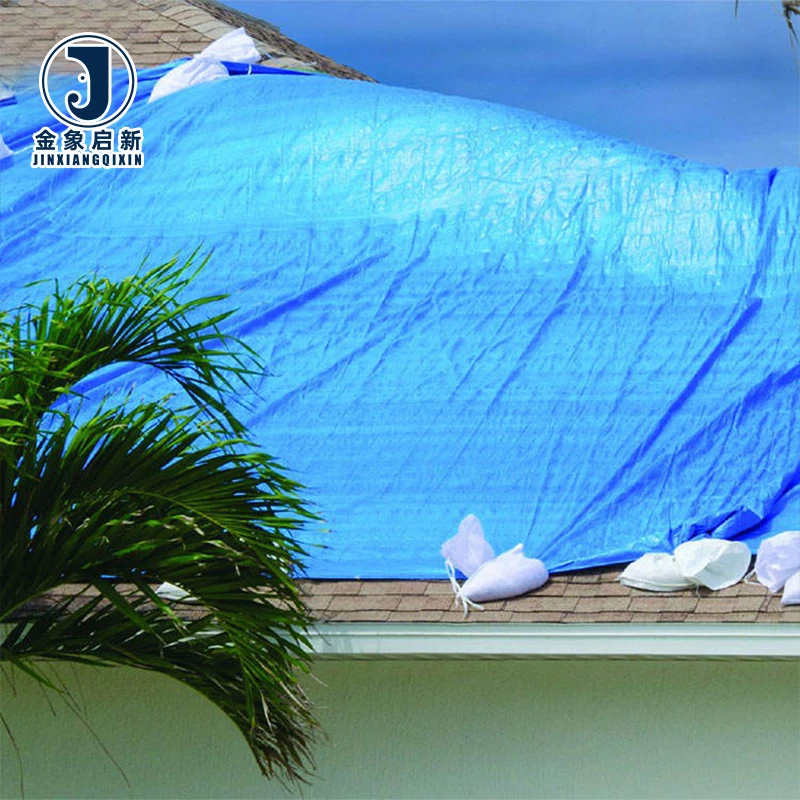
| Outdoor tent and awning fabric | Continuous sun exposure, wind load, rain ingress prevention, fold storage |
| Pond and reservoir lining | Permanent water contact, soil chemistry, puncture from substrate irregularities |
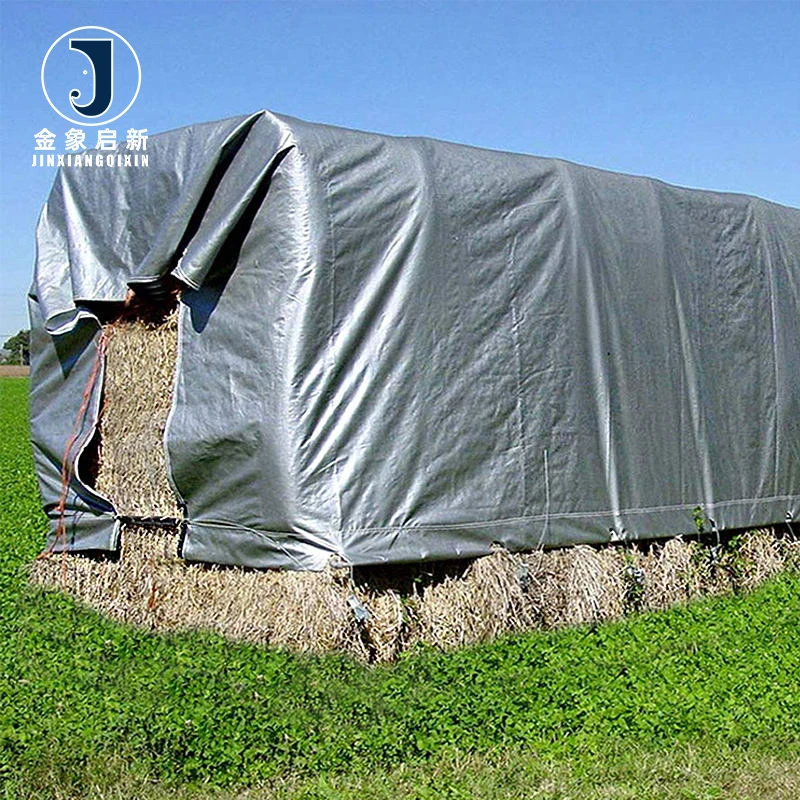
| Agricultural stock covering | Moisture ingress, UV degradation, mildew in humid storage conditions |
| Pallet and equipment protection | Warehouse handling abrasion, short-term outdoor staging, stacking compression |
Why GSM Alone Does Not Define Roll Value in Wholesale Purchasing
Weight must be read alongside weave count and lamination quality to understand true field performance.
When buying PE tarpaulin roll wholesale bulk, importers often focus on grams per square metre as the single proxy for strength. Yet a 200gsm roll with a 6×6 weave and thin lamination will behave very differently under tie-down tension than a 200gsm roll woven at 12×12 with heavier LDPE coating on both faces. [NEED_CITE: relationship between GSM, weave density, and tensile strength in HDPE woven fabrics]
I have seen buyers approve a sample roll at full weight, then receive production rolls where the lamination was thinner but the GSM appeared correct because the base yarn was heavier. The result is a fabric that passes the scale test but fails the tear test at the eyelet line. Pre-shipment inspection must verify coating weight and adhesion separately, not just total GSM.
Matching Weave Density to Wholesale Order Structure
When stocking multiple grades for distribution, aligning weave count with the intended end-use tier prevents costly misallocation at the retail or contractor level. A 6×6 mesh at 45gsm serves as an economical drop-sheet or temporary cover, while a 14×14 mesh at 400gsm handles the mechanical stress of truck side curtains and heavy equipment wrapping. Distributors ordering container loads benefit from specifying a clear grade-to-application matrix so that each roll in the shipment has a defined market position. PE tarpaulin roll wholesale bulk orders become easier to manage when every SKU maps to a specific buyer segment and exposure condition.
Controlling Colour Drift Across Container-Load Shipments
Consistent colour across every roll in a bulk order is one of the most common complaints from importers who display tarps side by side in retail yards or install them adjacently on large construction sites. The variation usually originates from pigment batch changes or lamination temperature fluctuations between production runs. [NEED_CITE: colour consistency testing methods for laminated polyethylene fabrics]
Our production process holds a single pigment masterbatch for the entire order volume, and lamination temperature is monitored continuously across each run. Every roll is inspected against a retained swatch under controlled lighting before it is released for packing. For buyers restocking a specific Pantone reference across repeat orders, we retain the colour formulation record so that subsequent shipments match the original approval sample.
Reading the Specification Sheet Beyond the Weight Column
Total GSM on a PE tarpaulin roll is the sum of the HDPE base fabric weight and the LDPE lamination on both sides. Two rolls at 180gsm can have very different split ratios — one might be 120gsm base with 30gsm per side lamination, and the other 90gsm base with 45gsm per side. The first will show higher tensile and tear values because the base yarn carries the structural load, while the second will feel stiffer and offer better water resistance but tear more easily at stress points.
Weave count directly governs how that structural load is distributed. A 14×14 weave spreads tension across more yarn crossings per square inch, limiting tear propagation when an eyelet pulls under load. A 6×6 weave relies on thicker individual yarns, which can be strong in warp and weft but allows a tear to travel further once initiated.
Thickness in the 0.2–0.4mm range correlates with lamination build rather than base fabric quality. Thicker lamination improves waterproofing and abrasion resistance on the surface but adds stiffness that can make folding and deployment harder in cold weather. Selecting the right thickness depends on whether the roll will be fabricated into finished tarps with frequent handling or installed as a semi-permanent cover.
The Hidden Cost of Specification Mismatches in Bulk Orders
When a distributor imports a full container of PE tarpaulin rolls with inconsistent GSM or colour, the financial impact extends far beyond the material cost. Retail customers who purchased adjacent panels for a single roof or truck cover will return both rolls, not just the one that looks different. Contractors who specified a flame retardant grade for a municipal project will face rejection at site inspection if the delivered rolls lack matching certification. [NEED_CITE: cost of batch rejection and restocking in wholesale tarpaulin distribution]
Welded seams are another failure point that traces back to specification choices. Rolls with insufficient lamination weight will not hold a heat weld reliably, and the seam will peel before the fabric itself shows wear. For buyers fabricating finished tarps from roll stock, confirming lamination adhesion through peel tests on sample lengths before full production avoids costly rework after the entire order has been cut and welded.
What Makes This Supply Source Fit for Wholesale Buyers
Three full production lines running in parallel mean that container-load orders ship on schedule without splitting batches across facilities with different equipment calibration. Roll-to-roll consistency in GSM, colour, and weave density is maintained because every run stays on the same line from start to finish.
A dedicated 10-person R&D team handles custom width, Pantone matching, and sample development in days rather than weeks, allowing distributors to test market response before committing to full container volumes. QA inspection covers every roll before packing, with weight and colour verified against the order specification — not spot-checked on a percentage basis.
Documentation & Verification
- Material specification sheet confirming GSM, weave count, and LDPE lamination weight per roll batch
- Colour reference swatch retained and matched to each production run for repeat orders
- Pre-shipment inspection record covering 100 percent of rolls against stated weight and visual standard
- Roll packing list with individual roll weight, dimensions, and container loading plan
- Certificate of origin and customs documentation for smooth clearance at destination port
- Flame retardant or UV test report supplied where treatment grade has been specified and verified
Fabrication, Handling & Storage
- Heat weld at lamination surface using temperature settings matched to the LDPE coating weight of the selected GSM grade
- Place eyelets within the 4cm hemming margin to distribute tie-down load across the PP rope reinforcement
- Store rolls horizontally on pallets to prevent flat spots that create permanent creases in the HDPE weave
- Allow cold-stored rolls to reach ambient temperature before unrolling to avoid lamination cracking at fold lines
- Cut panels with a hot knife to seal HDPE yarn ends and prevent fraying at the fabricated edge
Request a Quotation with the Right Detail
Provide your target GSM grade, weave count preference, and the roll widths that match your fabrication equipment or retail racking. Confirm whether you need rolls only or finished cut-to-size tarps with eyelets and hemming. If your market requires flame retardant certification, state the standard — such as NFPA701 — so that the treatment and test documentation align with local compliance. Share your annual volume and preferred shipment frequency so that production slots and raw material reservations can be planned around your schedule.
Frequently Asked Questions
Q: How is GSM verified before shipment and what should buyers check on arrival?
A: Every roll is weighed during pre-shipment inspection and recorded against the stated GSM on the packing list. On arrival, buyers should cut a measured sample from the outer wrap of selected rolls, weigh it, and compare against the documented value. Discrepancies beyond normal tolerance should be reported immediately with photographs and sample weights for resolution.
Q: How do you ensure colour consistency across rolls in the same bulk order?
A: A single pigment masterbatch is prepared for the entire order volume, and lamination temperature is monitored continuously. Each roll is inspected against a retained approval swatch under controlled lighting before packing. For repeat orders, the original colour formulation is archived to match subsequent shipments.
Q: What roll widths and lengths are available and how do they affect container loading?
A: Standard roll widths include 2m, 4m, and 6m, with imperial equivalents available. Roll lengths run to 100 yards or 100 meters, and custom lengths can be specified. Wider and longer rolls reduce the total roll count per container, improving freight efficiency, but require appropriate handling equipment at destination.
Q: How are PE tarpaulin rolls packed and loaded to prevent transit damage?
A: Rolls are packed in bale wrapping, carton boxes, or poly bags depending on buyer preference, and loaded horizontally on pallets to prevent crushing. A container loading plan is provided with the packing list so buyers can verify roll count and weight against the bill of lading at destination.
Q: What are the MOQ and lead time for custom width, colour or printed PE tarpaulin?
A: Minimum order quantities for custom width or Pantone colour are set at a level that allows a single dedicated production run. Lead times vary by specification complexity and current production schedule. Submit your required width, colour reference, and quantity for a confirmed timeline and production slot.