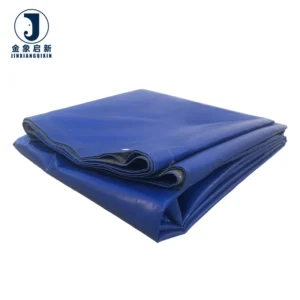

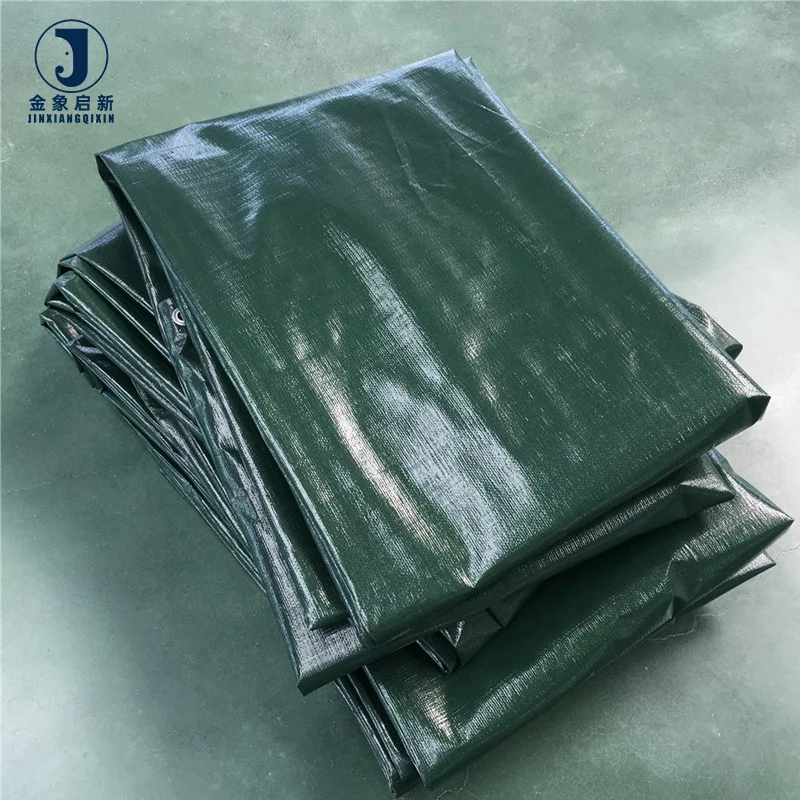
Description
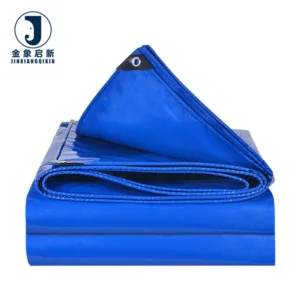
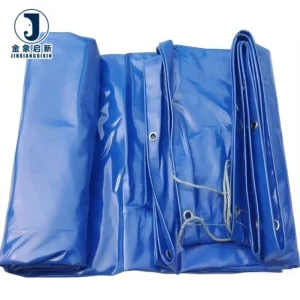
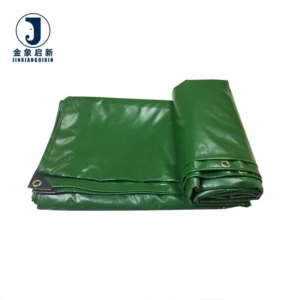
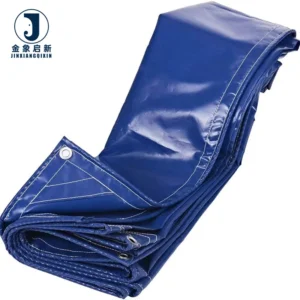
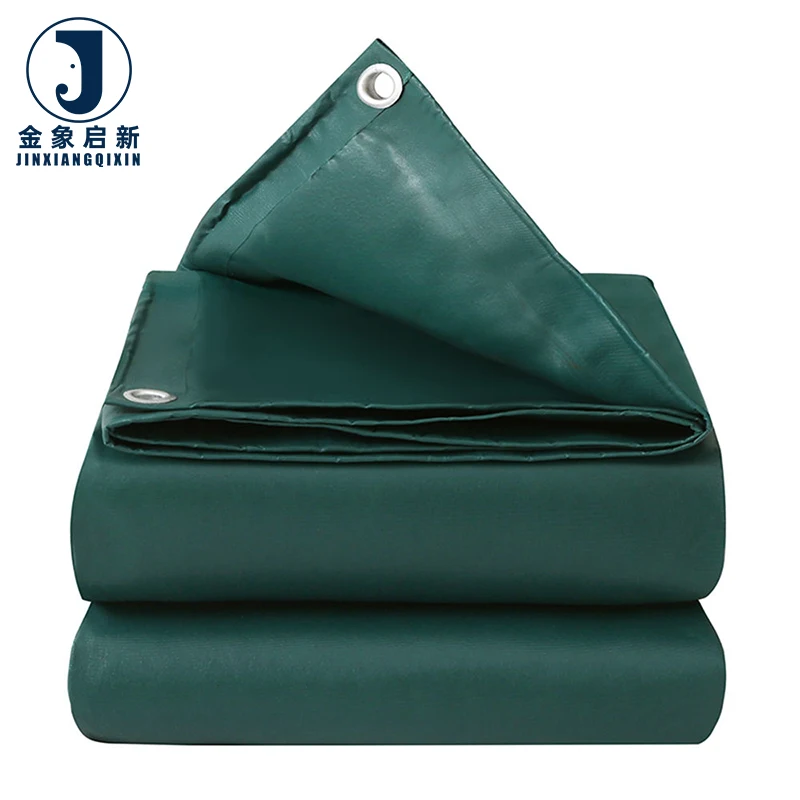
Batch-Consistent Roll Stock — Every roll of PVC coated tarpaulin leaves our facility with verified GSM, confirmed colour reference, and matched coating weight across the entire order, supported by 100% pre-shipment inspection before container loading.
Technical Specifications
| Parameter | Value |
|---|---|
| Product Type | PVC Coated Tarpaulin Roll |
| Material | PVC + High-strength polyester mesh fabric |
| Weight (GSM) | 350gsm / 420gsm / 500gsm / 550gsm / 600gsm / 750gsm |
| Total Thickness | 0.32mm / 0.35mm / 0.4mm / 0.45mm / 0.5mm / 0.65mm |
| Roll Width | 2m, 2.1m |
| Roll Length | 75m (for 2m width), 50m (for 2.1m width) |
| Coating Technology | Laminated & Hot-melt Coating |
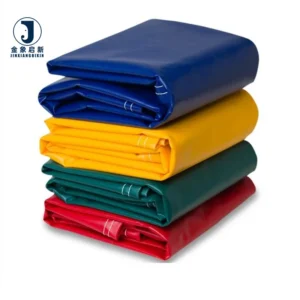
| Colour Options | Blue, Red, Yellow, Light blue, Grey, Green (customized) |
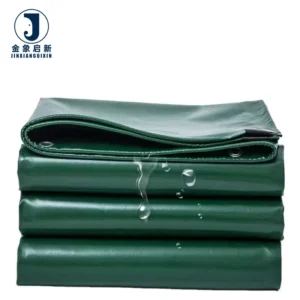
| Key Features | Cold crack resistance, anti-mildew, waterproof, sunproof, good flexibility, outstanding tearing strength for welding |
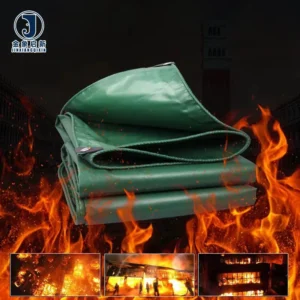
| Special Treatments Available | Flame retardant (grade not stated — confirm the grade required for your market), Anti-static, Anti-cold, Anti-mildew |
| Service Life | 3–7 years under normal circumstances |
| Standards | ISO, CE |
Application Suitability
| Application | Exposure & Requirement |
|---|---|
| Tent and awning fabrication | Repeated assembly and teardown, UV exposure, wind loading, weld seam integrity at stress points |
| Truck side curtain and awning | Constant flexing, road abrasion, weather exposure, colour consistency across fleet panels |
| Construction and scaffolding enclosure | Prolonged outdoor weathering, mechanical contact, dust containment, wind load resistance |
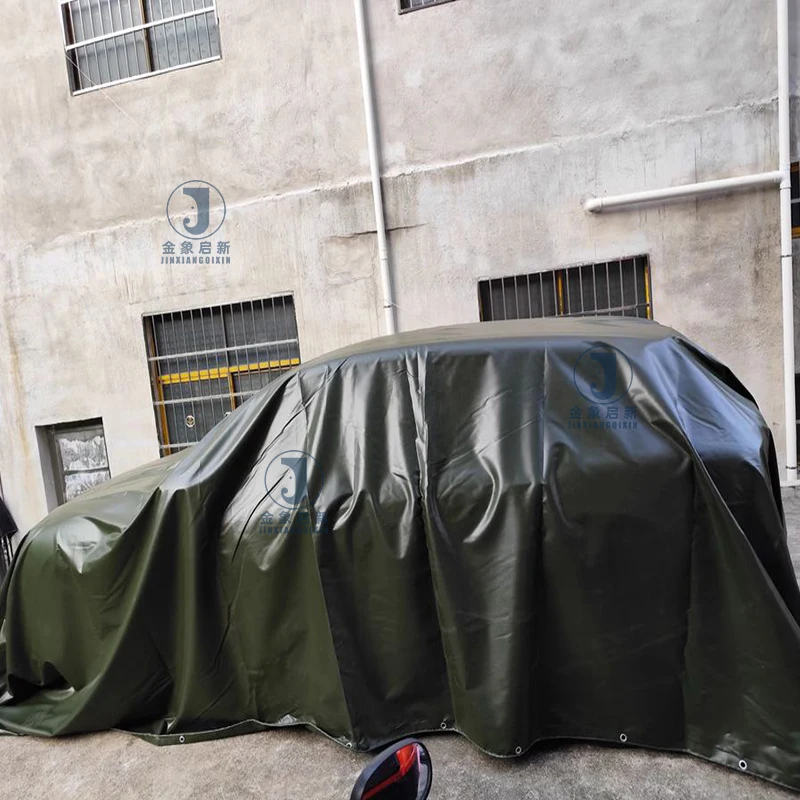
| Industrial equipment covers | Outdoor storage exposure, puncture risk from sharp edges, moisture ingress prevention |
| Inflatable and membrane structures | Internal air pressure, continuous tensile stress, weld strength at patterned seams |
| Agricultural and aquaculture covers | Water immersion, biological growth, chemical exposure from fertilizers or feed |
Why Roll-to-Roll Colour Drift Costs More Than the Fabric Itself
Colour variation between rolls in the same PVC coated tarpaulin roll stock order forces fabricators to reject entire panels or live with visible shade bands on finished installations.
When a tent manufacturer cuts panels from three different rolls and stitches them into a single marquee, even a slight delta-E shift becomes obvious under daylight. The customer sees it before the invoice is paid. Tarpaulin distributors face the same problem when restocking shelves — a blue roll from batch A next to a blue roll from batch B tells the end user something is wrong, even if both rolls meet the quoted GSM. [NEED_CITE: colour measurement standards for coated textiles per ISO 105 series] This is not a cosmetic complaint; it is a commercial rejection that triggers returns, replacement shipments, and lost container space.
Consistency at the Coating Stage Defines Batch Reliability
Colour matching in PVC coated tarpaulin roll stock begins at the compounding stage, where pigment dispersion into the plastisol determines the base shade. Any variation in mixing time, temperature, or pigment batch introduces drift before the coating head even touches the fabric. Our coating lines maintain controlled plastisol preparation with documented pigment ratios per production run, so rolls produced weeks apart within the same order stay within the agreed colour tolerance.
Container Loading Efficiency Through Standardised Roll Dimensions
Standard roll dimensions of 2m × 75m and 2.1m × 50m are sized around container internal width and stacking geometry. A PVC coated tarpaulin roll wholesale buyer planning a full container load can calculate roll count, gross weight, and cubic utilisation from these dimensions without guesswork. Custom widths are available, but standard sizes maximise the number of linear metres per TEU, reducing per-metre freight cost across large-volume orders.
How Coating Method Affects Weld Performance and Downstream Fabrication
Laminated and hot-melt coating technologies produce different adhesion profiles between the PVC layer and the polyester base fabric. Laminated construction bonds pre-formed PVC films to the mesh under heat and pressure, creating a uniform coating thickness that supports predictable hot-air welding parameters. Hot-melt coating applies*ve more deeply and producing higher peel strength at the interface. For fabricators welding seams on tent panels or truck curtains, the coating method determines the temperature window, dwell time, and pressure needed to achieve a bond that outlasts the fabric itself. Choosing the wrong weld settings for a given coating type is a common cause of seam failure in the field — the weld line cracks before the panel does, typically at the flex point where the load shifts during transport. [NEED_CITE: hot-air welding parameters for PVC coated polyester per industry fabricator guidelines]
GSM, Thickness, and Base Fabric: What the Numbers Actually Tell You
A 550gsm roll with a 0.45mm thickness does not automatically outperform a 500gsm roll at 0.4mm. The base fabric denier and weave density determine how much of that weight sits in the yarn versus the coating. A heavier coating layer adds surface mass but does not improve tear propagation resistance if the underlying mesh is loosely woven. Conversely, a tightly woven base with moderate coating weight delivers better tensile and tear performance at a lower total GSM. This is why material specification sheets must state base fabric construction alongside the finished weight — quoting GSM alone without the weave specification leaves a gap that can only be closed by physical sample testing. Roll width also affects yield: a 2.1m roll cut into 1m panels produces less edge waste than a 2m roll when the target panel width is just over 1m, directly impacting material cost per finished piece. [NEED_CITE: relationship between base fabric denier and tear strength in coated textiles per ISO 1421]
What Happens When Batch Weight Falls Short of the Quotation
A roll labelled 600gsm that arrives at 560gsm has lost nearly seven percent of its specified mass. That missing material is typically coating thickness, which means reduced abrasion resistance at contact points and weaker weld adhesion at seams. For a distributor reselling PVC coated tarpaulin roll stock to construction contractors, this shortfall surfaces as premature wear on scaffolding wraps that were specified to last a full project season. The contractor blames the distributor, the distributor blames the mill, and the entire supply chain absorbs the cost of replacement material and delayed project timelines. [NEED_CITE: coating weight verification methods for PVC tarpaulin per pre-shipment inspection standards]
Why Sourcing Here Reduces Roll Stock Risk
Our three full production lines and 36 sets of professional equipment support the volume consistency that PVC coated tarpaulin roll wholesale buyers depend on — multiple container loads from the same production campaign, not patched together from different machines with different wear profiles. The 10-person R&D team develops colour-matched samples within days, so approval happens before production starts rather than after the first container ships. Dedicated QA/QC runs at every stage from base fabric inspection through coating weight verification to final roll packing, with 100% inspection before dispatch. Each roll ships with documentation tied to its specific batch, not a generic certificate that covers every product we make.
Documentation & Verification
- Material specification sheet stating exact GSM, base fabric denier, and coating type per roll grade
- Pre-shipment inspection record confirming weight and colour against order specification before container loading
- Roll packing list with individual roll count, net weight, and container loading plan for freight planning
- Colour reference confirmation per order with batch consistency verified across all rolls in the shipment
- UV and flame retardant test reports provided where applicable treatments are specified for the target market
- ISO and CE certificates supporting customs clearance and regulatory compliance at destination
Fabrication, Handling & Storage
- Hot-air welding temperature and dwell time vary between laminated and hot-melt coated grades — test weld samples before full production runs
- Store rolls upright on pallets in a shaded, ventilated area to prevent flat-spot deformation on the coating surface
- Unroll and allow the fabric to relax at ambient temperature before cutting, especially for 750gsm grades that stiffen in cold transit
- Use sharp rotary blades for cutting to avoid fraying the polyester mesh at panel edges, particularly on 2.1m wide rolls
- Clean finished panels with mild detergent only — solvent-based cleaners can soften the PVC coating and reduce surface adhesion
- Plan cutting layout around standard 2m or 2.1m widths to minimise offcuts and weld seams on large panels
Before You Send the Inquiry
Specify the end-use application, expected environmental exposure, and target market so we can recommend the correct GSM grade, coating method, and any required treatments such as flame retardant or anti-static. Confirm whether you need standard roll dimensions or custom width, the colour reference or Pantone code for matching, and the annual volume to determine production scheduling. If you require cut-to-size panels rather than full rolls, provide the finished dimensions and seam placement preferences for fabrication planning.
Frequently Asked Questions
Q: How is GSM verified on arrival and what documentation supports the quoted weight?
A: Each roll ships with a material specification sheet stating the exact GSM, base fabric construction, and coating type. Our 100% pre-shipment inspection includes weight verification against the quoted specification before dispatch. The inspection record accompanies the shipment, giving you a documented baseline to compare against any arrival testing you conduct at your facility.
Q: What roll widths and lengths are available, and how do they optimise container loading?
A: Standard rolls are 2m wide by 75m long or 2.1m wide by 50m long, sized to align with container internal dimensions for efficient stacking. These dimensions allow buyers to calculate roll count and gross weight per container accurately. Custom widths are available with dedicated sample approval before production to confirm the specification meets your cutting layout requirements.
Q: How do you control batch-to-batch colour consistency across large orders?
A: Colour consistency is managed at the plastisol compounding stage with documented pigment ratios per production run. Rolls within the same order are produced under controlled conditions and inspected side by side before packing. A colour reference confirmation is issued per order, and our pre-shipment inspection verifies shade matching across all rolls in the batch before container loading.
Q: What are the MOQ and lead times for custom width, colour or printed rolls?
A: Minimum quantities and lead times depend on the specific width, colour, and any printing requirements. Custom orders begin with sample development by our R&D team for approval before full production starts. Contact us with your target specification and annual volume so we can provide a quotation with confirmed lead time and minimum order quantity for your configuration.
Q: What certifications and test reports ship with each roll order?
A: Every shipment includes ISO and CE certificates for customs and regulatory compliance. Where flame retardant, anti-static, or UV treatments are specified, corresponding test reports are provided for the applicable grade. The pre-shipment inspection record and roll packing list are included in the documentation package, giving buyers full traceability from production batch to container.