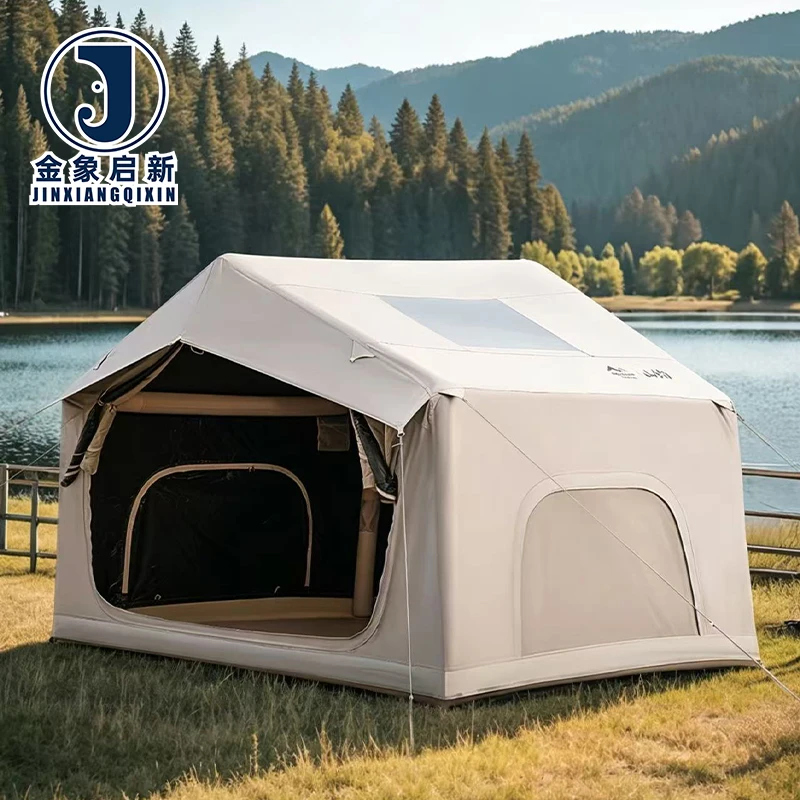
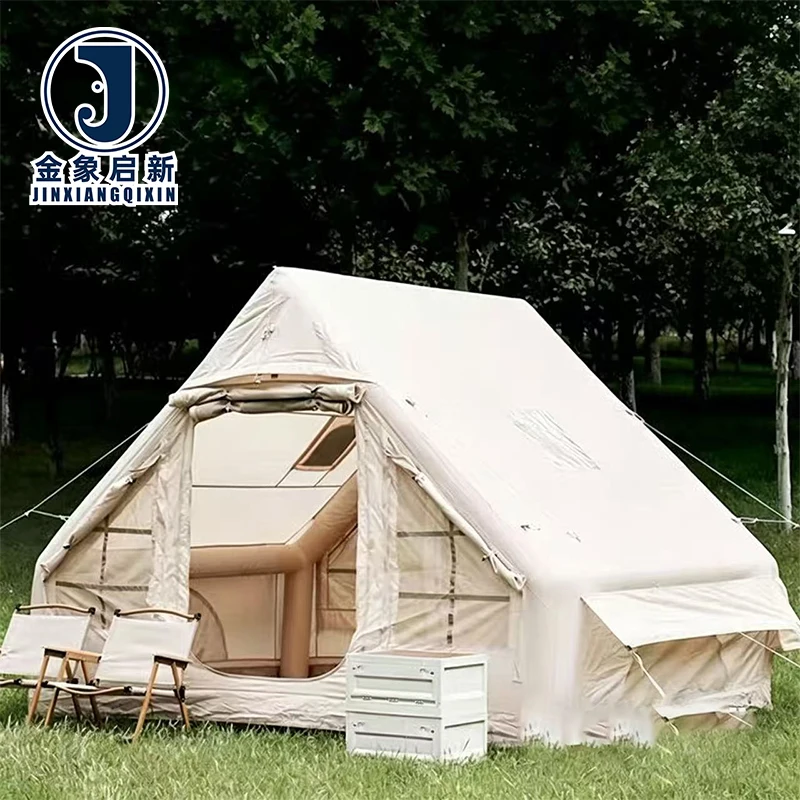
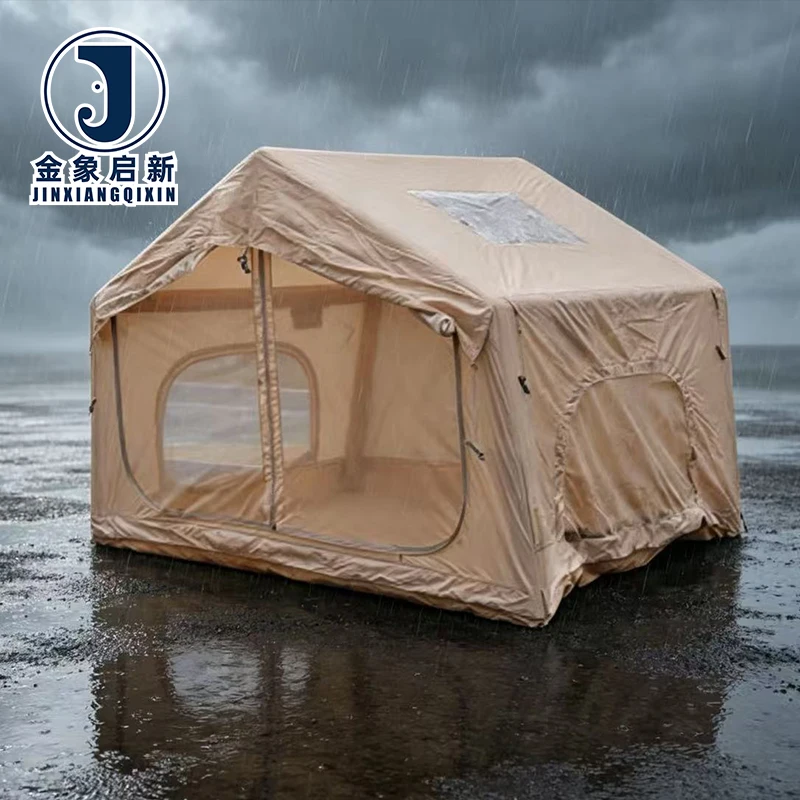
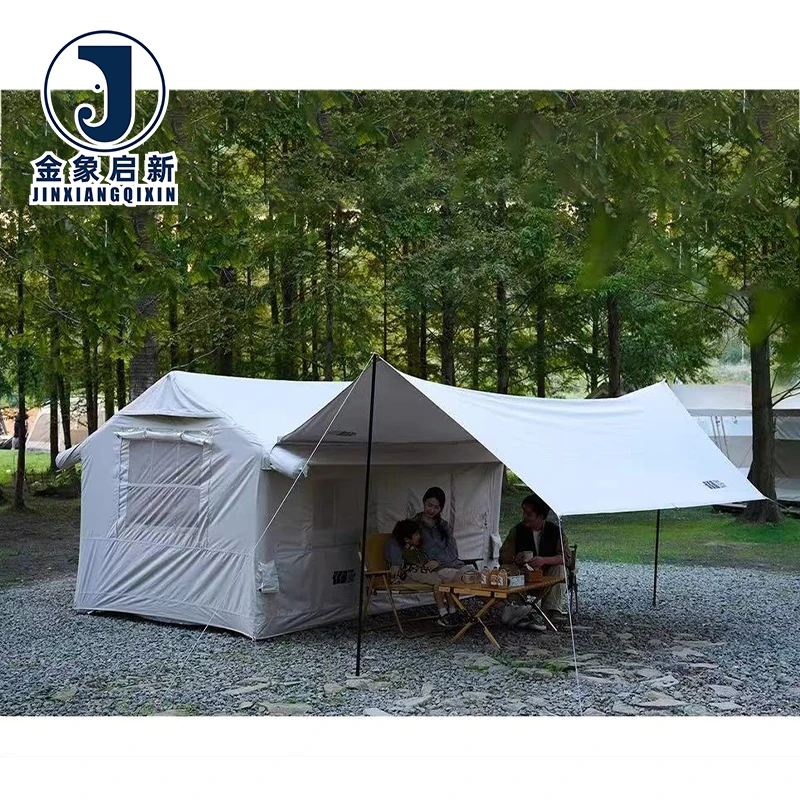
Description
Full-Process Batch Control — dedicated QA and QC oversight at every production stage ensures roll-to-roll consistency across your inflatable tent manufacturing run, verified before dispatch.
Technical Specifications
| Parameter | Value |
|---|---|
| Product Type | Inflatable Tent Fabric |
| Core Material | PVC Tarpaulin |
| Product Form | Roll stock for inflatable structure fabrication |
| Construction | Single layer coated fabric |
| Key Performance | Waterproof, tear-resistant |
| UV Treatment | UV-resistant treatment available — confirm the UV grade required for your market |
| Customization | OEM and ODM, sample development, pattern printing |
| Production Facility | 9,180 m² with 3 full production lines |
| Processing Equipment | 36 sets of professional equipment |
| R&D Capability | 10-technician team for material and print development |
| Quality System | 100% pre-shipment inspection with in-process QA |
| Certifications | ISO 9001, ISO 14001, ISO 45001, CE |
Application Suitability
| Application | Exposure & Requirement |
|---|---|
| Commercial inflatable camping tent production | Repeated inflation cycles, outdoor weather exposure, abrasion during transport and setup |
| Expedition and rental fleet inflatable structures | Extended UV exposure, wind loading, rapid deployment and takedown stress |
| Professional outdoor training program equipment | High-frequency use, varied terrain contact, cleaning between deployments |
| Temporary site accommodation inflatables | Prolonged outdoor installation, weather resistance, occupant safety compliance |
| Commercial event logistics structures | Fast setup and teardown cycles, public-facing appearance requirements, branding visibility |
Why Roll Consistency Matters More Than Quoted Weight for Inflatable Tent Fabric
Batch uniformity determines whether your inflatable tent fabric roll production run ships on schedule or stalls in rework.
When sourcing PVC inflatable tent fabric aftermarket supplier options, buyers often focus on the stated GSM on the quotation and assume the rest will follow. But a roll that measures lighter than agreed on arrival forces a difficult conversation with your own production team — the material may not hold the intended air pressure, or the welded seams may not achieve full bond strength across the thinner coating. For inflatable structures, even small deviations in coating weight translate directly into structural behaviour differences once inflated. A production run where every third roll behaves differently on the welding table wastes operator time, generates scrap, and delays your delivery commitments. [NEED_CITE: coated fabric weight verification methods per ISO testing standards]
Sourcing PVC Inflatable Tent Fabric by the Roll
Buying inflatable tent fabric in volume means you are committing to a supply chain, not just a material. Each roll must arrive with consistent coating weight, uniform colour, and predictable behaviour under your established heat welding parameters. When rolls vary, your operators spend time adjusting equipment rather than running production, and rejected panels accumulate on the floor. Our roll stock is produced on three full lines with dedicated in-process quality checks, so the PVC inflatable tent fabric you receive in container two matches container one.
Colour Matching Across a Multi-Roll Inflatable Tent Production Run
Colour variation between rolls is one of the most visible defects in finished inflatable tents — it shows the moment panels are joined and the structure is inflated for inspection. Achieving colour consistency requires control over raw pigment batches, coating temperature, and curing conditions across the entire order. Our R&D team develops colour references at the sampling stage and locks the formulation before bulk production begins. For buyers ordering multiple rolls of inflatable tent fabric for a single tent model or a fleet order, this eliminates the side-by-side panel mismatch that triggers buyer complaints. [NEED_CITE: colour measurement standards for coated textile batches]
Reading the Specification Sheet Beyond the Headline GSM
The stated weight of a PVC tarpaulin roll tells you the combined mass of base fabric and coating per square metre, but it does not describe how that weight is distributed. A roll with a heavy coating over a light base fabric will have different tear behaviour than one with a lighter coating over a denser weave. For inflatable tent structures, the base fabric denier and weave density determine how the material resists puncture and handles the stress concentration at welded seams. When evaluating inflatable tent fabric roll options, request the base fabric specification alongside the total GSM to understand what you are actually buying. Surface finish also matters — a glossy coating sheds water more readily and accepts printed branding with sharper definition, while a matte finish reduces glare in exhibition and event environments. UV-resistant treatment is available in different grades; confirm the grade required for your target market’s expected exposure duration.
The Hidden Cost of Specifying Inflatable Tent Fabric on Price Per Kilogram Alone
Choosing a roll supplier based on the lowest cost per kilogram almost always means accepting lighter coating or a less dense base fabric. The savings disappear quickly when your welding operators report inconsistent seam strength, when the material tears along fold lines during the first inflation test, or when finished tents fail the air-hold test on the production floor. For inflatable structures, fabric failure in the field means a collapsed tent and a liability claim — costs that far exceed the per-roll savings. [NEED_CITE: field failure modes in inflatable textile structures]
Why Manufacturers Source Inflatable Tent Fabric Here
Our production runs are monitored at every stage, from base fabric inspection through coating application to final winding, so each roll of inflatable tent fabric meets the same specification your sample was approved against. The 10-technician R&D team handles custom width requests, pattern printing development, and sample turnaround so you can validate the material before committing to bulk. With 36 sets of processing equipment across three lines, volume orders ship on schedule without quality shortcuts. Every order includes a pre-shipment inspection record, so you see what we measured before the rolls reach your factory. ISO 9001, ISO 14001, ISO 45001, and CE certifications are maintained and available for your compliance documentation.
Documentation & Verification
- Material specification sheet stating base fabric details, coating type, and colour reference per roll batch
- Pre-shipment inspection record with measured values against the quoted specification
- Batch quality inspection report tied to your specific order number and roll sequence
- UV treatment test documentation available upon request — confirm the test standard your market requires
- Certificate of origin and customs documentation for international roll shipments
- ISO and CE certification copies for your product compliance files
Fabrication, Handling & Storage
- Heat welding parameters should be established with sample rolls before bulk production to match the single layer PVC construction
- Store rolls upright on end caps to prevent flat-spot deformation of the coating surface
- Allow cold-stored rolls to reach workshop temperature before unrolling to avoid coating crack at fold lines
- Use sharp rotary blades for cutting to prevent fraying of the base fabric at panel edges
- Clean printed surfaces with mild detergent only — aggressive solvents will degrade the PVC coating and damage pattern printing
- Plan panel nesting on roll width to minimise offcut waste and reduce the number of welded seams per tent
What We Need to Quote Your Inflatable Tent Fabric Order
To prepare an accurate specification and sample, share your intended tent dimensions, the expected deployment conditions including UV exposure duration and climate range, and your annual roll volume. Let us know if you need custom width, specific colour matching, or pattern printing on the fabric surface. If you require rolls cut to a particular length for your nesting software, include that in your initial brief.
Frequently Asked Questions
Q: How can I verify the GSM of inflatable tent fabric rolls on arrival against the original quotation?
A: Request the pre-shipment inspection record with your order, which documents measured weight per square metre for each roll batch. On receipt, you can conduct a spot-check by cutting a measured sample from the roll end and weighing it against the stated specification. Any discrepancy should be reported immediately with photographic evidence before cutting into production stock.
Q: How do you control colour consistency across multiple rolls in a single inflatable tent fabric order?
A: Colour formulation is locked at the sampling stage by our R&D team and applied uniformly across the full production batch. In-process checks compare each roll against the approved reference under standardised lighting. Rolls that fall outside the agreed tolerance are removed before packing, so every roll in your shipment matches the approved sample.
Q: What custom widths and lengths are available for inflatable tent fabric rolls, and what is the minimum order?
A: Custom widths and roll lengths can be produced to match your panel nesting layout and reduce fabrication waste. Minimum order quantities depend on the specific colour and specification requested. Share your required dimensions and annual volume so we can confirm the production parameters and provide a realistic lead time for your planning.
Q: How does the pattern printing and sample development process work for branded inflatable tent fabric?
A: Submit your artwork and colour references to our R&D team, who will produce a printed sample on the specified base fabric for your approval. Colour matching is confirmed against your reference before bulk production begins. This step ensures the printed branding meets your visual standard and that the ink adhesion holds through the inflation and folding cycles your tents will undergo.
Q: How are inflatable tent fabric rolls packed and protected for container shipment?
A: Each roll is individually wrapped to protect the coating surface from abrasion and moisture during transit. Rolls are loaded into containers with securing materials to prevent movement and crushing. A detailed packing list accompanies every shipment, listing each roll with its batch reference so you can trace material back to its production run on arrival.