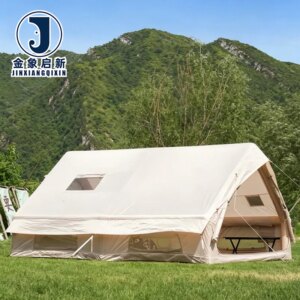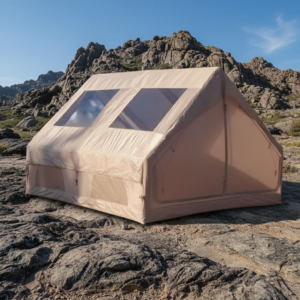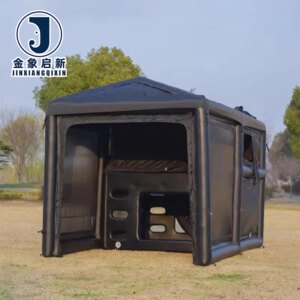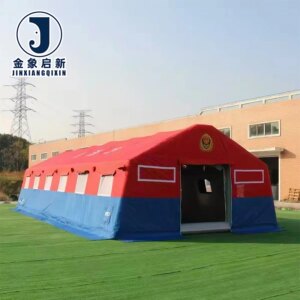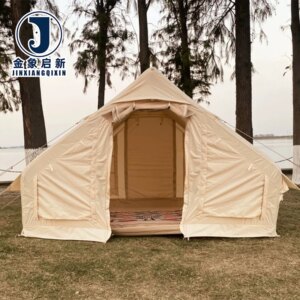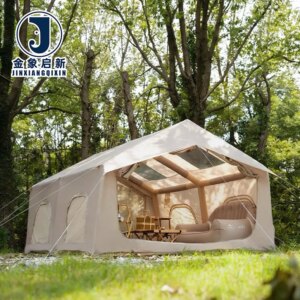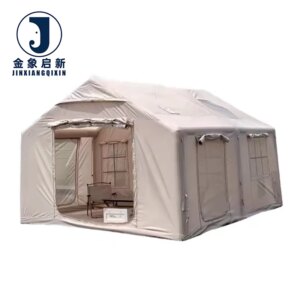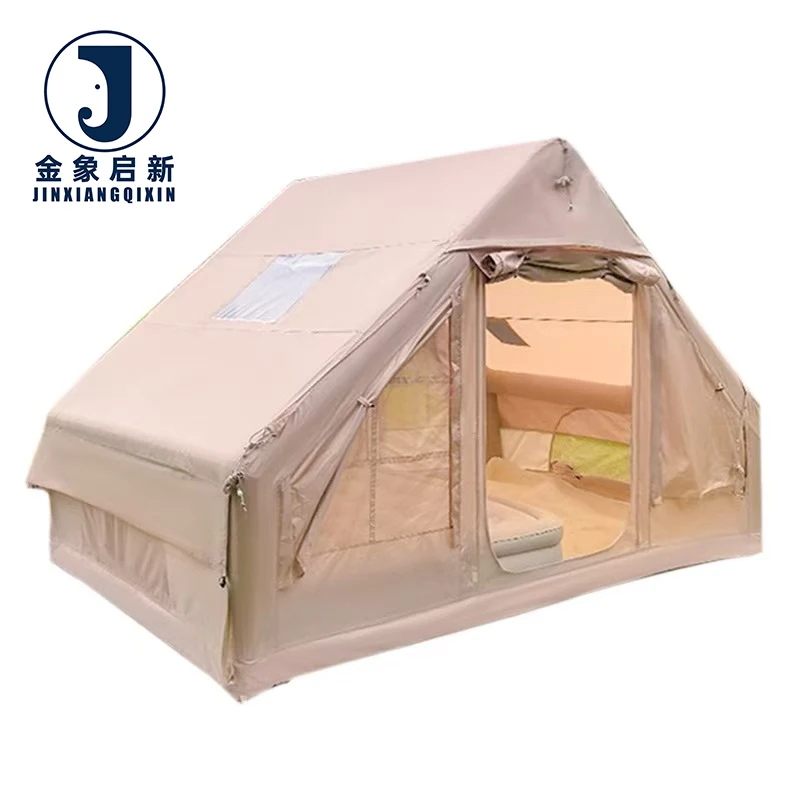
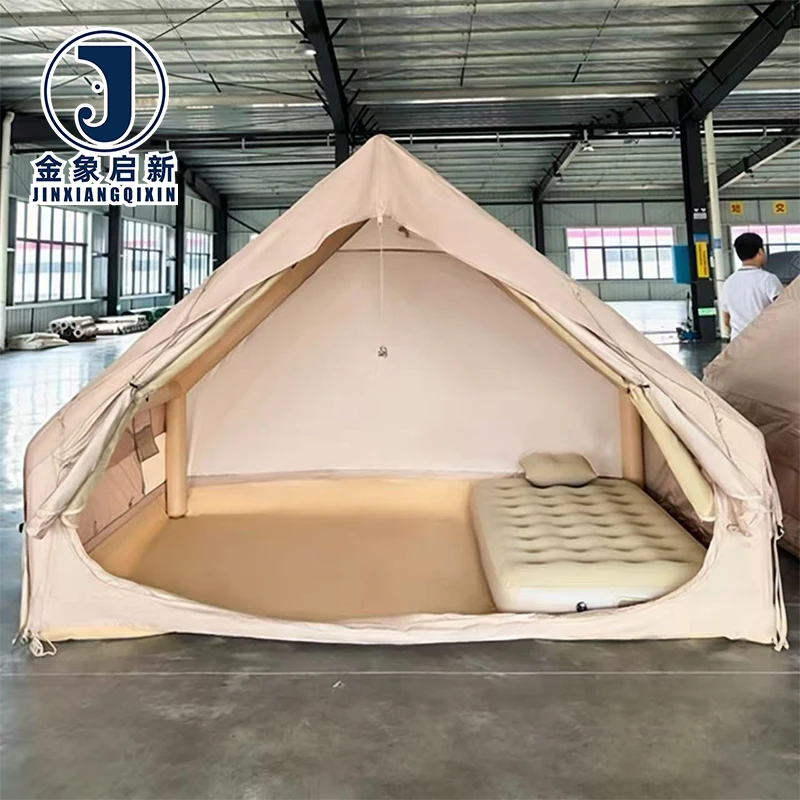
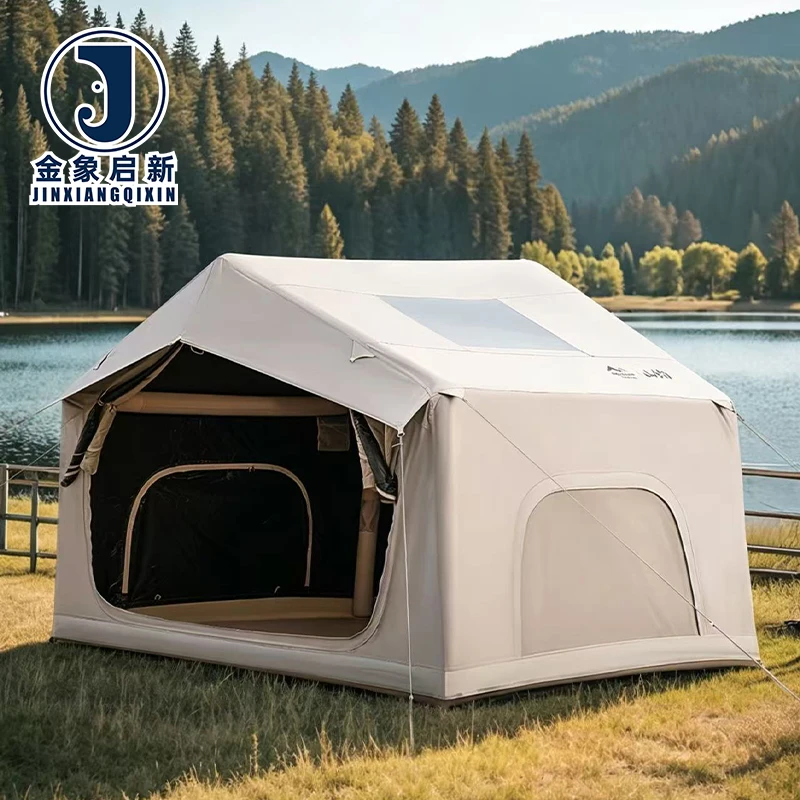
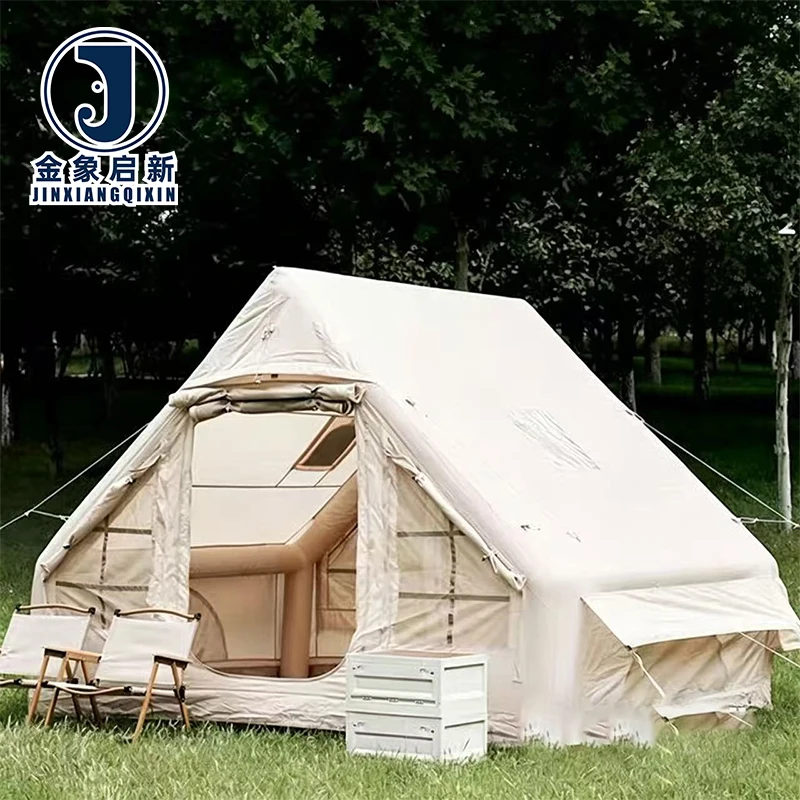
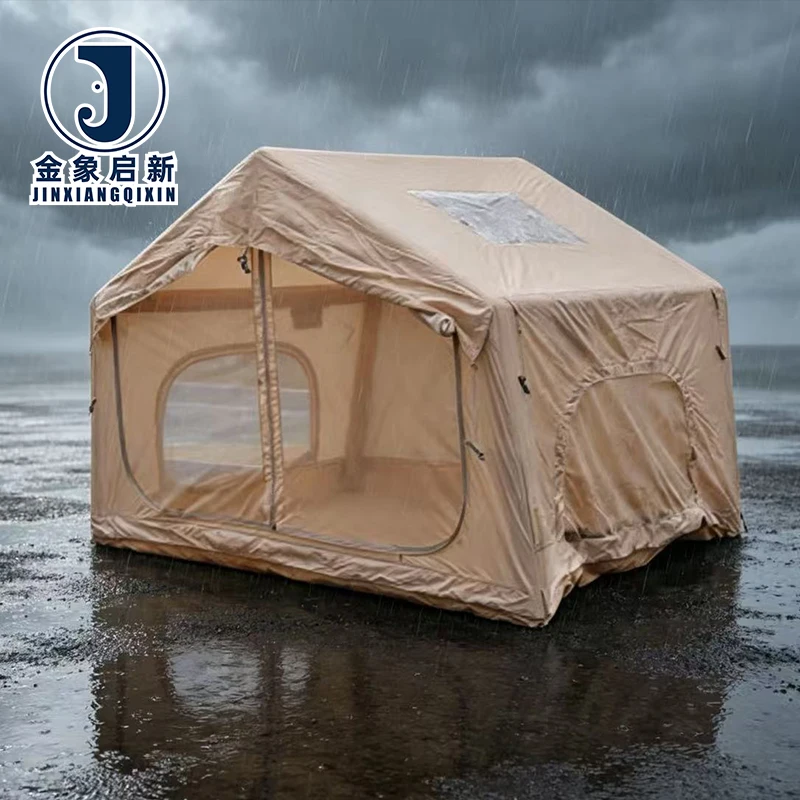
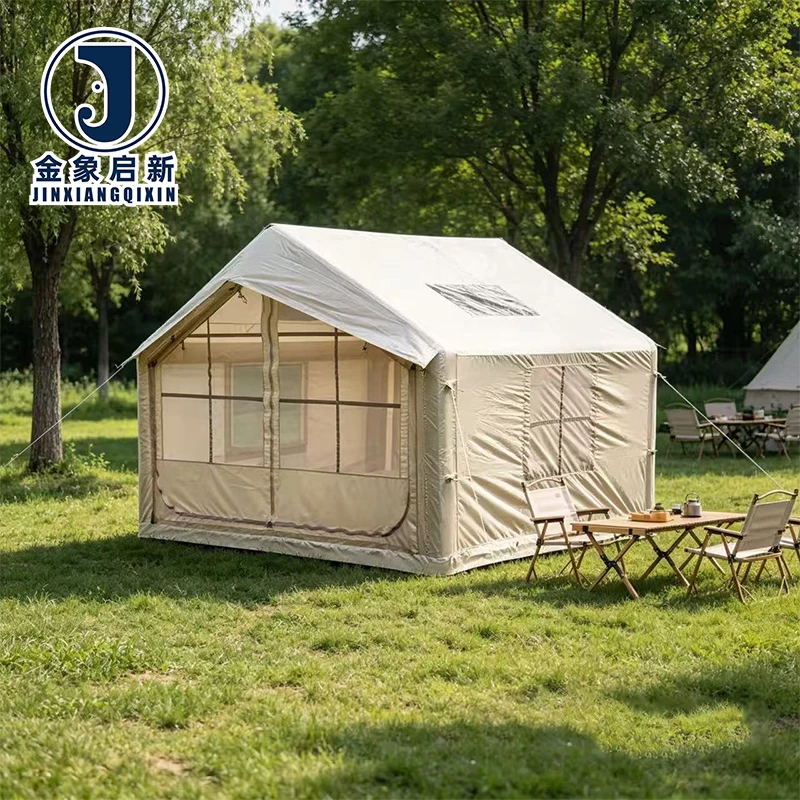
Description
Deep process control over coating weight and adhesion — every roll of inflatable tent fabric is produced on dedicated lines with in-process QA checks to ensure batch-to-batch consistency before it leaves the factory floor.
Technical Specifications
| Parameter | Value |
|---|---|
| Product Type | Inflatable Tent |
| Core Material | PVC Tarpaulin |
| Key Performance | Waterproof, UV-resistant (test basis not stated in source), Tear-resistant, Fire-retardant (grade not stated in source), Anti-static (surface resistance or standard not stated in source) |
| Construction | Single layer |
| Capacity | 1-2 Person |
| Opening Mechanism | Quick Automatic Opening |
| Season Rating | Four-season |
| Customization | OEM & ODM, sample customization, pattern printing |
| Standards | ISO9001, ISO14001, ISO45001, CE |
Application Suitability
| Application | Exposure & Requirement |
|---|---|
| Base camps for industrial field operations | Prolonged weather exposure, rapid deployment, wind loading on inflatable beams |
| Temporary shelters for outdoor equipment storage | Moisture ingress prevention, UV degradation resistance over extended periods |
| Auxiliary facilities for commercial expedition teams | Extreme temperature swings, abrasion from repeated packing and unpacking |
| Logistics company rapid-setup shelters in remote locations | Structural integrity under inflation pressure, resistance to puncture from uneven ground |
Why Flame Retardant Claims Fail at Site Inspection
A flame retardant label means nothing without the test standard printed next to it.
When sourcing PVC inflatable tent fabric in volume, buyers frequently encounter material described as "fire retardant" on the quotation but lacking any reference to DIN 4102, NFPA 701, or the local building code that the end-user must satisfy. The fabric arrives, the site safety officer asks for the test certificate, and the conversation stalls [NEED_CITE: DIN 4102 fire classification for building materials]. This is not a paperwork inconvenience — it can halt an entire project deployment. As an Inflatable Tent Fabric manufacturer, we see this gap between claim and documentation cause rejected shipments and lost contracts across industrial and commercial sectors regularly.
Coating Adhesion and the Inflatable Beam Stress Point
Inflatable tent structures concentrate mechanical stress at the beam seams, where internal air pressure pushes outward continuously during deployment. The PVC tarpaulin used here is coated with controlled adhesion to the base fabric, ensuring the coating does not delaminate when the beam flexes under wind load. An Inflatable Tent Fabric manufacturer must manage this coating-to-yarn bond precisely, because a seam failure at the beam is a structural failure of the entire shelter.
Colour Matching Across Multi-Roll Production Runs
Commercial tent producers ordering fabric by the roll need shade consistency that holds when panels from different rolls are sewn or welded side by side. Our 10-person R&D team manages colour formulation in-house, running comparison checks against reference standards before each batch enters production. This eliminates the visible panel mismatch that forces fabricators to reject entire sections of finished product after assembly.
Reading GSM in Context with Base Fabric Construction
GSM alone tells an incomplete story about how inflatable tent fabric will perform under inflation pressure. The denier of the yarn and the weave density of the base fabric jointly determine tensile and tear strength — a lighter fabric with a tighter weave can outperform a heavier one with a looser construction. Coating weight and method further influence peel strength, which governs how well heat-welded seams hold when the inflatable beam is under load [NEED_CITE: tensile and tear test methods for coated fabrics per ISO 1421]. Single-layer construction in this four-season rated fabric balances portability with the durability needed for repeated inflation cycles and field deployment. Fire-retardant and anti-static treatment options are available in grades matched to your target market — confirm the specific grade required for your application before placing the order.
The Cost of Overlooking Weld Seam Behaviour
Fabricators who select inflatable tent fabric based on GSM and price alone often discover the weakness at the heat-welded seam long after production. When the coating formulation does not match the welding temperature profile, the seam peels before the fabric body shows any sign of wear. This failure concentrates at the points where the inflatable beam bends most under load — exactly where structural integrity matters most. Rejected batches, warranty claims, and damaged reputation follow [NEED_CITE: heat welding parameters for PVC coated fabrics and seam peel strength]. The material specification sheet must be read alongside the fabricator’s welding equipment settings to avoid this mismatch entirely.
Why Volume Buyers Source Inflatable Tent Fabric Here
Three full production lines and 36 sets of professional processing equipment support the throughput that commercial tent manufacturers depend on for container-load orders. Every roll undergoes inspection at each production stage, with dedicated QA and QC staff verifying coating weight, colour match, and surface finish before the material moves to packing. The in-house R&D team develops custom samples within days when OEM specifications require non-standard width, colour, or pattern printing. Batch inspection records travel with each shipment, giving buyers full traceability from raw material lot to finished roll. Pre-shipment inflation testing on finished tent samples verifies air retention and structural integrity before dispatch [NEED_CITE: pre-shipment quality inspection standards for coated technical textiles]. ISO9001, ISO14001, ISO45001, and CE certification underpin the management systems governing every production decision.
Documentation & Verification
- Material specification sheet stating GSM, base fabric denier, and coating weight for every roll shipped
- Test report for UV and fire-retardant grades provided where applicable with full batch traceability
- Pre-shipment inspection record covering coating adhesion, colour consistency, and surface defect check
- ISO and CE certificates alongside certificate of origin and customs documentation for each consignment
- Roll packing list with net weight and running meter count per roll for receiving verification
Fabrication, Handling & Storage
- Heat-weld PVC tarpaulin seams using temperature profiles matched to the coating formulation to prevent peel failure
- Store rolls upright on pallets in a dry, shaded area to avoid compression creasing on the coated surface
- Allow cold-stored rolls to reach ambient temperature before unrolling to prevent coating crack in low conditions
- Use mild detergent and soft brush for field cleaning to preserve the surface coating integrity of the single-layer fabric
- Plan cutting layout to maximize roll width utilization and minimize offcut waste on every production run
What We Need to Quote Your Inflatable Tent Fabric Accurately
Provide the target width, roll length, and annual volume so we can align production scheduling with your delivery timeline. Share the fire-retardant or anti-static grade your end market requires — B1, M2, NFPA 701, or a local equivalent — so the correct treatment is applied from the first batch. If your specification includes custom colour or pattern printing, send reference samples or Pantone codes to initiate sample development. Confirm whether you need fabric supplied in roll form only or if cut-to-size panels are part of your requirement.
Frequently Asked Questions
Q: How is batch-to-batch colour consistency controlled across large inflatable tent fabric orders?
A: Our R&D team formulates colour in-house and runs side-by-side comparison checks against approved reference standards before each production batch begins. Rolls from the same order are inspected sequentially to catch shade drift early, ensuring panels cut from different rolls match when assembled into finished inflatable structures.
Q: What fire-retardant and anti-static certifications are available for inflatable tent fabric?
A: Fire-retardant and anti-static treatments are applied in grades that align with recognised standards such as DIN 4102, NFPA 701, or regional equivalents. Test reports and certification documentation are supplied with the shipment where applicable — specify your target market’s compliance requirement at the inquiry stage so the correct grade is confirmed.
Q: What custom sizing, pattern printing and branding options are offered for inflatable tent fabric?
A: Our 10-person R&D team handles custom width, length, and pattern printing directly in-house. OEM and ODM specifications are supported with sample development before bulk production, allowing you to approve colour, print registration, and material hand feel before committing to the full order quantity.
Q: What is the sample development lead time for custom inflatable tent fabric specifications?
A: Samples for custom specifications are developed within days once material selection, colour, and treatment requirements are confirmed. This rapid turnaround lets commercial tent manufacturers evaluate coating adhesion, weld behaviour, and surface finish before authorising full production runs.
Q: What documentation is included with each shipment for customs and compliance verification?
A: Every shipment includes a material specification sheet, batch inspection record, roll packing list, ISO and CE certificates, certificate of origin, and customs support documentation. Test reports for UV and fire-retardant grades accompany orders where those treatments have been applied, providing full traceability for receiving inspection.