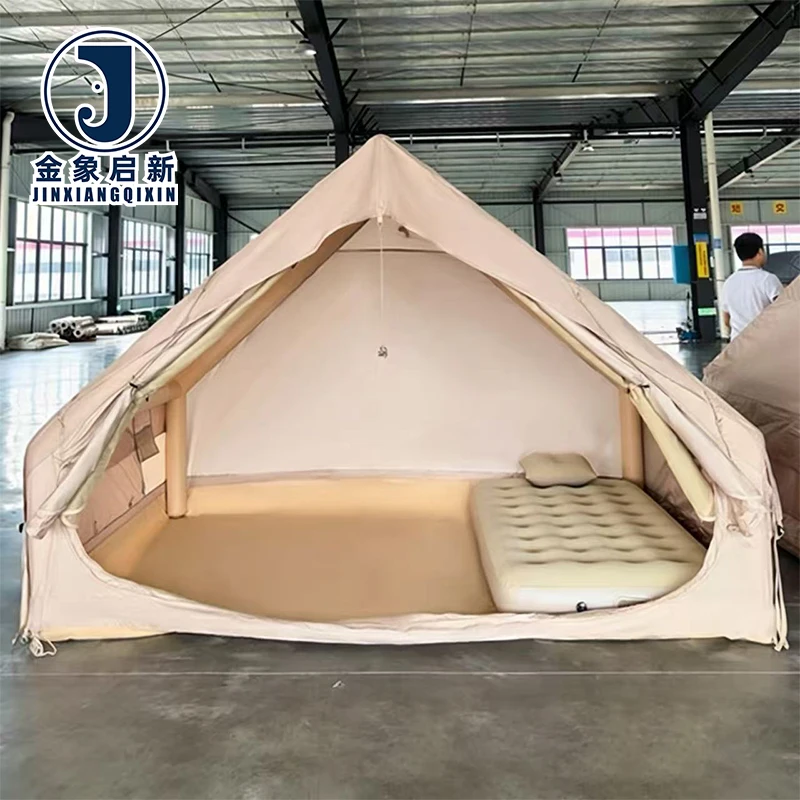
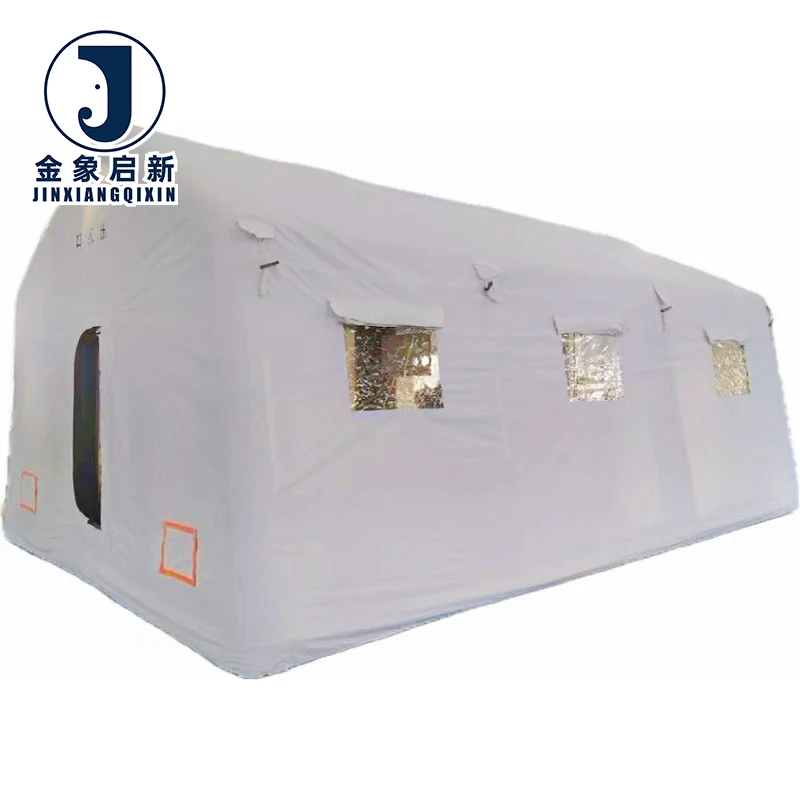
Description
Roll Consistency — every roll of inflatable tent fabric leaves the facility with verified GSM and colour-matched coating, eliminating batch-to-batch variation across full production runs.
Technical Specifications
| Parameter | Value |
|---|---|
| Product Type | Inflatable Tent Fabric |
| Core Material | Waterproof UV-Resistant PVC |
| Key Performance | Waterproof, UV-resistant (test basis not stated in source), tear-resistant |
| Flame Retardant | Available in flame retardant grades — confirm the grade required for your market |
| Construction | Single layer |
| Season Rating | Four-Season Design |
| Customization Service | OEM & ODM (sample customization, pattern printing) |
| Production Lines | 3 full production lines |
| Processing Equipment | 36 sets of professional processing equipment |
| Standards | ISO9001, ISO14001, ISO45001, CE |
Application Suitability
| Application | Exposure & Requirement |
|---|---|
| Inflatable and membrane structure manufacturing | Air-beam pressure cycling, UV exposure, repeated inflation-deflation flexing |
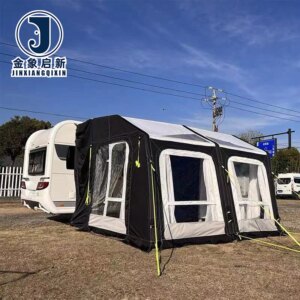
| Tent and awning fabrication | Roll-to-roll colour consistency, heat-weld seam integrity, outdoor weathering |
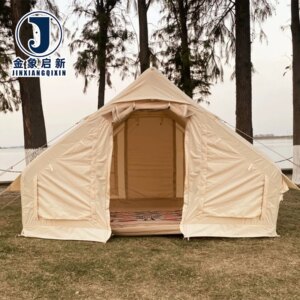
| Commercial camping equipment OEM | Custom pattern printing, abrasion resistance at ground contact points, four-season deployment |
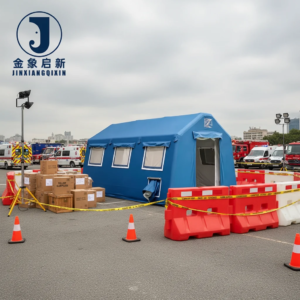
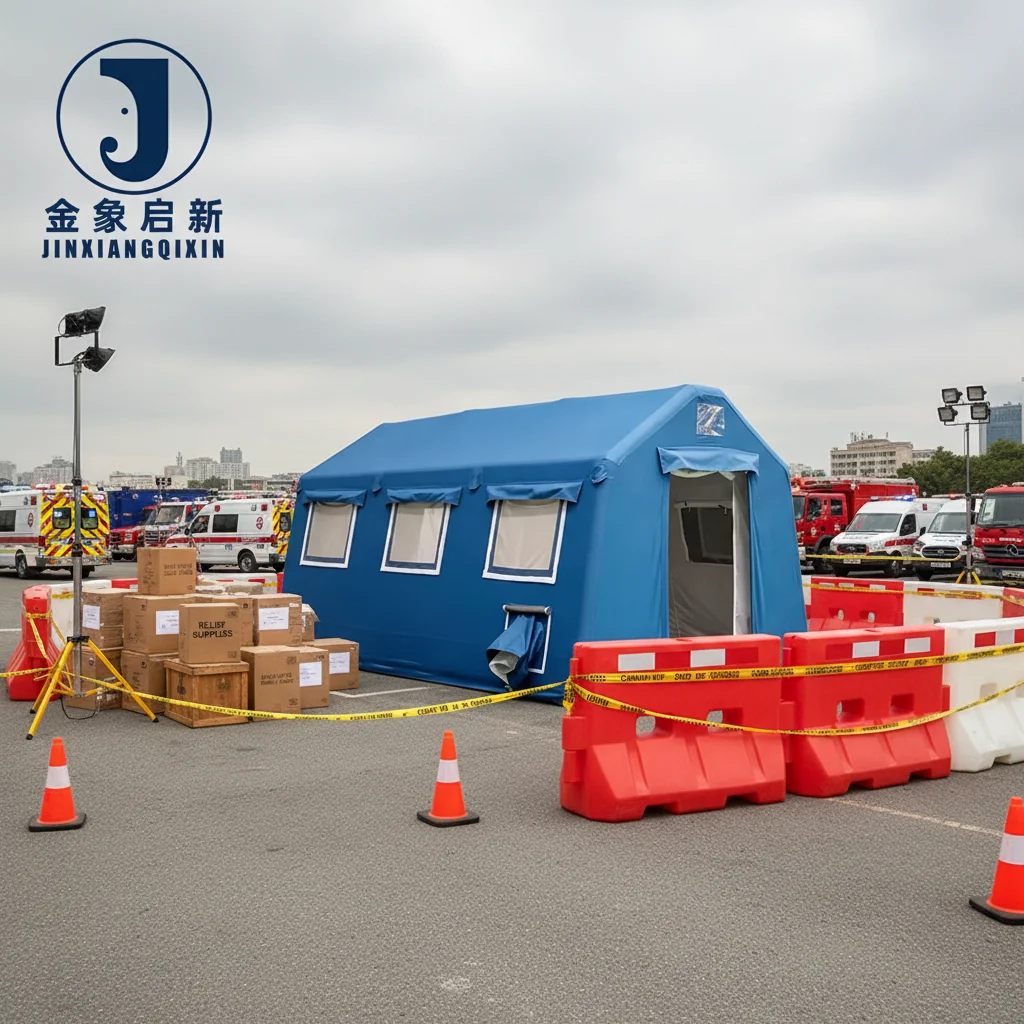
| Disaster relief shelter production | Rapid deployment requirement, tear resistance during transport and field assembly |
Why Roll-to-Roll Colour Varies — and How Controlled Coating Eliminates It
Colour drift within a single order is a coating process problem, not a dye problem.
When you unroll two panels side by side on a cutting table and the shade shifts visibly between them, the root cause traces back to coating weight inconsistency and colour mixing tolerance across production batches. Inflatable tent fabric roll wholesale buyers face this issue when sourcing from suppliers running multiple small batches rather than continuous production runs. The visible seam line between mismatched rolls compromises the finished tent’s commercial presentation and triggers buyer rejection at the retail or end-user level. [NEED_CITE: colour consistency standards for coated fabrics in batch production]
This is why container-volume orders require a single-run coating approach where the entire batch passes through the line under identical temperature, speed and colour-dosing parameters.
How Continuous-Line Coating Controls Batch Uniformity
The three full production lines at this facility handle inflatable-grade PVC fabric in uninterrupted runs, meaning an entire container load can be coated under one set of parameters. Inflatable tent fabric roll wholesale buyers ordering in volume benefit from this because the PVC slurry — base resin, plasticiser, pigment and UV additives — is mixed in a single batch large enough to cover the full order quantity. [NEED_CITE: PVC plastisol mixing protocols for consistent colour across coated fabric runs]
Rolls produced this way carry the same gloss level, the same hand feel and the same base colour tone from first roll to last, which matters when tent fabricators cut panels from sequential rolls and assemble them into finished inflatable structures.
Custom Width, Length and Print Matching for Tent Panel Layouts
Inflatable tent manufacturers cut panels to specific air-beam geometry, which means fabric roll width must align with panel dimensions to minimise waste and reduce seam count. Custom width options allow fabricators to select roll widths that match their panel templates, cutting utilisation rates upward and offcut volume downward. Pattern printing and OEM branding services extend this control into the visual layer — logos, panel markings and colour-blocking applied during coating rather than after-market printing, so the design sits within the coating film rather than on top of it. [NEED_CITE: coating-integrated printing versus post-coating surface printing durability comparison]
Reading PVC Coated Fabric Specs Without Getting Misled
The core material listed as waterproof UV-resistant PVC describes the coating compound, but actual field performance depends on how that compound interacts with the base fabric beneath it. Tensile strength and tear resistance come primarily from the base fabric denier and weave density, while the PVC coating contributes waterproofing, surface abrasion resistance and UV protection. When evaluating inflatable tent fabric, asking for the base fabric specification — denier, thread count, weave pattern — alongside the coating weight gives a complete picture of how the material will behave under air-beam pressure and field handling. The single-layer construction means the fabric must perform all functions — structural, waterproofing and UV shielding — from one coated composite, making base fabric selection critical. Flame retardant grades are available, but the specific grade must be confirmed against the fire classification required in your destination market, whether that is a building material standard or a textile-specific test protocol.
What Happens When Specifications Are Chosen on Price Alone
When inflatable tent fabric is sourced without specifying base fabric density or coating weight verification, the consequences surface at the fabrication stage rather than the receiving dock. Rolls that arrive lighter than quoted GSM produce weld seams that fail under air-beam pressure because there is insufficient coating material at the heat-weld zone to form a proper bond. Colour mismatch between rolls in the same shipment forces fabricators to either sort and re-match panels — wasting cutting time — or ship tents with visible shade differences that trigger end-customer complaints. Rolls that lack UV treatment verification degrade faster at outdoor events and commercial camping sites, showing surface chalking and loss of flexibility after seasons of sun exposure rather than maintaining the service life the tent manufacturer promised. [NEED_CITE: coated fabric weld failure modes related to insufficient coating weight at seam zones]
Why Fabricators Source Inflatable Tent Material From This Facility
Thirty years focused on PVC coated fabric production means the process parameters for inflatable-grade material are established through accumulated production data, not trial and error on each order.
The 10-person R&D team handles material selection and sample development for custom inflatable tent specifications, producing test rolls within days so fabricators can validate heat-weld parameters and cutting behaviour before committing to full production.
Dedicated QA and QC stations at every production stage catch coating weight drift and colour deviation before rolls reach the packing line, with 100 percent pre-shipment inspection verifying each roll against the order specification.
The 9,180 square metre facility with 36 sets of professional processing equipment supports bulk container loading with on-time dispatch scheduling built around your fabrication timeline.
ISO9001, ISO14001, ISO45001 and CE certification frameworks govern the production and documentation process from raw material intake through to final packing.
Documentation & Verification
- Material specification sheet stating GSM, base fabric denier and coating compound for each roll batch
- Pre-shipment inspection record with per-roll weight verification and colour comparison against order reference
- Roll packing list detailing roll count, individual roll weight and container loading plan
- UV and flame retardant test reports where applicable grades are specified in the order
- Certificate of origin and customs documentation support for destination country import clearance
Fabrication, Handling & Storage
- Heat-weld temperature and dwell time must be set per actual coating weight of the received PVC rolls, not generic PVC settings
- Store rolls upright on end-caps in a shaded warehouse to prevent flat-spot deformation and surface blocking between layers
- Cut panels with allowance for air-beam curvature to avoid stress concentration at seam intersections
- Clean finished inflatable tent surfaces with mild detergent only — solvent-based cleaners can soften the PVC coating film
- Handle rolls with fabric slings rather than metal hooks to avoid puncture damage to the coating surface
Requesting a Quotation for Inflatable Tent Fabric Rolls
Provide your target panel dimensions, annual roll volume and destination market so the specification recommendation aligns with your cutting layout and compliance requirements. If custom colour or pattern printing is required, indicate the reference standard or Pantone codes and whether you need sample rolls for in-house weld testing before production begins.
Frequently Asked Questions
Q: How is GSM verified per roll before dispatch?
A: Each roll of inflatable tent fabric is weighed and measured individually during the pre-shipment inspection stage. The recorded weight is divided by the measured area to calculate actual GSM, and any roll falling outside the specified tolerance is held back from the shipment. The inspection record accompanies your order with per-roll data.
Q: How is colour consistency managed across rolls in the same order?
A: Full orders are produced in a single continuous coating run using one mixed batch of PVC plastisol. This eliminates the batch-to-batch colour shift that occurs when an order is split across multiple production runs. Pre-shipment inspection includes visual colour comparison of rolls against the approved reference standard.
Q: How do I choose the right roll width for my inflatable tent panels?
A: Provide your panel cutting templates and the supplier will recommend a roll width that maximises cutting utilisation and minimises offcut waste. Custom widths are available to match specific air-beam geometry, reducing seam count in the finished inflatable structure.
Q: What is the process for pattern printing and sample approval?
A: Submit your artwork files with Pantone colour references. The R&D team produces printed sample rolls for your review, allowing you to verify colour accuracy, print resolution and coating compatibility before authorising the full production run. Sample turnaround takes days rather than weeks.
Q: How are rolls packed and protected for container shipping?
A: Each roll is wrapped and capped to prevent edge damage and surface contamination during transit. The roll packing list details roll count, individual weights and the container loading plan so you can verify the shipment against your order upon arrival at your facility.