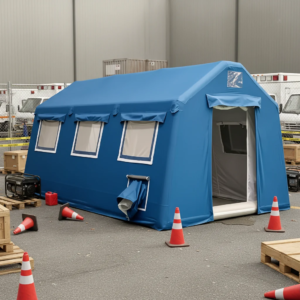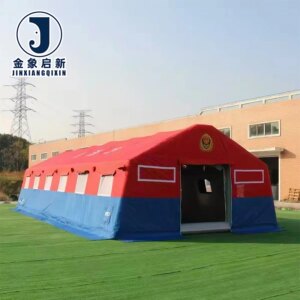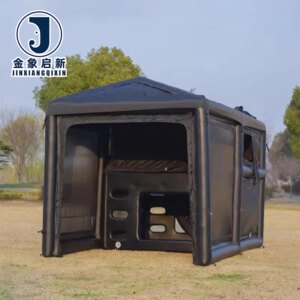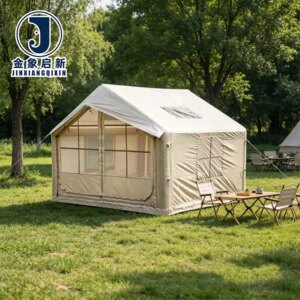

Description
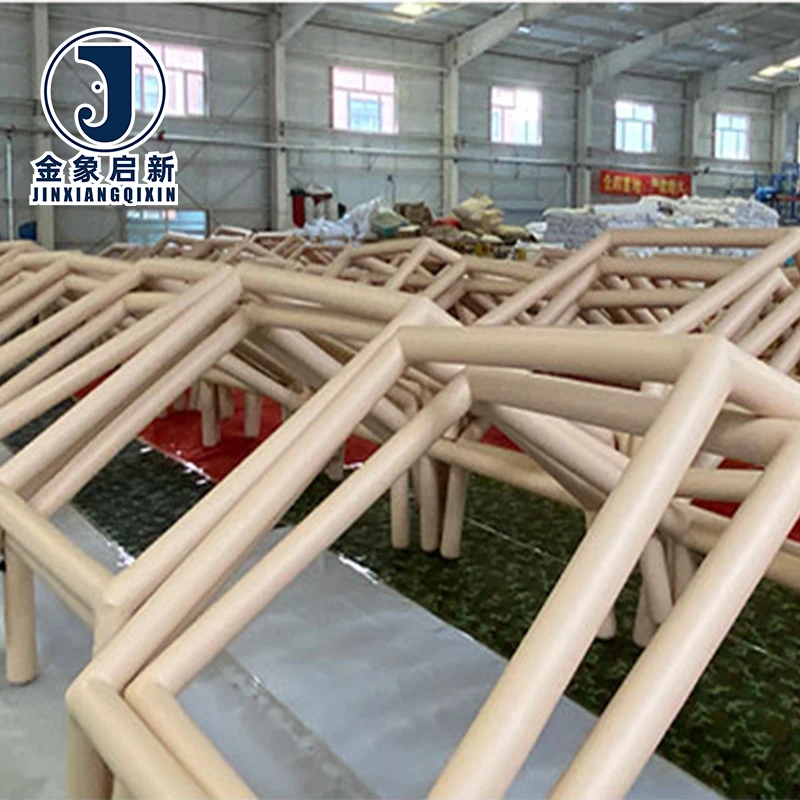
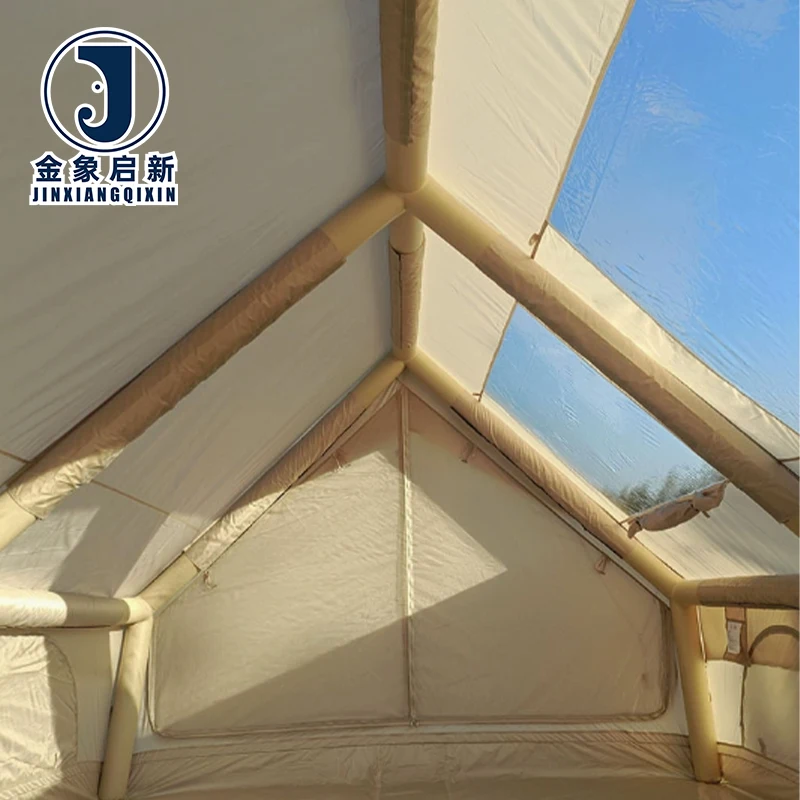
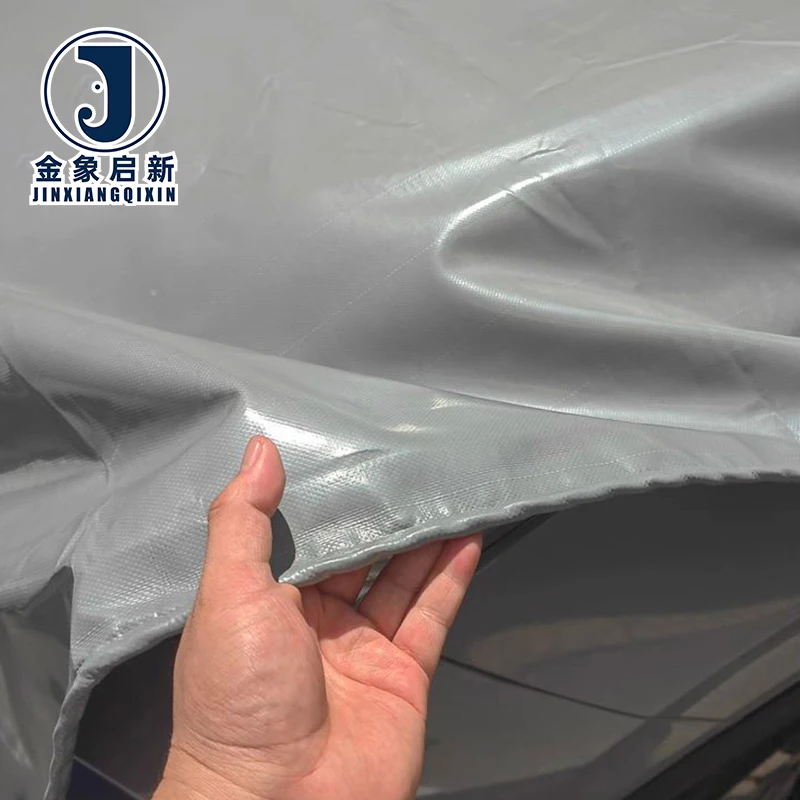
Bulk roll consistency — 3 full production lines and 36 sets of equipment ensure batch-to-batch colour and coating uniformity across container-quantity orders of inflatable tent fabric.
Technical Specifications
| Parameter | Value |
|---|---|
| Product Type | Inflatable tent |
| Core Material | PVC waterproof fabric |
| Waterproof Rating | Waterproof (grade not stated in source) |
| UV Treatment | UV-resistant (test basis not stated in source) |
| Tear Resistance | Tear-resistant (test basis not stated in source) |
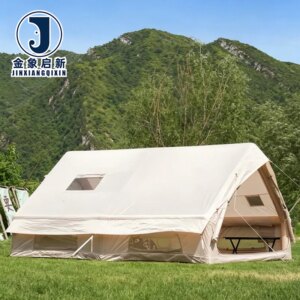
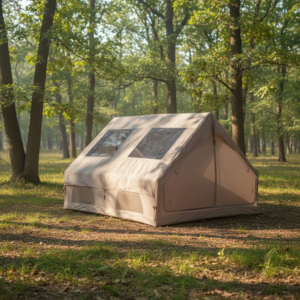
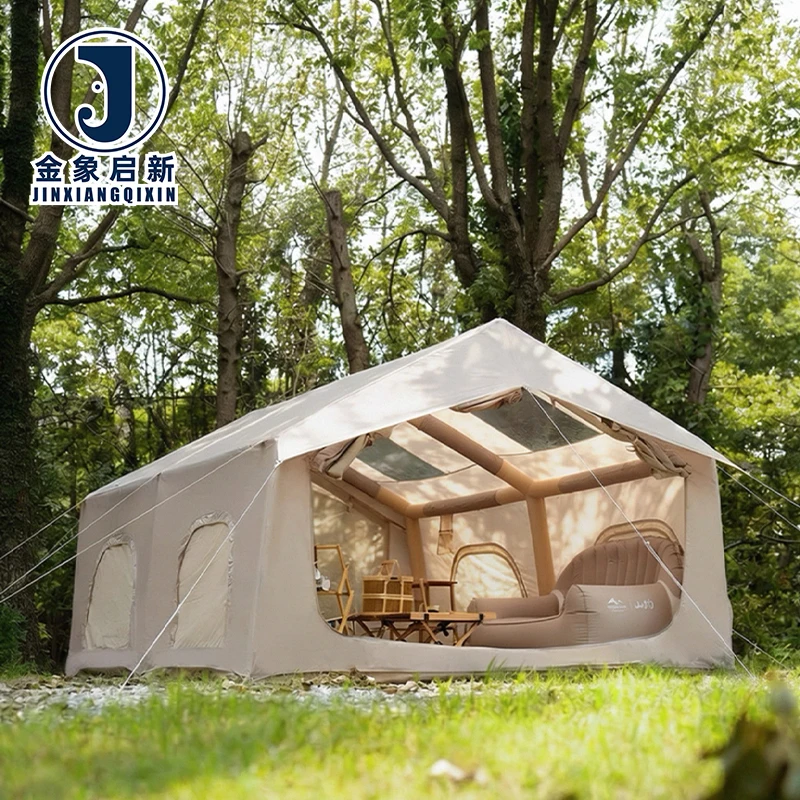
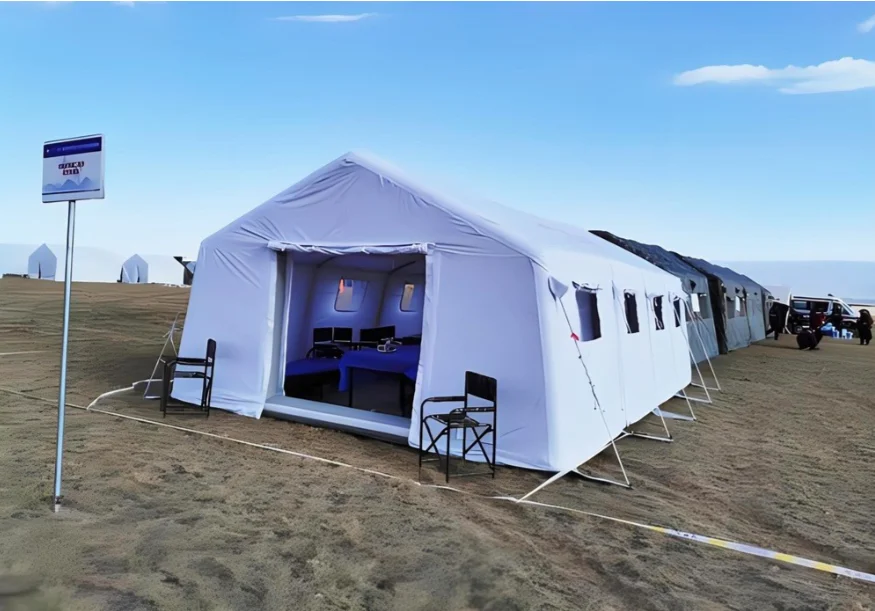
| Product Forms | Inflatable four-season camping tent, quick automatic opening design |
| Flame Retardant Grade | Available in flame retardant grades — confirm the grade required for your market |
| Customization Service | OEM & ODM, sample customization, pattern printing |
| Certifications | CE, ISO9001, ISO14001, ISO45001 |
| Quality Control | 100% pre-shipment inspection with dedicated QA/QC at every stage |
Application Suitability
| Application | Exposure & Requirement |
|---|---|
| Disaster relief shelters | Rapid deployment, all-weather exposure, repeated inflation cycles, transport abrasion |
| Engineering site temporary housing | Extended UV exposure, wind loading, dust and debris impact, multi-season use |
| Mobile storage for outdoor events | Waterproof integrity, frequent setup and teardown, ground contact moisture |
| Inflatable structure fabrication by third-party manufacturers | Roll-to-roll consistency, predictable heat-weld behaviour, custom colour matching |
Why "UV-Resistant" on a Data Sheet Is Not Enough for Your Inflatable Tent Purchase
Verification starts with a test report tied to your specific batch, not a blanket claim on a brochure.
When sourcing inflatable tent fabric at container scale, buyers often discover that the UV treatment stated on the quotation has no corresponding test result behind it. The material arrives, passes visual inspection, and goes into production — only for finished tents to show premature chalking or surface degradation after a season of outdoor exposure. [NEED_CITE: UV degradation test methods for PVC coated fabrics per ISO 4892] An inflatable tent manufacturer that cannot produce a test report referencing the actual production batch leaves the buyer carrying all the compliance risk. This is especially critical when your end customer — a disaster relief agency or a mining contractor — requires documented proof of material performance before accepting delivery.
How Roll Stock Purchasing Differs from Finished Tent Procurement
Buying inflatable tent fabric by the roll means you are responsible for cutting, welding, and assembly. The material must behave predictably through your fabrication process. An inflatable tent aftermarket supplier providing roll stock needs to guarantee that every roll in your order shares the same coating weight, surface tension, and colour reference so your production line does not require constant parameter adjustments mid-run.
What Consistency Across Rolls Actually Means on the Warehouse Floor
When you open three rolls from the same shipment and lay them side by side, any visible colour shift or gloss variation becomes an immediate problem. Your fabrication team will reject panels that do not match, creating waste and delaying assembly. [NEED_CITE: colour consistency measurement standards for coated textiles per ISO 105-A02] Maintaining this consistency across bulk orders requires controlled coating parameters at every stage — from base fabric tension through final surface treatment — which is where production line capability directly affects your yield rate.
Reading the Specification Sheet Beyond the Headline Numbers
The PVC waterproof fabric used in inflatable tent construction relies on the relationship between base fabric denier, weave density, and coating weight to deliver its tear resistance. A heavier coating does not automatically mean a stronger material — if the base fabric has a loose weave, the coating bears all the structural load and becomes prone to cracking at fold points. UV-resistant and tear-resistant properties are achieved through additive chemistry in the coating compound, and the effectiveness of these additives depends on uniform dispersion during the mixing stage. Flame retardant grades are available — confirm the grade required for your market, as different regions mandate different classifications. The quick automatic opening design of the finished tent depends on fabric flexibility at inflation seams, which in turn requires a coating formulation that remains pliable across the expected temperature range without becoming brittle in cold conditions or tacky in heat.
The Hidden Cost of Colour Drift Between Production Batches
Imagine receiving a 20-roll order where rolls 1 through 14 match your approved sample perfectly, but rolls 15 through 20 carry a slightly different hue. Your cutting table has already processed the first batch into tent panels, and now the remaining panels will not match when assembled into a complete unit. [NEED_CITE: batch colour variation tolerance standards in industrial textile procurement] This forces a choice between accepting a visible mismatch in the field or scrapping the entire partial set and waiting for replacement material. The downstream cost — in delayed shipments, customer complaints, and rework labour — far exceeds the material savings of choosing a supplier who skips intermediate colour checks during production.
Why Fabric Buyers Consolidate Their Inflatable Tent Material Sourcing Here
A 10-person R&D team handles your pattern printing requirements and custom colour development, producing samples within days rather than weeks. Three full production lines with 36 sets of professional equipment give the capacity to fulfil container-volume orders without splitting your batch across multiple runs that introduce variation. Dedicated QA and QC staff inspect at every production stage, not just at final packing, catching coating weight deviations before they propagate through the entire order. Material specification sheets accompany each dispatch, stating the base fabric construction, coating type, and treatment parameters so your incoming inspection team has a document to verify against. The CE and ISO certification framework means your procurement file already contains the compliance documentation your quality system requires.
Documentation & Verification
- Material specification sheet stating base fabric, coating type, and treatment parameters per batch
- Test reports for UV and flame retardant grades provided where applicable, referenced to order number
- 100% pre-shipment inspection record covering coating weight, colour, and surface quality
- CE, ISO9001, ISO14001, ISO45001 certificates and certificate of origin included with dispatch
- Roll packing list with individual roll weights and dimensions for receiving verification
Fabrication, Handling & Storage
- Heat-weld PVC waterproof fabric panels using temperature and dwell settings matched to coating thickness
- Store rolls upright on pallets to prevent flat-spot deformation of the PVC coating surface
- Allow cold-transported rolls to acclimatise before unrolling to avoid coating micro-cracking
- Use compatible PVC adhesive for field repairs on tear-resistant inflatable tent membrane panels
- Plan cutting layout to minimise offcuts from custom-width rolls and reduce material waste
- Avoid stacking heavy objects on stored rolls to preserve surface finish uniformity
What to Include in Your Material Enquiry
To receive an accurate specification recommendation and sample, share your target roll width, annual volume estimate, and the colour references you need matched. Specify the flame retardant grade your end market requires and whether you need pattern printing or plain stock. Confirm whether you are purchasing roll stock for your own fabrication line or require pre-cut panels.
Frequently Asked Questions
Q: How can I verify the UV treatment basis and expected service life for inflatable tent fabric?
A: Request a test report referencing ISO 4892 or an equivalent accelerated weathering standard, tied to your production batch number. The report should document the specific additive package and exposure hours tested. For outdoor service life estimates, combine the test data with your deployment climate — a manufacturer can provide guidance, but field conditions ultimately determine longevity.
Q: What flame retardant grade options exist, and how do they align with different market regulations?
A: Flame retardant grades are available across multiple classification systems. Confirm which standard your destination market mandates — European, North American, or regional building code requirements differ substantially. Provide your target regulation in your enquiry, and the manufacturer will match the formulation and supply the corresponding test certificate with your shipment.
Q: What is the typical sample development timeline for custom inflatable tent projects?
A: The 10-person R&D team develops custom samples within days of receiving your specification, including colour matching, pattern printing, and coating weight confirmation. Sample approval is required before mass production begins. This prevents batch-scale errors and ensures your fabrication parameters are validated against the actual material you will receive.
Q: How is roll-to-roll colour and coating consistency maintained across bulk orders?
A: Each production run is monitored at multiple checkpoints — base fabric inspection, coating weight measurement, and final surface quality review. Dedicated QA staff compare every roll against the approved colour reference under standardised lighting. Rolls that deviate are held before packing, preventing mixed-batch shipments from reaching your warehouse.
Q: What are the recommended heat welding practices for inflatable structure fabrication with this PVC fabric?
A: Welding parameters depend on the specific coating weight and formulation of your batch. The material specification sheet supplied with your order provides the baseline temperature and speed recommendations. Conduct test welds on offcuts before production, adjusting dwell time and pressure to achieve a bond that fails in the fabric rather than at the seam line.