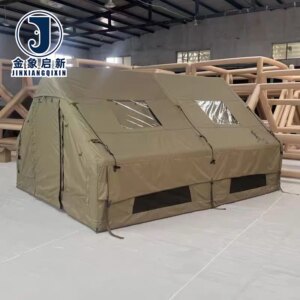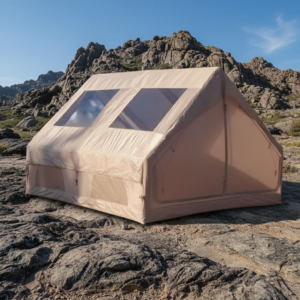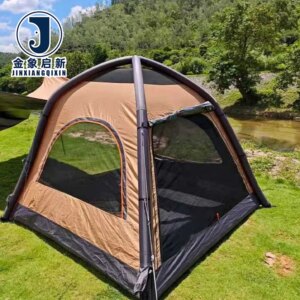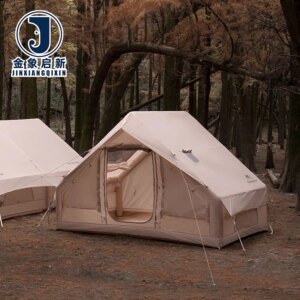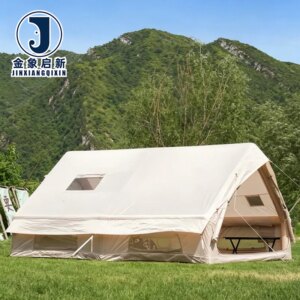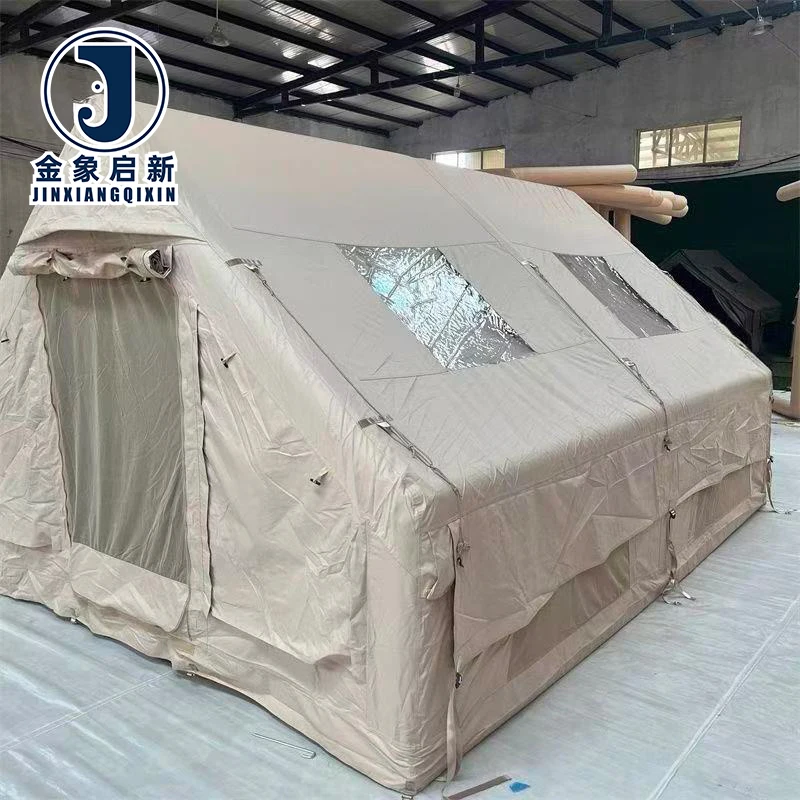
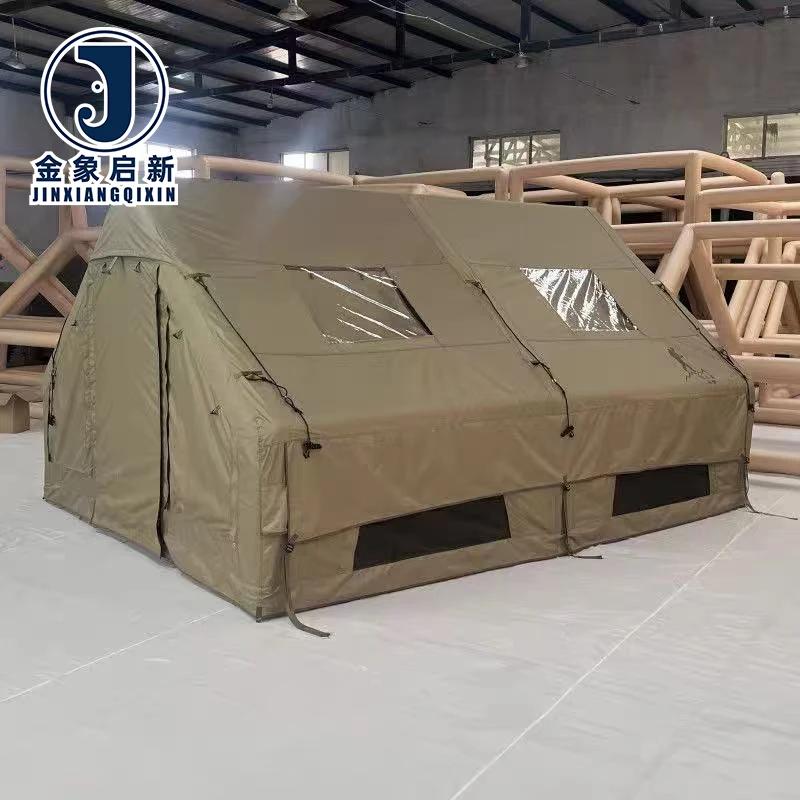
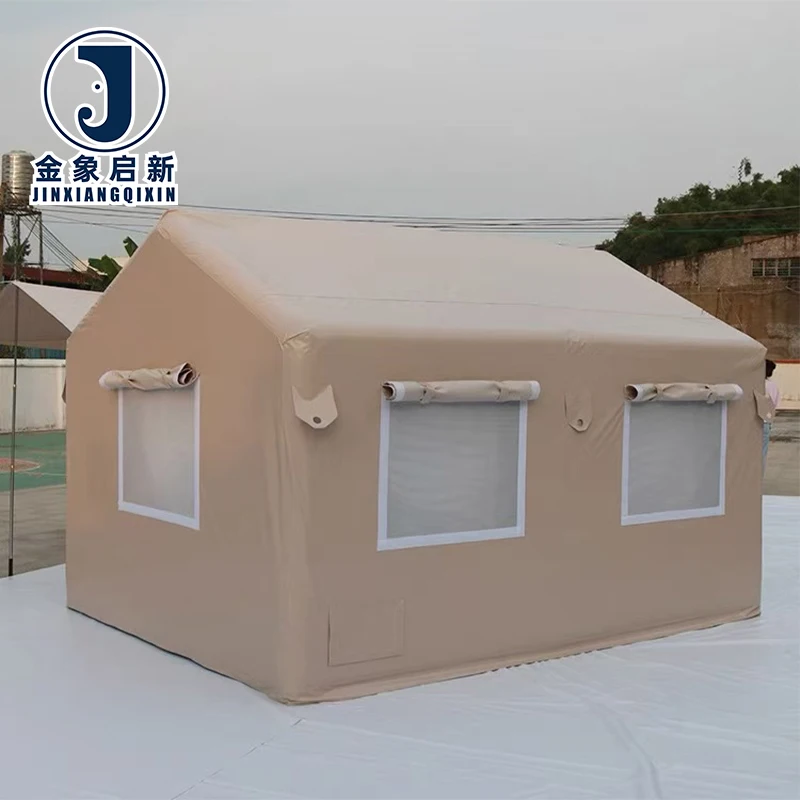
Description
Bulk Roll Consistency — Every roll of Inflatable Tent Fabric produced on our three dedicated lines undergoes stage-gated QA to guarantee uniform GSM, colour and coating adhesion from first metre to last.
Technical Specifications
| Parameter | Value |
|---|---|
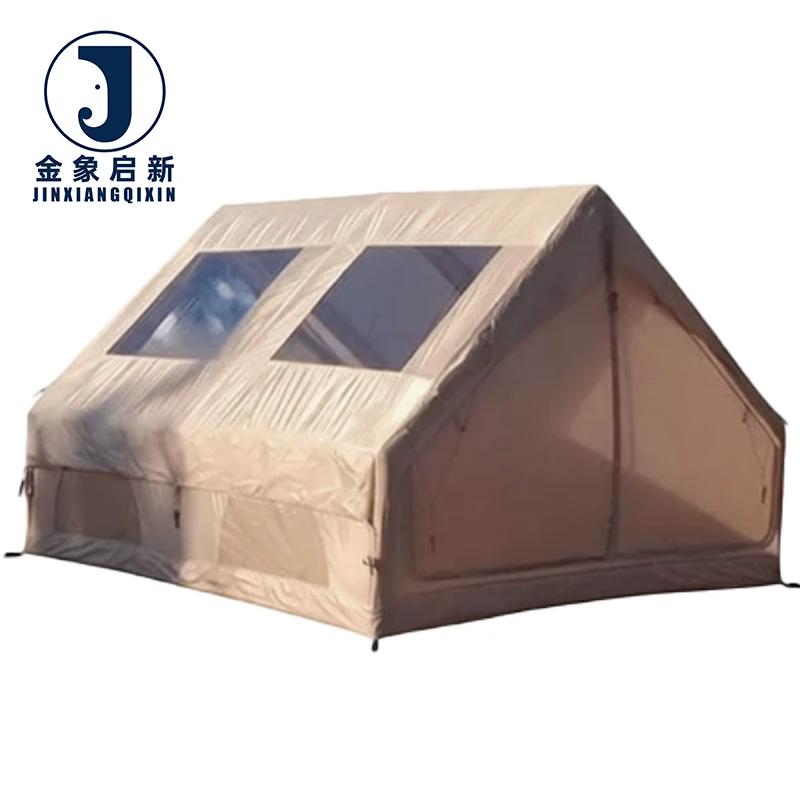
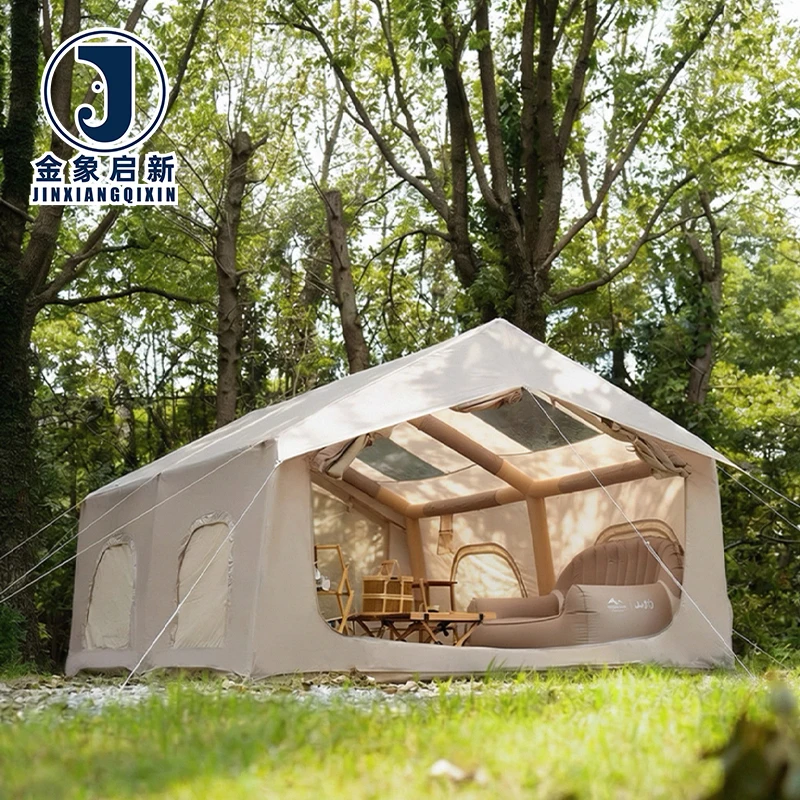
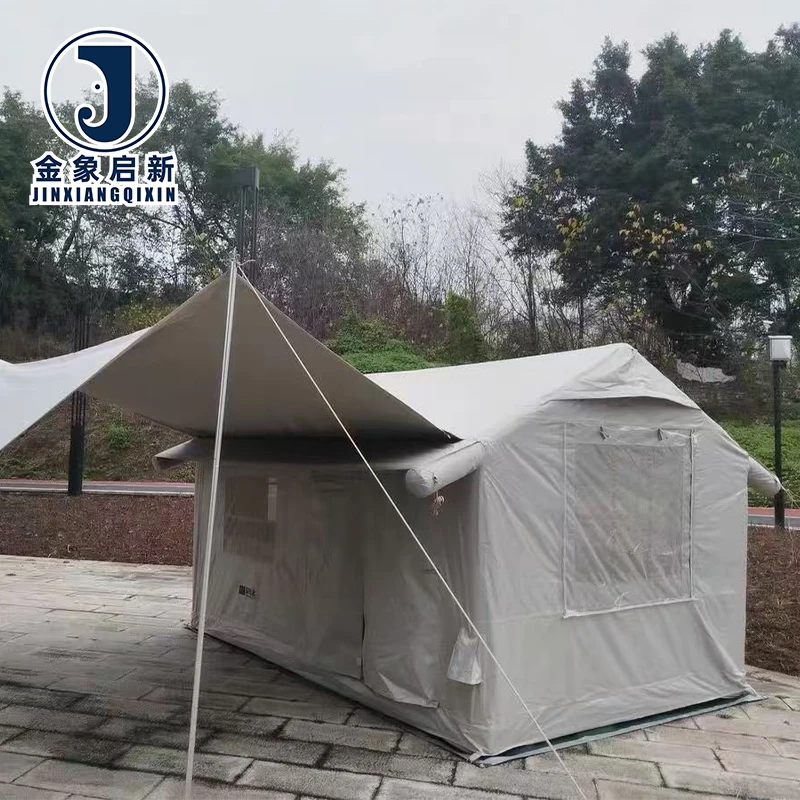
| Product Type | Inflatable Tent |
| Core Material | PVC tarpaulin |
| Capacity | 6-8 Person |
| Season Rating | 4 Season |
| Opening Mechanism | Automatic Opening (Inflatable) |
| Waterproof | Fully waterproof coated construction |
| UV Treatment | UV-resistant (test basis not stated in source) |
| Tear Resistance | Tear-resistant (test standard not stated in source) |
| Flame Retardant | Fire-retardant (grade not stated in source) |
| Anti-Static | Anti-static (standard not stated in source) |
| Certifications | ISO9001, ISO14001, ISO45001, CE |
| Customization | OEM & ODM — sample customization, pattern printing, material selection, product design |
Application Suitability
| Application | Exposure & Requirement |
|---|---|
| Base camps for industrial field operations | Continuous weather exposure, high wind loading on inflatable beams, frequent relocation |
| Temporary shelters for outdoor event management | Rapid deployment cycles, crowd contact abrasion, visible branding surface |
| Construction site workforce housing | Dust and chemical splash, repeated inflation and deflation over project lifespan |
| Commercial camping facility fleets | Year-round guest occupancy, UV degradation under sustained sunlight, guest-facing aesthetics |
| Organized outdoor workforce accommodation | Thermal variation across seasons, snow load on inflated structure, sanitation requirements |
What "Fire-Retardant" Really Means When No Grade Is Stated
Specifying flame retardant fabric without naming the test standard invites rejection at the receiving dock.
I have watched tent manufacturers accept container loads of material labelled "fire-retardant" only to discover the certification required by their local building authority was never tested against [NEED_CITE: DIN 4102 fire classification for building materials]. The cost is not the failed lab test — it is the six weeks of production already committed to cutting, welding and assembling tubes that must now be scrapped. For Inflatable Tent Fabric bulk wholesale buyers operating across jurisdictions, confirming whether your destination market demands NFPA 701, M2, B1 or another classification before issuing a purchase order removes the single most expensive variable in the procurement chain.
Roll-to-Roll Colour Match Across Your Entire Order
Commercial tent makers cutting dozens of identical units from the same Inflatable Tent Fabric bulk wholesale shipment cannot afford visible shade drift between rolls. Colour deviation becomes obvious once panels from adjacent rolls are welded side by side and the structure is inflated under showroom lighting. We batch-match dye lots across your full container quantity, so every roll pulled from the same purchase order cuts, welds and assembles into tents that look identical to your end customer.
Volume Pricing That Scales With Container Loading
Buying Inflatable Tent Fabric by the roll at commercial scale means your landed cost per square metre hinges on container utilisation. Our dispatch team plans loading by roll diameter, weight and pallet configuration so that a 40-foot container reaches practical fill capacity without exceeding weight limits or crushing lower-layer rolls [NEED_CITE: container loading standards for coated fabric rolls]. This applies whether your order is two tonnes of a single colour or a mixed-width container serving multiple product lines.
Reading the Specification Sheet Beyond the Headline GSM
Two PVC tarpaulin rolls both marked at the same nominal weight can behave completely differently under inflation pressure. The base fabric denier and weave density determine how tear propagation is arrested once a puncture occurs — a tightly woven polyester scrim distributes stress across multiple yarn intersections, while a looser weave allows a tear to zip through the panel. Coating method matters equally: knife-over-edge coating penetrates the yarn interstices for mechanical adhesion, whereas lamination can leave a boundary layer that delaminates under the cyclic flexing an inflatable beam endures season after season. Fire-retardant grades available — confirm the grade required for your market before sampling. Anti-static treatment available for environments where charge accumulation poses a risk; verify the standard your site mandates. UV-resistant formulation is engineered to reduce degradation under prolonged sunlight, though specific test basis should be confirmed for your climate zone [NEED_CITE: tensile and tear test methods for coated fabrics per ISO 1421].
The Hidden Cost of Accepting Unverified Batch Uniformity
A tent manufacturer once received a bulk roll order where the coating weight drifted downward across the production run without a corresponding change in quoted GSM. The lighter rolls cut and welded normally, but when assembled tents were pressure-tested, the thinner-coated inflatable beams sagged under their own structural load within hours [NEED_CITE: coating weight verification methods for PVC tarpaulin]. The buyer had already committed to delivery dates with three commercial camping clients. Batch-level quality records traceable to each roll number prevent this scenario — when every roll in your Inflatable Tent Fabric bulk wholesale order carries its own inspection record, you know before cutting begins that the material matches what was quoted.
Why Commercial Tent Makers Source Rolls Here
Three full production lines give us the throughput to fill a multi-container Inflatable Tent Fabric bulk wholesale order without splitting it across weeks of staggered dispatches. Thirty-six sets of professional processing equipment handle coating, calendaring and winding in a single continuous workflow, reducing the handling transfers where damage typically enters the roll. A ten-technician R&D team develops samples within days when your specification calls for a non-stock width, colour or surface finish. Dedicated QA at every production stage — not just at final inspection — catches coating weight drift and colour shift while the roll is still on the line, not after it has been packed for export. ISO9001, ISO14001, ISO45001 and CE certifications are maintained as active management systems, not wall decorations [NEED_CITE: ISO management system requirements for coated textile manufacturers].
Documentation & Verification
- Material specification sheet per roll stating base fabric type, coating weight and treatment properties
- Pre-shipment inspection record confirming roll count, diameter and weight against your order
- Fire-retardant and anti-static test reports available — confirm the standard your project requires
- Roll packing list with batch numbers enabling traceability from warehouse receipt to cutting table
- Certificate of origin and customs documentation supporting international bulk shipment clearance
Fabrication, Handling & Storage
- Hot-air welding temperature should be calibrated to this PVC tarpaulin coating thickness before production runs begin
- Store rolls vertically on pallets to prevent permanent compression marks on the coating surface
- Allow cold-transported rolls to acclimatise to workshop temperature before unrolling for cutting
- Use solvent-compatible cleaners only — test on an off-cut before full-surface application
- Plan cutting layout to minimise off-cuts and maintain panel grain direction consistency across panels
Requesting a Bulk Quotation
To move efficiently from inquiry to sample, provide your target roll width, annual volume estimate and the fire-retardant or anti-static standard your end market requires. Let us know whether you need stock widths or custom roll dimensions, and whether pattern printing or OEM branding is part of your production specification. A confirmed colour reference and finish preference — glossy or matte — allows us to develop a sample roll section that matches your production intent before you commit to container quantities.
Frequently Asked Questions
Q: How is batch colour consistency maintained across multiple rolls in one order?
A: Every roll within a single bulk order is drawn from the same dye lot and production run. In-line colour measurement during coating flags deviation before the roll is wound. A pre-shipment inspection record accompanies your order showing the batch number assigned to each roll, so you can trace any panel back to its position in the production sequence.
Q: What roll widths and lengths are available for inflatable tent fabric?
A: Standard stock widths serve the majority of inflatable tent panel layouts. Custom widths are available through our R&D team — provide your cutting plan dimensions and we will recommend a roll width that minimises off-cut waste. Roll length is specified per your container loading plan and production consumption rate.
Q: How is container loading planned by roll count and weight for bulk orders?
A: Our dispatch team calculates pallet configuration based on roll diameter and gross weight to maximise container fill without exceeding weight limits. A loading plan is shared before dispatch so you know the exact roll count per container and can plan your warehouse receiving schedule accordingly.
Q: What is the minimum order quantity for custom width or colour rolls?
A: Custom specifications require a minimum run that covers machine setup and colour-matching calibration. The exact threshold depends on the degree of deviation from stock grades. Submit your required width, colour reference and treatment needs, and we will confirm the minimum alongside a sample development timeline.
Q: What documentation accompanies each bulk shipment for receiving inspection?
A: Each shipment includes a roll packing list with batch numbers, a pre-shipment inspection record, a material specification sheet per roll, test reports for fire-retardant and anti-static treatments where applicable, and a certificate of origin. All documents reference your purchase order number for straightforward customs and warehouse processing.