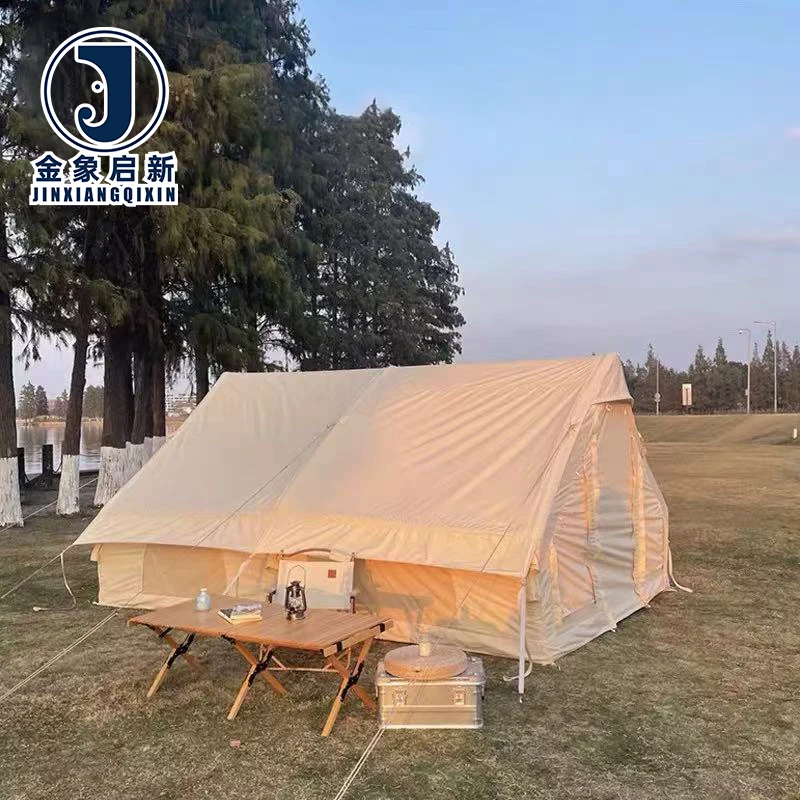
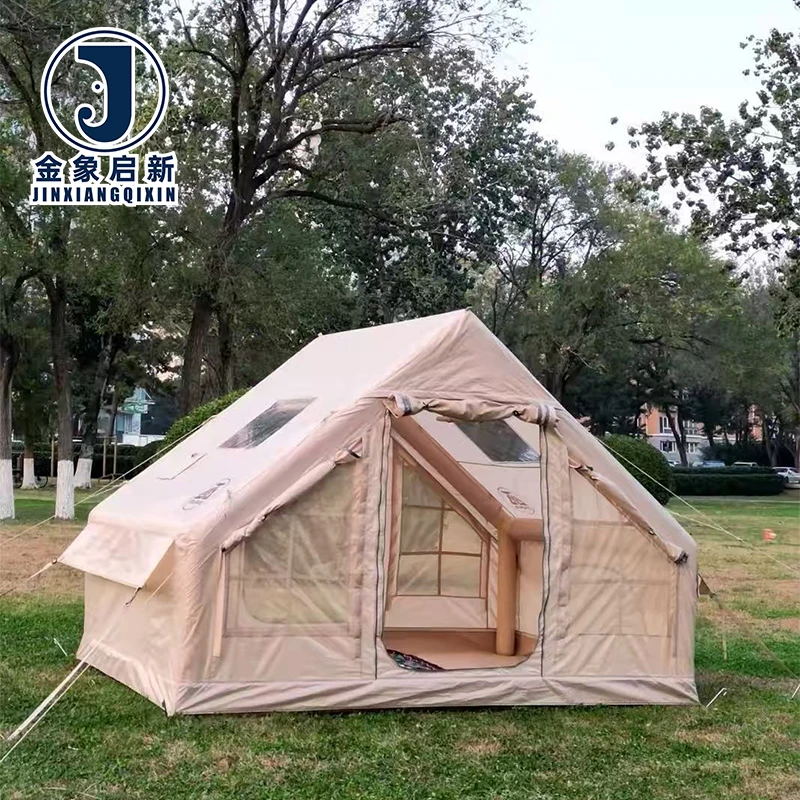
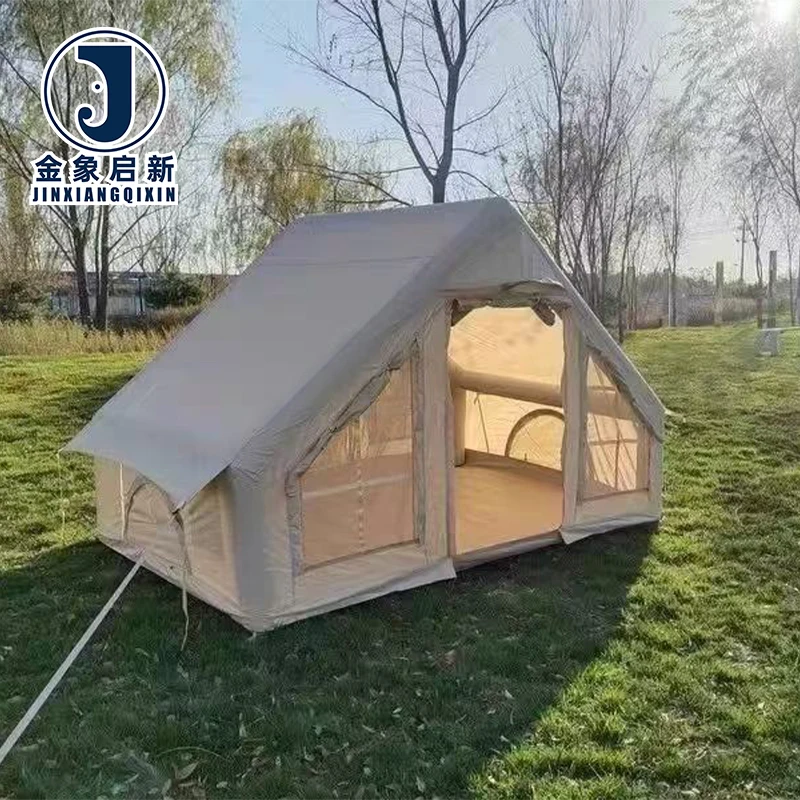
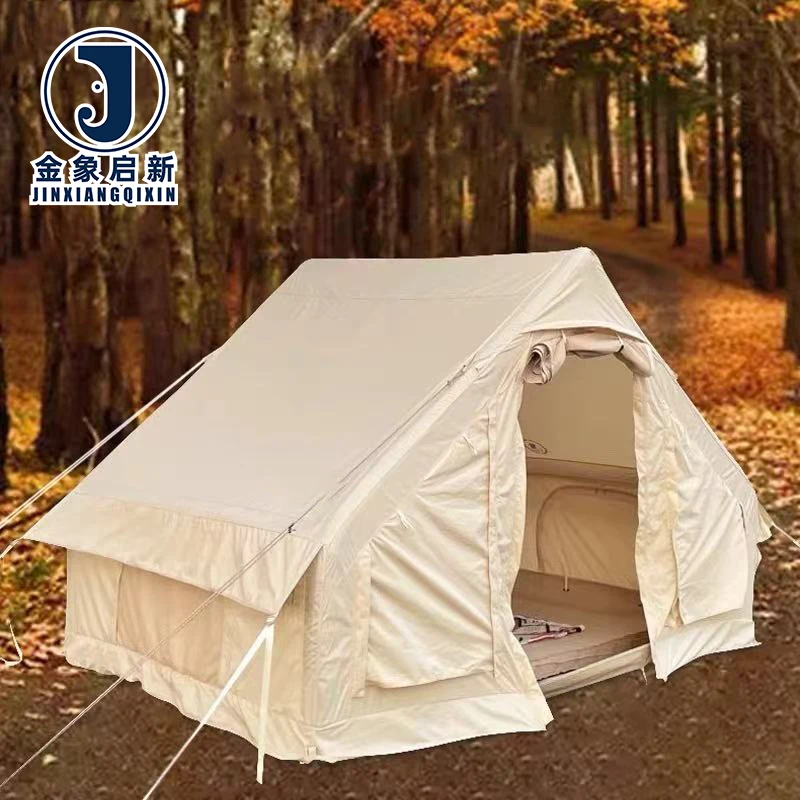
Description
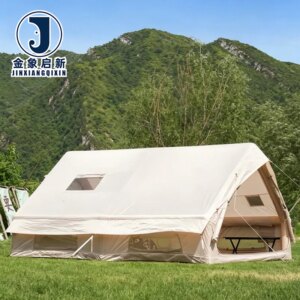
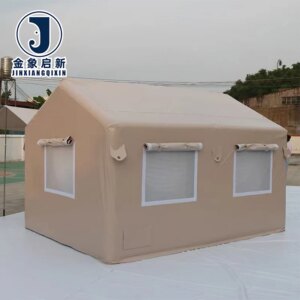
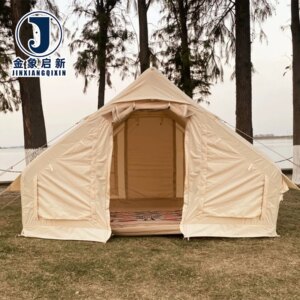
Batch-Matched Colour Control — every roll of inflatable tent fabric leaving our lines is checked against the Pantone reference under D65 daylight simulation, so khaki tents cut from consecutive rolls match once erected side by side.
Technical Specifications
| Parameter | Value |
|---|---|
| Product Type | Inflatable Tent Fabric |
| Core Material | UV Water-resistant PVC Fabric |
| Hydrostatic Head | ≥5000mm (test basis not stated in source) |
| UV Protection Rating | 50+ (test basis not stated in source) |
| Tear Resistance | ≥300N warp and weft (test basis not stated in source) |
| Fabric Thickness Range | 0.3mm-0.8mm (source value — verify against manufacturer catalog) |
| Design Configuration | Single Layer, One Bedroom & One Living Room |
| Season Suitability | Four-Season Use |
| Capacity | 4-Person |
| Colour | Khaki (Pantone system available for custom orders) |
| Customization Service | OEM & ODM (Material Selection, Product Design) |
| Certifications | ISO9001, ISO14001, ISO45001, CE |
Application Suitability
| Application | Exposure & Requirement |
|---|---|
| Inflatable camping tent production lines | Continuous inflation cycles, repeated folding, abrasion at internal baffle welds |
| Expedition company gear supply | Alpine UV exposure, sub-zero flexibility, wind-driven rain on outer membrane |
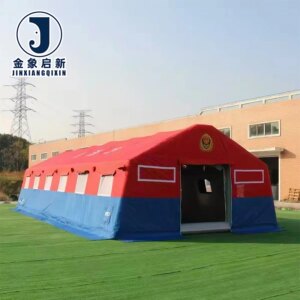
| Military field operations shelters | Rapid deployment, vehicle transport vibration, camouflage colour consistency per batch |
| Disaster relief temporary structures | High-frequency assembly, ground contact moisture, bulk roll procurement with traceable certification |
| Large-scale outdoor event structures | Multi-day UV load, crowd contact wear, sponsor colour matching across adjacent tents |
Why Roll-to-Roll Colour Drift Ruins Tent Installations Before They Start
Pantone-locked batching eliminates the visible seam line between adjacent panels cut from different rolls.
When a production run of inflatable tents is cut from stock rolls pulled at random from a warehouse, even slight pigment variation in the PVC coating shows up the moment two panels are welded together and inflated under sunlight. Buyers sourcing inflatable tent fabric roll wholesale often discover this only when the finished tents are lined up on a show floor or deployed at an event site. [NEED_CITE: colour variation in coated fabric batches per Pantone tolerance standards]. The cost of re-cutting and re-welding entire panels — plus the scrap fabric and lost production days — far exceeds the time needed to enforce batch matching at the coating stage. We address this by assigning a single dye lot to each purchase order and retaining a physical reference swatch for every roll shipped.
How Four-Season Inflation Cycles Shape the Coating Specification
An inflatable tent relies on internal air beams that flex every time wind loads shift, temperature drops cause pressure loss, or the structure is deflated and repacked. The PVC coating must maintain adhesion to the base fabric through thousands of these micro-flex cycles without delaminating at the weld seam. Sourcing inflatable tent fabric roll wholesale from a supplier who understands this inflation-specific stress profile means specifying a coating weight that balances beam rigidity against pack-down flexibility. Too stiff a coating cracks at the fold; too soft a coating allows the air beam to sag under load.
Waterproofing That Survives the Weld Line, Not Just the Lab Test
A hydrostatic head rating measured on a flat, unweldled sample tells only part of the story. The real waterproofing challenge in inflatable tent manufacturing is the heat-welded seam where two coated surfaces are fused under pressure and temperature. If the coating formulation does not respond uniformly to the welding platen, microscopic channels open along the seam — invisible in pre-shipment inspection but obvious after the first night of rain. [NEED_CITE: welded seam integrity testing methods for PVC coated fabrics]. This is why we supply material specification sheets that note the recommended hot-air weld temperature range alongside the base coating data, so your production team does not have to reverse-engineer our parameters through trial and error.
Reading Beyond the GSM Number on Your Quotation
GSM — grams per square metre — is the single most quoted figure in coated fabric procurement, yet it tells a buyer almost nothing about how the material will behave once cut and welded into an inflatable tent. A 500 GSM fabric with a tight 500-denier base weave and a thin, well-bonded coating can outperform a 650 GSM fabric made with a coarse 1000-denier yarn and a thick but poorly adhered coating layer. The base fabric denier and thread count per centimetre determine tear propagation resistance, while the coating method — knife-over-roll, dip, or calender — governs peel strength and weld compatibility. For inflatable tent fabric roll wholesale buyers, requesting the base fabric specification alongside the GSM figure is the minimum step toward comparing quotations on equal terms. [NEED_CITE: tensile and tear test methods for coated fabrics per ISO 1421]. Thickness range alone, even across the 0.3mm to 0.8mm band, cannot substitute for understanding how coating weight and base cloth density interact to produce the final tensile and tear values your tent design demands.
The Hidden Cost of Ignoring Batch Consistency in Tent Roll Stock
When a tent manufacturer switches roll suppliers mid-season to chase a lower unit price, the new fabric may carry the same stated GSM yet behave differently on the welding table — requiring adjusted temperature settings, different dwell times, or altered pressure profiles. Production line workers adapt by feel, but the result is a fleet of tents with inconsistent seam strength. Some fail at the beam junction after the first deployment; others hold through the season. [NEED_CITE: impact of coating batch variation on hot-air weld peel strength]. The returns, warranty claims, and brand damage from a single inconsistent batch routinely outweigh the savings that prompted the supplier switch. Buyers purchasing inflatable tent fabric roll wholesale should treat pre-shipment sampling from the actual production batch — not a generic stock sample — as a non-negotiable verification step before authorising container loading.
What Thirty Years of Coated Fabric Focus Brings to Your Tent Line
Three full production lines and 36 sets of professional equipment give us the capacity to fill a container order of roll stock without splitting it across outsourcing partners who may not share our coating formulation. The 10-person R&D team handles Pantone colour matching, thickness sampling within the specified range, and OEM/ODM design collaboration — not as a separate service tier, but as a standard step in the quotation process. Dedicated QA/QC staff inspect every roll before dispatch, checking coating weight, colour match against the retained swatch, and surface defect count. ISO9001, ISO14001, ISO45001 and CE certifications are held at factory level, meaning documentation for your export market is generated from our own audit records rather than borrowed from a trading intermediary. Samples for custom colour or thickness within the 0.3mm-0.8mm range are developed within days, not weeks, keeping your pre-production validation on schedule.
Documentation & Verification
- Material specification sheet stating PVC coating type, base fabric denier, Khaki Pantone reference and thickness value per roll
- UV protection and waterproof test reports included where the stated 50+ and ≥5000mm ratings apply to your batch
- Pre-shipment inspection record covering coating weight, colour match and surface condition for every roll in the order
- Roll packing list with individual roll count, net weight and dimensions for container loading verification
- Certificate of origin and customs documentation prepared for the destination market named in your purchase order
Fabrication, Handling & Storage
- Hot-air weld temperature and dwell time recommendations provided for the specific PVC coating formulation in your batch
- Store rolls horizontally on racking to prevent flat-spot deformation that transfers into visible crease lines on inflated tent panels
- Allow cold-stored rolls to acclimatise to workshop temperature before unrolling to prevent coating micro-cracking at fold points
- Use PVC-compatible cleaners only — solvent-based products can soften the water-resistant coating and reduce hydrostatic performance
- Cut panels with the machine direction noted on the roll label to align warp threads with primary air beam stress axes
- Field repairs on deployed tents respond best to PVC adhesive patches matched to the supplied coating thickness range
Preparing Your Roll Stock Inquiry
Share the target thickness within the 0.3mm-0.8mm range, the Pantone reference for Khaki or your custom colour, and the estimated annual roll volume so we can align batch sizing with your production schedule. If your destination market requires specific fire classification or UV test documentation, state the standard name in your inquiry so we can confirm report availability before quotation. Let us know whether you need rolls at standard width and length or if custom slitting is required for your cutting table.
Frequently Asked Questions
Q: How do you control colour consistency across multiple rolls in one order?
A: Every purchase order is assigned a single dye lot. A physical Khaki swatch is retained at our QC station and each roll is compared under D65 daylight simulation before packing. Rolls that drift outside the agreed Pantone tolerance are held back and re-coated rather than shipped.
Q: What custom widths and roll lengths can I order?
A: We accommodate custom slitting within the limits of our production line width capacity. Minimum order quantities apply per colour and thickness combination. Share your cutting table width and required roll length in your inquiry so we can confirm feasibility and batch minimums.
Q: How should I plan container loading for a bulk roll order?
A: Each roll packing list states individual roll count, net weight and roll dimensions. We provide a container loading plan during quotation so you can verify that the total roll count and weight fit within your chosen container type before production begins.
Q: Are bulk pricing tiers available for annual volume commitments?
A: Volume-based pricing is structured around confirmed annual roll quantities and consistent specifications. Buyers committing to recurring orders of the same Khaki reference and thickness benefit from locked dye lots and scheduled production slots that reduce lead time variability.
Q: Can I receive batch-specific samples before authorising shipment?
A: Pre-shipment samples are cut from the actual production rolls in your order and dispatched for your approval. These samples carry the same coating batch number as the full shipment, allowing your welding team to validate hot-air settings before the container is loaded.