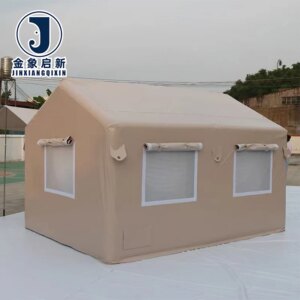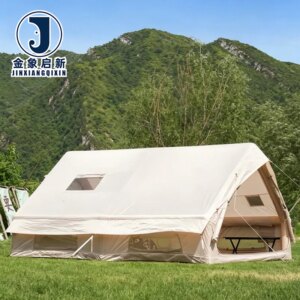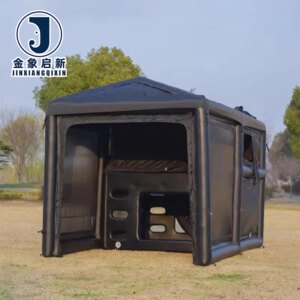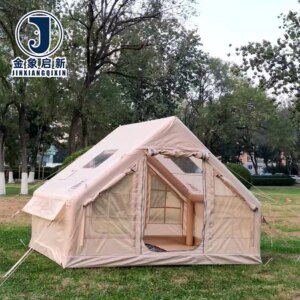

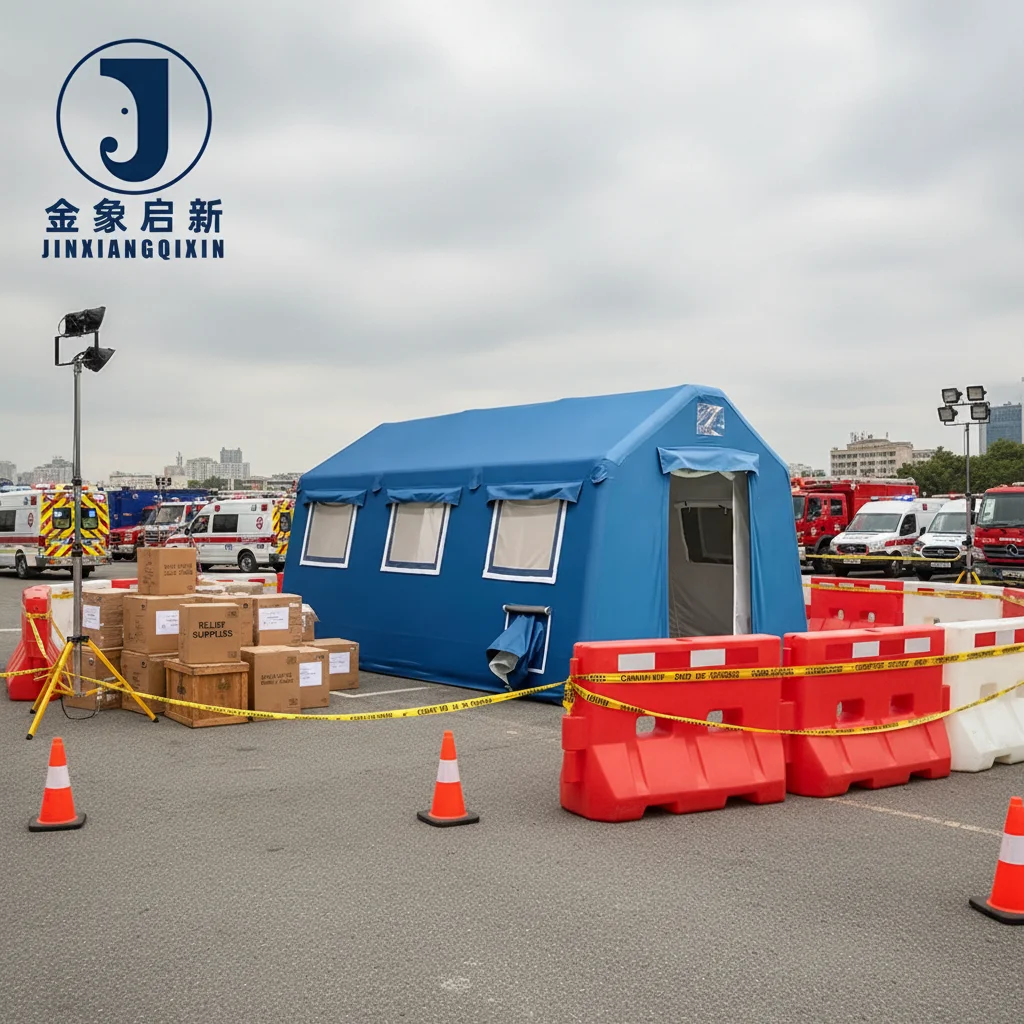
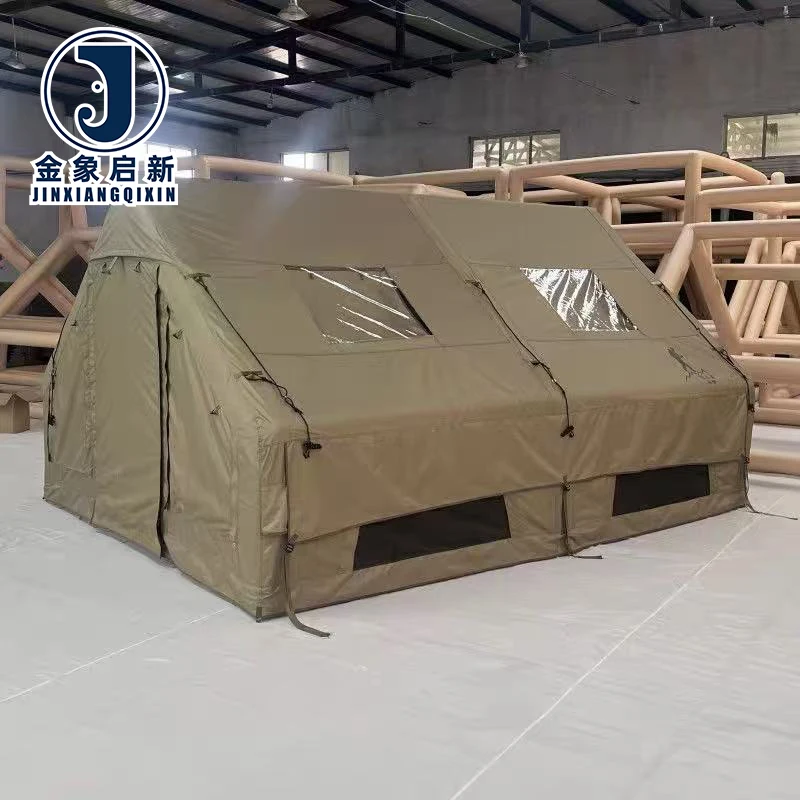
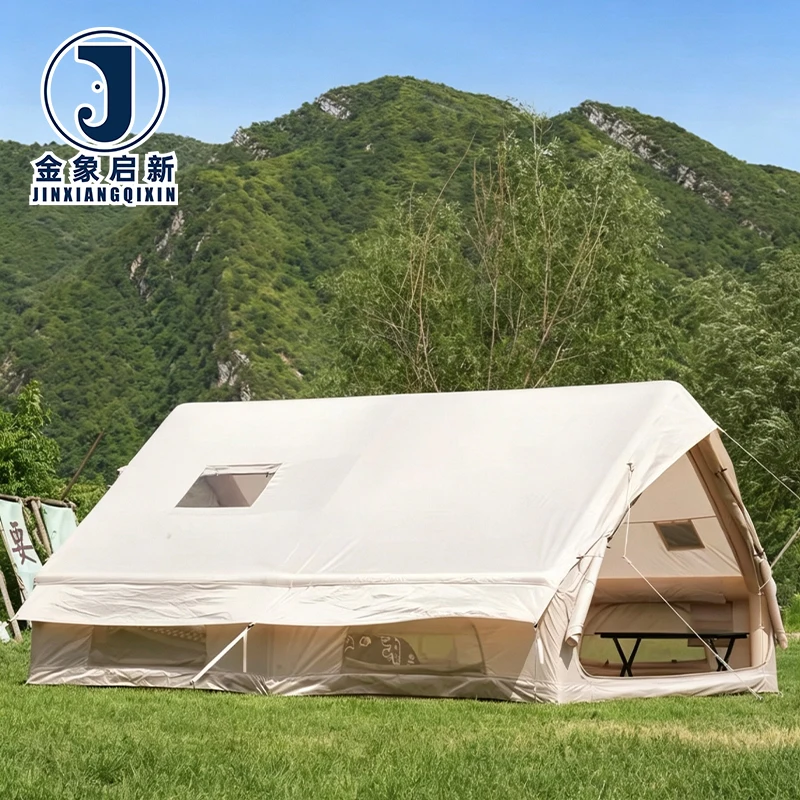
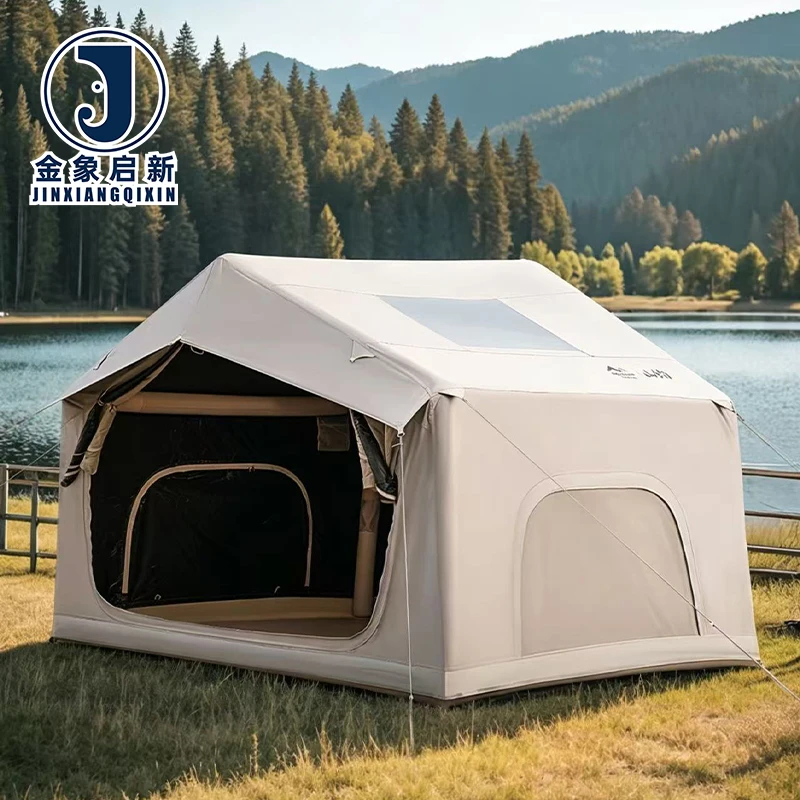
Description
Batch-Verified PVC Coating — Every roll of inflatable tent fabric is measured against stated coating weight and GSM before dispatch, eliminating the shortfall that typically surfaces only after tents are deployed in the field.
Technical Specifications
| Parameter | Value |
|---|---|
| Product Type | Inflatable Tent |
| Core Material | PVC tarpaulin |
| Waterproof Rating | 3000mm |
| Capacity | 2-8 person |
| Structure | Inflatable, extended type |
| Season Suitability | 4-season |
| Opening Mechanism | Quick automatic opening |
| Flame Retardant Grade | EN 13501-1 |
| Tear Resistance | ≥300N (EN 13501-1) |
| UV Treatment | UV-resistant PVC formulation (test basis not stated) |
| Seam Strength | 250N |
| Material Thickness Tolerance | ±0.02mm |
| Setup Time | 2-minute (500+ deployment cycles tested) |
| Standards | ISO9001, ISO14001, ISO45001, CE |
Application Suitability
| Application | Exposure & Requirement |
|---|---|
| Industrial emergency response operations | Rapid deployment, extreme weather, repeated inflation cycles |
| Temporary equipment storage shelters | Prolonged UV exposure, moisture ingress, abrasion from stored goods |
| Field command centers | All-season thermal variation, secure enclosure, frequent relocation |
| Material distribution hubs in disaster zones | High foot traffic, wet ground contact, constant inflation stress |
| Industrial logistics coordination tents | Wind loading, rain penetration, daily setup and teardown |
Why Consistency Across a Container Load Matters More Than the Unit Price
Roll-to-roll coating uniformity is what separates a tent that holds pressure on day one from one that sags by week three.
When tarpaulin distributors or relief procurement agencies order Inflatable Tent wholesale, the material arriving at the port may look identical roll to roll — until it is cut, welded, and inflated side by side. Coating weight variation within the same batch causes uneven stiffness, which stresses the welded seams differently across units. Field reports from emergency deployments consistently show that seam failures concentrate in the panels cut from rolls at the low end of the GSM tolerance band [NEED_CITE: tensile and tear test methods for coated fabrics per ISO 1421]. For bulk buyers, this means one defective tent in twenty can delay an entire relief shipment while replacements are sourced.
Coating Weight Control from the First Roll to the Last
Our PVC coating process is managed at the source with dedicated QA checkpoints at every production stage. For bulk Inflatable Tent orders, this means the coating weight applied to the base fabric is measured continuously, not sampled after the fact. The result is consistent GSM across every roll in a container, which directly translates to uniform air-holding performance when the finished tents are inflated. Buyers sourcing by the roll for their own fabrication lines receive material that behaves predictably under their existing welding parameters.
Weld Seam Behaviour Under Repeated Inflation Cycles
An inflatable tent lives and dies by its seams. The high-frequency welded joints on our PVC tarpaulin carry a tested seam strength of 250N, verified through the production QA protocol. This matters because inflatable structures flex at every inflation and deflation cycle — the seam is the point where cyclic fatigue concentrates first [NEED_CITE: seam peel strength testing for coated PVC fabrics]. The extended-type structure design distributes stress across a broader weld area rather than concentrating it at a single fold line, which is critical when tents are deployed and packed repeatedly in emergency rotation schedules.
Reading the Specification Sheet Beyond the Headline Number
The 3000mm waterproof rating confirms the PVC coating forms a continuous barrier against water penetration under hydrostatic pressure — this is essential for tents pitched on saturated ground during disaster relief operations. Tear resistance rated at ≥300N per EN 13501-1 indicates the fabric will resist propagation once punctured by debris or sharp equipment edges. The flame retardant classification to EN 13501-1 provides a documented fire performance baseline, though buyers should confirm whether their destination market requires this European standard or an alternative classification system. UV-resistant PVC formulation is applied to resist degradation from prolonged sun exposure, though buyers should request the specific test basis for the UV claim to match their expected outdoor service duration. The ±0.02mm material thickness tolerance ensures that panels cut from different rolls will inflate uniformly without one section stretching faster than another.
The Hidden Cost of Skipping Pre-Shipment Thickness Verification
When a batch of Inflatable Tent fabric arrives with coating thickness drifting outside tolerance, the problem rarely shows up in the warehouse. It appears on the production floor when automated cutters encounter stiffer panels, or worse, in the field when one tent in a batch of fifty cannot hold pressure as long as the others. Buyers who skip pre-shipment inspection records to save time on large orders often end up paying for replacement material and air freight to correct the shortfall [NEED_CITE: pre-shipment inspection standards for coated technical textiles]. The ±0.02mm tolerance on our material is verified through a multi-point thickness measurement protocol per panel before packing, and the inspection record ships with the batch.
Why Sourcing Inflatable Tent Fabric Here Reduces Procurement Risk
Three full production lines with 36 sets of professional processing equipment mean that bulk orders are fulfilled from parallel capacity rather than squeezed into a single line competing with other customers’ schedules. The 10-person R&D team handles custom width, colour matching, and pattern printing requests, developing samples within days rather than weeks. Every roll undergoes 100% pre-shipment inspection — not a statistical sample — so the batch you receive matches the material specification sheet you approved. Documentation including ISO9001, ISO14001, ISO45001, and CE certificates accompanies every shipment, which matters when your end client is a government procurement agency or an international relief organisation. Roll packing is arranged with a detailed packing list showing roll count, weight, and container loading plan for customs and warehouse receiving.
Documentation & Verification
- Material specification sheet confirming GSM, base fabric denier, and coating weight for every roll
- Pre-shipment inspection record with batch-specific waterproof and seam strength test results
- Flame retardant test report per EN 13501-1 included with applicable grades
- Certificate of origin and customs documentation for export clearance
- Roll packing list detailing count, weight, and container loading sequence
Fabrication, Handling & Storage
- Heat weld at temperatures matched to PVC coating thickness tolerance of ±0.02mm for consistent seam adhesion
- Store rolls upright on pallets to prevent flat-spot creasing that weakens the coating at fold lines
- Allow cold-stored rolls to acclimatise before unrolling to avoid coating cracking in low-temperature transit
- Use PVC-compatible cleaners only; solvent-based products may degrade the UV-resistant surface formulation
- Cut panels with allowance for seam overlap to maintain the 250N rated seam strength at weld zones
What to Include in Your Inquiry
Specify the capacity range and deployment environment so we can confirm whether the 2-8 person extended-type structure meets your operational requirement. Indicate whether you need finished tent units or roll stock for your own fabrication line, along with target widths and annual volume. If your destination market requires a specific fire classification beyond EN 13501-1, state the standard so we can confirm available grades. Request a sample shipment if batch colour consistency across your order is critical to your end-use application.
Frequently Asked Questions
Q: How is color consistency maintained across bulk tent orders?
A: Coating colour is matched against a reference standard at the mixing stage, and every roll in a batch is visually inspected against that reference before packing. A 10-point thickness measurement per panel accompanies the visual check. If your order spans multiple production runs, we hold a retained sample from the first batch to match against subsequent runs.
Q: How to verify PVC tarpaulin material thickness upon arrival?
A: Each shipment includes a pre-shipment inspection record documenting batch-specific thickness measurements taken across multiple points per panel. On arrival, buyers can cross-check using a digital thickness gauge at the roll edges and centre. The ±0.02mm tolerance stated on the specification sheet is the acceptance criterion.
Q: What is the MOQ for custom-capacity inflatable tents?
A: Minimum order quantities depend on whether you are ordering finished tent units or roll stock in custom widths and colours. Custom print and non-standard colour orders typically require a container-load minimum to ensure batch consistency. Contact us with your target capacity and quantity for a specific MOQ confirmation.
Q: What test basis supports the UV-resistant claim?
A: The PVC formulation includes UV-resistant additives, but the specific accelerated weathering test standard and exposure duration should be confirmed for your market requirement. Request the applicable test report with your sample shipment to verify it matches your destination climate and expected deployment duration.
Q: How are inflatable tents packed and loaded for container shipment?
A: Rolls are packed upright on pallets with protective wrapping to prevent surface abrasion during transit. A detailed packing list accompanies each container showing roll count, individual weight, and loading sequence for efficient warehouse receiving. Finished tent units are folded and carton-packed with a separate packing list by unit count and size.