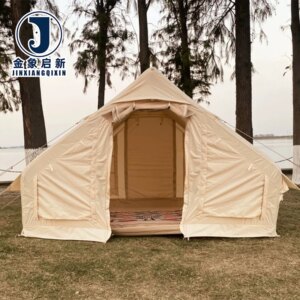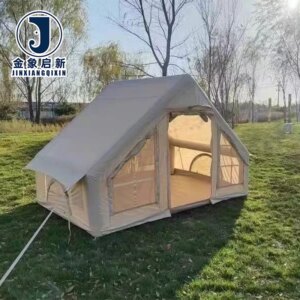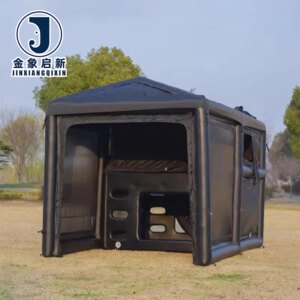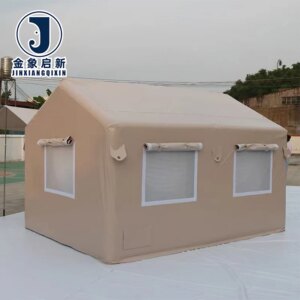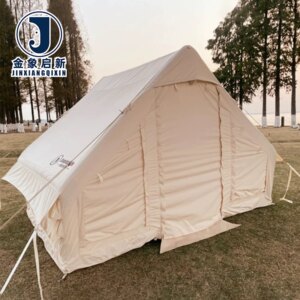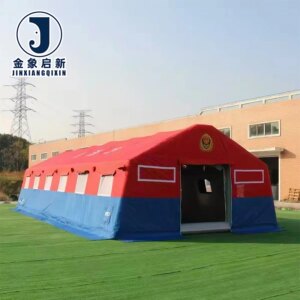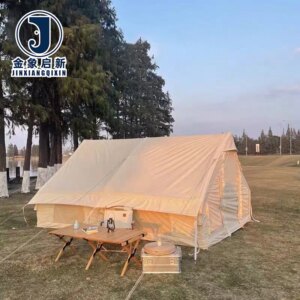

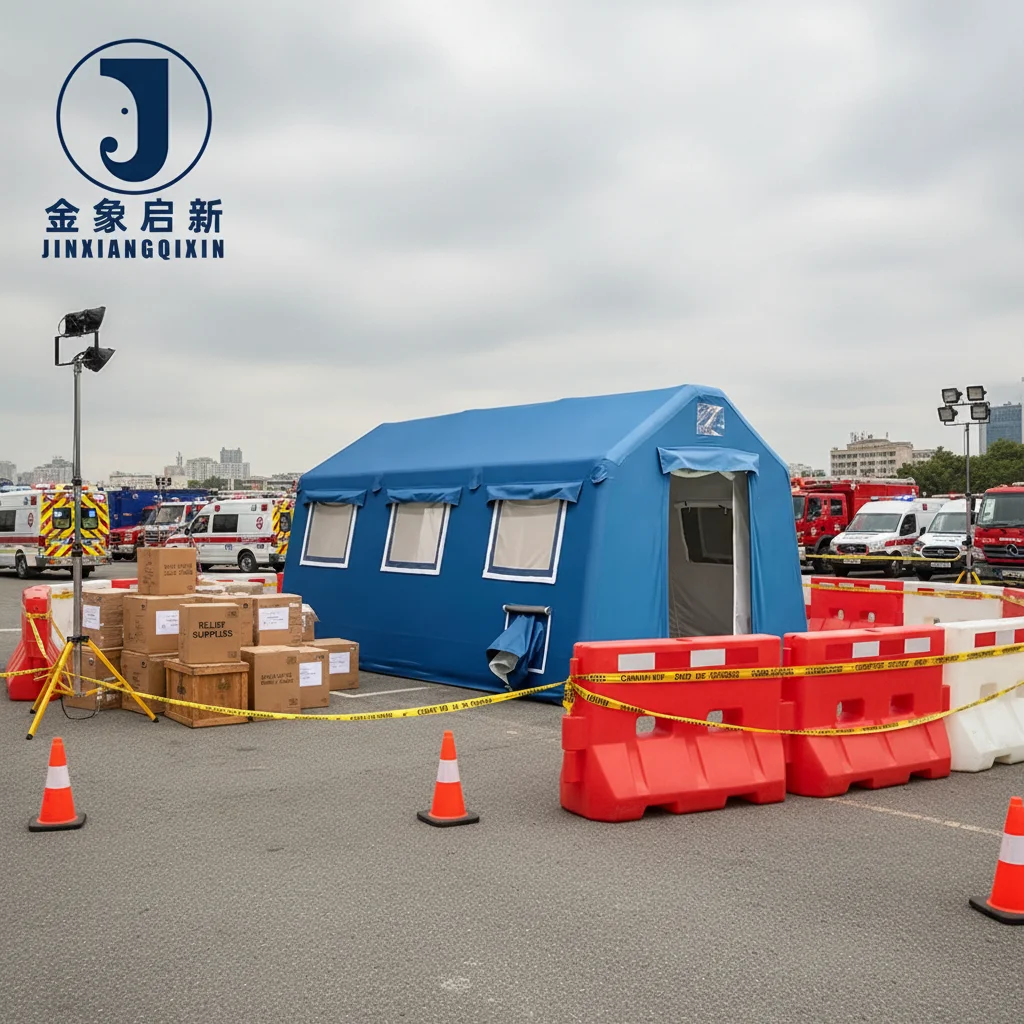
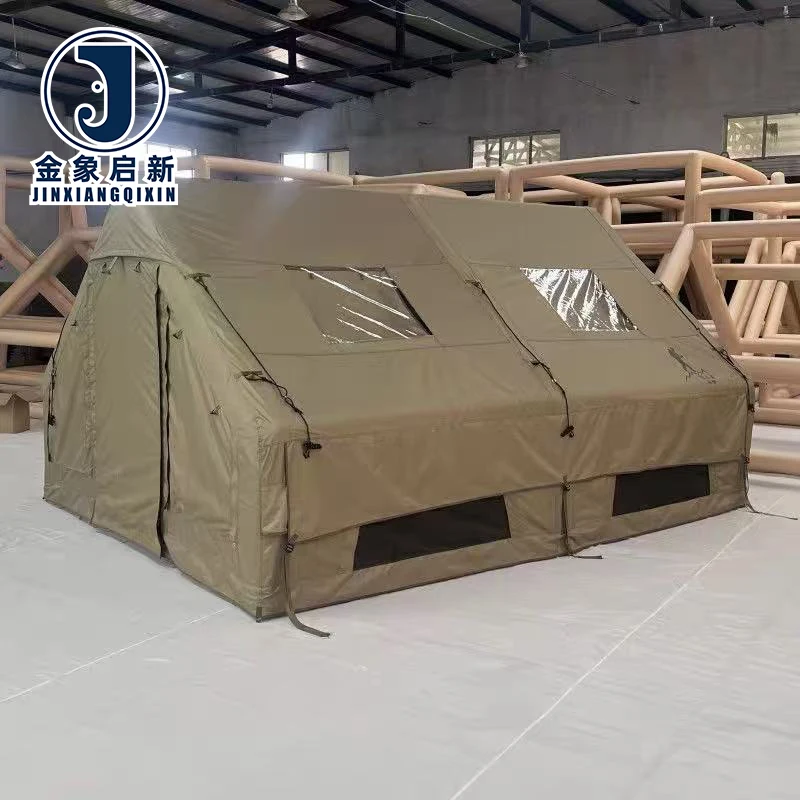
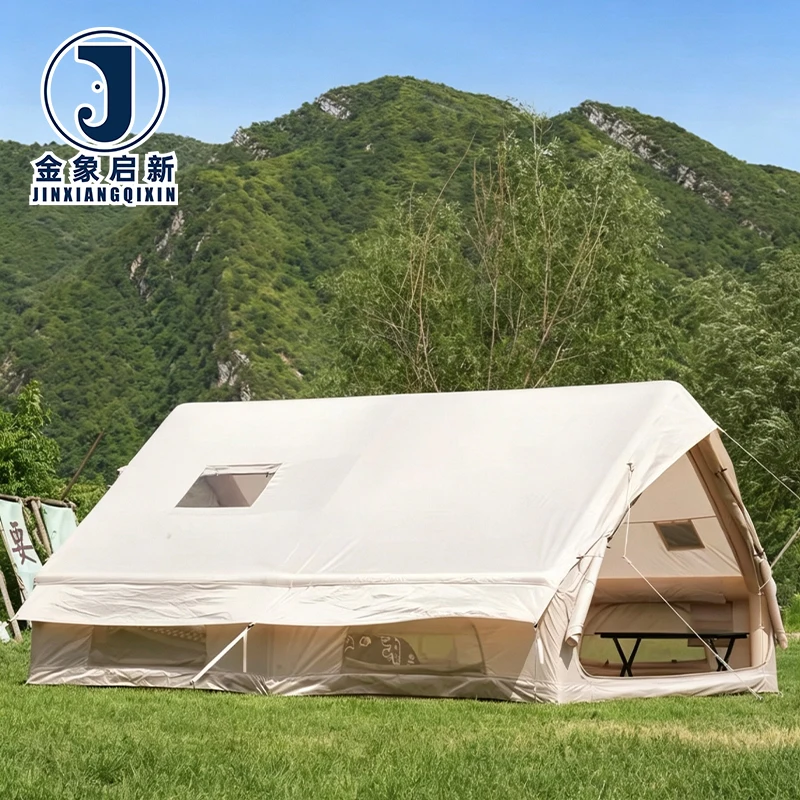
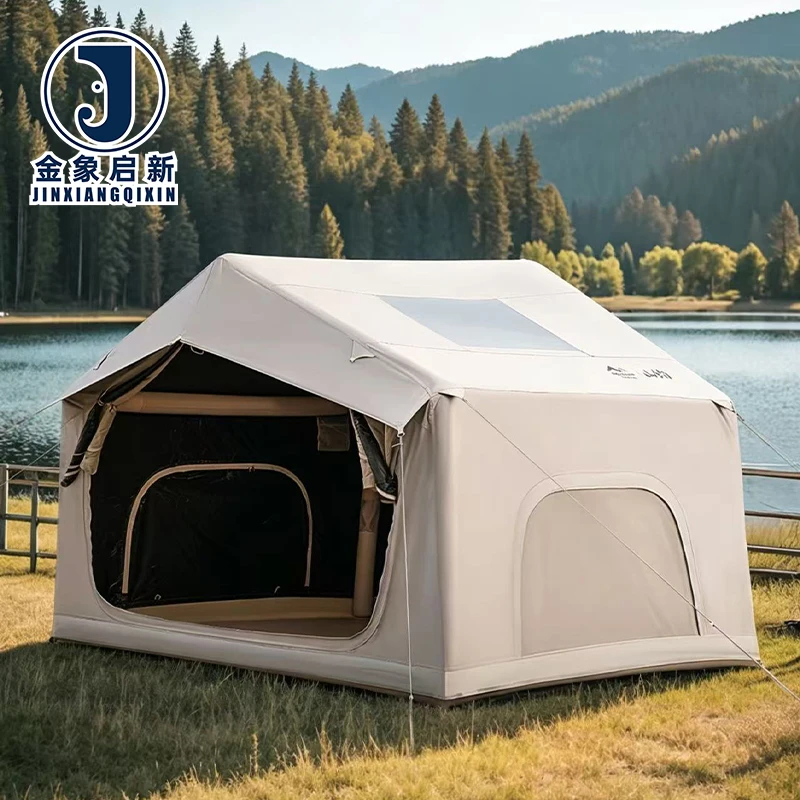
Description
Batch-Matched Roll Output — dedicated QA/QC inspection at every production stage verifies coating weight and GSM per roll before dispatch, ensuring the inflatable tent fabric you receive matches the specification sheet.
Technical Specifications
| Parameter | Value |
|---|---|
| Product Type | Inflatable Tent |
| Core Material | PVC tarpaulin |
| Waterproof Rating | 3000mm |
| Flame Retardancy | EN 13501-1 |
| Tear Resistance | ≥300N (test standard not stated) |
| Seam Strength | 250N (test standard not stated) |
| Season Rating | 4-season |
| Material Thickness Tolerance | ±0.02mm |
| Setup Mechanism | Quick automatic opening (tested to 500+ cycles, ~2-minute deployment) |
| Structure Type | Inflatable, extended type |
| Capacity | 2–8 person |
| UV Treatment | UV-resistant PVC formulation (test basis not stated) |
| Certifications | ISO 9001, ISO 14001, ISO 45001, CE |
Application Suitability
| Application | Exposure & Requirement |
|---|---|
| Disaster relief temporary shelter | Prolonged outdoor exposure, rapid deployment under extreme weather, waterproof integrity |
| Field command centers in crisis zones | Continuous occupancy, equipment protection, repeated inflation-deflation cycles |
| Emergency material distribution hubs | High foot traffic abrasion, ground contact moisture, UV degradation risk |
| Industrial logistics coordination shelters | Wind loading on inflated structure, temperature extremes from desert to alpine |
Why Roll-to-Roll Consistency Matters More Than Quoted GSM for Inflatable Tent Fabric
Coating weight variance across rolls is the leading cause of seam failure in inflatable structures, not the GSM number on the quotation.
When inflatable tent fabric roll stock arrives with inconsistent coating thickness from one roll to the next, the heat-sealing parameters that worked on roll three will burn through roll four. Fabricators then face a choice: re-calibrate welding equipment between every roll or accept weakened seams on the finished structure. [NEED_CITE: coating adhesion and peel strength test methods for PVC-coated polyester per ISO 2411]. Neither outcome is acceptable when the end product must hold internal air pressure under wind load in an emergency deployment zone.
How Coating Tolerance Affects Inflatable Structure Integrity
The ±0.02mm material thickness tolerance on this inflatable tent fabric roll stock ensures that each roll entering your welding line presents the same thermal mass to the hot-air or high-frequency welder. Inflatable and membrane structure manufacturers buying fabric by the roll know that even minor coating variation forces operators to adjust dwell time or temperature mid-run, and those mid-run adjustments are where seam delamination begins. Consistent coating weight across a container-load order means your first tent and your five-hundredth tent leave the factory with identical seam strength.
Batch Colour Matching Across Container-Load Volumes
Colour varying between rolls in the same order becomes immediately visible once inflatable tent panels are installed side by side on a disaster relief site or exhibition structure. Our batch-matched production process controls pigment dispersion and coating cure temperature within the same production run, so that a multi-roll order of inflatable tent PVC fabric arrives with uniform colour from the first core to the last. For tent and awning producers specifying custom colour runs, this eliminates the post-production sorting and panel-matching that delays project handover. [NEED_CITE: colour fastness and batch consistency standards for coated technical textiles].
Reading the Specification Sheet Beyond the GSM Number
A 3000mm waterproof rating on PVC tarpaulin tells you how much hydrostatic head the coating can resist before water penetrates, which matters when a disaster relief tent sits on saturated ground during continuous rainfall. The ≥300N tear resistance figure indicates how far a puncture or cut will propagate under load — critical for inflatable structures where internal pressure concentrates stress at any point of damage. The EN 13501-1 flame retardancy classification provides a European fire reaction grade that procurement agencies in many markets require for temporary public shelters. However, UV resistance is noted as a formulation feature; confirm the specific UV test standard required for your market before specifying.
What Happens When Specification Gaps Reach the Field
A relief tent deployed in a desert environment with UV treatment that was claimed but never tested will show surface chalking and embrittlement within weeks, long before the base fabric reaches its mechanical limit. Similarly, an inflatable structure welded with heat settings optimised for one roll’s coating weight may experience seam peel on the next roll when the coating is marginally thicker or thinner. [NEED_CITE: peel strength and seam integrity failure modes in inflatable membrane structures]. These are not manufacturing defects in the traditional sense — they are specification gaps that only become visible under field conditions, and they are the reason pre-shipment inspection records must include batch-specific test data rather than generic pass certificates.
Why Fabricators Source Inflatable Tent PVC Fabric Here
Three full production lines operating within a single facility allow container-load volumes of inflatable tent fabric roll stock to be produced under one set of process controls, rather than split across shifts or subcontracted lines with different coating calibrations. A dedicated R&D team handles custom width slitting, colour matching, and sample roll development so that trial orders arrive with the same coating formulation as the bulk production run. Every roll undergoes inspection against its material specification sheet before packing, with GSM, coating weight, and colour reference verified per roll rather than per batch average. Production capacity supports on-time dispatch of repeat orders without the long lead times that delay emergency procurement timelines.
Documentation & Verification
- Material specification sheet confirming GSM, base fabric denier, coating weight, and colour reference for each roll
- Pre-shipment inspection record with batch-specific waterproof and seam strength test data
- EN 13501-1 test report documenting the fire reaction grade for each production run
- Roll packing list detailing container loading by roll count and weight for logistics planning
- Certificate of origin and customs documentation prepared for international shipment
Fabrication, Handling & Storage
- Hot-air weld temperature must account for the ±0.02mm thickness tolerance to avoid seam scorch on thinner sections
- Store PVC tarpaulin rolls upright on pallets to prevent flat-spot creasing across the inflatable membrane panels
- Unroll and acclimatise fabric at installation-site temperature before inflation to reduce cold-stiffness stress
- Use PVC-compatible solvent cleaners only — aggressive solvents degrade the coating surface and compromise waterproof integrity
- Cut patterns to maximise yield from standard roll width, placing seams away from high-stress inflation bend points
Request a Specification Proposal
Provide your target roll width, annual volume requirement, and the fire classification grade your market mandates so we can match the correct formulation to your inflatable tent production line. If you require custom colour or printed branding on the fabric surface, include your Pantone or RAL reference and we will develop a sample roll for weld-trial approval before bulk production.
Frequently Asked Questions
Q: How is batch-to-batch colour consistency guaranteed across multiple rolls?
A: Pigment dosing and coating cure temperature are controlled within a single production run. Each roll is checked against the colour reference on the material specification sheet during pre-shipment inspection, so that a container-load order arrives with uniform colour across every roll core.
Q: What roll widths and lengths are available for inflatable tent fabric?
A: Standard and custom widths are available to match your cutting-table layout and minimise off-cuts. Roll length is configured to your container-load volume and handling equipment capacity. Provide your required width and target metres per roll when requesting a quotation.
Q: How to verify GSM and coating weight on arrival against the quotation?
A: Each shipment includes a pre-shipment inspection record listing GSM and coating weight measured per roll. Buyers can cross-check these figures against the material specification sheet and conduct independent sampling on receipt using standard coated-fabric test methods.
Q: What is the MOQ for custom width, colour, or pattern printing on roll stock?
A: Minimums depend on the specific colour, width, and printing complexity. Custom sample rolls are produced first for your weld-trial and visual approval. Share your target specification and volume so we can confirm the applicable minimum for your order.
Q: How are rolls packed and loaded for container shipment to prevent transit damage?
A: Rolls are packed upright on pallets with protective end-caps and stretch wrap to prevent edge damage and moisture ingress during ocean freight. The roll packing list details roll count, weight, and container loading plan for your logistics team.