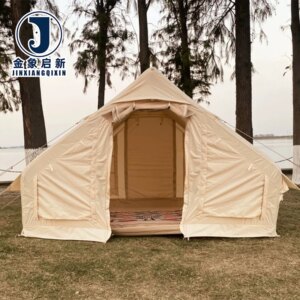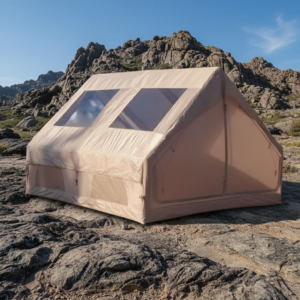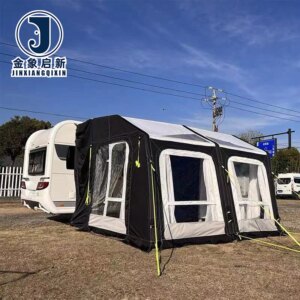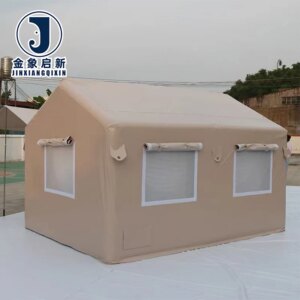
Description
Roll-to-Roll Uniformity — Batch-controlled coating lines ensure colour and weight stay consistent across every roll of inflatable tent fabric in your order.
Technical Specifications
| Parameter | Value |
|---|---|
| Product Type | Inflatable Tent |
| Core Material | PVC Tarpaulin |
| Waterproof Rating | Minimum 3000mm water column |
| UV Resistance | 400 hours accelerated aging test |
| Tear Strength | Tested per ASTM D751 |
| Wind Load Capacity | Up to 12 m/s |
| Service Temperature | -10°C to 40°C |
| Dimensional Tolerance | ±2 cm for large structures |
| Inflation Test Protocol | 3-stage (24-hour initial pressure, temperature variation, structural load) |
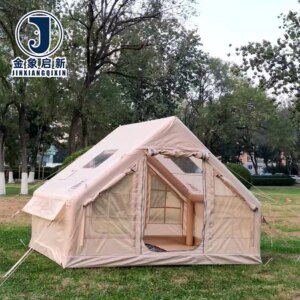
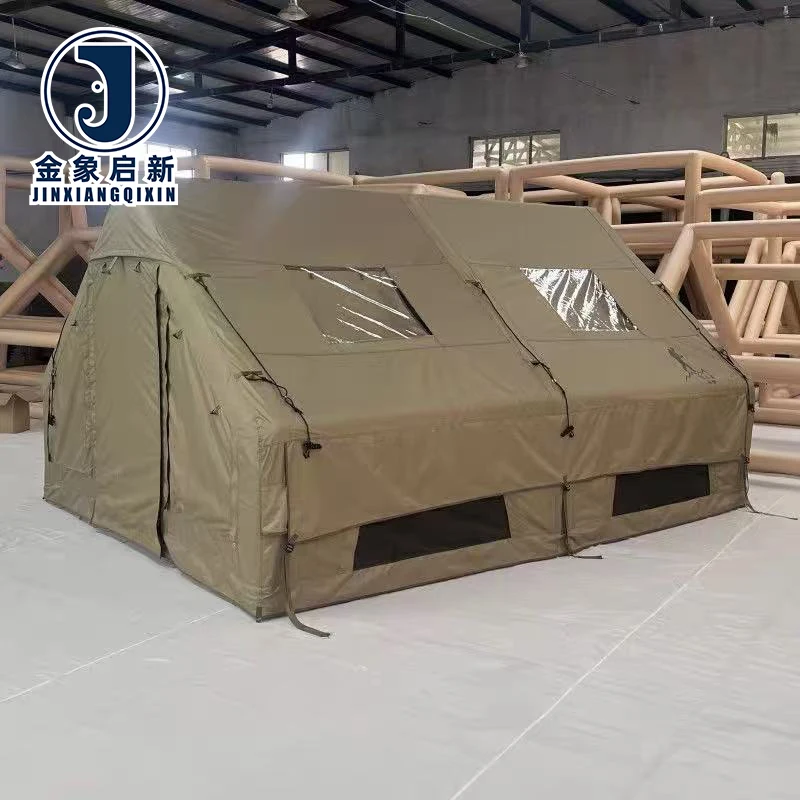
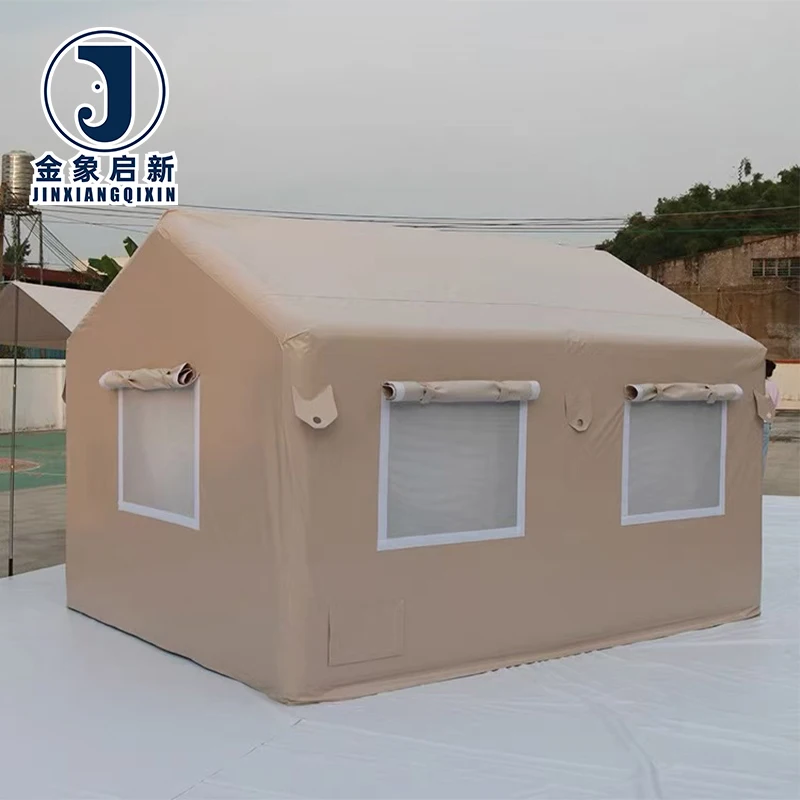
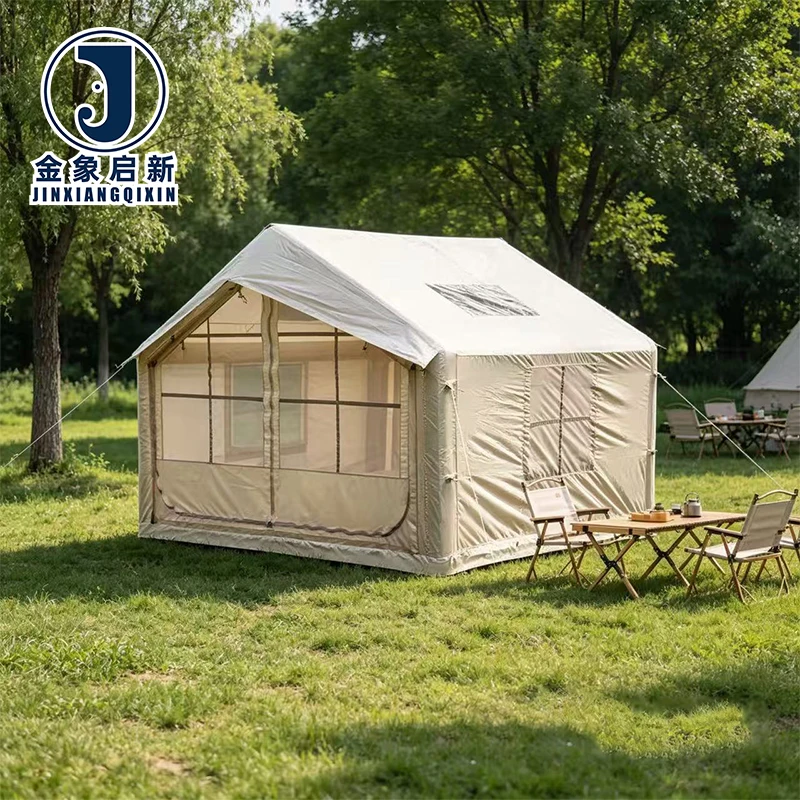
| Product Form | Inflatable Camping Tent |
| Construction | Single-layer |
| Customisation | OEM & ODM — dimensions, colour, pattern printing, ventilation, reinforcement |
| Sample Lead Time | 7–10 days |
| Standard Lead Time | 15–20 days for non-custom orders |
| Certifications | ISO 9001, ISO 14001, ISO 45001, CE |
Application Suitability
| Application | Exposure & Requirement |
|---|---|
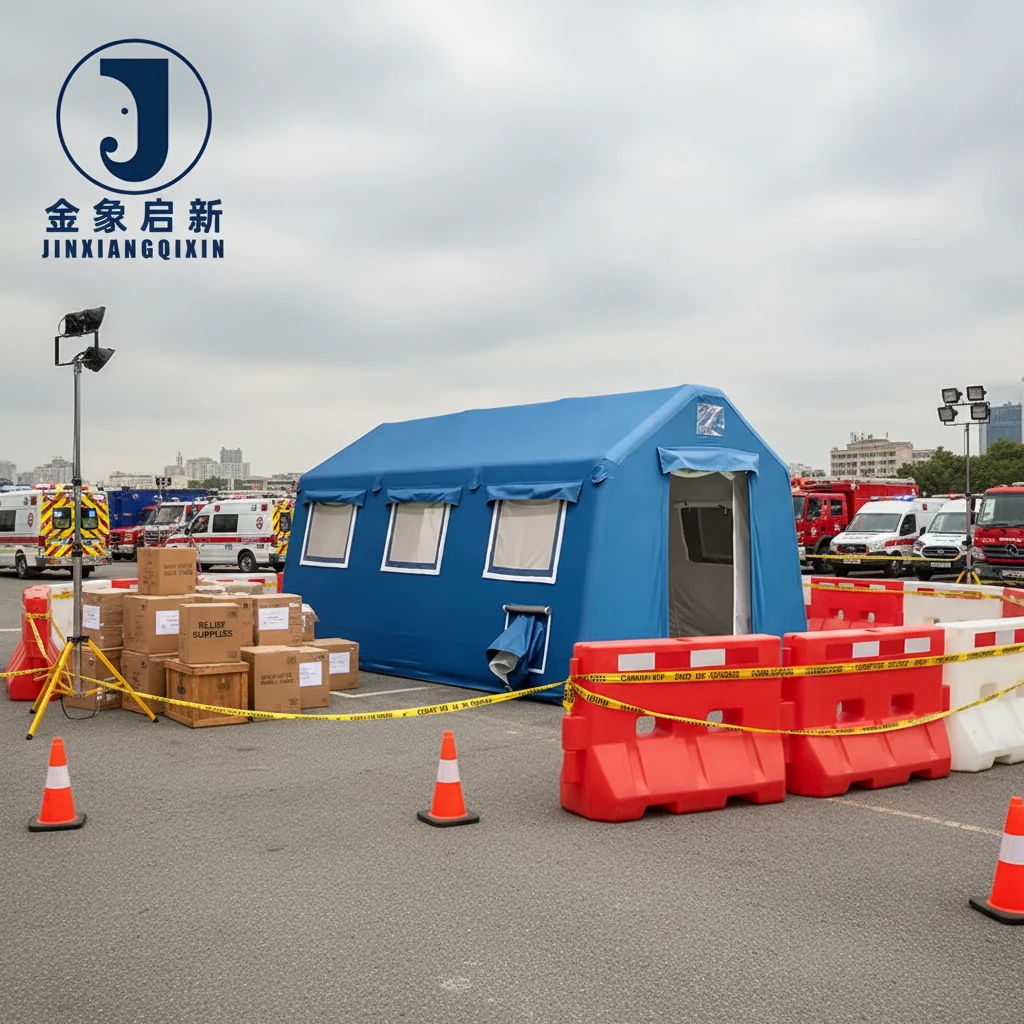
| Disaster relief shelters | Rapid deployment, repeated inflation cycles, exposure to rain and wind |
| Construction site command tents | Prolonged UV, dust ingress, mechanical contact with tools and equipment |
| Remote industrial workspace covers | Temperature swings, ground moisture, extended standing time |
| Equipment storage during outdoor operations | Waterproof membrane integrity, abrasion from loading and unloading |
| Mobile medical or logistics hubs | Structural stability under wind load, cleanliness of interior surface |
Why Batch Consistency Matters More Than Quoted GSM for Inflatable Tent Fabric
A roll that matches the spec sheet but shifts colour or stiffness mid-order disrupts your entire production run.
When inflatable tent manufacturers source PVC tarpaulin by the roll, the first sample often looks right — correct weight, acceptable hand feel, colour on target. Problems surface weeks later when the second or third container arrives and the coating weight drifts or the shade no longer matches [NEED_CITE: roll-to-roll GSM variance across multi-container orders]. Panels cut from different rolls end up visibly mismatched on the finished inflatable structure, forcing rework or customer rejection. For wholesale Inflatable Tent fabric buyers, the real cost is not the per-metre price but the downtime and waste caused by inconsistency.
How Coating Process Control Affects Inflatable Structure Performance
The behaviour of an inflatable tent under pressure depends directly on the coated fabric. A PVC tarpaulin with uneven coating thickness creates weak zones where air leakage concentrates, reducing the interval between re-inflation cycles. Inflatable Tent roll stock must maintain uniform adhesion between the base fabric and the coating layer so that welded seams hold at the same stress level across the entire panel.
Weld Seam Integrity Across Production Batches
Inflatable tents rely on heat-welded seams to contain internal pressure. When coating formulation or weight varies between rolls, the optimal welding temperature and dwell time shift as well [NEED_CITE: relationship between PVC coating composition and hot-air weld parameters]. Fabricators who set weld parameters based on the first roll may find seams peeling on panels made from later batches. Batch-consistent Inflatable Tent fabric eliminates this trial-and-error, letting production teams lock in weld settings and run with confidence.
What the Specification Numbers Mean for Inflatable Tent Fabrication
The waterproof rating of minimum 3000 mm water column indicates the hydrostatic head the PVC membrane can withstand before leakage — relevant for inflatable camping tents exposed to sustained rainfall. Tear strength tested per ASTM D751 provides a standardised measure of how the fabric resists propagation of a cut or nick, which matters when tent panels are handled during inflation and deflation cycles. The 400-hour accelerated aging test addresses UV exposure, though the specific test standard should be confirmed for your regional compliance requirements. Dimensional tolerance of ±2 cm on large structures ensures that panels cut to pattern will align correctly during welding, reducing fit-up errors on the assembly floor.
The Hidden Cost of Ordering Without Verifying Roll Consistency
Colour shift between rolls is the most visible defect, but not the most expensive. Coating weight variation changes the fabric’s stiffness, which alters how panels fold and pack into the carry bag — a complaint that only appears after the inflatable tent reaches the end user [NEED_CITE: field complaints linked to coating weight variance in PVC tarpaulin rolls]. Weld failures under inflation pressure are harder to trace back to the fabric batch, leading manufacturers to blame their welding equipment before investigating material inconsistency. For tent and awning distributors loading full containers, one off-spec roll buried in the shipment can trigger a claim that far exceeds the material cost.
Why Volume Buyers Source Inflatable Tent Fabric Here
Three full production lines and 36 sets of processing equipment support bulk roll output without sacrificing coating consistency — every roll in a container-load order passes through the same calibrated coating head. A 10-technician R&D team handles custom width, colour matching, and pattern printing for OEM buyers who need branded Inflatable Tent roll stock. Dedicated QA/QC staff inspect every roll before dispatch, recording GSM and colour reference against the purchase specification. The 9,180 m² production facility maintains raw material inventory to keep standard grades available for rapid dispatch. Sample development within 7–10 days lets buyers validate fabric performance before committing to volume orders.
Documentation & Verification
- Material specification sheet stating GSM, base fabric, coating type, and colour reference for each roll
- Pre-shipment inspection record with batch-specific waterproof and tear strength results
- Roll packing list detailing roll count, individual weight, and container loading plan
- UV aging test report accompanying each batch of Inflatable Tent fabric
- Third-party testing via SGS or Intertek available within 7–10 business days on request
Fabrication, Handling & Storage
- Set hot-air weld temperature based on the PVC coating weight stated on the roll ticket before running production panels
- Allow rolled PVC tarpaulin to acclimatise to workshop temperature before unrolling to avoid crease memory
- Store rolls vertically on pallets to prevent flat-spotting and edge compression on the Inflatable Tent fabric
- Use solvent-based cleaner compatible with PVC coating for surface prep before welding reinforcement patches
- Cut panels with a minimum seam allowance to accommodate the ±2 cm dimensional tolerance on large inflatable structures
- Avoid stacking heavy objects on stored rolls to protect the coating surface from permanent impression marks
Request a Quotation for Inflatable Tent Fabric
To provide an accurate specification and lead time, share your target GSM range, required roll width, annual volume estimate, and any colour or print requirements. Let us know if you need finished panels cut to your pattern or roll stock only, and whether third-party testing documentation is required for your market compliance.
Frequently Asked Questions
Q: How is GSM verified on arrival and what documentation supports roll-to-roll consistency?
A: Each roll ships with a ticket stating measured GSM and colour reference. A pre-shipment inspection record accompanies the batch, listing individual roll weights against the quoted specification. Buyers may conduct receiving inspection using a fabric scale and compare results to the supplied documentation for verification.
Q: How do you control colour variation between rolls within the same bulk order?
A: Coating batches are mixed to a single formulation and run consecutively on the same calibrated line. Rolls from the same production run are grouped and labelled with a shared batch code. Shade cards from the approved sample are used as the visual reference during in-process QA checks.
Q: What standard widths and roll lengths are available, and can custom widths be ordered in volume?
A: Standard widths cover common inflatable tent panel layouts, with custom widths produced on request. Minimum order quantities apply to non-standard widths and colours. Contact the sales team with your target dimensions and volume to confirm feasibility and lead time.
Q: How are rolls packed and loaded for container shipment to prevent damage and creasing?
A: Rolls are wound on cores, wrapped in protective film, and palletised for container loading. A loading plan is prepared to maximise container utilisation while keeping rolls secure against shifting during transit. The packing list details roll count and gross weight for customs clearance.
Q: What is the MOQ for custom width, colour, or printed rolls?
A: MOQ depends on the degree of customisation — standard colour rolls in non-standard widths carry lower minimums than fully custom-printed runs. Sample rolls can be produced within 7–10 days to validate the specification before bulk commitment.