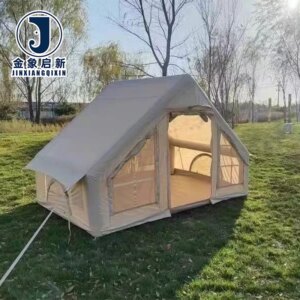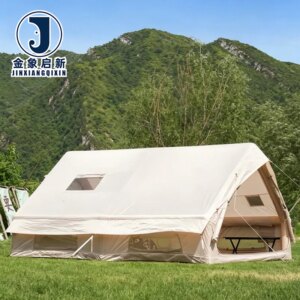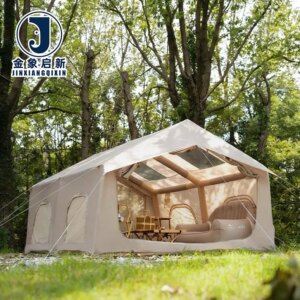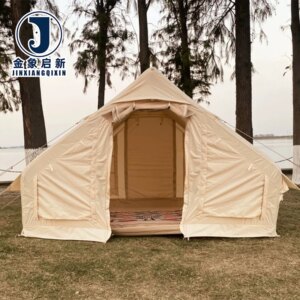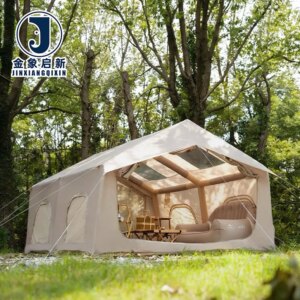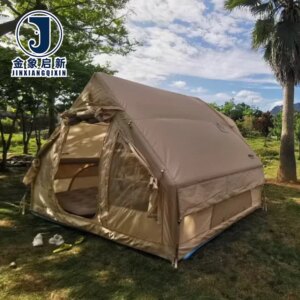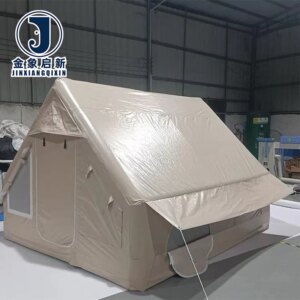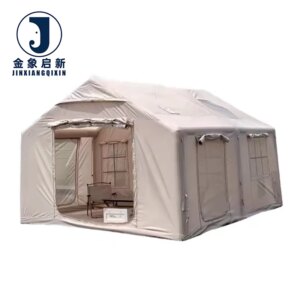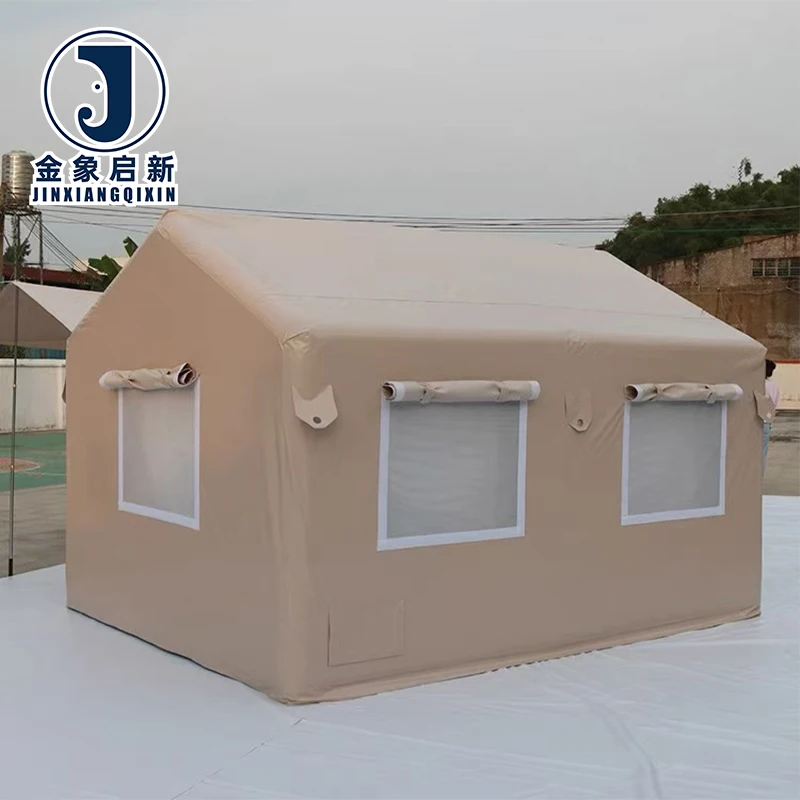
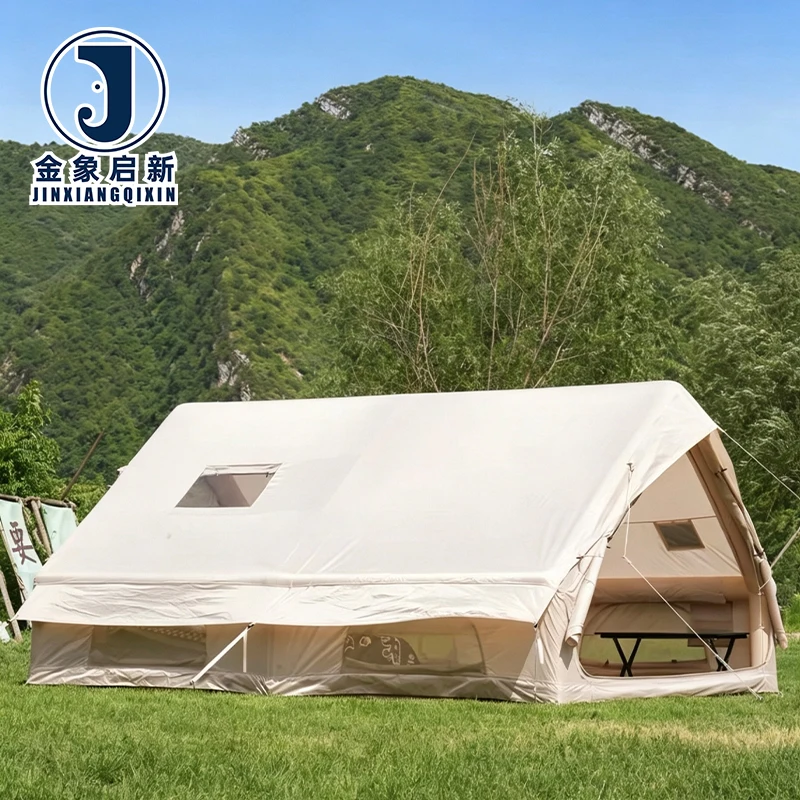
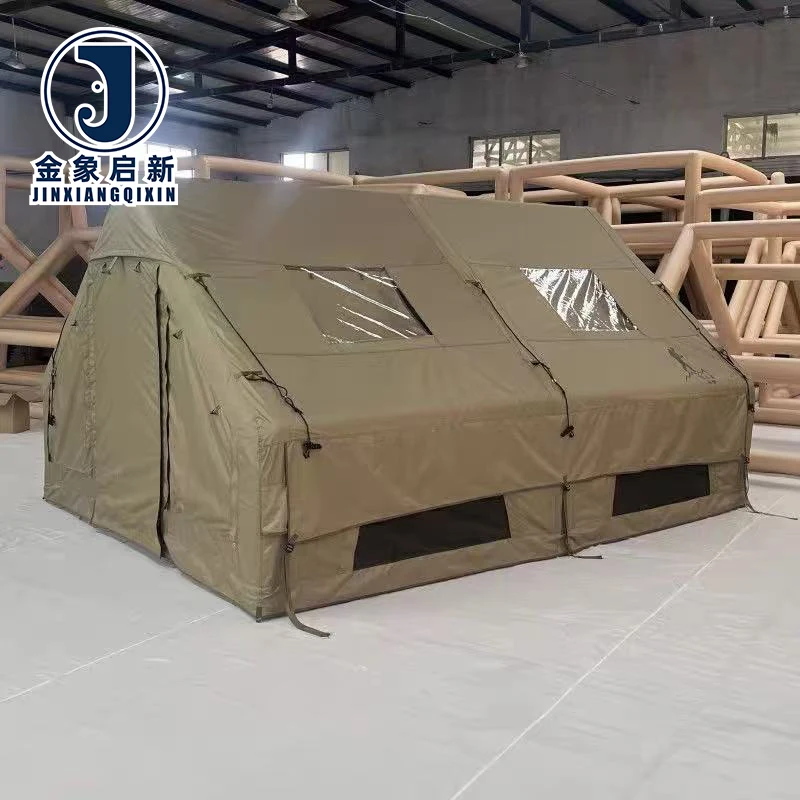
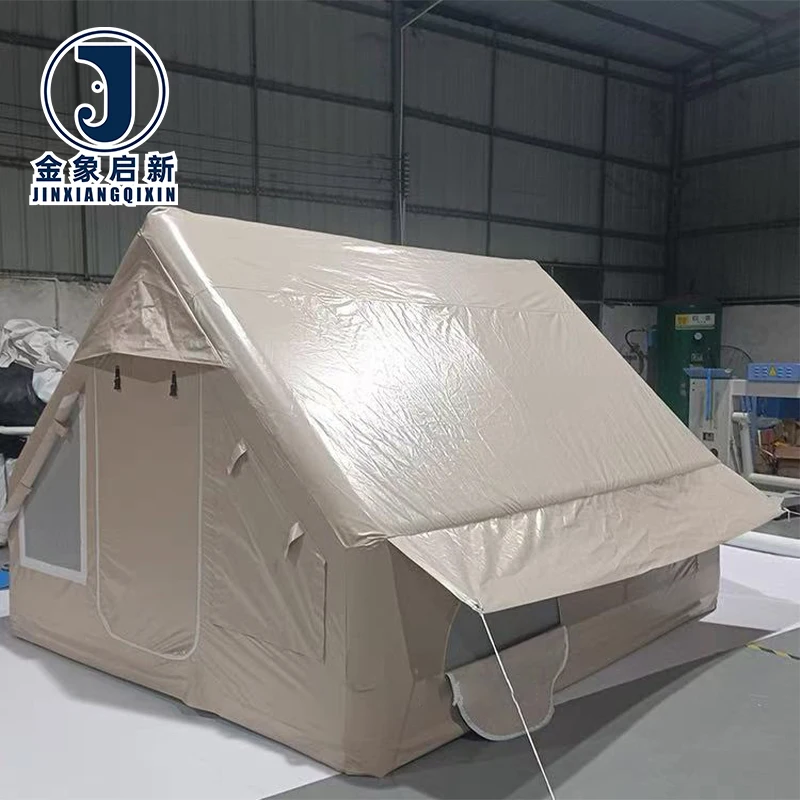
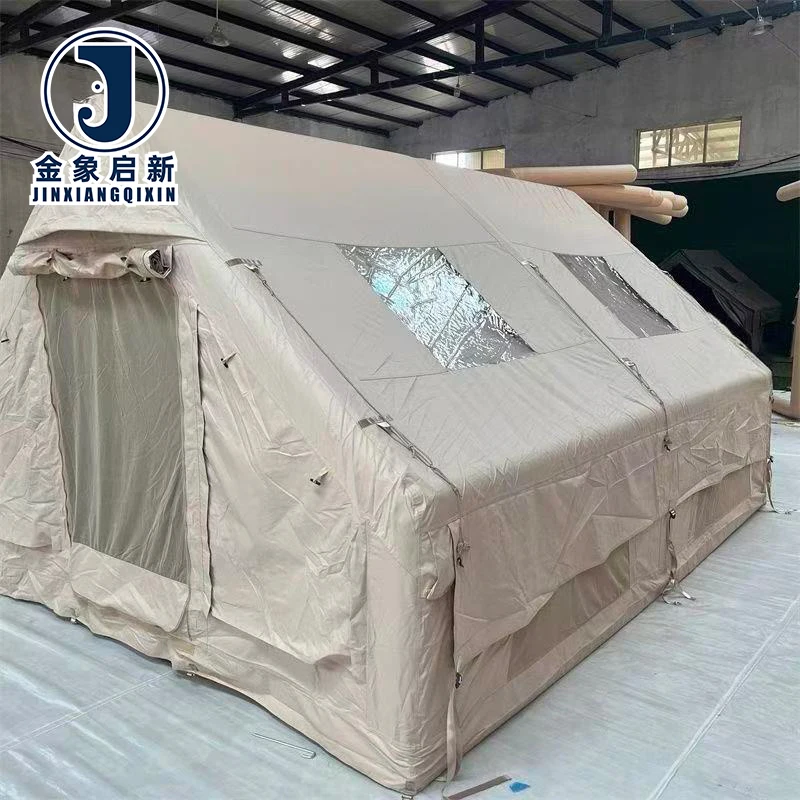
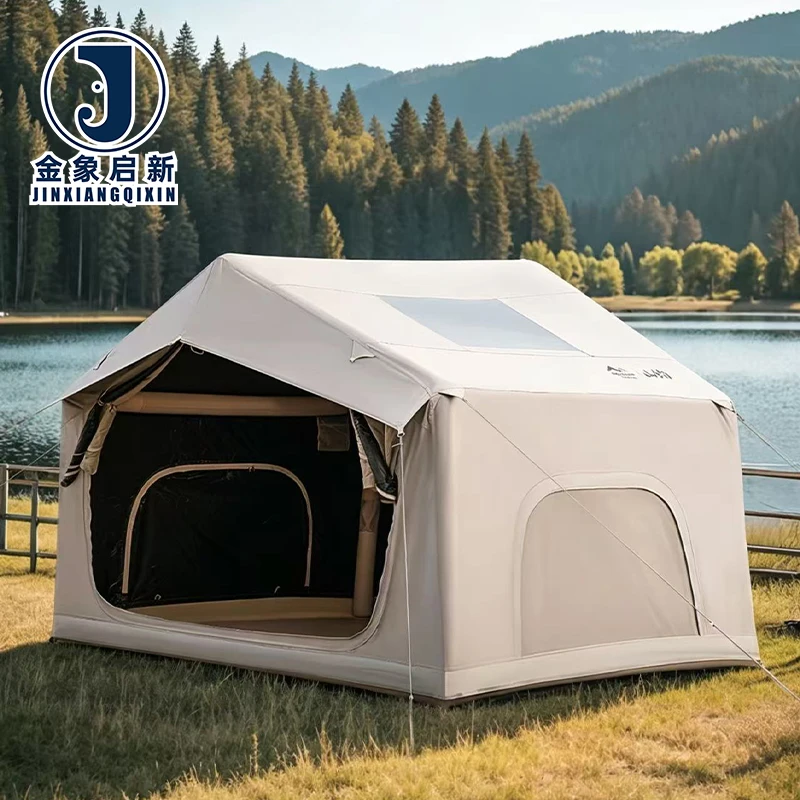
Description
Roll-to-Roll Consistency — Three full production lines with dedicated QA at every stage keep GSM, colour, and coating weight uniform across container-load orders of PVC inflatable tent roll.
Technical Specifications
| Parameter | Value |
|---|---|
| Product Type | Inflatable tent |
| Core Material | PVC tarpaulin |
| Capacity | 6-8 persons |
| Opening Mechanism | Quick automatic opening |
| Design Feature | Four-season design |
| Construction | Single layer |
| Type | Extended type |
| Waterproof | Fully waterproof coated construction |
| UV Resistance | UV-resistant treatment (test basis not stated — confirm grade required for your market) |
| Tear Resistance | Tear-resistant PVC coated fabric |
| Customization | OEM & ODM support |
| Quality System | Full-process quality inspection with dedicated QA & QC staff |
| Certifications | ISO9001, ISO14001, ISO45001, CE |
Application Suitability
| Application | Exposure & Requirement |
|---|---|
| Construction site command centers | Continuous outdoor exposure, wind load on inflatable tubes, abrasion from site traffic and equipment movement |
| Logistics storage shelters | Rain and dust ingress protection, repeated inflation and deflation cycles, UV exposure during extended yard storage |
| Emergency response staging areas | Rapid deployment under time pressure, transport over rough terrain, variable climate conditions across disaster zones |
| Outdoor industrial events | Crowd-facing appearance requiring colour consistency across multiple units, sun exposure over multi-day setups |
| Temporary workspace enclosures | Wind-driven rain resistance, thermal comfort in four-season operation, weld integrity under internal air pressure |
Why Batch Consistency Matters More Than Quoted GSM for Inflatable Shelter Fabric
Colour shifts between rolls in a single container load can force an entire production run to be re-sorted or rejected.
When sourcing Inflatable tent roll for manufacturing rapid-deployment shelters, buyers often focus on the GSM stated on the quotation. Yet the failures that reach the field are rarely about weight alone. A roll that tests within tolerance on arrival but shifts colour against the next roll creates visible panel mismatches once fabricated into adjacent tent sections. Welding parameters that worked on the first roll may produce weak seams on a second roll if coating formulation varies between batches. These inconsistencies compound across a container of Inflatable fabric wholesale stock, turning a material procurement decision into a production scheduling problem [NEED_CITE: tensile and tear test methods for coated fabrics per ISO 1421].
Roll-Stock Sourcing Demands Production Line Discipline
Manufacturers buying PVC inflatable tent fabric by the roll need assurance that every roll in an order behaves identically under the same heat-welding and cutting settings. The coating weight, base fabric tension, and surface finish must remain stable from the first roll to the last. Jinxiang runs three full production lines with 36 sets of professional equipment, giving the capacity to fulfil large Inflatable tent roll orders while maintaining in-process checks at every coating stage. This is how batch-to-batch uniformity is achieved in practice rather than promised on paper.
How Custom Width and Colour Affect Container Planning
Standard widths suit general cutting patterns, but inflatable tube manufacturers often need specific widths to minimise off-cuts and welding seams on curved chamber sections. OEM and ODM support covers custom width, colour matching, and pattern printing directly on the Inflatable fabric wholesale stock. The 10-person R&D team develops samples within days so that fabric behaviour under your specific welding equipment can be verified before committing to bulk volume [NEED_CITE: PVC coated fabric welding temperature and dwell time parameters].
Reading the Specification Sheet Beyond the GSM Number
The single-layer construction of this PVC tarpaulin balances transport efficiency against durability for field-deployable shelters. Waterproof performance depends on the continuity of the coating across the entire fabric surface — any pinhole or thin spot becomes a leak path once the inflatable chamber is pressurised. Tear resistance is governed by the base fabric denier and weave density together with the coating adhesion, not by weight alone. UV-resistant treatment is available, though the specific grade should be confirmed against the exposure conditions of your target market and verified with a test report. Four-season design reliability requires the material to resist both low-temperature stiffening and high-temperature softening across the operating range.
The Hidden Cost of Skipping Pre-Shipment Fabric Verification
A container of PVC inflatable tent fabric that arrives with inconsistent GSM across rolls forces the manufacturer to either re-test every roll or accept unknown performance variation in finished shelters. Coating weight below specification reduces weld strength at the seam points where inflatable chambers experience the highest internal pressure. Colour variation between rolls discovered after cutting wastes material and delays assembly. Welded seams failing before the fabric itself tears is a recurring pattern when coating formulation drifts between production batches without the buyer’s knowledge [NEED_CITE: weld failure analysis in coated technical textiles]. These problems are preventable through documented pre-shipment inspection rather than post-delivery dispute resolution.
What This Supply Chain Delivers to Inflatable Shelter Manufacturers
Deep process control over coating weight and adhesion comes from nearly 30 years focused exclusively on coated fabric, not from general-purpose textile capability. Three full production lines provide the volume capacity to ship container-load Inflatable tent roll orders on schedule without splitting production across subcontracted facilities. A 10-person R&D team handles material selection, custom sizing, and sample development so that buyers can validate fabric performance on their own welding equipment before production starts. Dedicated QA and QC staff inspect every roll at each production stage, with 100% inspection completed before dispatch. Full-process quality inspection records accompany each shipment so that incoming material can be traced back to specific production runs and coating batches.
Documentation & Verification
- Material specification sheet stating PVC base fabric, coating type, and treatment details per roll
- Roll packing list with batch-specific colour reference and GSM for incoming inspection
- Pre-shipment inspection record documenting 100% inspection results before container loading
- ISO9001, ISO14001, ISO45001, and CE certificates included with dispatch documentation
- UV and tear-resistance test reports supplied where applicable to stated treatment grades
- Certificate of origin and customs documentation for cross-border Inflatable fabric wholesale shipments
Fabrication, Handling & Storage
- Heat-weld temperature and dwell time should be verified on sample rolls before bulk fabrication of inflatable chambers
- Store PVC tarpaulin rolls upright on pallets to prevent flat-spot deformation that affects cutting accuracy
- Single-layer construction requires clean, flat cutting surfaces to avoid snags through the coated fabric
- Allow cold-transported rolls to reach workshop temperature before unrolling to prevent coating micro-cracking
- Use PVC-compatible cleaners only; solvent-based products may degrade the coating surface and affect weld adhesion
- Plan cutting layouts around the supplied roll width to minimise welded seams on pressurised tube sections
What to Include in Your Enquiry
Specify the target market and any fire-safety or compliance standards the finished inflatable shelters must meet in that jurisdiction. Provide the required roll width, annual volume estimate, and whether you need plain stock or OEM colour and print customisation. Indicate whether you are sourcing Inflatable tent roll for your own fabrication line or require cut-to-size panels. Request sample rolls to validate welding compatibility and colour consistency before placing a bulk order.
Frequently Asked Questions
Q: How is roll-to-roll colour consistency maintained across a full container order?
A: Every production run is tracked by batch with colour reference recorded on the roll packing list. Dedicated QA staff inspect coating colour at multiple points during production, and 100% pre-shipment inspection compares every roll against the approved sample. This prevents the visible panel mismatch that occurs when rolls from different batches are cut and assembled side by side in finished inflatable shelters.
Q: What width options are available for inflatable tube cutting patterns?
A: Standard widths are available from stock, with custom widths produced to match your specific tube diameter and panel cutting layout. Custom widths reduce off-cuts and the number of welded seams on pressurised inflatable chambers. The R&D team develops sample rolls in the requested width within days so you can verify cutting yield and welding behaviour before committing to a bulk Inflatable fabric wholesale order.
Q: How can I verify GSM on arrival matches the quoted specification?
A: Each shipment includes a roll packing list documenting batch-specific GSM alongside the material specification sheet stating coating weight and base fabric details. Buyers should perform incoming weight verification per roll using a calibrated scale and a standardised sample area. Any discrepancy can then be traced to the specific production batch through the pre-shipment inspection record supplied with the documentation package.
Q: What is the minimum order for custom colour or OEM print on roll stock?
A: Minimum order quantities for custom colour, width, and OEM pattern printing depend on the specific combination requested. Custom colours require a production run large enough to ensure batch consistency within that colour. Request a quotation with your target colour reference, roll width, and estimated annual volume so that the minimum and lead time can be confirmed against current production scheduling.
Q: Is the PVC tarpaulin suitable for heat-welding inflatable chamber seams?
A: The PVC coated construction is designed for heat-welding, which produces stronger seams than stitching for pressurised inflatable applications. Welding parameters including temperature, pressure, and dwell time should be validated on sample material using your own equipment before bulk production. The single-layer PVC tarpaulin coating formulation determines the optimal weld window, and the R&D team can advise on settings based on the specific roll stock grade ordered.