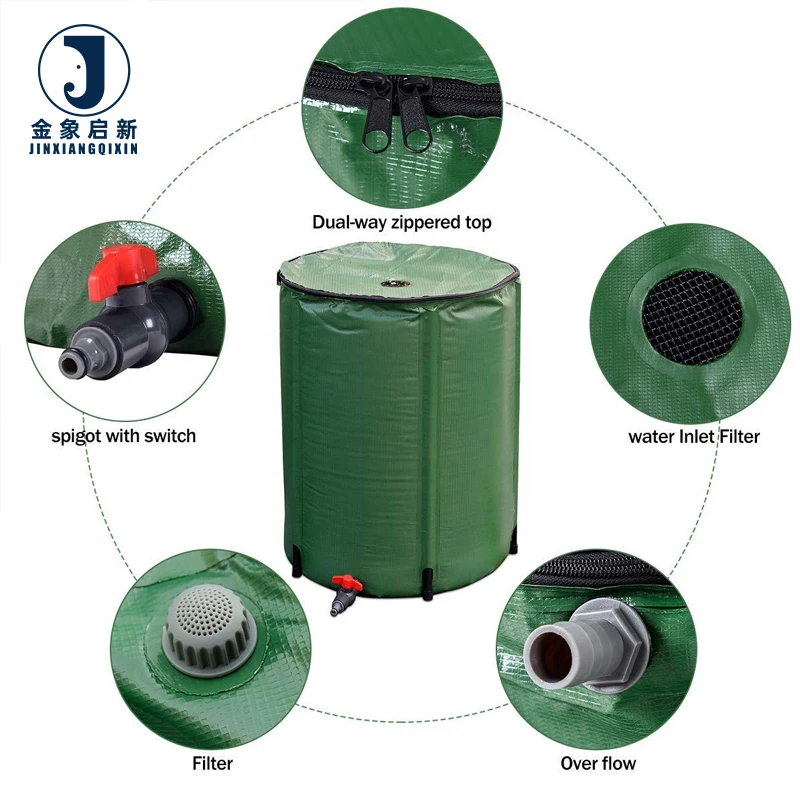
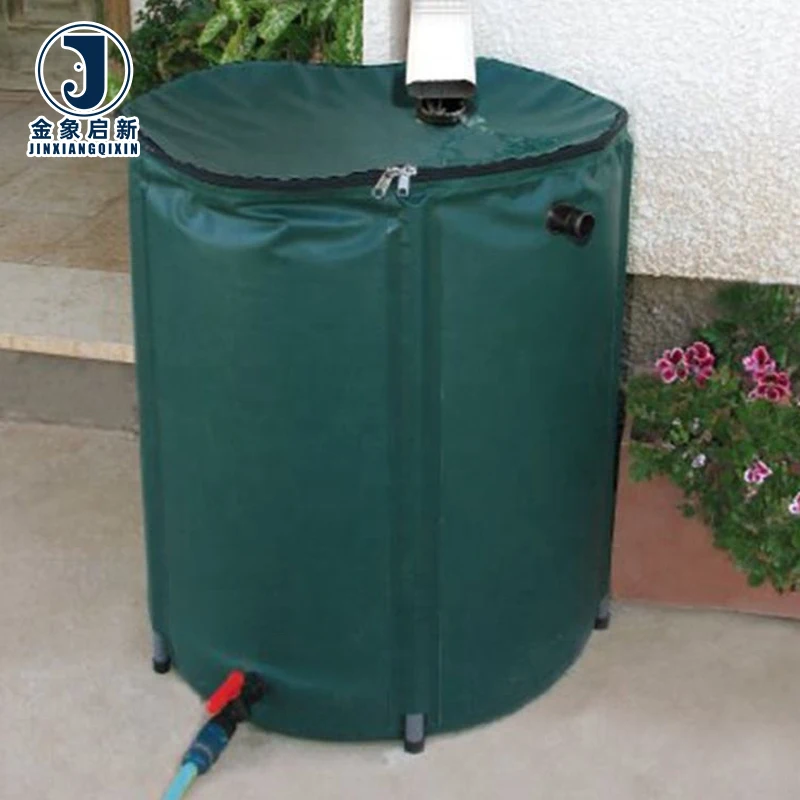
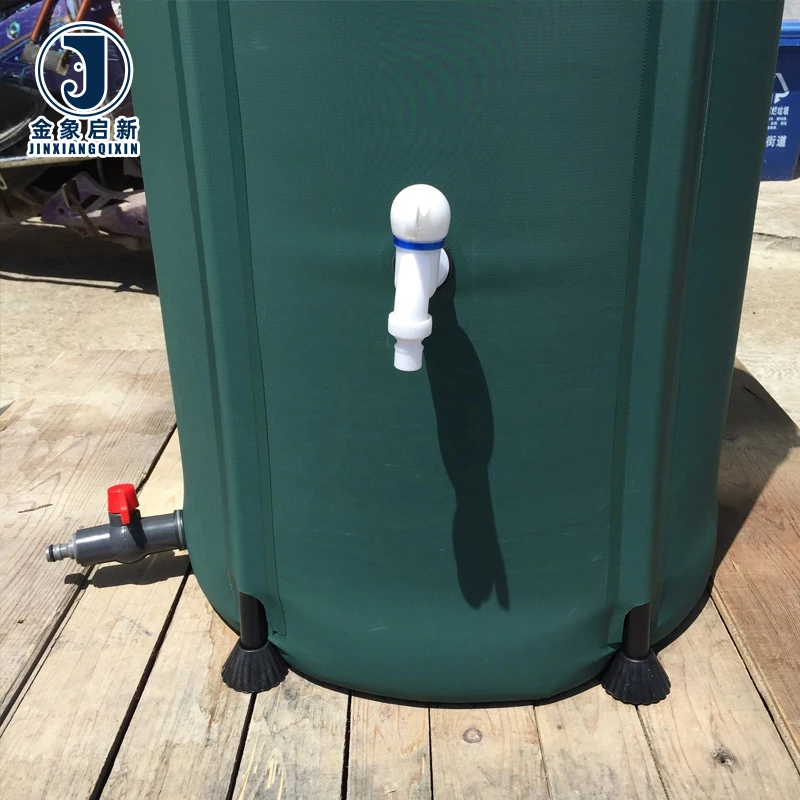
Description
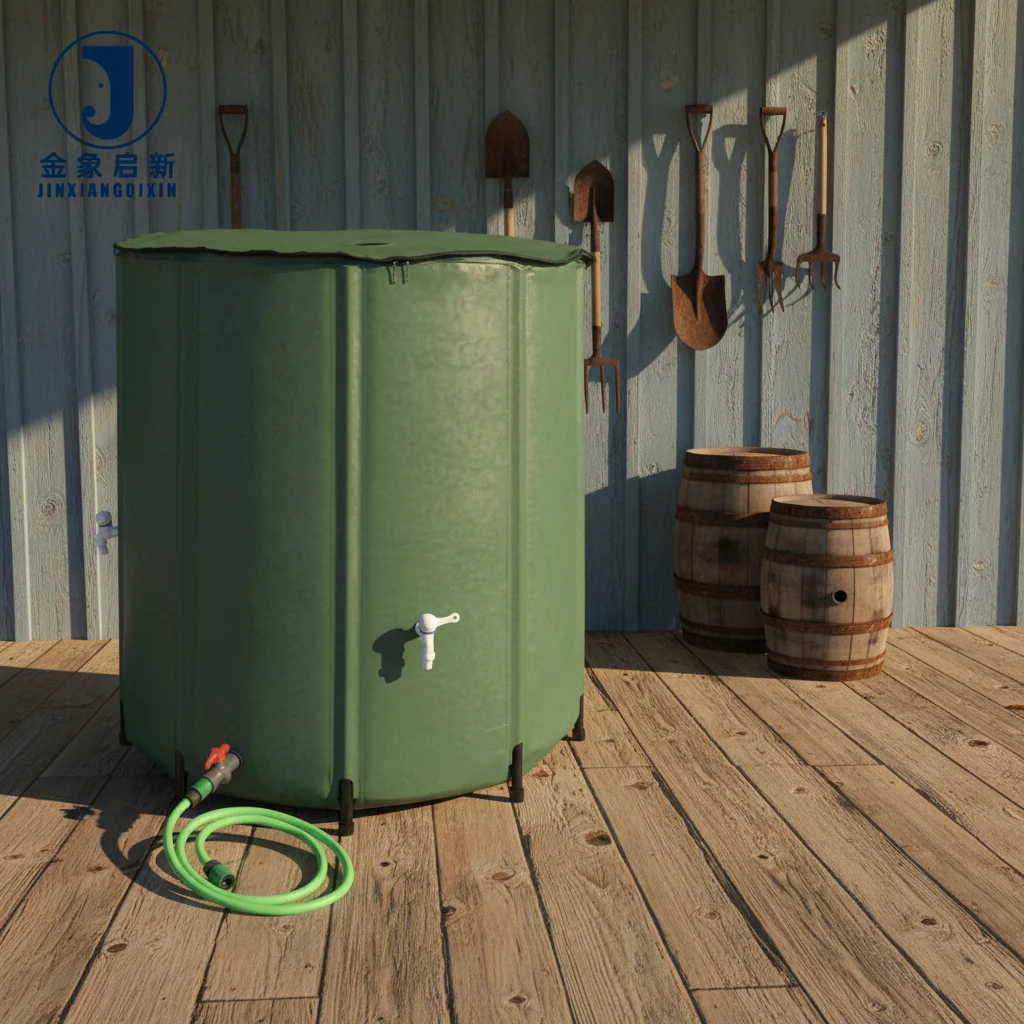
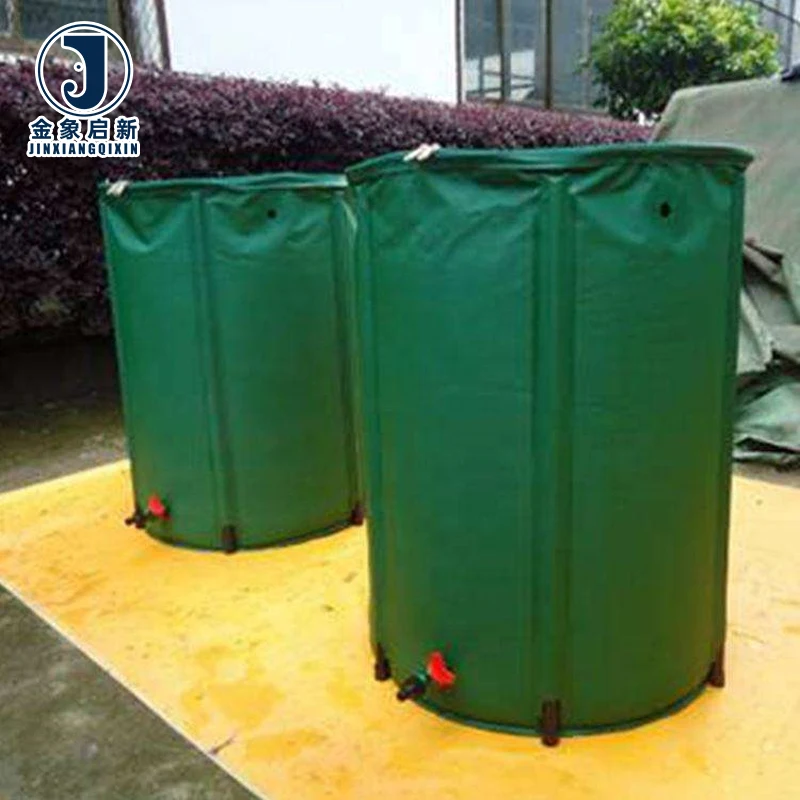
Roll-to-Roll Consistency — Every collapsible PVC rain water barrel across a multi-SKU container load is matched for colour, coating adhesion, and seam integrity through batch-level dye-lot control and full pre-shipment inspection.
Technical Specifications
| Parameter | Value |
|---|---|
| Product Type | Rain Water Storage Barrel |
| Material | PVC Tarpaulin / PVC Mesh Cloth |
| Fabric Grade | 500D / 1000D |
| Capacity Options | 200L / 380L / 500L / 750L |
| Structure | Collapsible with PVC Support Rod |
| Waterproof | Yes |
| Anti-UV | Treated (test basis not stated in source) |
| Anti-Mildew | Yes |
| Flame Retardant | Available — confirm grade required for your market |
| Anti-Static | Available — confirm standard required for your application |
| Tear-Resistant | Yes (test standard not stated in source) |
| Abrasion-Resistant | Yes |
Application Suitability
| Application | Exposure & Requirement |
|---|---|
| Garden rainwater collection | Prolonged UV exposure, seasonal temperature swings, rooftop debris contact |
| Agricultural irrigation reserve | Standing water contact, soil adjacency, frequent filling and draining cycles |
| Outdoor construction site water storage | Rough terrain handling, dust and particulate exposure, temporary deployment |
| Aquaculture water buffering | Constant moisture, microbial growth risk, bio-film accumulation |
Why Denier Choice Matters More Than Capacity Alone for a PVC Tarpaulin Rain Barrel
Selecting the correct base fabric denier determines whether the barrel survives its second season or splits at the lower seam under hydrostatic load.
A 200L barrel filled with rainwater carries roughly 200 kilograms of static weight pressing outward on every welded seam. Scale that to 750L and the lateral force at the base ring demands a fabric with sufficient tear propagation resistance to handle both the fill weight and any ground unevenness beneath it. I have seen importers default to the lowest-cost denier across all capacity tiers, only to receive field complaints where the 500L and 750L units developed stress cracks at the base weld within the first wet season [NEED_CITE: tensile and tear test methods for coated fabrics per ISO 1421].
The issue is rarely the coating itself. PVC tarpaulin as a material class is more than capable of containing water long-term. The failure point sits at the junction where hydrostatic pressure meets a seam that was welded to a lighter base fabric than the application actually requires.
Matching Base Fabric Grade to Fill Volume and Site Conditions
The 500D grade suits smaller capacities and low-impact garden installations where the barrel sits on a flat, prepared surface and is drained regularly. For 500L and 750L units deployed on uneven ground or in agricultural settings where the barrel may be moved while partially full, the 1000D base fabric provides the additional tear resistance needed to handle flex stress at the support rod channels. A collapsible PVC rain water barrel wholesale order mixing both grades in a single container allows distributors to stock a complete capacity range without committing to a single denier across every SKU.
Coating Adhesion and Long-Term Water Containment
The PVC coating must bond fully to the mesh base fabric to prevent delamination under constant water immersion. When adhesion is inconsistent, water migrates between the coating and the yarn, causing blistering that eventually compromises the waterproof barrier. The coating process applied here covers both anti-mildew and waterproof treatment at the production stage rather than as a post-finish, which ensures the treatment penetrates the full fabric structure rather than sitting on the surface where it can wash off during the first heavy rain cycle [NEED_CITE: PVC coating adhesion test methods for industrial fabrics].
Reading the Specification Sheet Beyond Capacity
Capacity in litres tells you how much water the barrel holds. It does not tell you whether the fabric will resist puncture from wind-blown debris, whether the welded seams will survive repeated freeze-thaw cycles, or whether the anti-UV treatment will hold up through a full summer of direct sunlight. The denier of the base fabric, the coating weight, and the specific treatment package together determine field performance. A 500D barrel with a heavier coating may outperform a 1000D barrel with a lighter one in abrasion resistance, while the reverse may be true for tear propagation. Buyers specifying for bulk purchase should request the material specification sheet that states base fabric denier and coating weight per SKU rather than relying on capacity as the sole selection criterion.
The Hidden Cost of Ordering Rain Barrels Without Batch Verification
Colour variation between barrels in the same shipment is the most visible defect once units are displayed side by side in a retail yard or lined up along a farm fence line. This is not a cosmetic complaint — it signals inconsistent coating batches, which can also mean variation in coating weight and treatment concentration across the order. Importers who do not require pre-shipment inspection records covering colour matching and GSM verification per production run absorb the full cost of customer returns and shelf pullbacks [NEED_CITE: batch consistency standards for coated textile products]. Seam failures from inconsistent welding parameters across a production run are less visible at delivery but surface within the first fill-and-drain cycle, typically at the point where the support rod channel meets the base ring.
What Consistent Supply Looks Like at Volume
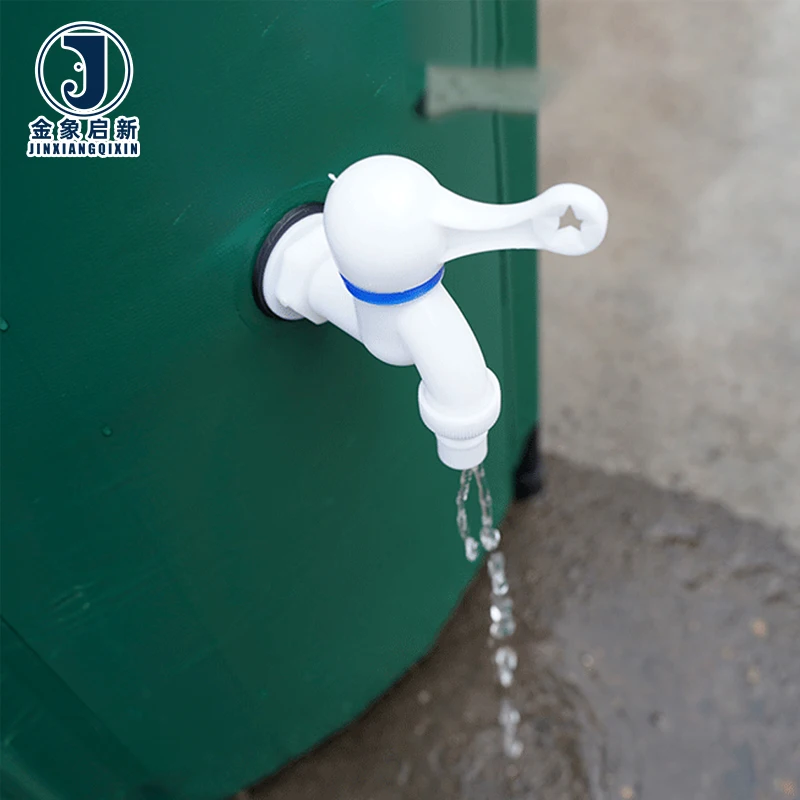
Three full production lines with dedicated equipment for coated fabric fabrication mean that collapsible PVC rain barrels are produced on machinery calibrated specifically for PVC tarpaulin rather than adapted from general-purpose lines. The 10-person R&D team handles sample development for custom capacity sizes, support rod specifications, and fitting configurations before production begins. Every unit undergoes inspection at the seam, fitting, and surface level before packing. For wholesale buyers loading mixed-SKU containers, the production planning process groups capacity tiers by dye lot so that 200L, 380L, 500L, and 750L units in the same container share material origin and coating batch. ISO and CE certification supports import compliance across markets that require documented manufacturing standards for water-contact products.
Documentation & Verification
- Material specification sheet stating base fabric denier, coating weight, and treatment claims per SKU
- Pre-shipment inspection record covering seam strength, capacity verification, and colour consistency across the full order
- Roll packing list and container loading plan showing unit count by capacity tier for logistics planning
- Test reports for UV and flame-retardant grades where applicable — confirm requirements for your target market
- ISO and CE certificates available to support import compliance documentation
Fabrication, Handling & Storage
- Weld support rod channels using temperature settings matched to the PVC mesh cloth grade to avoid burn-through on 500D sections
- Store collapsed barrels flat and avoid stacking heavy items on top to prevent permanent crease marks in the PVC coating
- Rinse interior with mild detergent between seasons — avoid solvent-based cleaners that can degrade the anti-mildew treatment layer
- Inspect PVC support rods for hairline cracks before seasonal redeployment, particularly after storage in sub-zero conditions
- When linking multiple barrels in series, ensure overflow fittings are aligned to the same grade level to prevent uneven hydrostatic loading
What to Include in Your Specification Enquiry
Provide the capacity tiers you need, the target climate and UV exposure level at the installation site, and whether your market requires flame-retardant or anti-static certification for water storage products. If you are loading mixed-SKU containers, specify the unit count per capacity size so the production plan can group dye lots accordingly. Confirm whether you need the barrels supplied with standard fittings or if custom inlet, outlet, and overflow configurations are required for your distribution channel.
Frequently Asked Questions
Q: How is batch-to-batch colour and material consistency maintained across a multi-container order?
A: Production runs are grouped by dye lot so that every PVC tarpaulin rain barrel within a single order shares the same coating batch. Pre-shipment inspection covers colour matching and material verification per SKU before dispatch. For multi-container orders, we document which production runs ship in which container so you can trace consistency back to the source batch if needed.
Q: What base fabric denier is recommended for different outdoor exposure and puncture risk levels?
A: The 500D grade suits garden installations on prepared, level surfaces with moderate UV exposure. The 1000D grade is specified for agricultural and construction-site use where ground debris, uneven terrain, and higher puncture risk are factors. Request the material specification sheet for each capacity tier to match denier selection to your specific site conditions and fill volume.
Q: How are welded seams tested to prevent leaks at flex and load-bearing points?
A: Welded seams at the base ring and support rod channels are inspected for full adhesion and continuity before packing. The inspection covers the junction points where hydrostatic pressure concentrates during filling. Units that show incomplete weld penetration or coating separation at stress points are rejected during the pre-shipment quality check.
Q: What is the MOQ per capacity size, and can mixed-SKU containers be arranged?
A: Minimum order quantities vary by capacity tier and customisation requirements. Mixed-SKU containers combining 200L, 380L, 500L, and 750L barrels are available for wholesale buyers, with production planned so that all sizes in one container share the same dye lot. Provide your target unit count per size for a detailed loading plan.
Q: Are UV and flame-retardant treatments supported by test reports, and which standards are covered?
A: Anti-UV and anti-mildew treatments are applied during the coating stage. Flame-retardant and anti-static grades are available — specify the standard required for your target market so the correct grade can be sourced and documented. Test reports are provided for applicable treatments upon confirmation of your compliance requirements [NEED_CITE: flame retardant classification standards for PVC coated fabrics].