Description
Proven Process Control — Nearly 30 years focused on coated fabric production ensures deep expertise in ventilation duct material selection and specification matching for confined-space airflow applications.
Technical Specifications
| Parameter | Value |
|---|---|
| Product Type | Axial Flow Fan |
| Size Options | 200mm, 250mm, 300mm, 350mm, 400mm, 450mm, 550mm, 650mm, 750mm, 850mm, 900mm |
| Power Range | 250W – 5500W |
| Air Volume Range | 1300 – 28000 m³/h |
| Total Pressure Range | 140 – 320 Pa |
| Voltage | 220V/380V |
| Noise Level | 57-88 dB(A) (varies by size) |
| Bearing Type | Ball Bearing |
| Housing Material | Cast Iron |
| Customization | ODM Available |
Application Suitability
| Application | Exposure & Requirement |
|---|---|
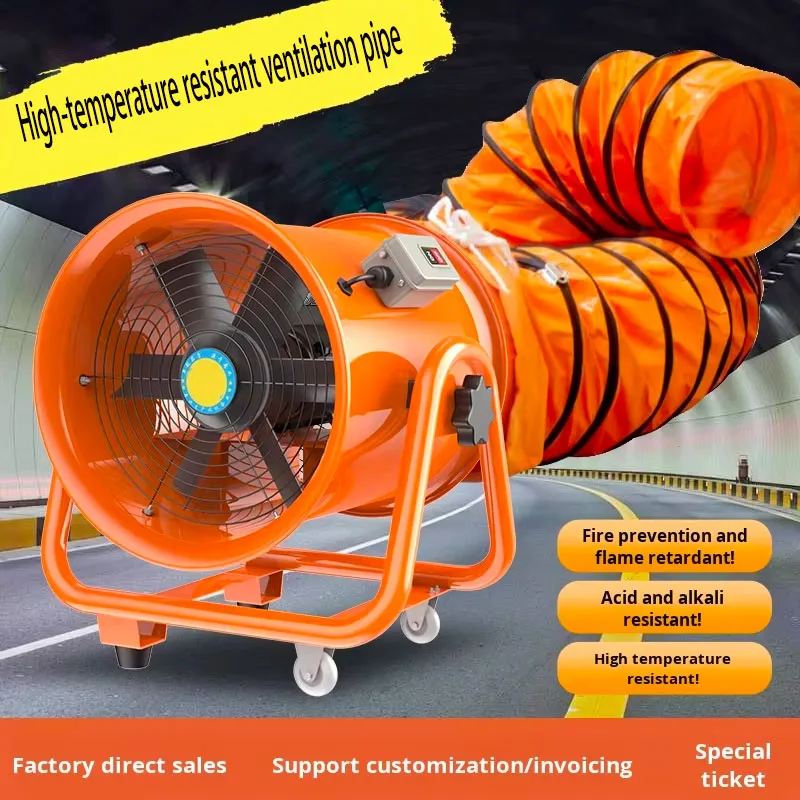
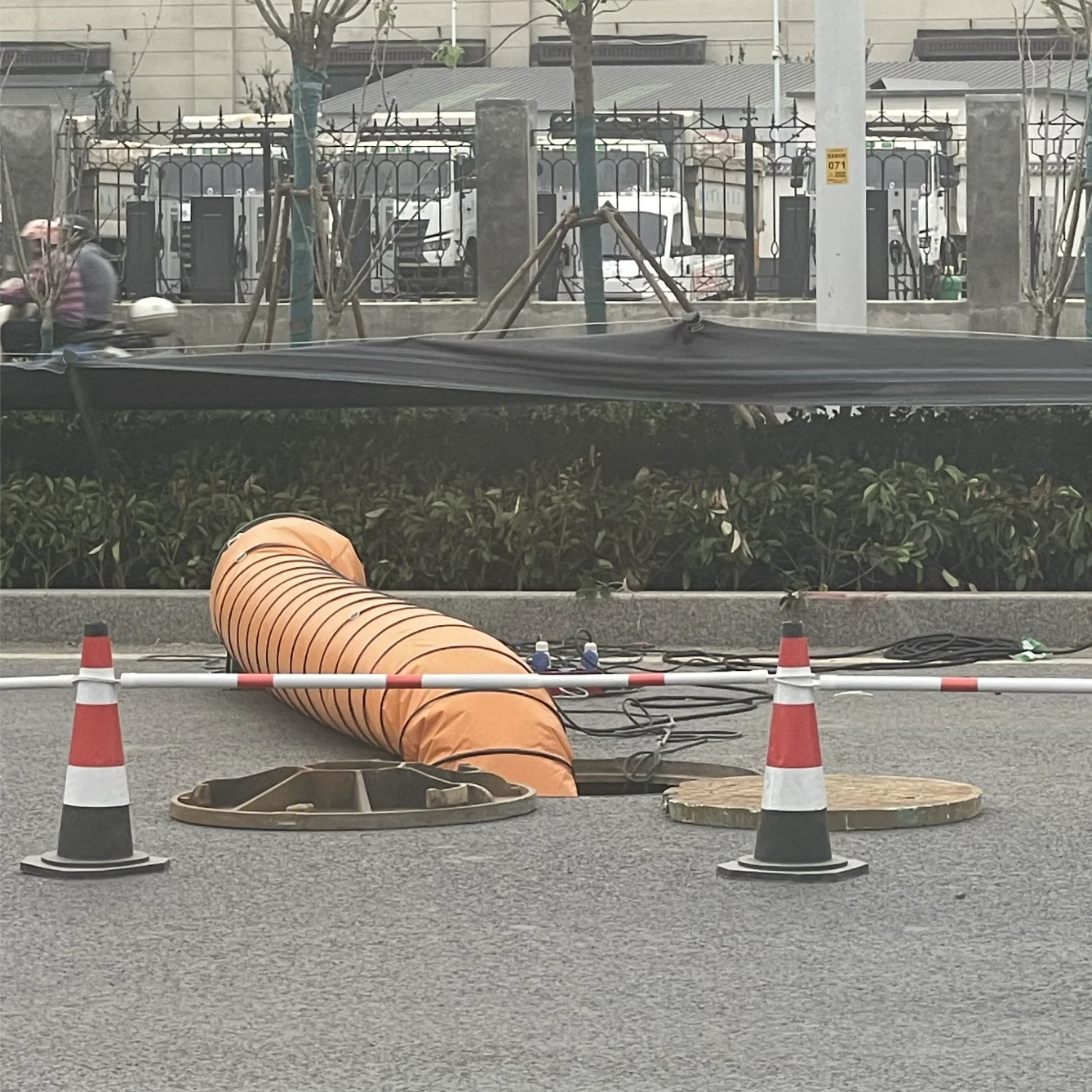
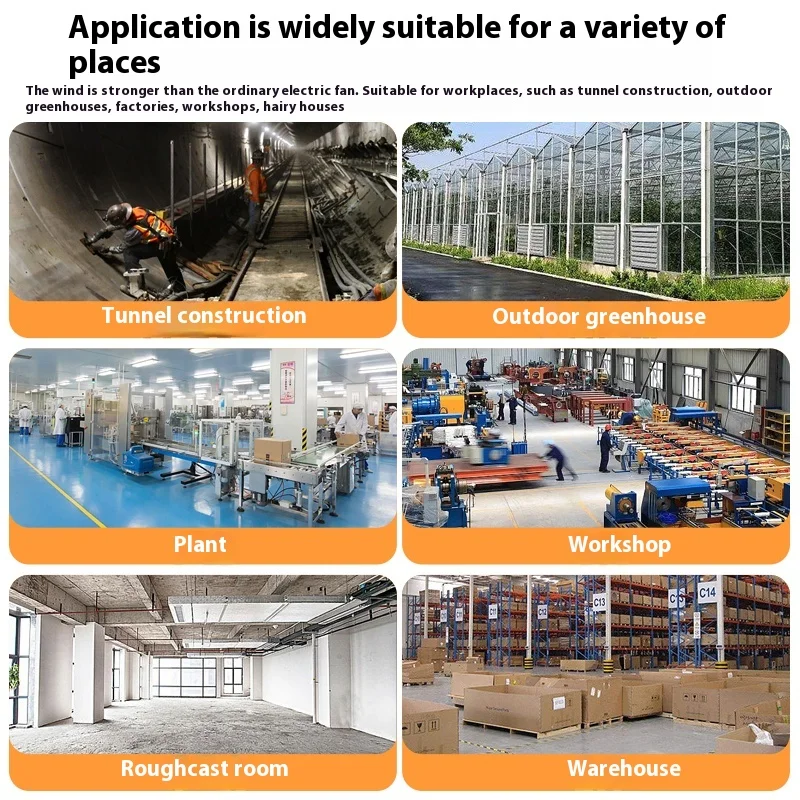
| Mining and tunnelling forced ventilation | Continuous operation in abrasive dust environments, paired with flexible ducting for fresh air supply to working faces |
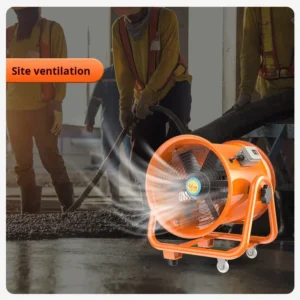
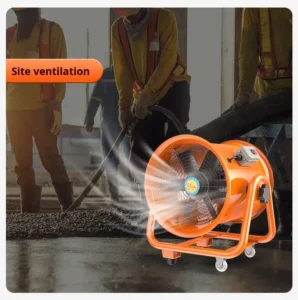
| Construction confined-space exhaust | Removal of fumes and particulates from enclosed areas during concrete curing, welding or coating work |
| Workshop localized fume extraction | Capture of airborne contaminants at source points before dispersion into the general workspace |
| Maintenance bay air circulation | Directed airflow for cooling equipment or clearing residual gases after confined-space entry work |
Why Airflow Matching Matters More Than Fan Size Alone
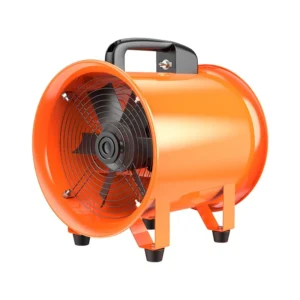
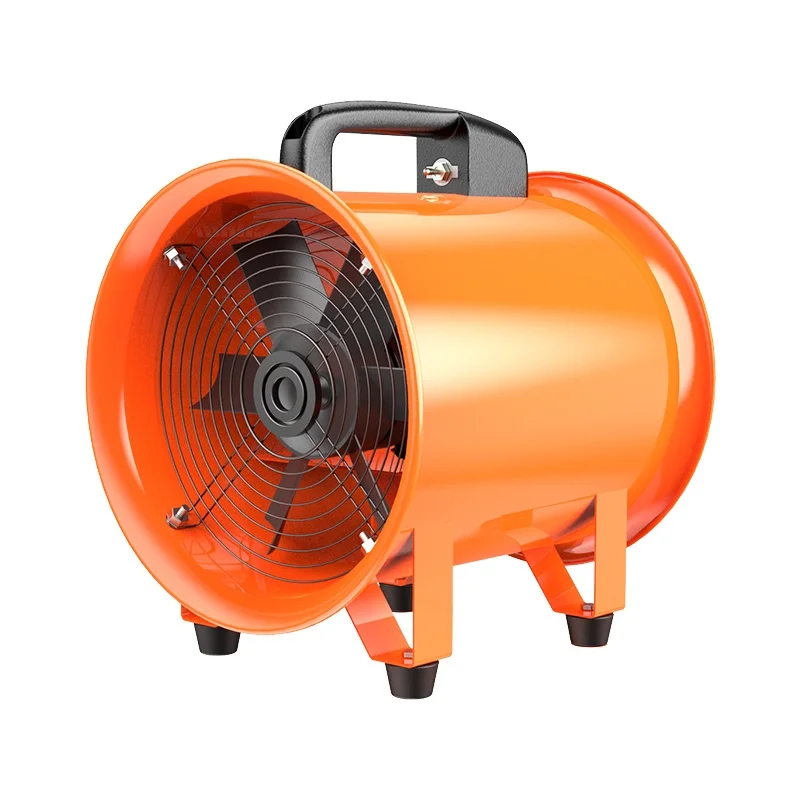
Selecting a Portable Axial Flow Ventilation Fan based on physical dimensions without verifying the pressure-to-duct-length relationship leads to underperformance at the delivery point.
A fan that moves adequate volume in free air can lose effective delivery when connected to long duct runs, particularly when bends or restrictions are present. The total pressure rating determines how much resistance the unit can overcome while maintaining usable airflow at the outlet. [NEED_CITE: relationship between static pressure and duct run length for axial fans] When specification relies on diameter alone, the result is often a unit that runs continuously but fails to deliver the required air change rate at the working face.
Matching Fan Outlet to Duct Coupling Specifications
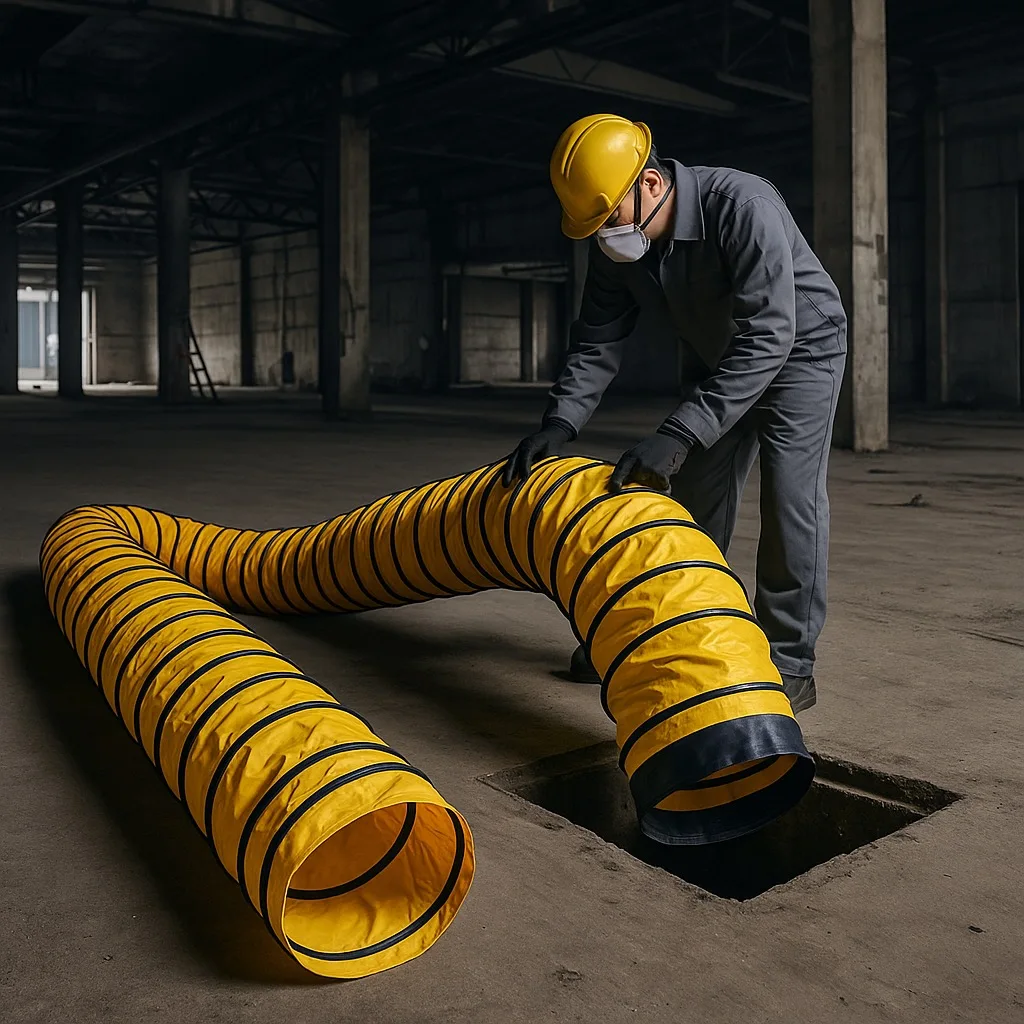
The connection point between fan and ducting is where specification errors become visible on site. A Portable Axial Flow Ventilation Fan must have an outlet diameter that aligns with the duct coupling standard used on the project, because mismatched connections create turbulence, air leakage and pressure loss before the air even enters the run. Confirming the coupling type — whether flanged, sleeve or clamp — before ordering prevents field modifications that compromise the sealed connection.
Verifying Fire-Retardant and Anti-Site Requirements Before Deployment
Mining and tunnelling sites typically mandate specific fire-retardant and anti-static certifications for all ventilation equipment deployed underground. The fan housing material and motor enclosure must meet the site’s compliance framework, not just the ducting. [NEED_CITE: fire-retardant and anti-static certification requirements for underground ventilation equipment] Procurement should request certification documentation as part of the quotation stage rather than discovering a compliance gap at pre-deployment inspection.
Understanding Pressure and Volume Trade-offs Across the Size Range
The eleven available sizes from 200mm to 900mm cover a broad spectrum of airflow and pressure combinations. Smaller diameter units at higher rotational speeds can generate useful pressure for shorter duct runs, while larger diameters move greater volumes at lower velocities suited to longer runs with fewer restrictions. Selecting the correct point on this spectrum requires knowing both the required delivery volume at the working face and the total system resistance of the duct layout. The air volume range of 1300 to 28000 m³/h spans light local extraction to heavy forced ventilation duties. Ball bearing construction supports the continuous operation these applications demand, while cast iron housing provides the mass and rigidity needed to resist vibration transfer in sustained industrial use.
The Cost of Underspecifying Pressure for Ducted Applications
A fan selected on air volume alone, without accounting for the pressure drop across the intended duct run, delivers less air than calculated at every bend and every metre of length. On construction and tunnelling sites, this shortfall manifests as inadequate air change rates at the working face, triggering compliance failures and work stoppages. [NEED_CITE: impact of pressure drop on delivered airflow in flexible duct ventilation systems] The consequence is not simply underperformance — it is a ventilation system that appears functional on paper but fails the practical air quality monitoring that sites conduct continuously. Correcting the error means replacing the fan mid-project, with associated downtime and re-mobilization costs.
Why Sourcing Ventilation Equipment Here Reduces Specification Risk
Direct engagement with a 10-person R&D team means fan selection is supported by application knowledge rather than catalogue browsing alone. Sample development within days allows physical verification of outlet dimensions, coupling compatibility and build quality before committing to a production order. A dedicated QA/QC process at every production stage, with 100 percent inspection before shipment, catches dimensional and performance deviations that random sampling would miss. [NEED_CITE: pre-shipment inspection protocols for industrial ventilation equipment] Three full production lines and 36 sets of professional equipment provide the capacity to fulfil project-volume orders within typical multi-week lead times. ODM capability extends to branding, colour and inlet or outlet configuration changes required to match specific site standards or equipment colour codes.
Documentation & Verification
- Performance curve documentation stating air volume and total pressure at specified operating points
- Voltage and phase configuration confirmed against site electrical supply before dispatch
- Noise level test data per size variant for occupational exposure assessment
- Material specification sheet stating housing material and bearing type
- Pre-shipment inspection record verifying dimensions and electrical safety
- Certificate of origin and customs documentation for international project sites
Fabrication, Handling & Storage
- Match fan outlet diameter to duct coupling before installation to prevent field modification of cast iron housing
- Verify 220V or 380V supply compatibility with motor nameplate before electrical connection
- Store units upright on pallets to protect ball bearing alignment during extended site storage
- Use appropriate lifting equipment for larger 750mm to 900mm sizes given cast iron housing weight
- Inspect power cable and plug condition after transport before connecting to site supply
Requesting a Specification Match
Provide the duct diameter, total duct run length and number of bends in your ventilation layout so the correct size and pressure rating can be identified. Specify whether the site requires fire-retardant or anti-static certification for the fan unit itself, not only the ducting. Confirm the available power supply — single-phase 220V or three-phase 380V — and any noise level restrictions that apply to the work area.
Frequently Asked Questions
Q: How do I match fan size to my duct diameter and required airflow?
A: Start with the air volume your application requires at the delivery point, then calculate the pressure drop across your full duct run including bends and length. Select the fan size from the 200mm to 900mm range that delivers the required volume at the calculated system pressure, not simply the size that matches your duct diameter.
Q: What certification requirements apply to fans used in mining and tunnelling?
A: Underground sites typically require fire-retardant and anti-static certification for all ventilation equipment, including the fan unit. Confirm the specific standards your site mandates and request certification documentation during the quotation stage to avoid compliance failures at deployment.
Q: Can these cast iron fans operate continuously on site?
A: The ball bearing construction is designed for continuous duty operation in industrial environments. Verify that the selected power rating and voltage match your site supply, and ensure adequate clearance around the housing for heat dissipation during sustained use.
Q: What is the difference between 220V and 380V models?
A: The 220V models connect to standard single-phase site power and suit lighter duty applications within the range. The 380V models use three-phase supply, typically available on larger construction and mining sites, and support the higher power ratings needed for the larger fan sizes.
Q: What ODM customization options are available?
A: Customization covers branding, housing colour and inlet or outlet configuration changes to match specific project requirements or site equipment standards. Submit your requirements with target volumes to receive a development sample for approval before production commitment.