Description
Batch Consistency Control — Every roll in a container load passes the same coating weight and colour matching checkpoint before dispatch, eliminating visible variation between adjacent panels.
Technical Specifications
| Parameter | Value |
|---|---|
| Product Type | PVC Coated Tarpaulin Roll |
| Material | PVC + High-strength polyester mesh fabric |
| Coating Method | Laminated technology & Hot-melt Coating technology |
| Weight (GSM) | 350gsm / 420gsm / 500gsm / 550gsm / 600gsm / 750gsm |
| Total Thickness | 0.32mm / 0.35mm / 0.4mm / 0.45mm / 0.5mm / 0.65mm |
| Roll Width | 2m / 2.1m |
| Roll Length | 75m (for 2m width) / 50m (for 2.1m width) |
| Color | Blue / Red / Yellow / Light blue / Grey (Customized) |
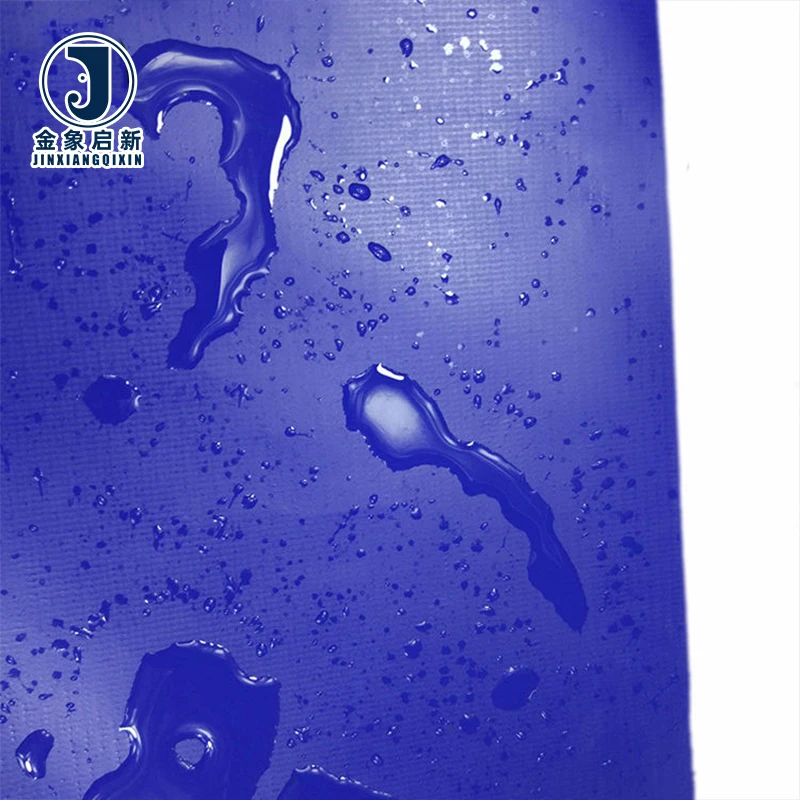
| Key Features | Waterproof, sunproof, cold crack resistance, anti-mildew, anti-static (test basis not stated in source), flame retardant treatment available (grade not stated) |
| Finish Product Option | Custom cut sizes as per buyer requirements or sold by roll inventory |
| Certification | ISO, CE |
Application Suitability
| Application | Exposure & Requirement |
|---|---|
| Tarpaulin distribution & import | Multiple GSM grades needed for regional resale; roll-to-roll colour and weight consistency critical for downstream resale credibility |
| Tent, awning & inflatable manufacturing | Fabric bought by the roll for production runs; weld seam strength and batch colour matching across consecutive rolls |
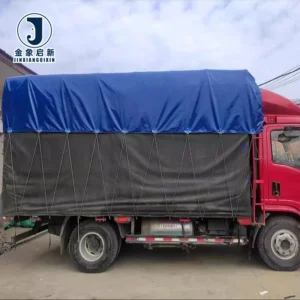
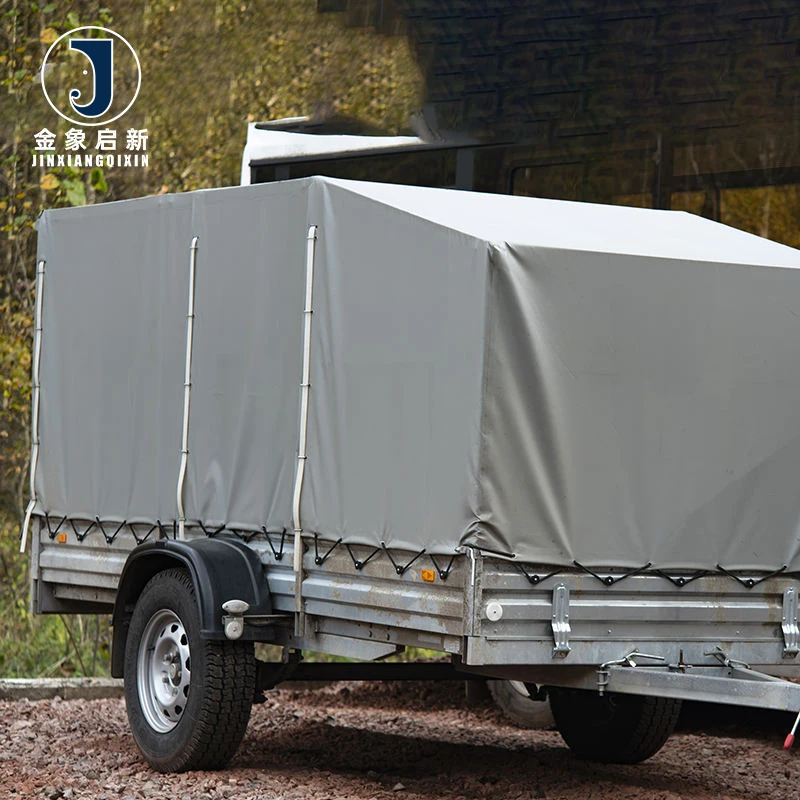
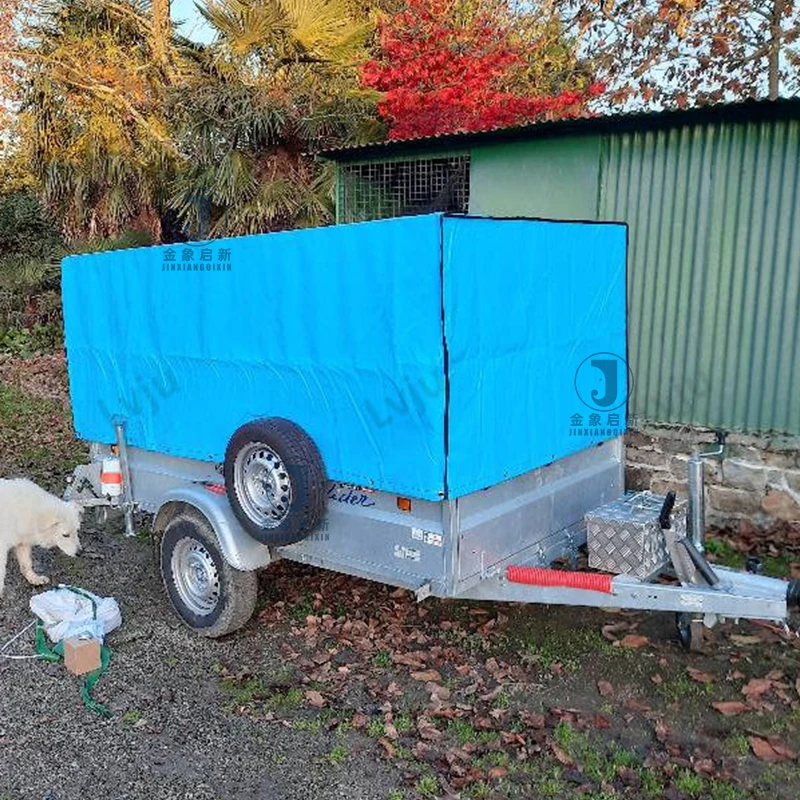
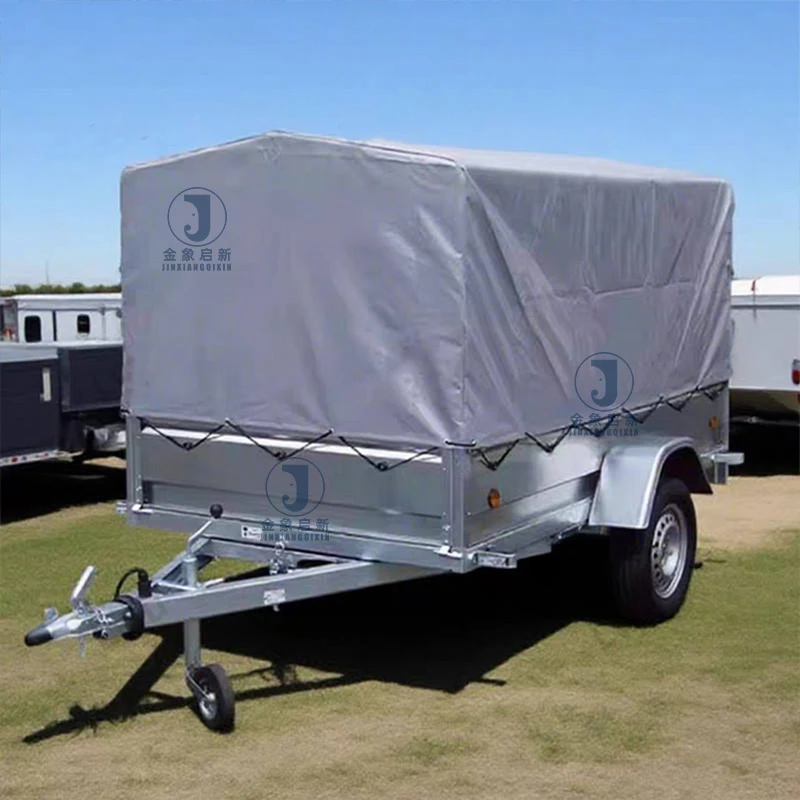
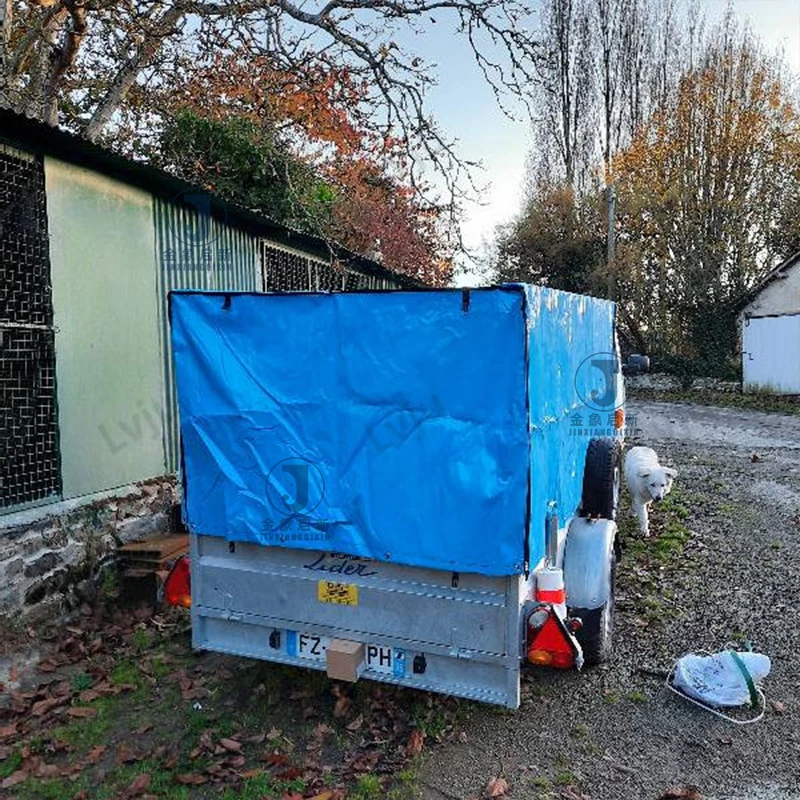
| Logistics fleet in-house fabrication | Roll stock cut and welded into truck covers and side curtains; abrasion resistance at flex points and cold crack resistance during winter operations |
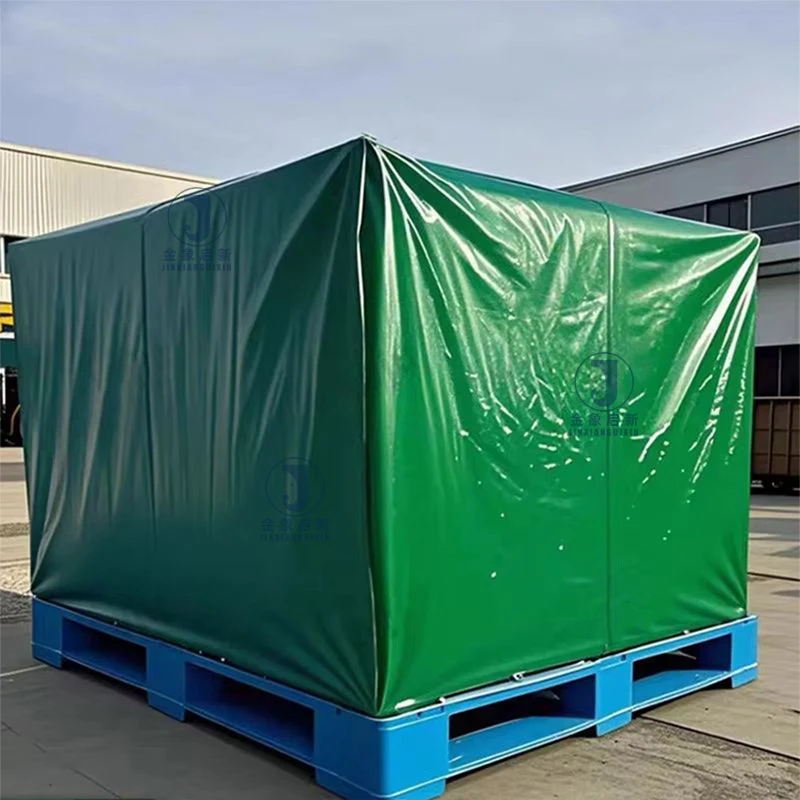
| Equipment & agricultural covers | Broad width rolls to minimize seams; waterproof and anti-mildew performance for long-term outdoor storage |
| Construction & scaffolding enclosure | Heavy-grade rolls for site hoarding; material must withstand wind loading and repeated handling |
Why Roll-to-Roll Colour Consistency Decides Whether Your Container Passes Inspection
Colour drift between rolls in the same order is the single most common reason wholesale tarpaulin shipments get rejected at the buyer’s warehouse.
When a distributor unloads a container of PVC coated tarpaulin rolls and panels cut from adjacent rolls show visible shade differences once installed side by side, the entire batch is flagged. This is not a cosmetic complaint — it undermines the buyer’s credibility with their own customers. Batch consistency in PVC Coated Tarpaulin Roll wholesale orders depends on tight control over pigment dosing, coating temperature, and curing speed across the entire production run [NEED_CITE: colour fastness testing methods for coated fabrics per ISO 105 series]. Without process-level controls, each roll becomes a gamble.
Roll Width and Length Planning for Container Utilization
Standard roll widths of 2m and 2.1m, paired with lengths of 75m and 50m respectively, are configured to simplify container loading calculations for wholesale buyers. When ordering PVC coated tarpaulin rolls by the container, knowing the exact roll count per 20-foot or 40-foot unit allows accurate landed-cost calculation before the order is placed.
The relationship between roll width and length directly affects how many linear metres fit in a single container. A 2m × 75m roll yields different packing density than a 2.1m × 50m roll, and buyers planning large-volume purchases need these figures to compare total coverage per shipment [NEED_CITE: standard container loading dimensions and weight limits for roll goods].
Coating Technology and Its Effect on Downstream Fabrication
Laminated and hot-melt coating methods produce different adhesion profiles between the PVC layer and the polyester base fabric. For fabricators who weld seams into finished truck covers or tents, the coating method determines the heat settings and dwell time needed to achieve a bond that matches or exceeds the fabric’s own tear strength.
Hot-melt coating typically delivers deeper*resistance at the weld line. Laminated construction offers a smoother surface finish that suits printed branding and visible panels. Buyers selecting PVC Coated Tarpaulin Roll wholesale stock for fabrication should confirm which coating method each GSM grade uses before setting production parameters.
Reading the GSM and Thickness Matrix Correctly
The available range — 350gsm through 750gsm with corresponding thicknesses from 0.32mm to 0.65mm — covers light-duty covers through heavy-duty truck and construction applications. However, GSM alone does not determine mechanical performance. A 500gsm roll built on a high-denier, tight-weave polyester mesh can outperform a 600gsm roll made with a looser base fabric in tensile and tear resistance.
The coating method matters equally: hot-melt coated fabric at 550gsm may show better weld seam integrity than a laminated 600gsm product because the coating penetrates the yarn structure more thoroughly. Thickness readings should be checked against the GSM specification — if a 500gsm roll measures closer to 0.55mm, the coating formulation likely contains fillers that add bulk without adding strength [NEED_CITE: relationship between GSM, base fabric denier, and tensile strength per ISO 1421]. Always request the base fabric specification alongside the GSM figure.
The Hidden Cost of Specifying on GSM Without Verification
A roll that arrives lighter than the quoted GSM means less coating material, thinner protection, and a shorter service life than planned. For wholesale buyers reselling to end users, this discrepancy surfaces as warranty claims and returns. In fabrication, under-weight rolls produce weld seams that fail before the fabric body does — precisely at the point where a truck cover flexes most under load.
Colour inconsistency across rolls forces fabricators to sort and match panels manually, adding labour cost and delaying production. When flame retardant or anti-static treatment is claimed without supporting test documentation, the finished product may fail site inspection at a mining or construction project, resulting in rejected installations and contractual penalties [NEED_CITE: fire classification requirements for temporary structures and site enclosures].
What Production Infrastructure Means for Wholesale Buyers
Three full production lines running 36 sets of professional equipment provide the throughput needed to fill container-load orders within predictable timelines. A dedicated 10-person R&D team handles custom colour matching, width adjustments, and sample development — critical when a distributor needs a specific Pantone reference replicated across multiple production runs.
Every roll undergoes inspection before shipment, with a QA/QC checkpoint at each production stage rather than a single final audit. This process-level control is what keeps GSM values within tolerance and colour references consistent from the first roll to the last in a bulk order. Custom samples are developed within days, allowing buyers to confirm weight, hand feel, and colour before committing to full production.
Documentation & Verification
- Material specification sheet stating exact GSM, base fabric denier, and coating type for each roll batch
- Weight verification per roll against the stated GSM before dispatch
- Roll packing list with individual roll count, net weight, and container loading plan
- Pre-shipment inspection record covering colour, weight, and dimensional checks per batch
- Certificate of origin and customs documentation for international shipments
- Test report for flame retardant or anti-static grades where applicable — confirm the grade required for your market
Fabrication, Handling & Storage
- Hot-melt coated rolls require adjusted weld temperature and dwell time settings compared to laminated grades
- Store rolls upright on pallets to prevent flat-spot deformation across the 2m or 2.1m width
- Allow cold-stored rolls to reach ambient temperature before unrolling to avoid coating crack at low GSM grades
- Use rotary cutters on 75m length rolls to maintain clean edges for downstream welding operations
- Lay flat and avoid stacking heavy items on finished panels to preserve surface finish across customized colours
What to Include in Your Inquiry
To receive an accurate specification recommendation and quotation, provide the GSM grade and thickness you currently use, or describe the end application and exposure conditions so we can suggest the appropriate grade. Specify your preferred roll width and whether you need standard inventory rolls or custom widths. If colour consistency across the full order is critical, share your colour reference or request a sample roll for approval before bulk production.
Frequently Asked Questions
Q: How is roll-to-roll colour consistency controlled across a bulk order?
A: Pigment dosing, coating temperature, and line speed are held constant across the entire production run. Each roll is checked against the approved colour reference before packing. For PVC Coated Tarpaulin Roll wholesale orders, we provide a colour sample from the production batch for buyer approval prior to dispatch.
Q: What GSM grades and roll widths are kept in stock versus made to order?
A: Standard GSM grades from 350gsm to 750gsm in 2m and 2.1m widths are produced regularly. Custom colours, non-standard widths, or specific flame retardant treatments are made to order with a sample approval step before bulk production begins.
Q: How are rolls packed and loaded to maximize container utilization?
A: Each roll is packed individually with a label showing GSM, width, length, and colour. A detailed roll packing list with net weight and roll count is provided before loading, enabling buyers to verify container capacity utilization against their shipping plan.
Q: How can I verify the stated GSM on arrival against the quotation?
A: We provide a material specification sheet stating the exact GSM and coating weight per roll batch. Buyers can conduct a cut-and-weigh test on arrival using a measured sample area. Any discrepancy should be reported with the roll label and inspection record for resolution.