Description
Verified Weight Consistency — every roll is weighed and checked against the stated GSM before dispatch, ensuring the PE Tarpaulin roll stock you receive matches the specification on your order.
Technical Specifications
| Parameter | Value |
|---|---|
| Product Type | PE Tarpaulin |
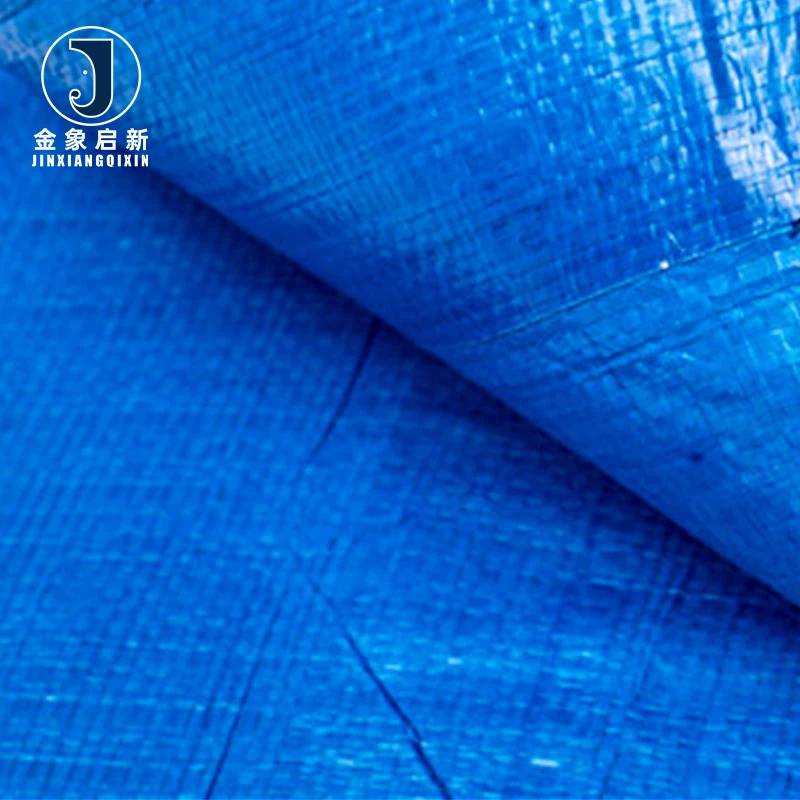
| Material | HDPE weaving with LDPE lamination on both sides |
| Weight Range | 50 g/m² – 220 g/m² |
| Thickness | 0.18 mm – 0.40 mm (8 mil – 16 mil) |
| Knitting Density (Lightweight) | 8×8 |
| Knitting Density (Medium) | 10×10 |
| Knitting Density (Heavy-duty) | 12×12 |
| Tensile Strength (Lightweight) | Meridian 300–500 N/5cm / Latitude 250–450 N/5cm |
| Tensile Strength (Medium) | Meridian 500–800 N/5cm / Latitude 400–700 N/5cm |
| Tensile Strength (Heavy-duty) | Meridian 900–1200 N/5cm / Latitude 700–1000 N/5cm |
| Roll Width Options | 6 ft, 8 ft, 10 ft, 12 ft / 2 m, 4 m, 6 m |
| Roll Length Options | 100 yards, 100 meters, or custom |
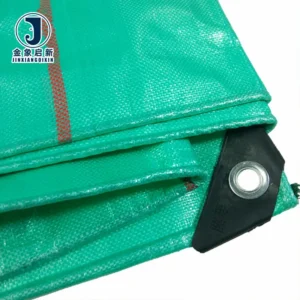
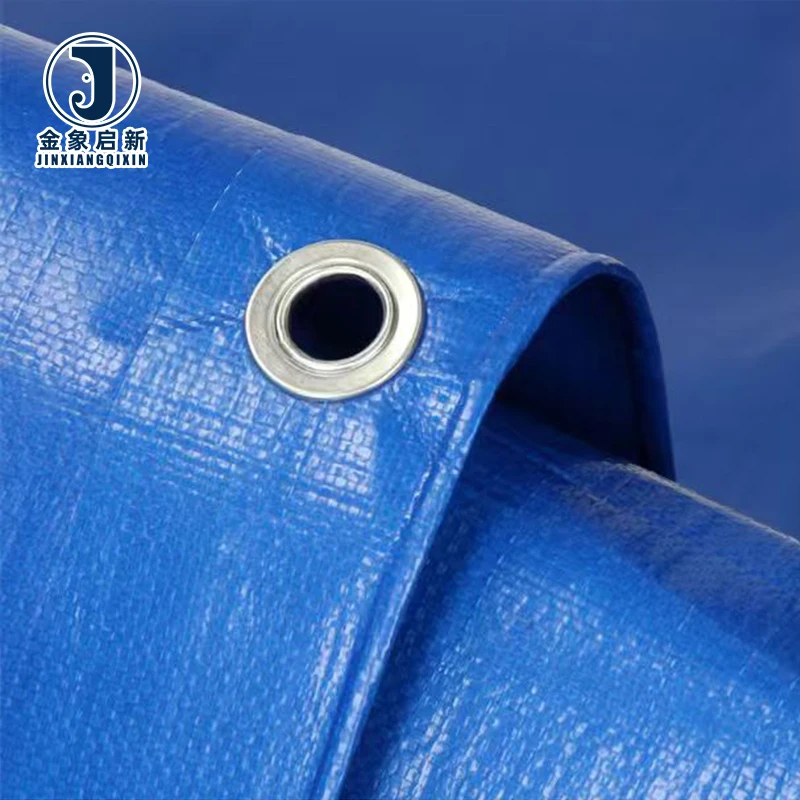
| Finished Tarpaulin Edge | All four edges reinforced with PP rope in hem |
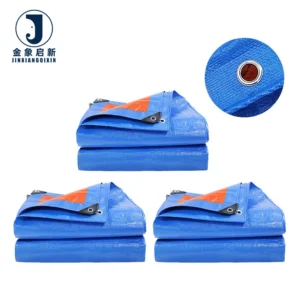
| Eyelet Spacing | Galvanized eyelets every 3 ft or 1 m interval |
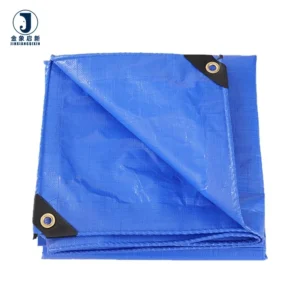
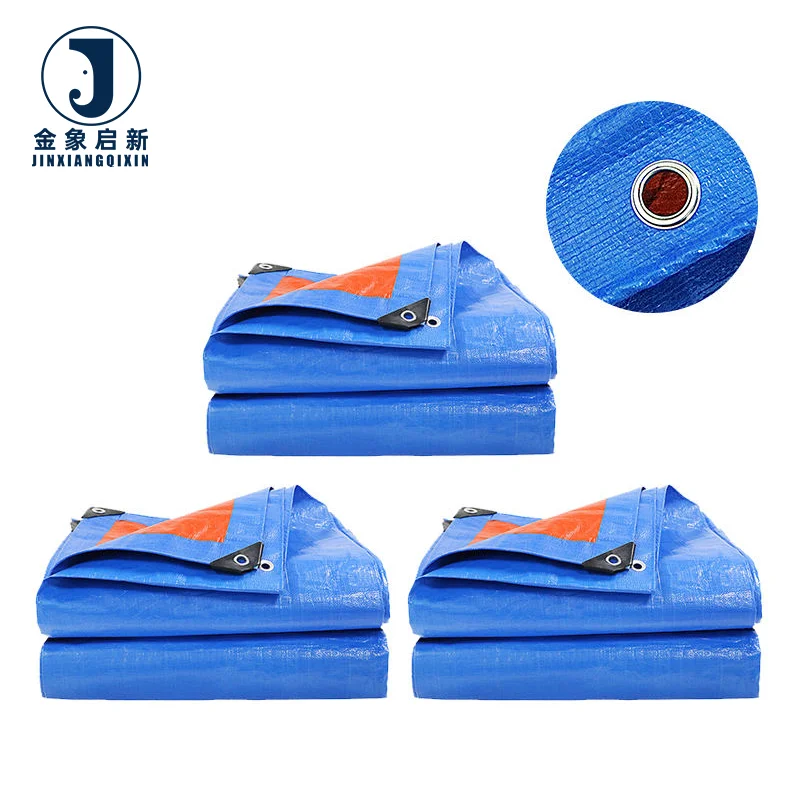
| Corner Reinforcement | Reinforced plastic corners |
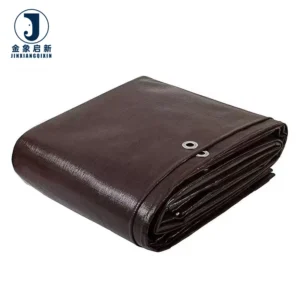
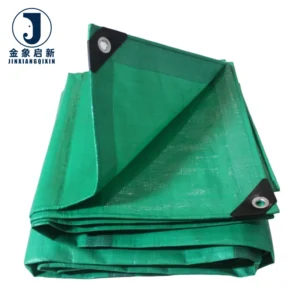
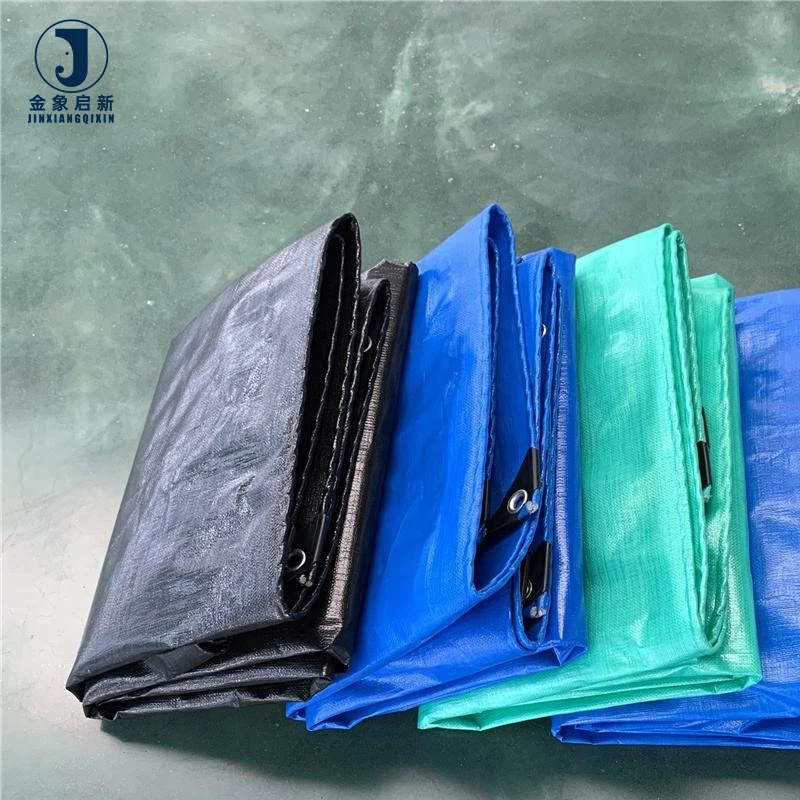
| Color Options | Blue, Blue/Orange, Green, Grey, Black, Clear, Grey/Green, Orange, or custom |
| Key Features | Waterproof, washable, tear resistant, weather proof, UV treatment available (grade not stated), mildew proof, anti-aging |
| Certifications | ISO, CE |
Application Suitability
| Application | Exposure & Requirement |
|---|---|
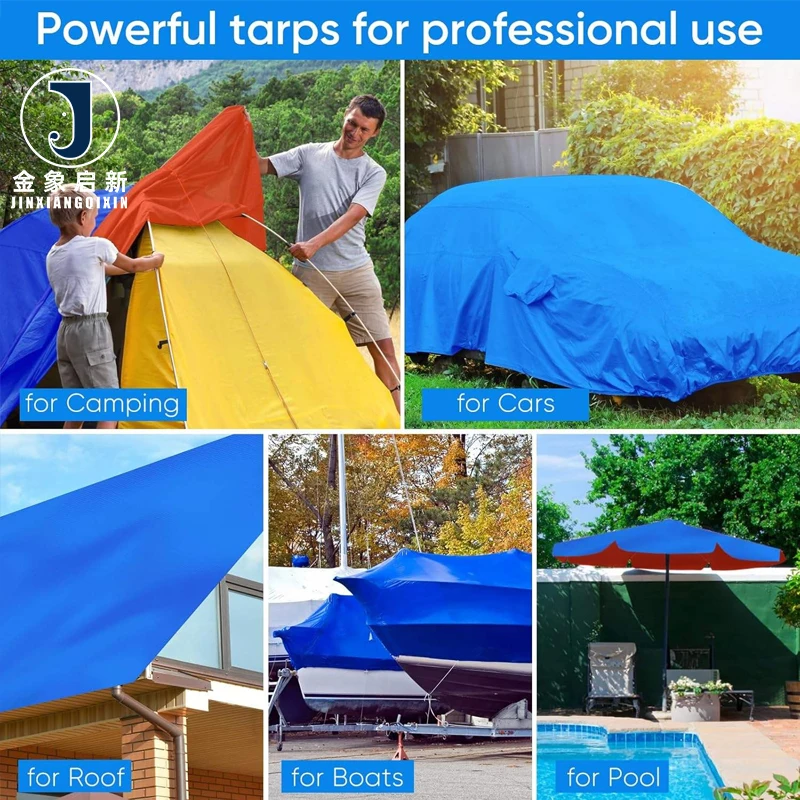
| Agricultural covering | Prolonged sun exposure, moisture contact, lightweight protection for crops and stock — suited to 80–110 g/m² grades |
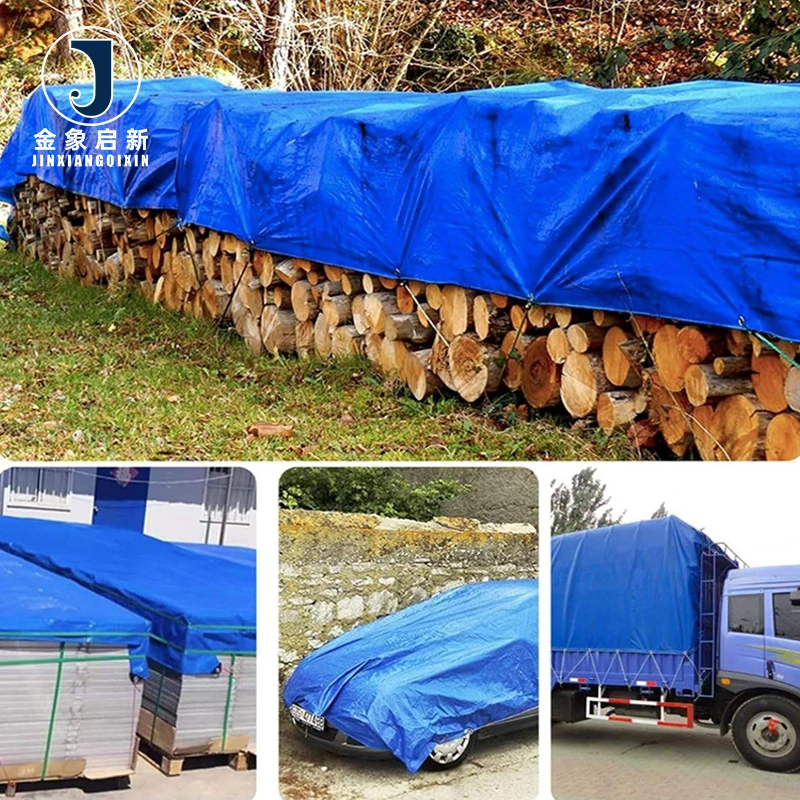
| Warehouse and yard coverage | Abrasion from stacked goods, wind load on large spans, water ingress prevention — suited to 120–150 g/m² grades |
| Truck and trailer tarpaulin | Road vibration, flexing at load points, weather during transit — suited to 160–240 g/m² grades |
| Tarpaulin distribution and restocking | Consistent colour and weight across multiple rolls, standard widths for retail cutting |
| Aquaculture pond lining | Continuous water immersion, soil chemistry, puncture from substrate |
Why Roll-to-Roll Weight Variation Costs More Than You Think
Receiving a PE Tarpaulin roll that weighs less than the quoted GSM is one of the most common complaints in bulk fabric procurement. A quoted 150 g/m² that arrives at 130 g/m² is not a rounding difference — it is a missing layer of coating that changes how the fabric behaves under tension.
When a distributor cuts and sells sheets from an underweight roll, the end user experiences tearing at eyelet points or seam failure within months. The claim comes back to the distributor, not the mill. Colour inconsistency across rolls in the same container compounds the problem: two rolls laid side by side on a warehouse roof show a visible band where the batch changed. [NEED_CITE:]
Batch Consistency Across Container-Load Orders
For volume buyers ordering PE Tarpaulin roll stock by the container, the real risk is not a single defective roll but a gradual drift in coating weight across a production run. Three full production lines allow coating parameters to be locked per batch, so roll number one and roll number five hundred in the same order carry the same GSM and colour reference. Colour is controlled at the LDPE lamination stage, where pigment is metered into the resin before extrusion, rather than applied as a surface coat that can shift with ambient temperature.
Width and Length Configurations for Wholesale Cutting
Stock widths of 2 m, 4 m, and 6 m cover most retail cutting patterns, while custom widths are supported for fabricators running automated cut-and-weld lines. Roll lengths of 100 metres or 100 yards align with standard container loading calculations. A 20-foot container typically holds a set number of rolls depending on width and GSM, and the packing list is prepared against the proforma invoice before dispatch so the buyer can verify count and total weight. [NEED_CITE:]
How Knitting Density and Lamination Weight Work Together
The knitting density of the HDPE base fabric — 8×8, 10×10, or 12×12 — determines the number of yarns per unit area before lamination. A higher mesh count provides more yarn crossover points, which distributes tensile load across a wider area and slows tear propagation. However, knitting density alone does not define the finished weight. The LDPE lamination applied to both sides fills the weave interstices and adds the remaining mass. A 12×12 base with thin lamination may weigh less than a 10×10 base with heavy lamination, yet the 12×12 construction will resist tear spread more effectively. This is why weight and mesh count must be specified together, not treated as interchangeable.
The Hidden Cost of Specifying on GSM Alone
A buyer who selects PE Tarpaulin roll stock based only on price per kilogram and quoted GSM invites two failure modes. First, the supplier may meet the GSM target by adding filler to the LDPE lamination rather than increasing base fabric density — the weight is correct, but tensile and tear strength fall below what the mesh count should deliver. Second, rolls from different production dates may arrive with slight colour variation that becomes obvious when cut sheets are installed adjacent to each other on a truck body or building wrap. [NEED_CITE:]
Why Procurement Verification Matters at Every Stage
The specification sheet issued before production lists GSM, base fabric denier, knitting density, and coating weight per roll batch. The pre-shipment inspection record then confirms that the physical roll matches those figures. Without both documents, the buyer has no traceable link between the quotation and the material on the warehouse floor. UV treatment is another area where documentation separates a claim from a verified property: a test report confirms the treatment grade, while a line on a quotation does not.
What Verification Documentation Ships With Your Order
- Material specification sheet listing GSM, knitting density, and LDPE coating weight per roll batch
- Pre-shipment inspection record confirming measured weight against quoted GSM for each roll
- Roll packing list detailing roll count, individual roll weight, and container loading plan
- Certificate of origin and customs documentation prepared for the destination country
- Test report for UV treatment grade where applicable to the ordered specification
- Colour reference confirmation tied to the production batch number
Fabrication, Handling & Storage
- Cut sheets with sharp blades to avoid fraying the 8×8 through 12×12 HDPE weave at edges
- Heat-seal LDPE laminated surfaces using temperature settings matched to the lamination thickness
- Install galvanized eyelets through PP-rope reinforced hems to distribute tie-down loads evenly
- Store rolls upright on pallets to prevent flat-spot deformation of the 0.18–0.40 mm material
- Avoid prolonged direct sunlight on stored rolls where UV treatment grade has not been confirmed
- Use mild detergent for cleaning; solvents may degrade the LDPE lamination surface
What to Include in Your Enquiry
Specify the weight grade, knitting density, and roll width your operation requires, along with estimated annual volume. If your market mandates a particular UV or fire classification, state the standard so the correct treatment grade can be matched. Indicate whether you need rolls only, or finished cut sizes with eyelets and reinforced hems.
Frequently Asked Questions
Q: How is GSM verified roll-by-roll before shipment?
A: Each roll is sampled and weighed during the pre-shipment inspection. The measured GSM is recorded on the inspection report and compared against the specification sheet issued at order confirmation. Any roll falling outside the agreed tolerance is flagged and replaced before the container is sealed.
Q: What widths and roll lengths are stocked versus made-to-order?
A: Standard widths of 2 m, 4 m, and 6 m in 100-metre or 100-yard rolls are produced regularly. Custom widths and lengths are supported by three production lines, with lead times depending on the colour and specification combination requested.
Q: How do you control colour consistency across rolls in the same order?
A: Pigment is metered into the LDPE resin before lamination, locking the colour at the coating stage. Each production batch is tied to a single colour reference, and rolls from the same batch are allocated to the same order to prevent visible variation when installed side by side.
Q: What are the MOQ and lead times for custom width or colour?
A: Minimums depend on the width and colour requested. Standard colours in stock widths have lower thresholds than bespoke Pantone matches. Typical lead times for custom specifications span several weeks, confirmed at quotation stage.
Q: How are rolls packed and loaded for container transport?
A: Rolls are packed upright on pallets with protective wrapping. A packing list details roll count, individual weight, and total container weight so the buyer can verify the load against the proforma invoice before dispatch.