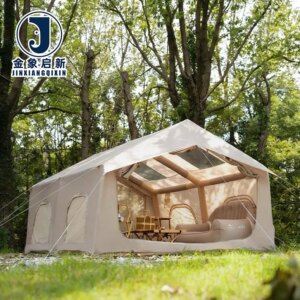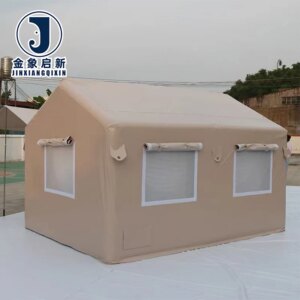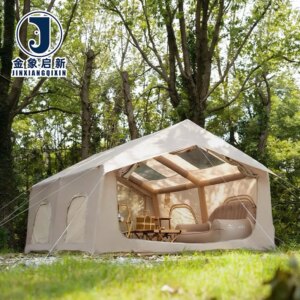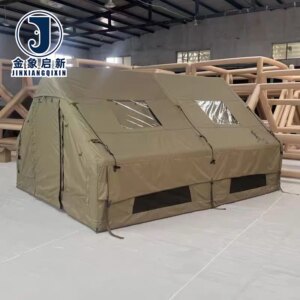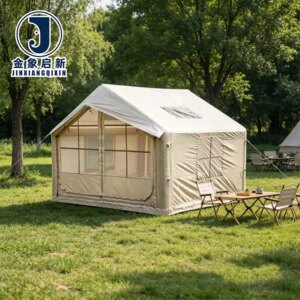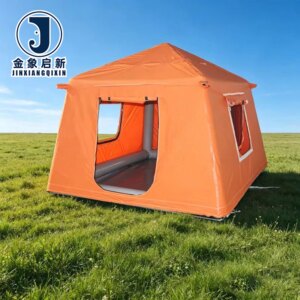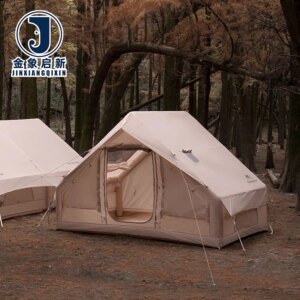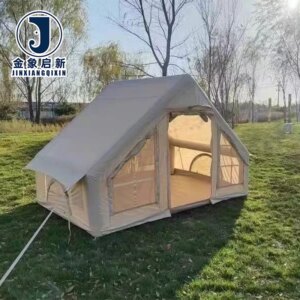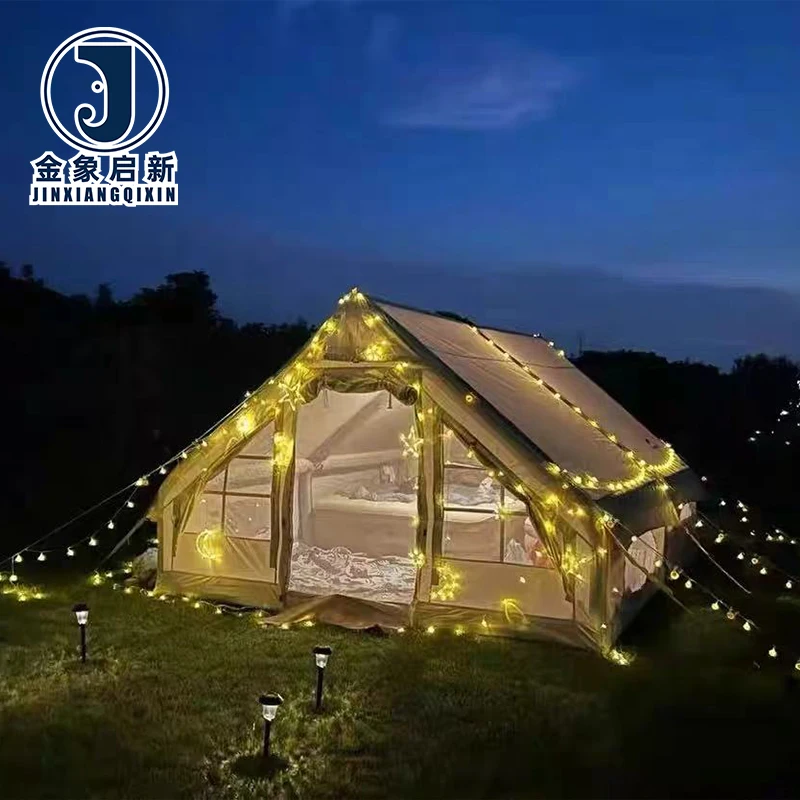
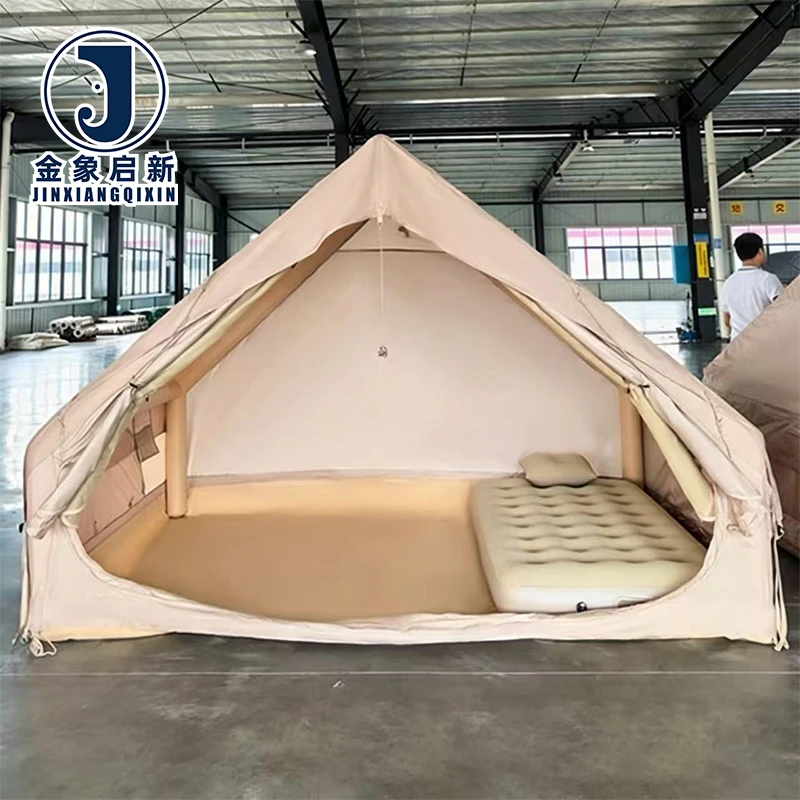
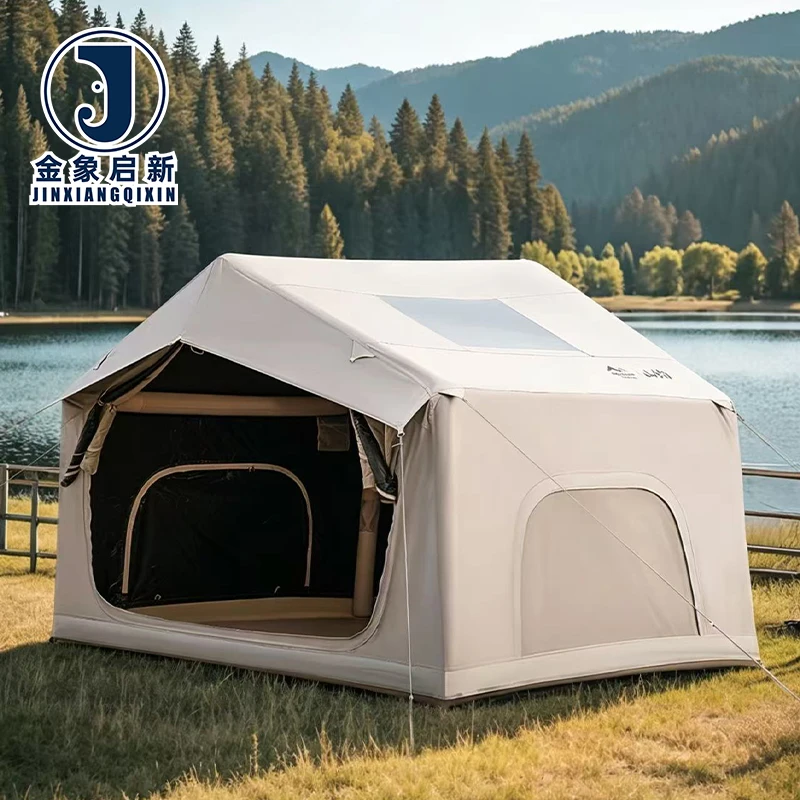
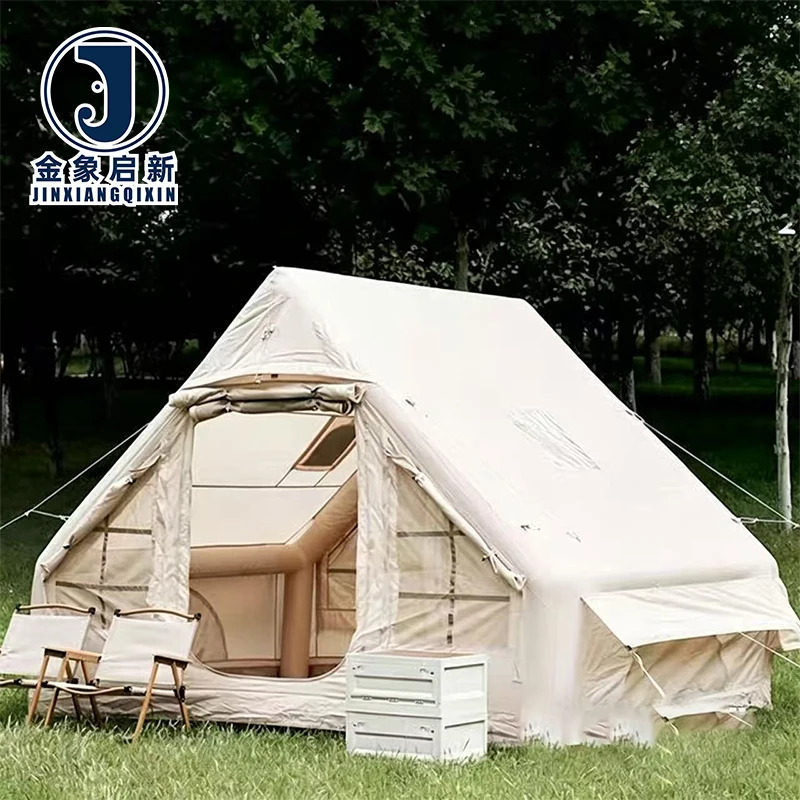
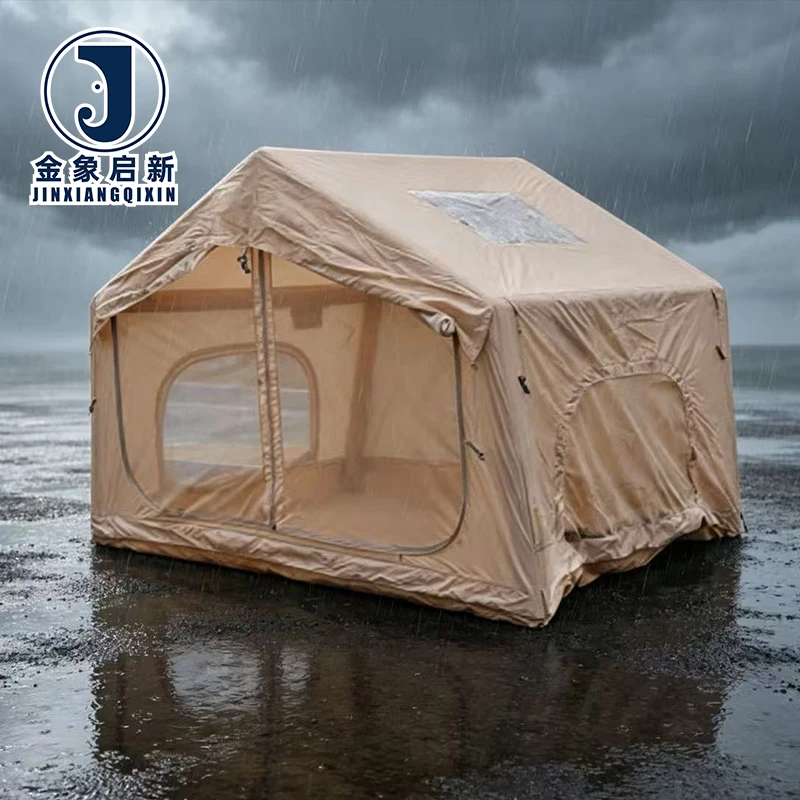
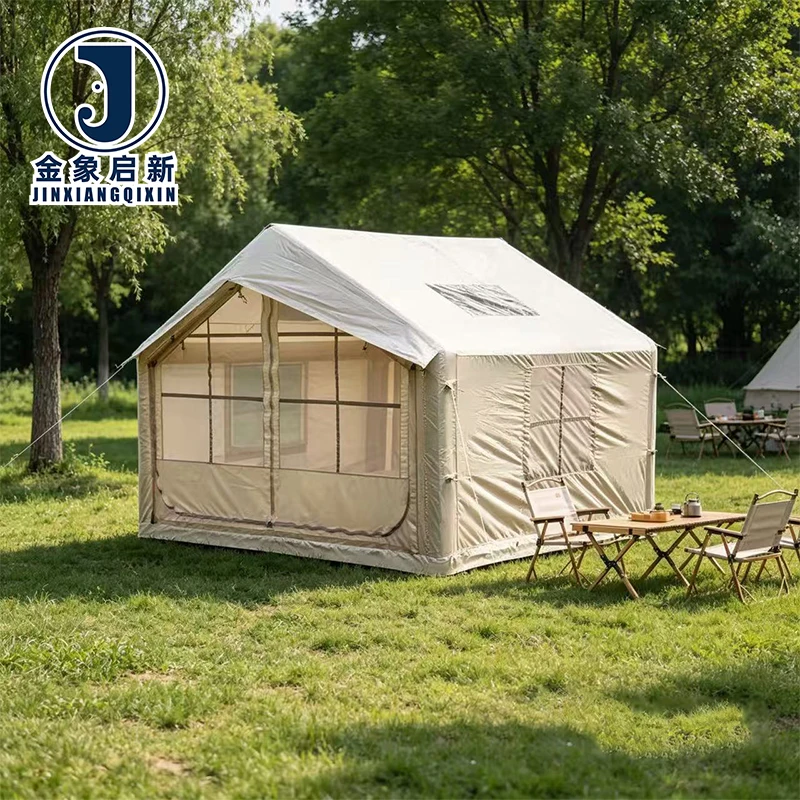
Description
Bulk Supply Reliability — three full production lines and 36 sets of professional processing equipment ensure roll-to-roll consistency across large inflatable tent fabric orders.
Technical Specifications
| Parameter | Value |
|---|---|
| Product Type | Inflatable Tent |
| Core Material | Knife-coated PVC Tarpaulin |
| Capacity | 4-6 Person |
| Construction | Single-layer |
| Deployment | Quick automatic opening (air inflatable) |
| Waterproof | Fully waterproof coated construction |
| UV Resistance | Available with UV treatment — confirm grade required for your market |
| Fire Retardancy | Available in fire-retardant grades — confirm the grade required for your market |
| Anti-Static | Available with anti-static treatment — confirm surface resistance standard required |
| Tear Resistance | Tear-resistant PVC substrate (test standard not stated) |
| Customization | OEM & ODM — size adjustments, pattern printing, material thickness modifications |
| Certifications | ISO9001, ISO14001, ISO45001, CE |
| Production Facility | 9,180 m² with 3 full production lines |
| Quality Control | Full-process QA/QC; 24-hour inflation test before packaging |
Application Suitability
| Application | Exposure & Requirement |
|---|---|
| Construction site crew accommodations | Constant weather exposure, dirt and debris abrasion, fire-retardant compliance for regulated zones |
| Mobile command centers for outdoor events | Rapid deployment cycles, frequent inflation and deflation, branded pattern printing requirements |
| Emergency response shelters | Harsh environmental conditions, quick automatic opening, structural integrity under wind load |
| Equipment storage and temporary workspaces | UV exposure during extended outdoor placement, tear resistance from equipment handling |
| Logistics rapid-deployment camps | Multi-site relocation, repeated packing and transport, varied climate transitions |
Why Stated GSM Does Not Guarantee the Inflatable Tent Fabric You Ordered
Weight verification per roll against the stated specification before dispatch eliminates the gap between quotation and arrival.
When sourcing an Inflatable Tent Fabric manufacturer for bulk roll stock, buyers frequently encounter material that measures lighter than the agreed GSM once it reaches the warehouse. A quoted weight may reflect the average across a production run, but individual rolls can fall below the minimum threshold, leaving inflatable structures under-engineered for the air pressure and wind loads they must withstand. This discrepancy often surfaces only after the fabric has been cut, welded, and inflated — making rework costly and project timelines slip. [NEED_CITE: tensile and tear test methods for coated fabrics per ISO 1421]
Roll-to-Roll Consistency Across Bulk Inflatable Tent Fabric Orders
Maintaining uniform coating weight across every roll in a multi-roll shipment is the baseline requirement for fabricators producing inflatable structures at scale. When one roll measures lighter than the next, the resulting tents exhibit different inflation characteristics and structural rigidity. Our Inflatable Tent Fabric manufacturer process controls the knife-coating application at each stage, with dedicated QA and QC staff monitoring output across all three production lines.
Coating Adhesion and Weld Integrity for Air-Holding Structures
Inflatable tents depend on welded seams that hold continuous internal air pressure without delaminating under flex stress. The knife-coated PVC construction delivers a bond between the base fabric and the coating layer that supports high-frequency hot-air welding. Fabricators running automated weld lines benefit from consistent surface properties roll after roll, reducing rejected seams and downtime. [NEED_CITE: hot-air welding parameters for PVC coated fabrics]
How PVC Coating Method Determines Inflatable Tent Performance
Knife coating applies the PVC compound directly onto the woven base fabric under controlled tension, forcing the material into the weave interstices. This method produces higher peel strength compared to calendaring or lamination, which matters when welded seams carry the structural load of an inflated chamber. The base fabric denier and weave density determine how the coating anchors mechanically — a tighter weave provides more anchor points per square centimetre, improving tear propagation resistance. Coating weight alone does not define strength; a lighter fabric with a dense base weave can outperform a heavier one with an open weave. For inflatable applications, the relationship between GSM, base fabric construction, and air-holding weld strength must be evaluated together rather than treating weight as the sole specification. Surface finish — glossy or matte — affects how the fabric handles during fabrication and how printed patterns appear once applied.
The Hidden Cost of Specifying Inflatable Tent Fabric by Weight Alone
Selecting fabric based on a single GSM figure without verifying the base fabric construction or coating adhesion method leads to field failures that appear unrelated to material choice. Welds may separate before the fabric body fails, particularly at the flex points where inflatable beams bend during inflation and deflation cycles. Colour variation between rolls in the same order becomes visible once multiple tents are deployed side by side at a site or event. Fire-retardant performance claimed without a supporting test report can result in failed site inspections, forcing contractors to replace shelters that have already been installed. These consequences compound across a fleet order, turning a material savings into a project-level loss. [NEED_CITE: fire classification standards for temporary structures]
Why Fabricators Source Inflatable Tent Fabric Through This Supply Chain
Our 10-person R&D team handles material selection, pattern printing specifications, and sample development for custom inflatable tent projects, reducing the back-and-forth between design and production. Three full production lines and 36 sets of professional processing equipment support bulk roll output without sacrificing the coating consistency that automated weld lines demand. Every roll undergoes dedicated QA and QC inspection at each production stage, with 100% pre-shipment inspection and a 24-hour inflation test on finished tent samples before packaging. Samples for custom specifications — whether sizing, thickness, or printed branding — are developed within days rather than weeks. Material specification sheets accompany every order, stating GSM, base fabric details, and coating method for full traceability.
Documentation & Verification
- Weight verification per roll against the stated GSM before dispatch, recorded in the pre-shipment inspection report
- Material specification sheet stating base fabric denier, coating method, and colour reference for each batch
- Test report for UV and fire-retardant grades supplied where applicable — request before order confirmation
- ISO9001, ISO14001, ISO45001, and CE certificates included in the documentation package
- Roll packing list with batch identifiers enabling traceability from warehouse to installation site
- Certificate of origin and customs documentation prepared for cross-border roll shipments
Fabrication, Handling & Storage
- Hot-air welding temperature and speed must be calibrated to the specific PVC coating thickness of the knife-coated fabric
- Store rolls vertically on pallets in a dry environment to prevent permanent creasing across the PVC coating surface
- Allow cold-stored rolls to acclimatise to workshop temperature before unrolling to avoid coating cracking at low flex
- Use PVC-compatible cleaners only; solvents may degrade the knife-coated surface and compromise waterproof integrity
- Pattern printing adhesion should be verified on a sample swatch before full-roll printing runs commence
What to Include in Your Inflatable Tent Fabric Enquiry
Provide the target inflatable structure dimensions, required capacity range, and whether the end use involves regulated work sites requiring documented fire-retardant compliance. Specify the annual roll volume and whether you need raw roll stock or custom cut-and-weld sizing to reduce in-house fabrication steps. Include any pattern printing or colour matching requirements so the R&D team can prepare samples that reflect the final production specification.
Frequently Asked Questions
Q: How is the PVC coating weight verified and what documentation accompanies each batch?
A: Every roll is inspected against the stated GSM during our pre-shipment quality check. A material specification sheet listing the base fabric construction, coating method, and weight accompanies each order. The pre-shipment inspection record documents the verification results, and batch testing samples are available for independent lab analysis on large orders.
Q: What fire-retardant grades are available and which test standards do they meet?
A: Fire-retardant treatment is available in multiple grades to suit different market requirements. The specific grade and corresponding test standard depend on the regulatory framework of your target market. Request the applicable test report before order confirmation so the correct formulation is applied during production and documented for your compliance files.
Q: How is batch-to-batch colour consistency controlled across multiple rolls?
A: Colour matching is managed through controlled pigment dosing during the knife-coating process, with dedicated QA staff verifying shade consistency across the production run. For orders spanning multiple batches, reference samples are retained and compared against new production to minimise visible variation when rolls are deployed side by side.
Q: What OEM and ODM customisation options are available for inflatable tent fabric?
A: Customisation covers size adjustments, material thickness modifications, and pattern printing for branded applications. Our 10-person R&D team develops samples within days based on your specifications, allowing approval before full production begins. Both roll stock supply and cut-to-size formats are available depending on your fabrication setup.
Q: What is the sample development lead time for a custom inflatable tent fabric project?
A: Sample development typically proceeds within days once the application requirements, target GSM, colour reference, and any treatment specifications are confirmed. The sample reflects the actual production material and coating process, enabling accurate evaluation of weld behaviour, inflation characteristics, and surface finish before committing to a bulk order.