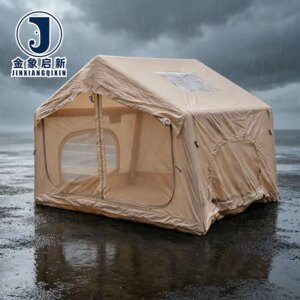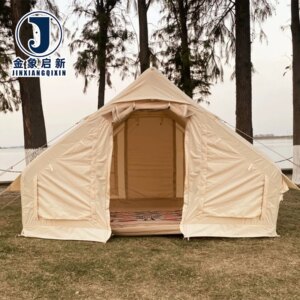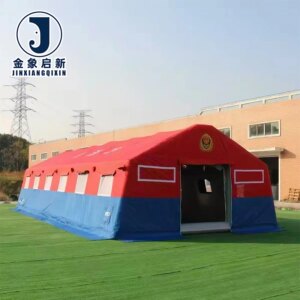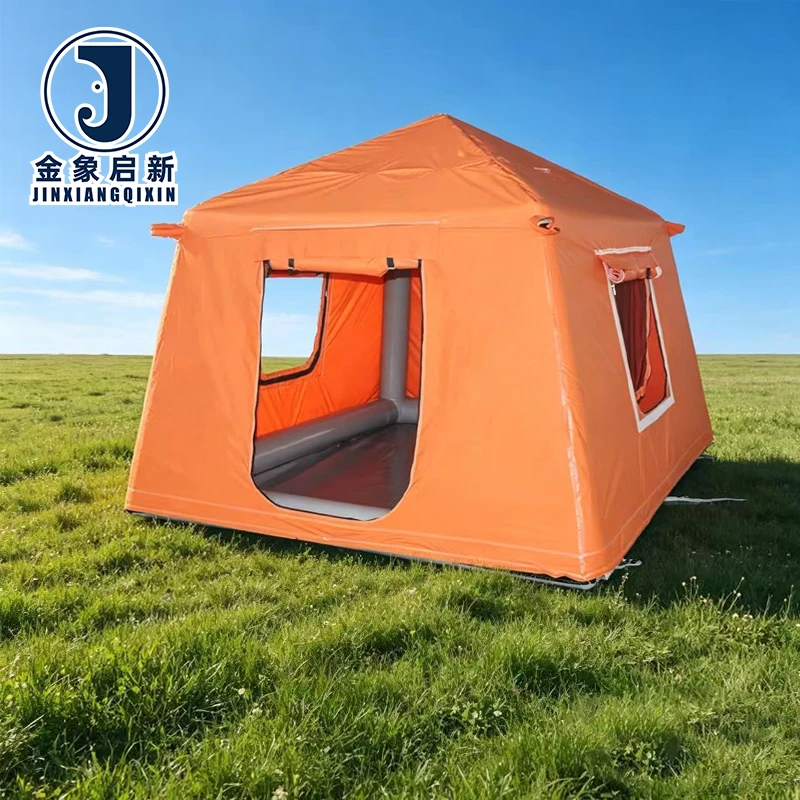

Description
Roll-to-Roll Consistency — Three dedicated production lines and 36 sets of processing equipment maintain uniform coating weight and colour across container-load inflatable tent fabric roll orders.
Technical Specifications
| Parameter | Value |
|---|---|
| Product Type | Inflatable Tent Fabric |
| Core Material | 420D Oxford |
| Construction | Single Layer |
| Waterproof Rating | 3000mm water column (source value — verify against manufacturer catalog) |
| Flame Retardant | Available in flame retardant grades — confirm the grade required for your market |
| UV Treatment | Available with UV stabilisation — confirm test basis required for your market |
| Customisation | OEM & ODM, sample customisation, pattern printing |
| Quality System | Full-process QA & QC with on-site dedicated staff |
| Certifications | ISO 9001, ISO 14001, ISO 45001, CE |
Application Suitability
| Application | Exposure & Requirement |
|---|---|
| Tent and inflatable structure manufacturing | Roll-fed production lines require consistent width, GSM and colour batch-to-batch for uninterrupted cutting and welding |
| Commercial outdoor events and festivals | Rapid-deployment shelters exposed to rain, wind loading and repeated inflation cycles demand reliable seam and coating adhesion |
| Industrial project base camps | Temporary accommodation and equipment shelters in remote sites face prolonged UV exposure, abrasion from ground contact and frequent relocation |
| Tarpaulin distributors consolidating container loads | Importers need roll-to-roll uniformity so downstream customers receive identical material across split shipments |
Why Colour Drift Between Rolls Derails Inflatable Tent Production Runs
Batch-level colour control starts at the coating formulation stage, not at final inspection.
When multiple rolls of inflatable tent fabric arrive with visible shade variation, the downstream fabricator faces an immediate problem: panels cut from different rolls show mismatched tones once the structure is inflated and viewed in daylight. This defect is rarely caught at the supplier’s loading dock because individual rolls look acceptable in isolation. The discrepancy becomes visible only when adjacent panels are seamed together under natural light. Buyers who have sourced coated Oxford fabric across several suppliers report that colour inconsistency accounts for a significant share of rejected roll stock, particularly on large project orders where tents ship in batches to the same event site. [NEED_CITE: colour measurement tolerances for coated textiles per ISO 105 series]
How 420D Oxford Base Fabric Supports Inflatable Structure Integrity
The denier count of the base yarn directly influences how well the fabric resists tear propagation at stress concentration points — corners, valve openings and seam junctions where internal air pressure exerts continuous outward force. A 420D Oxford weave provides a mid-range balance between pack weight and puncture resistance, making it a practical choice for inflatable tent fabric roll stock destined for commercial event shelters that are erected and dismantled repeatedly. The single-layer construction reduces overall roll weight, which matters when a container holds hundreds of rolls and freight cost per unit is a procurement variable.
Coating Adhesion and Weld Line Behaviour on Oxford Substrates
Coated Oxford fabric used for inflatable structures must hold a welded seam that is at least as strong as the base fabric itself, because inflation pressure loads the seam continuously. If the coating bond to the yarn is weak, the heat-activated weld zone delaminates before the Oxford yarn reaches its breaking point. Our 10-person R&D team evaluates coating formulation and curing parameters for each production run to ensure the PVC bond to the 420D substrate withstands inflation pressure cycling without peel-back at the weld edge. [NEED_CITE: peel strength test methods for coated fabric seams per ISO 2411]
Reading the Specification Sheet Beyond Stated Waterproof Ratings
A 3000mm water column rating indicates the hydrostatic head the coating can resist before water penetrates, but this single number does not describe how the fabric performs once it is cut, welded and inflated into a structure. The 420D Oxford base contributes tensile strength and tear resistance independently of the coating’s waterproof barrier. Coating weight and adhesion quality determine whether the waterproof barrier survives repeated folding, transport abrasion and the thermal stress of heat-welding seams. When evaluating inflatable tent fabric roll options, request the base fabric specification alongside the coating weight so that both the mechanical and barrier properties can be assessed for your intended deployment conditions.
The Hidden Cost of Accepting Rolls Without Batch-Level GSM Verification
When a roll of inflatable tent fabric arrives lighter than the GSM stated on the quotation, the finished tent may pass visual inspection but fail in service: seams tear at lower inflation pressure, abrasion resistance drops and the structure sags under wind load. This shortfall is often undetectable without cutting a sample swatch and weighing it on arrival. Distributors who split container loads among multiple customers face compounding complaints because each downstream buyer receives fabric that underperforms the specification they purchased against. Consistent roll weight across the entire order is what separates reliable bulk supply from a shipment that generates returns and replacement claims. [NEED_CITE: GSM verification sampling procedures for textile roll stock]
Why Volume Buyers Source Inflatable Tent Fabric From This Facility
Near-30 years of focused coated fabric production has established deep process control over coating weight accuracy and adhesion consistency across production runs. Three full production lines allow container-scale orders of inflatable tent fabric to be scheduled without compressing lead times into unrealistic windows. The 10-technician R&D team handles material formulation adjustments, pattern printing specifications and sample development within days rather than weeks. Dedicated QA and QC personnel inspect every roll before packing, catching GSM drift and colour deviation before the order ships rather than after it arrives at the destination port.
Documentation & Verification
- Material specification sheet stating 420D Oxford base, coating type and colour reference per roll
- Pre-shipment inspection record documenting GSM verification and visual consistency check per batch
- Roll packing list detailing roll count, individual weight and container loading plan for logistics coordination
- ISO 9001, ISO 14001, ISO 45001 and CE certificates included with shipment documentation
- UV and flame retardant test reports supplied where the specified grade has been confirmed at order placement
Fabrication, Handling & Storage
- Heat-weld parameters must be tuned to the single-layer PVC coating thickness on 420D Oxford to avoid burn-through or incomplete fusion
- Store rolls vertically or on wide cradles to prevent permanent creasing that weakens the coating at fold lines
- Cut patterns with grain direction noted to align 420D Oxford warp yarns with primary inflation load paths
- Use PVC-compatible cleaners only; solvents in general-purpose cleaners can soften the coating on 420D Oxford
- Allow cold-stored rolls to reach ambient temperature before unrolling to prevent coating micro-cracking
What to Specify When Requesting a Quotation
Provide the intended application — commercial event shelter, project base camp or equipment enclosure — along with the deployment environment and expected inflation cycle frequency. State your target market so that the correct flame retardant grade and UV stabilisation level can be matched to local compliance requirements. Confirm the roll width and length that suit your cutting table and container loading plan, and indicate whether pattern printing or OEM branding is required on the roll stock.
Frequently Asked Questions
Q: How is GSM verified before shipment against the quoted specification?
A: Each production batch undergoes in-process weight checks, and a dedicated QA team performs 100% pre-shipment inspection on every roll. Swatch samples are cut, weighed and recorded against the quoted GSM. The inspection report accompanies the shipment so you can cross-reference on arrival.
Q: How do you control colour consistency across rolls within a single container order?
A: Coating formulations are mixed per batch with colour references checked against the approved standard under controlled lighting. Rolls from the same production run are grouped together, and pre-shipment inspection compares adjacent rolls side by side to flag any visible drift before packing.
Q: What roll widths and lengths are available for container loading optimisation?
A: Roll width and length can be adjusted within the capability of our production lines to match your cutting table dimensions and container loading plan. Provide your target roll count per container, and the production team will propose dimensions that maximise weight utilisation and minimise dead space.
Q: What is the minimum order for custom colour or pattern printing on roll stock?
A: Custom colour and printed branding are available on roll-stock orders with minimums set per colour or print design. The exact quantity depends on the coating batch size required for colour consistency. Request a sample development run to confirm shade and print definition before committing to full production volume.