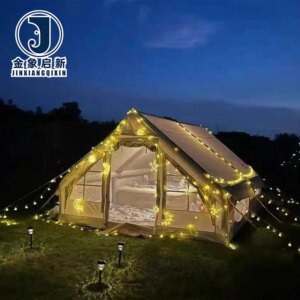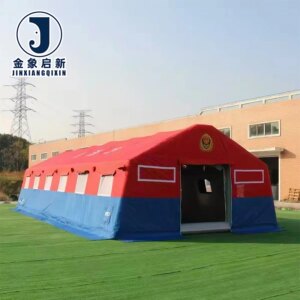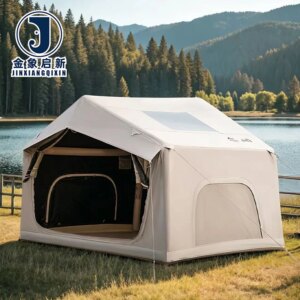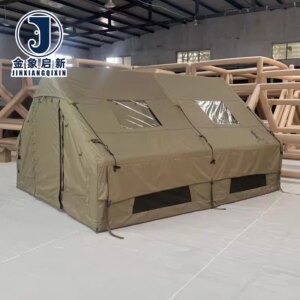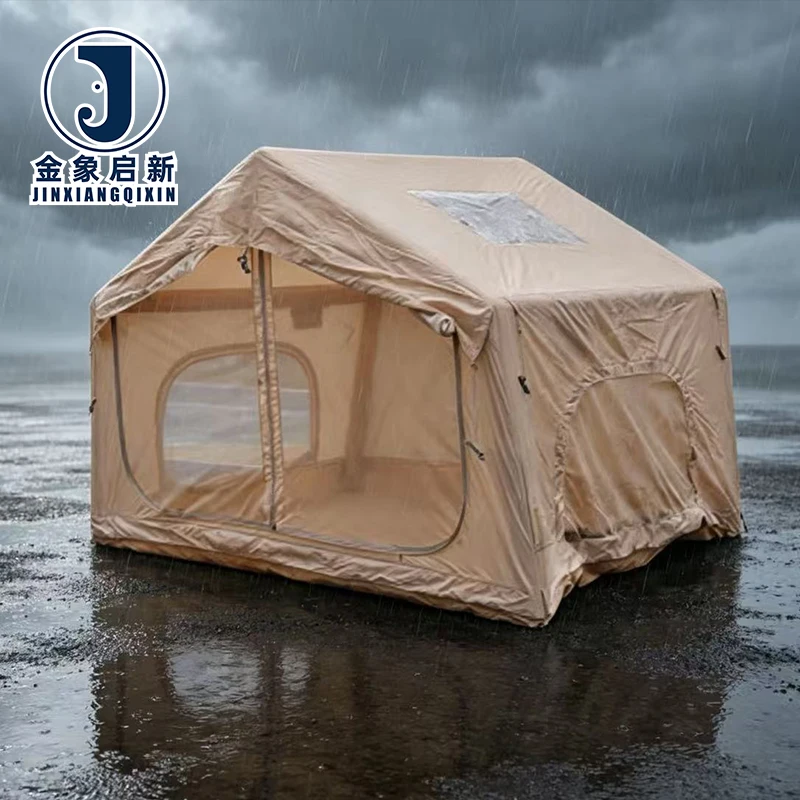
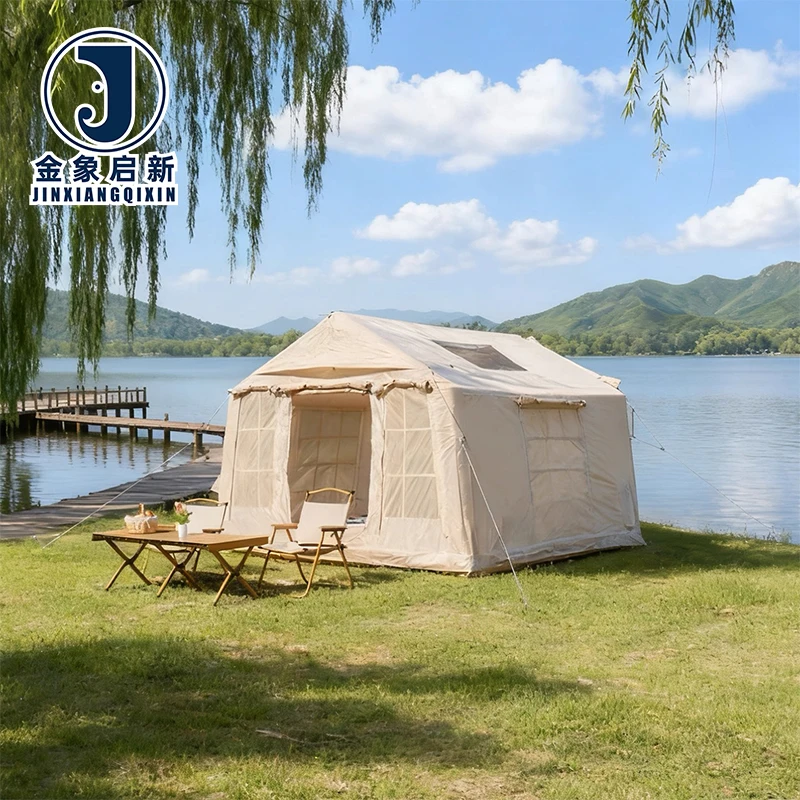
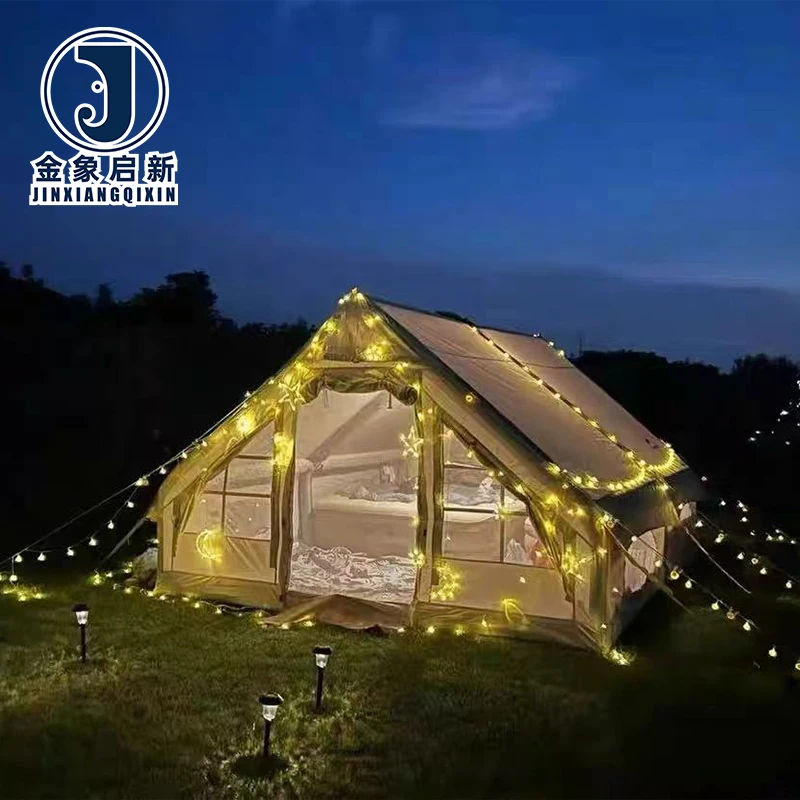
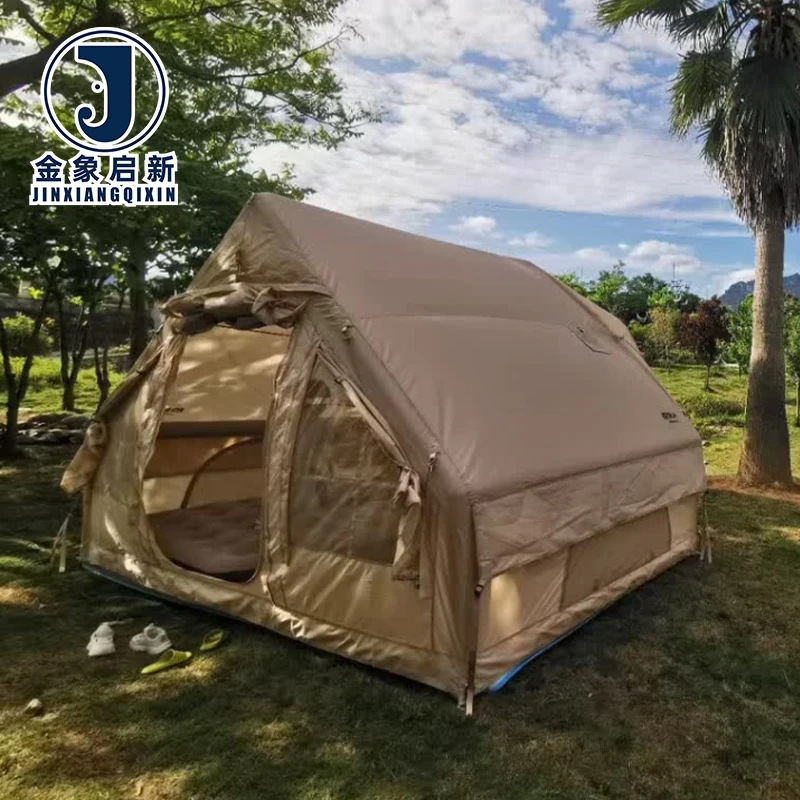
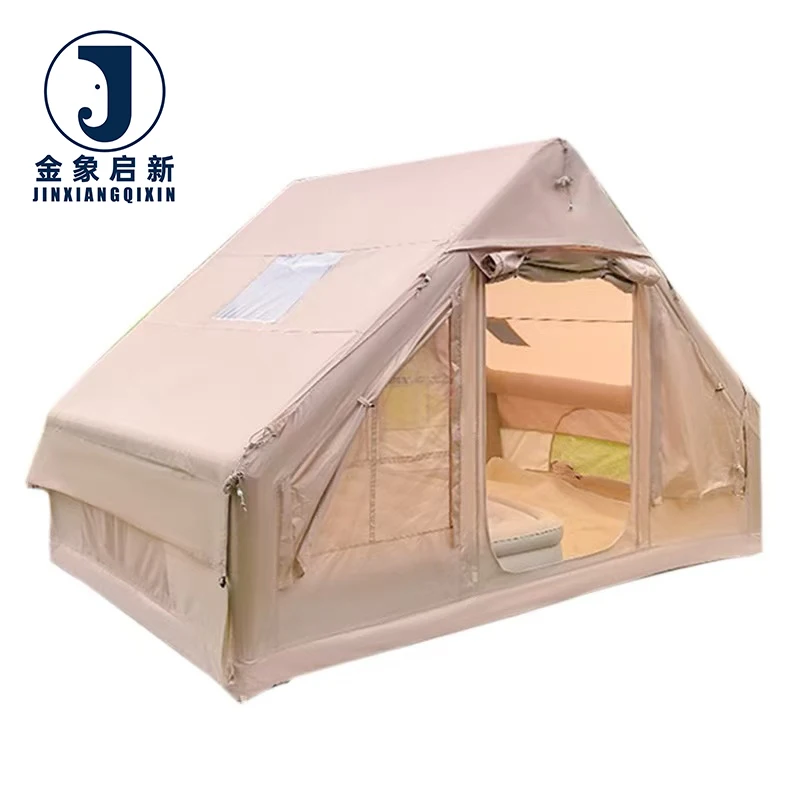
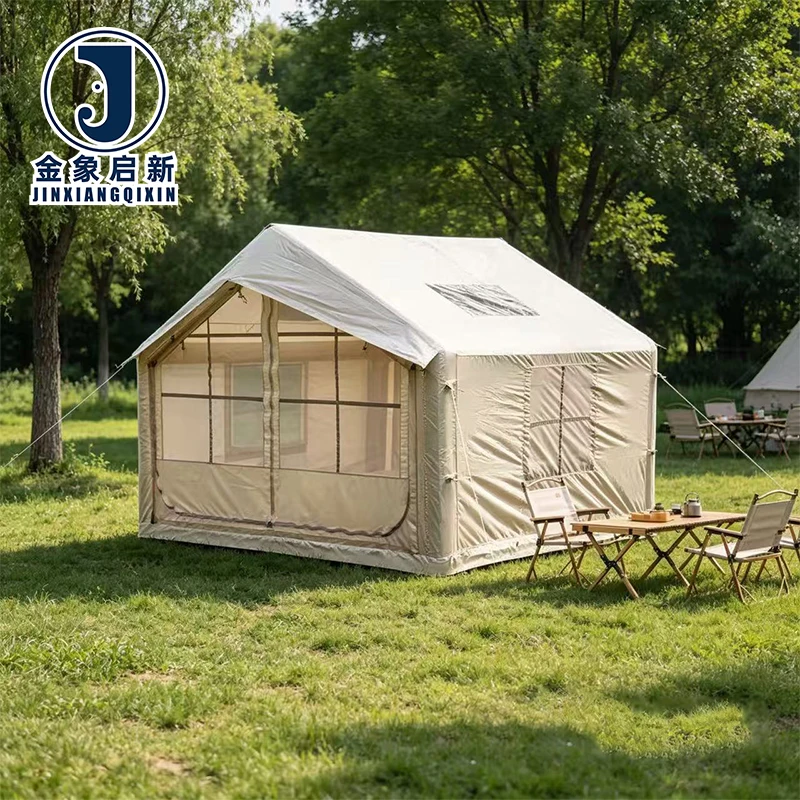
Description
Roll Consistency Guaranteed — Every roll of inflatable tent fabric leaves the facility with identical GSM, colour, and coating adhesion, backed by 100% pre-shipment inspection across all 7 quality checkpoints.
Technical Specifications
| Parameter | Value |
|---|---|
| Product Type | Inflatable Tent |
| Core Material | PVC tarpaulin |
| Thickness Options | 0.4mm–0.8mm |
| Waterproof Rating | 2000mm |
| Tear Resistance | 180N minimum |
| Flame Retardancy | UL94 V-2 |
| UV Treatment | UV-resistant (test basis not stated) |
| Construction | Single-layer |
| Opening Mechanism | Quick Automatic Opening |
| Season Rating | 4-Season |
| Certifications | ISO 9001, ISO 14001, ISO 45001, CE |
| Sample Lead Time | 5–7 days (standard), 7–10 days (custom) |
| Production Lead Time | 45 days (standard configurations) |
| Warranty | 2 years on material defects |
Application Suitability
| Application | Exposure & Requirement |
|---|---|
| Commercial camping site outfitting | Permanent outdoor deployment, sustained UV exposure, repeated inflation cycles, guest turnover wear |
| Outdoor event management | Rapid setup and teardown cycles, wind loading on inflatable beams, public safety compliance |
| Expedition and field operations | Extreme weather exposure, transport abrasion, remote deployment without repair facilities |
| Temporary field shelters | Ground moisture, variable temperature ranges, long-duration inflation under load |
Why Batch-to-Batch Colour Drift Matters for Inflatable Tent Fabric Buyers
Visible colour variation across inflatable tent panels assembled side by side ruins the professional appearance of a commercial campsite or branded event structure.
When an inflatable tent fabric manufacturer supplies multiple rolls for a single project, even minor differences in pigment dispersion or coating thickness between batches become obvious once the panels are inflated and positioned adjacent to each other. Buyers who have sourced from multiple suppliers often discover this problem only at the fabrication stage, when rejection means lost production time and missed event deadlines. A custom inflatable tent project involving six or eight units across a festival site demands colour uniformity that starts at the coating line, not at the cutting table [NEED_CITE: colour consistency standards for coated fabrics in batch production].
How Thickness Selection Maps to Inflation Pressure and Structural Load
The 0.4mm–0.8mm thickness range available for this inflatable tent fabric covers the spectrum from lightweight family camping shelters to heavy-duty expedition-grade structures. Thinner gauges reduce transport weight and packed volume, which matters when outfitting commercial campsites that relocate seasonally. Thicker gauges provide the structural rigidity needed for larger inflatable beam diameters and higher internal pressures, particularly in wind-prone environments. Specifying the correct thickness at the inquiry stage prevents costly re-engineering after sample evaluation.
Controlling Coating Adhesion Across the Full Production Run
Coating adhesion directly determines whether an inflatable tent beam holds pressure or delaminates at a stress point after repeated inflation cycles. The three full production lines and 36 sets of processing equipment in the facility allow tight control over coating temperature and nip pressure, which are the variables that govern the bond between the PVC layer and the base fabric. When adhesion is inconsistent, the failure typically appears after the tenth or twentieth inflation — well past the point where a fabricator would discover it during incoming inspection [NEED_CITE: adhesion test methods for PVC coated fabrics per ISO 2411].
Reading the Specifications: What Actually Determines Inflatable Beam Integrity
Tear resistance at 180N minimum reflects the force needed to propagate a cut through the coated fabric, which matters most at the base of inflatable beams where ground contact creates abrasion and nick points. A small cut in a beam panel will either arrest or spread depending on the base fabric denier and weave density — tear strength alone does not tell the full story. The waterproof rating of 2000mm addresses hydrostatic head pressure, relevant when rain accumulates on the roof surface or when ground moisture wicks upward. The UL94 V-2 flame retardancy grade documents that the material self-extinguishes after flame removal, a requirement for commercial event permits in most jurisdictions [NEED_CITE: UL94 V-2 classification criteria for plastic materials]. Coating thickness interacts with all of these properties: a thicker PVC layer improves waterproofing and puncture resistance but adds weight that affects transport logistics and inflation pump sizing.
What Happens When the Weld Fails Before the Fabric Does
Inflatable tent beams concentrate stress at the welded seams where panels join, and this is precisely where coating composition and heat-sealing parameters must be matched correctly. If the PVC coating on the inflatable tent fabric does not reach proper melt temperature during fabrication, the weld peels under inflation pressure — often during the first setup at the event site. Conversely, excessive heat during welding degrades the base fabric yarns, creating a brittle zone that cracks under flex fatigue. Buyers who specify material without confirming weld compatibility with their fabrication equipment face the highest-cost failure mode: a structurally sound fabric that cannot be reliably assembled [NEED_CITE: hot air welding parameters for PVC tarpaulin fabrics].
Procurement Advantages Rooted in Production Infrastructure
Dedicated QA and QC staff inspect every roll at seven defined checkpoints, from raw material incoming through final packaging, ensuring the custom inflatable tent fabric you receive matches the specification sheet. The 10-technician R&D team develops samples within days for custom sizing, colour matching, and logo printing requirements, eliminating the multi-week sample cycles common with traders. Three full production lines provide the throughput needed to fill container-load orders with consistent batch-to-batch quality, while maintaining 30% reserve capacity for urgent follow-up orders. A two-year warranty on material defects backs every roll shipped, and ISO 9001, ISO 14001, ISO 45001, and CE certifications are maintained as active operating standards rather than display certificates.
Documentation & Verification
- Material specification sheet confirming GSM, base fabric type, and PVC coating weight per roll
- UL94 V-2 flame retardancy test report linked to the specific batch number supplied
- Pre-shipment inspection record showing 100% QA/QC verification results before dispatch
- ISO 9001, ISO 14001, ISO 45001, and CE certificates with certificate of origin
- Roll packing list with individual roll weights and dimensions for customs clearance
Fabrication, Handling & Storage
- Hot air welding at temperatures matched to the selected 0.4mm–0.8mm PVC thickness range for reliable seam strength
- Store rolls upright on pallets to prevent permanent creasing that weakens the PVC coating at fold lines
- Allow rolls to acclimatise before unrolling in cold conditions to prevent surface cracking of the PVC layer
- Use PVC-compatible adhesives for field repairs on the single-layer construction to maintain coating integrity
- Lay patterns to minimise seams on curved inflatable beam panels, reducing potential leak paths
Start Your Inflatable Tent Fabric Inquiry
Provide your target inflatable beam diameter and internal pressure requirements so we can recommend the appropriate thickness from the 0.4mm–0.8mm range. Specify any flame retardancy or UV treatment grades required by your destination market regulations. Confirm whether you need rolls in standard widths or custom-cut panels, and share your colour references or logo artwork for print matching.
Frequently Asked Questions
Q: How is GSM verified on arrival and what documentation supports the quoted weight?
A: Every roll undergoes weight verification at the final QA checkpoint before packing. The pre-shipment inspection record documents the actual GSM measured per roll against the specification sheet. This documentation ships with your order, so your receiving team can cross-reference immediately without waiting for separate lab results.
Q: What UV treatment test basis supports the anti-UV claim for extended outdoor exposure?
A: The fabric is supplied with UV-resistant treatment; however, the specific test method and exposure hours should be confirmed for your market. Request the UV test report at the sample approval stage and verify it meets the requirements for your intended deployment duration and geographic location.
Q: How is batch-to-batch colour consistency controlled across multiple rolls in a single order?
A: Colour consistency is managed through controlled pigment dispersion at the coating stage and verified at multiple QA checkpoints during production. For multi-roll orders, all rolls are produced in the same coating run where possible. A colour reference sample is retained and compared against each finished roll during the 100% pre-shipment inspection.
Q: What is the sample development timeline before committing to full production?
A: Standard samples ship within 5–7 days. Custom inflatable tent samples with specific colour, thickness, or logo printing requirements typically require 7–10 days. Sample approval is mandatory before mass production begins, ensuring your specifications are locked in and documented before the full order enters the production lines.